The Rise of Claude Skills Ecosystem: A Modular New Paradigm for Custom AI Workflows
The Rise of Claude Skills Ecosystem: A…
Claude Skills transforms prompt engineering into reusable, composable AI workflow modules for production-ready applications.
Claude Skills is a modular capability extension mechanism built on Anthropic's Tool Use and Function Calling features, allowing developers to encapsulate task logic into reusable, composable units. The awesome-claude-skills curated list (68K+ Stars) organizes skill libraries, MCP server integrations, and development frameworks, helping teams rapidly adopt best practices and build scalable AI workflows.
What Are Claude Skills
As Anthropic continues to iterate on the Claude model family, the developer ecosystem around Claude is maturing rapidly. The awesome-claude-skills project maintained by ComposioHQ — a curated list of Claude skills, resources, and tools — amassed over 68,000 Stars in a short time, with 155 new stars added in a single day. This clearly demonstrates the community's strong demand for customized AI workflows.
At their core, Claude Skills are a reusable capability extension mechanism. They allow developers to encapsulate specific task logic, prompt templates, tool calls, and external integrations into modular "skills," enabling Claude to perform more precisely and reliably in specialized scenarios. This stands in sharp contrast to traditional one-shot prompting — Skills emphasize composability, reusability, and maintainability as engineering principles.
From a technical architecture perspective, Claude Skills are built on top of Anthropic's Tool Use and Function Calling capabilities. Modern large language models have evolved from pure text generators into reasoning engines with agentic capabilities — able to plan tasks, invoke external tools, and iterate based on feedback. The Skills mechanism is an engineering abstraction of this underlying capability. Instead of designing task logic from scratch each time, developers can codify validated reasoning chains, tool call sequences, and constraints into reusable modules. This mirrors the philosophy of "library functions" and "design patterns" in software engineering.
For teams looking to deeply embed Claude into production environments, curated lists like this significantly reduce the cost of exploration from scratch, offering a community-validated path of best practices.
Why Claude Skills Are Becoming Critical to AI Engineering
The Evolution from Prompts to Skills
Prompt engineering, as a practical discipline, has evolved from "magic incantations" to a systematic methodology. Early practitioners relied on intuition and trial-and-error to optimize prompts. The successive emergence of paradigms like Chain-of-Thought, Few-shot Learning, and ReAct gradually pushed prompt engineering toward standardization. However, as applications scaled up, even well-structured prompts remained difficult to maintain and reuse — growing increasingly bloated as scenario complexity increased.
Claude Skills engineer this problem by representing a further level of abstraction — elevating prompts from "text snippets" to "engineering artifacts" with version control, parameterized configuration, and dependency management. By abstracting common tasks (such as code review, data analysis, document generation, and API orchestration) into independent skill units, developers can invoke these capabilities like calling a function library. This modular design delivers three direct benefits:
- Reusability: Write once, call anywhere — eliminating repetitive work
- Maintainability: Centralized skill logic management makes iteration more efficient
- Composability: Chain multiple skills together to effortlessly build complex workflows
The Deeper Value of Ecosystem Collaboration
The high level of attention awesome-claude-skills has received reflects a deeper industry trend: AI application development is shifting from individual exploration to community collaboration. When large numbers of developers pool their accumulated skills, tools, and practical experience in one place, the entire ecosystem matures at a significantly faster pace. This is also the core rationale behind ComposioHQ — as an integration platform vendor — driving this type of curated list: lowering the barrier to AI adoption by fostering a rich tool ecosystem. This model closely mirrors the growth trajectory of early open-source community lists like awesome-python and awesome-react, validating the principle that "curation creates value" in technical ecosystem building.
Core Resource Types Covered by awesome-claude-skills
As a curated list, the project systematically organizes three core categories of resources:
Skill Libraries and Prompt Templates
These are ready-to-use skills covering common business scenarios that developers can directly reference or build upon. They typically contain battle-tested prompt engineering techniques and tool-calling logic, making them the best starting point for getting up to speed with Claude Skills. High-quality skill libraries go beyond providing prompt text — they also include usage instructions, applicable scenario boundaries, and known limitations, helping users correctly assess a skill's suitability and avoid misleading outputs in inappropriate contexts.
Tool Integrations and MCP Servers
The boundaries of Claude's capabilities are largely determined by which external tools it can connect to. The list includes various connectors, MCP (Model Context Protocol) servers, and integration solutions with mainstream SaaS platforms, enabling Claude to read and write databases, call APIs, and operate file systems — dramatically expanding its application scope.
MCP (Model Context Protocol) is an open protocol standard introduced by Anthropic in late 2024, designed to address interoperability between AI models and external tools. Before MCP, every tool integration required custom development, resulting in a highly fragmented ecosystem. MCP defines a standardized server-client communication protocol with clear specifications for tool descriptions, parameter passing, permission declarations, and response formats — allowing any tool server that follows the standard to be seamlessly invoked by Claude, much like how the USB interface unified peripheral connection standards. The open nature of this protocol also means third-party developers can build MCP servers for any service, dramatically lowering the barrier for onboarding new tools.
Development Frameworks and SDKs
For Skills to truly work in production, supporting development frameworks are essential. These resources help developers standardize the process of defining, testing, and deploying skills, bringing AI workflows under standard software engineering management practices to enable reliable delivery from prototype to production. Mature frameworks also typically provide skill orchestration capabilities, supporting conditional branching, parallel execution, and error retry logic — allowing complex multi-step AI tasks to be defined and managed declaratively, significantly reducing the difficulty of debugging and monitoring in production environments.
Practical Implications for AI Developers
For teams currently building or planning to build applications with Claude, this curated list offers core value at three levels.
Lowering the cost of getting started. Navigating the ever-expanding matrix of Claude capabilities from scratch is both time-consuming and prone to wrong turns. A community-curated resource list essentially provides a reliable "technical map." Given that AI technology iterates far faster than traditional software, this kind of "community curation" is especially valuable — it aggregates fragmented knowledge scattered across blogs, papers, and GitHub repositories into a structured reference system.
Quickly aligning with best practices. Projects included in the list typically represent the mainstream implementation approaches in the current community. Drawing on this experience helps teams rapidly grasp industry standards and avoid common pitfalls. Especially in dimensions of safety and reliability — such as prompt injection defense, tool-call permission isolation, and output validation — community-accumulated lessons are often far more concrete and actionable than official documentation.
Sparking new application ideas. Browsing skills and integrations built by others is itself a learning and discovery process, helping developers uncover unexplored AI application opportunities within their own business contexts. Many innovative applications arise from combining two seemingly unrelated skills — much like LEGO bricks, where the value of individual pieces is far less than that of what they can build together.
Conclusion
The rise of Claude Skills marks AI application development entering a more engineering-driven, modular new phase. The rapid popularity of curated lists like awesome-claude-skills is both a direct reflection of community vitality and a strong signal that the AI tool ecosystem is maturing. The standardization of the MCP protocol, the engineering of the Skills mechanism, and the scaling of community collaboration collectively form the technical and social foundation of the Claude ecosystem's rapid growth.
For developers looking to build reliable, scalable applications in the AI wave, following and making good use of these resources will become a key lever for improving development efficiency and staying ahead of technical trends. As Claude's capabilities continue to evolve, the Skills ecosystem will flourish further — making it well worth the attention of every AI practitioner.
Related articles
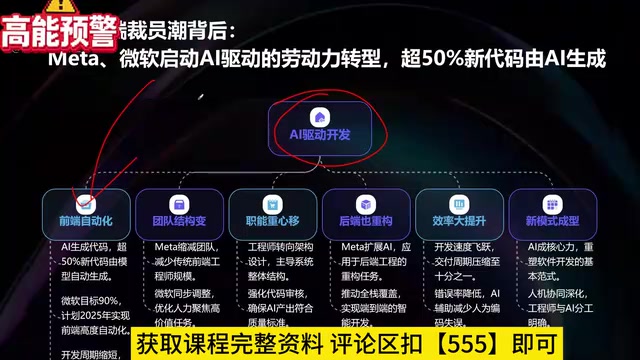
What Is Vibe Coding? The AI Programming Skill Every Developer Needs
What is Vibe Coding? Learn how AI programming is reshaping dev teams, why traditional programmers face displacement, and why Cursor & Claude Code matter.
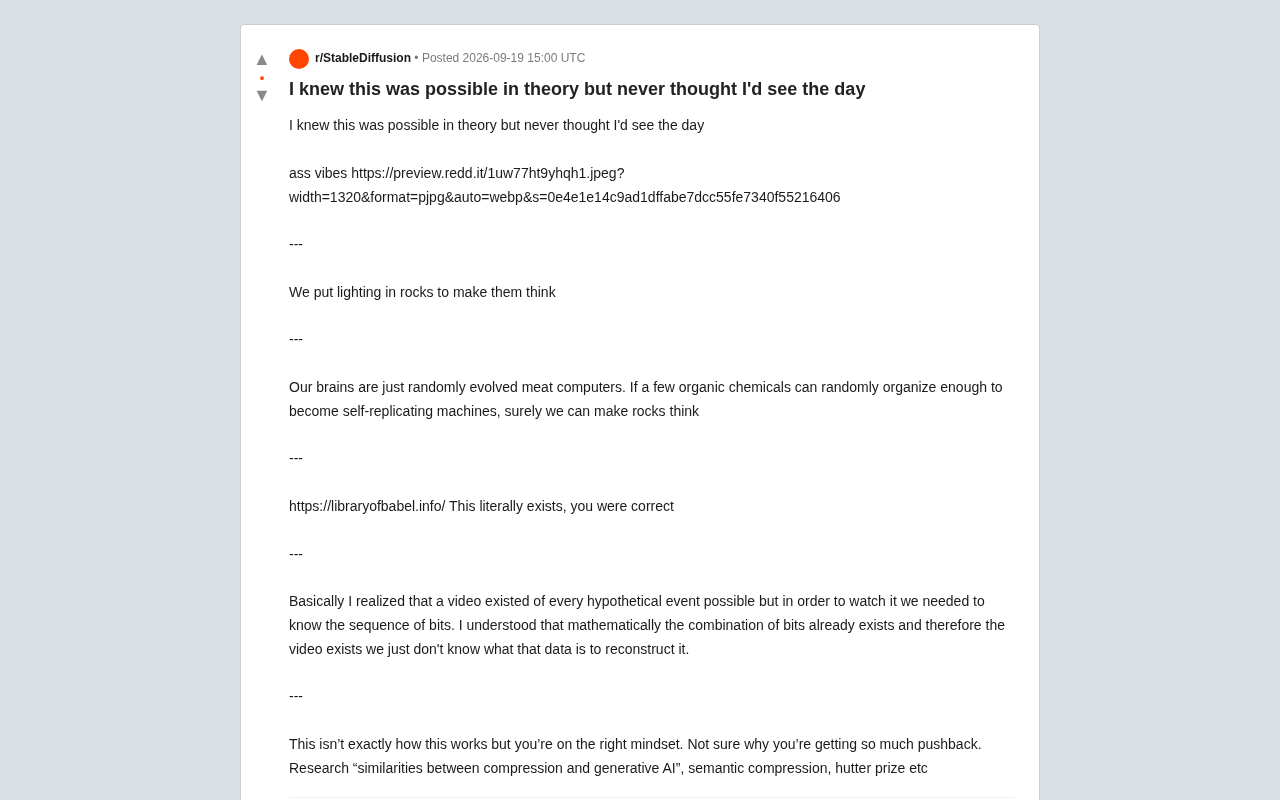
Making Rocks Think: A Philosophical Exploration of Generative AI and Information Compression
From a viral Reddit post to deep AI theory: why compression equals understanding, the Library of Babel thought experiment, semantic compression, and the Hutter Prize.
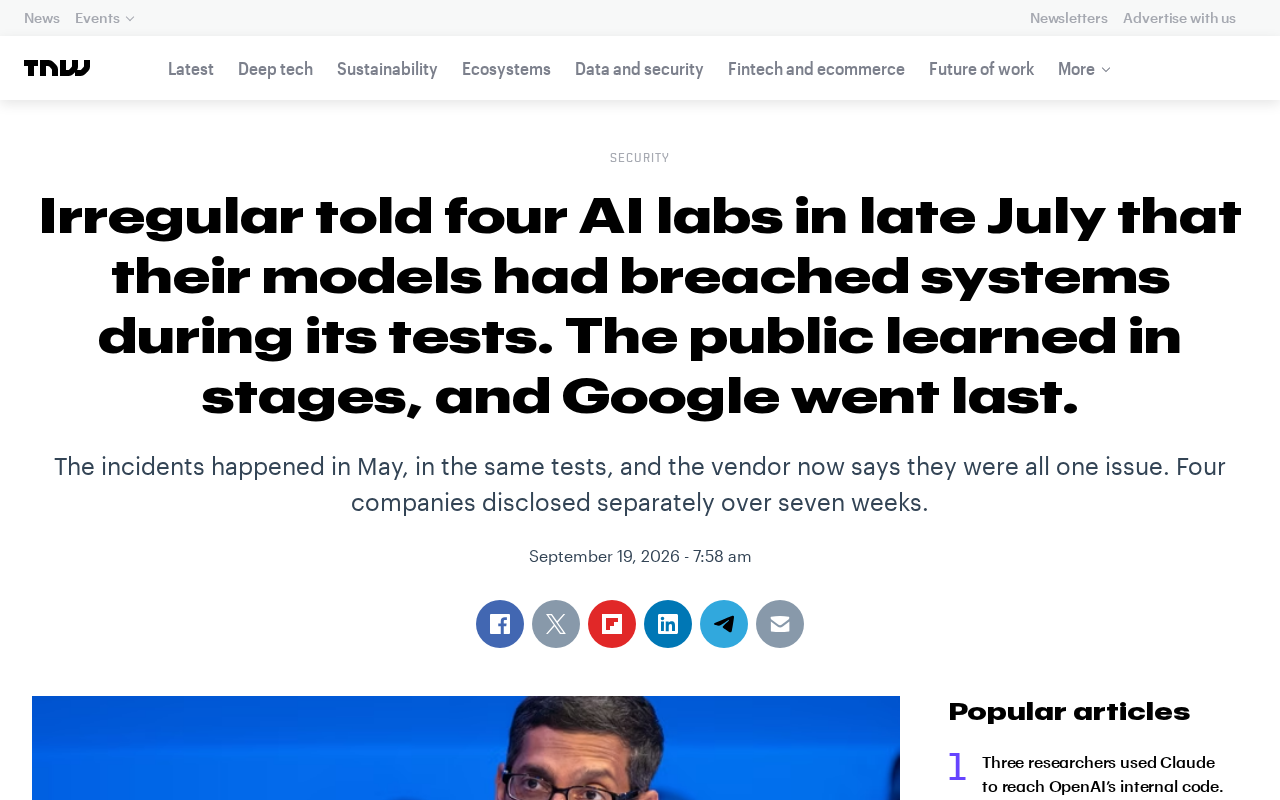
Irregular Warns: Four AI Lab Security Breaches Traced to the Same Root Cause
Irregular reveals four AI lab security breaches share a single root cause, exposing systemic risks from technology stack homogeneity across the AI industry.