The Rise of Open-Source AI Models: How Ecosystem Collaboration Drives Technological Innovation

Open-source AI models are going mainstream, powered by ecosystem collaboration and partner networks.
Open-source AI models like Llama, Mistral, Qwen, and DeepSeek are reshaping the AI landscape by democratizing access to cutting-edge technology. This article examines how partner ecosystems and collaborative infrastructure — from Hugging Face to hardware innovators — create compounding advantages that closed-source models struggle to replicate, while exploring how open and closed-source approaches serve as complements rather than competitors.
The Open-Source Signal Behind a Single Tweet
Recently, a brief yet powerful tweet caught the attention of the AI community: "Congrats to the team! Bullish on open models and all the partners we make along the way!" Though short, it reflects an increasingly clear trend in the AI industry — open-source models are moving from the margins to the mainstream, with ecosystem collaboration as their core driving force.
Over the past two years, the competitive landscape in AI has undergone a dramatic shift. From the early dominance of closed-source large models to the powerful rise of the open-source camp, the industry's balance of power is being redistributed. The word "bullish" in that tweet captures the growing confidence that practitioners, investors, and technical teams are placing in the open-source approach.
Why Open-Source AI Models Deserve the Optimism
Technology Democratization Lowers the Barrier to Entry
The greatest value of open-source models lies in breaking down technological barriers. In the past, only a handful of tech giants had the resources to train and deploy top-tier large models. But with the release of open-source models like Llama, Mistral, Qwen, and DeepSeek, small and medium-sized enterprises, research institutions, and even individual developers can now build upon these foundations for secondary development and customization.
Each of these open-source models brings its own technical strengths and industry significance. The Llama series, released by Meta, has gone through multiple iterations from Llama 1 to Llama 3, scaling from 7B to 405B parameters, with architectural innovations like GQA (Grouped Query Attention) that dramatically improve inference efficiency. Mistral, from a French company founded by former DeepMind and Meta researchers, introduced its Mixtral series based on a Sparse Mixture of Experts (Sparse MoE) architecture — a design that activates only a subset of parameters during inference, significantly reducing computational costs while maintaining high performance. Qwen (Tongyi Qianwen), developed by Alibaba, stands as a major representative of Chinese open-source large models with continuous advances in multimodal capabilities. DeepSeek made waves across the industry with its efficient training strategies and highly competitive performance, offering the community valuable insights through its MoE architecture and training methodology. The collective emergence of these models signals that open-source AI has entered a mature, flourishing stage.
The direct effect of this technology democratization is an exponential acceleration in the pace of innovation. When model weights are publicly available and the community can freely improve upon them, the entire industry's iteration cadence speeds up dramatically. One team's breakthrough can be rapidly validated, optimized, and extended by developers worldwide.
It's worth noting that "open source" in the context of AI models differs significantly from traditional software open source. With traditional open-source software, publishing the source code is enough to fully reproduce functionality. But open-sourcing an AI model involves multiple layers: model weights, training code, training data, data processing pipelines, and alignment/fine-tuning methods. Currently, most "open-source models" primarily release model weights and inference code, while training data and complete training procedures often remain undisclosed. This has sparked ongoing debate in the industry about the definition of "true open source" — the OSI (Open Source Initiative) is working to establish open-source definition standards for AI, attempting to clarify which components must be made public to qualify as "open-source AI." Furthermore, the licenses adopted by different models vary widely, from fully permissive Apache 2.0 to custom licenses with commercial restrictions, requiring users to carefully evaluate the terms.
The Dual Advantage of Cost and Data Security
For enterprise users, open-source models mean lower costs and greater data control. Compared to the ongoing expenses of calling closed-source APIs, locally deploying open-source models can significantly reduce long-term operational costs. At the same time, data doesn't need to be uploaded to third-party servers, meeting the compliance requirements of industries with stringent privacy demands, such as finance and healthcare.
The feasibility of enterprise local deployment of open-source models is largely thanks to the rapid development of model compression and inference optimization technologies in recent years. Among these, model quantization is one of the most critical techniques — it compresses model parameters from 32-bit floating-point numbers to 8-bit, 4-bit, or even lower-precision integer representations, enabling large models that originally required multiple high-end GPUs to run smoothly on consumer-grade hardware. Quantization formats and methods such as GPTQ, AWQ, and GGUF each have their strengths and weaknesses, while community tools like llama.cpp have even made it possible to run large models on CPUs. At the inference framework level, vLLM's PagedAttention technology has dramatically improved memory utilization efficiency, TensorRT-LLM provides deep hardware optimization, and emerging frameworks like SGLang continue to boost inference throughput while reducing latency. These technological breakthroughs have transformed local deployment from theoretically feasible to practically viable, serving as a key driver for enterprises choosing open-source models.
Partner Ecosystem: The Core Competitive Advantage of Open-Source Models
The tweet specifically emphasized "all the partners we make along the way," a point particularly worth reflecting on. In the open-source era, going it alone is unsustainable — building a thriving collaborative ecosystem is where true competitive advantage lies.
From a Single Model to a Complete Ecosystem
Behind every successful open-source model is typically an entire ecosystem of support: inference frameworks, fine-tuning tools, deployment platforms, cloud service providers, and developer communities building applications around it. Model hosting platforms like Hugging Face exemplify this kind of ecosystem collaboration — connecting model publishers, tool developers, and end users in a virtuous cycle.
Founded in 2016, Hugging Face started as a chatbot company before pivoting to become an AI model hosting and collaboration platform. Now valued at over $4.5 billion, it plays a role in the open-source AI ecosystem similar to what GitHub represents for software development. The platform hosts over 500,000 models, 100,000 datasets, and a vast collection of Spaces (online demo applications). Its core open-source library, Transformers, has become the de facto standard for NLP and multimodal AI development, supporting multiple deep learning frameworks including PyTorch, TensorFlow, and JAX. Additionally, Hugging Face has released a series of complementary tools including Accelerate (distributed training), PEFT (parameter-efficient fine-tuning), and TRL (reinforcement learning from human feedback), greatly lowering the technical barriers to model fine-tuning and deployment. The developer community and toolchain that have formed around it have become indispensable infrastructure for open-source AI.
The Compounding Effect of Collaboration
Every new partner that joins the ecosystem potentially brings new capabilities and users to the whole. Chip manufacturers optimize hardware compatibility, cloud platforms provide computing power, tool teams refine the developer experience, and application developers create real-world value. The compounding effect generated by this multi-party collaboration is something the closed-source model finds difficult to replicate.
At the hardware level, this ecosystem collaboration is fueling an intense competition around AI inference chips. NVIDIA has long dominated the AI training and inference market with its CUDA ecosystem, but the proliferation of open-source models is reshaping the competitive landscape. AMD is aggressively pursuing market share through its ROCm software stack and MI300 series accelerators, while Intel's Gaudi series AI accelerators are also seeking a breakthrough. Even more noteworthy are emerging chip companies focused on inference scenarios, such as Groq (achieving ultra-low latency inference with its LPU architecture) and Cerebras (wafer-scale chips), which are pioneering new technological approaches. On the edge, chips from Qualcomm and Apple are providing increasingly powerful compute support for running small open-source models locally. This hardware-level diversification in competition, in turn, drives continuous improvement in the deployment efficiency and accessibility of open-source models.
As the sentiment conveyed in the tweet suggests — gratitude for partners and anticipation for the future — the cohesion of the open-source community is itself a valuable asset.
Open Source vs. Closed Source: Complementary, Not Adversarial
A subtle but important point: being bullish on open source doesn't mean dismissing closed source. The industry is developing a more mature understanding: open source and closed source are not a zero-sum game, but a complementary relationship suited to different scenarios.
Closed-source models still hold advantages in cutting-edge capabilities, safety alignment, and commercialized services, while open-source models excel in flexibility, cost, and customizability. Many enterprises adopt a hybrid strategy — using closed-source models for the most complex tasks while leveraging open-source models for high-volume, high-frequency routine workloads.
By quantitative metrics, the capability gap between open-source and closed-source models is narrowing at a pace that exceeds expectations. On mainstream benchmarks such as MMLU (Massive Multitask Language Understanding), HumanEval (code generation), and GSM8K (mathematical reasoning), top open-source models are approaching and even surpassing closed-source models like GPT-4 in certain dimensions. In 2024, for example, Llama 3.1 405B and DeepSeek-V3 demonstrated performance comparable to closed-source leaders across multiple benchmarks. Notably, Safety Alignment remains an area where closed-source models maintain an edge — companies like OpenAI and Anthropic have accumulated extensive proprietary experience and data in alignment techniques such as RLHF (Reinforcement Learning from Human Feedback) and Constitutional AI. However, the open-source community is catching up, with more efficient alignment methods like DPO (Direct Preference Optimization) being widely adopted, lowering the technical barrier to safety alignment.
As open-source model capabilities continue to approach — and in some tasks surpass — those of closed-source models, this competition is entering an exciting new chapter.
Conclusion: Embracing Openness as a Long-Term Strategy
This brief tweet is, at its core, a public declaration of belief in the philosophy of openness. It represents not just congratulations for a team's achievements, but a firm conviction in the entire open-source AI movement.
In an era of accelerating AI evolution, choosing openness and embracing collaboration may well be the right path toward sustainable innovation. As more teams and partners rally under the banner of open source, the boundaries of this industry will continue to expand.
As that spirited sign-off puts it — Let's go. The open-source story is just getting started.
Related articles
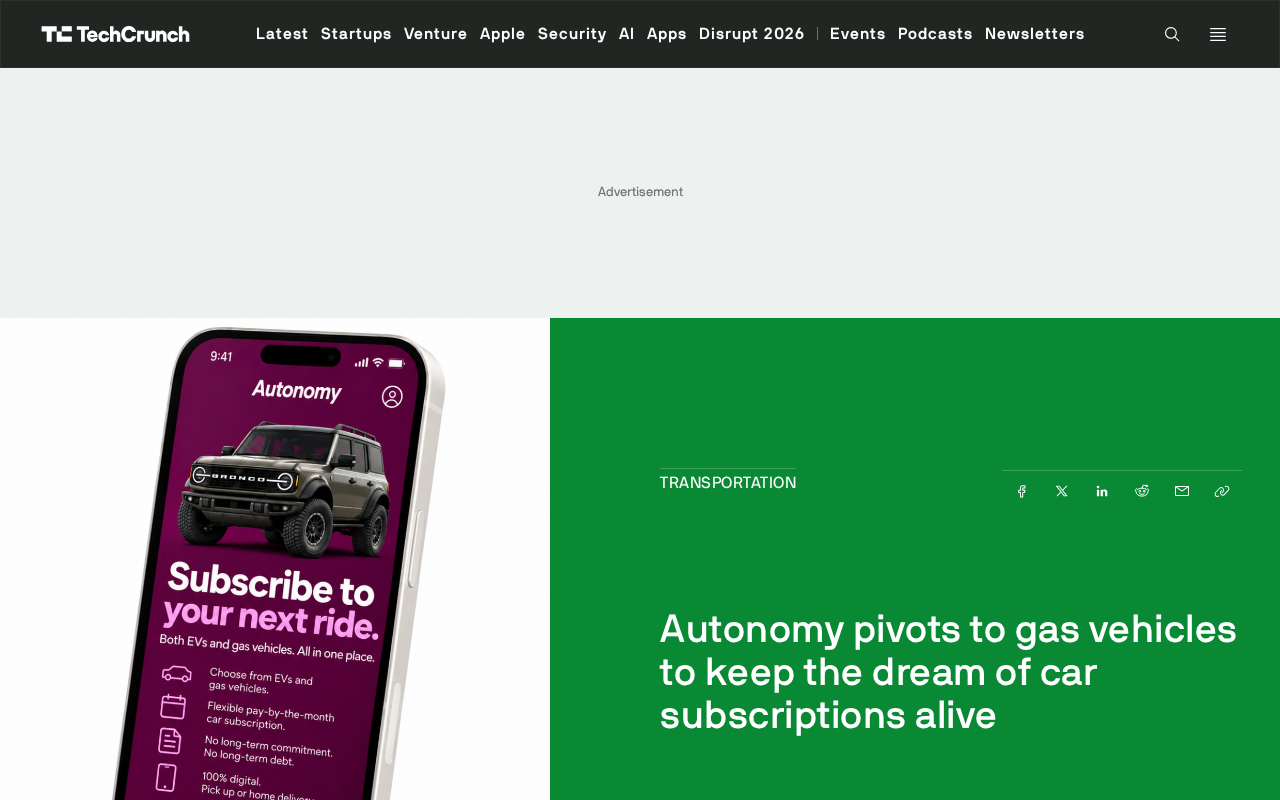
Autonomy Pivots to Gas-Powered Cars: A Survival Play for the Car Subscription Model
Autonomy pivots from EV to gas-car subscriptions. This article analyzes the heavy-asset challenges, EV residual value risks, and lessons for mobility innovation.
Abolish Copyright? Core Arguments and Reflections in the Intellectual Property Debate
Should copyright be abolished? This article analyzes core arguments for and against, covering excessive protection terms, AI training data disputes, open-source movements, and possible IP reform.
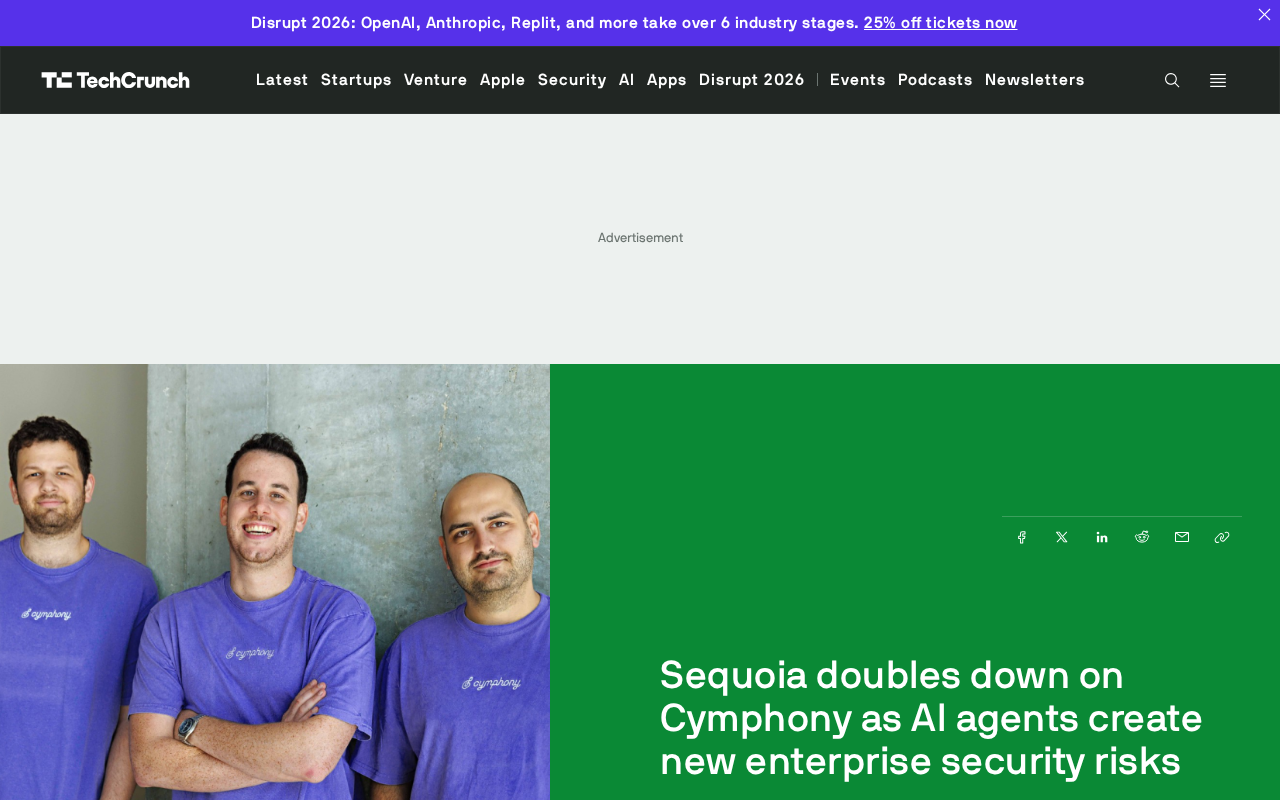
Cymphony Raises $25M Series A Led by Sequoia: AI Agent Enterprise Security Challenges and Opportunities
Sequoia leads Cymphony's $25M Series A for AI agent security, valued over $100M. Exploring enterprise AI agent security challenges, permission management, and emerging market opportunities.