The Rise of Quiet Launches in AI: Why Top Technologies Choose to Debut Under the Radar

AI industry embraces "quiet launches," letting product quality replace marketing hype.
A counterintuitive "quiet launch" strategy is gaining traction in AI: benchmark products like Meta Llama, Mistral, and DeepSeek all debuted with minimal fanfare, yet achieved community recognition far exceeding traditional marketing. Built on the verifiability of benchmarks and the decentralized distribution power of open-source communities, this approach delivers better expectation management, higher trust, and less iteration pressure — driving AI from marketing-driven to capability-driven competition.
Introduction
In an AI industry saturated with flashy launch events and relentless marketing campaigns, a strikingly different product release strategy is quietly gaining ground — the "Quiet Launch." Recently, a brief tweet caught the attention of industry insiders, summing up the release style of a particular AI achievement in just four words: "Quiet and humble."

This phenomenon deserves deeper examination: in an age of the attention economy, why are some of the most impactful AI breakthroughs choosing the most understated paths to market?
The concept of the Attention Economy was introduced by economist Herbert Simon in 1971: an abundance of information inevitably leads to a scarcity of attention. In today's AI industry, this tension has been amplified to the extreme — dozens of new models are released every week, media coverage is overwhelming, and the cognitive bandwidth of users and developers is severely overtaxed. At its core, the high-profile launch strategy is a battle for this increasingly scarce attention resource. Yet when everyone is shouting at the top of their lungs, choosing silence becomes the loudest voice of all. This counterintuitive communication logic is precisely the underlying rationale behind the "quiet launch" strategy.
Quiet Launches: A Counterintuitive Product Strategy
Letting Products Speak for Themselves
Looking back at major AI breakthroughs in recent years, many milestone products and models adopted a low-key release approach. Meta's Llama series of open-source models dropped weight files directly, Mistral initially released its model via a torrent link, and DeepSeekAd unveiled its technical report in a minimalist fashion — all demonstrating that truly capable AI technologies often need no excessive packaging.
These three cases share a common communication logic worth unpacking. Meta's Llama series practically upended how big companies typically operate: no launch event, no countdown — just model weight files made available for direct download, accompanied by a technical report. It was this attitude of "here, just take it" that quickly generated a strong sense of trust within the developer community. Mistral went even further — its 7B model was initially released via a BitTorrent seed link, a move steeped in hacker ethos that resonated widely in tech circles, generating far more buzz than any traditional marketing campaign could have. DeepSeek used a detailed technical report as its primary release medium, letting the model's technical specifics serve as the most compelling "advertisement." The common thread across all three approaches: handing the power of dissemination to the community rather than keeping it in the hands of a marketing team.
The description "Quiet and humble" perfectly reflects the tech community's deep appreciation for this release style. When an AI model or product is good enough, the community itself becomes the most powerful distribution channel. Word-of-mouth spreads through tech circles far faster than any meticulously planned marketing campaign.
Quiet Launch vs. High-Profile Launch: Comparing Outcomes
By contrast, some high-profile launches have sometimes backfired. Excessive expectation management and exaggerated performance claims can trigger fierce community backlash once a product actually ships. While OpenAI's various launch events have attracted massive attention, they have also frequently been met with skepticism about whether the company is "over-marketing."
The core advantages of a low-key launch manifest in three areas:
- More reasonable expectation management: Users aren't held hostage by inflated expectations, so the actual experience often exceeds what they anticipated
- Higher community trust: Tech professionals naturally gravitate toward the style of "letting the product speak for itself"
- Less iteration pressure: Teams don't need to execute every version update under the spotlight
A Culture of Humility Is Taking Shape in AI
The Open-Source Community as the Driving Force
The rise of quiet launch culture is inseparable from the growth of the open-source AI community. In the open-source ecosystem, the code and model themselves serve as the best "launch event." A carefully written technical report and a convincing set of benchmark results are more persuasive than any promotional video.
It's worth explaining the special role that benchmarks play in the AI community. Unlike advertising in the consumer goods industry, the performance of AI models can be precisely quantified and independently verified. Standardized test suites such as MMLU (Massive Multitask Language Understanding), HumanEval (code generation capability), and MT-Bench (multi-turn conversation quality) constitute an "objective scoring system" widely recognized by the community. When a team releases a model, they simply need to include scores from these benchmarks, and anyone can reproduce and verify the results independently. This verifiability is the cornerstone of the tech community's trust system, and the fundamental reason why the quiet launch strategy works — you don't need to convince anyone to believe you; you just need to provide evidence that can be verified. Technical reports go a step further by disclosing details about training methods, data processing, and architectural innovations, making peer review possible. This is the standard path for establishing credibility in academia, and it's now being adopted by an increasing number of AI teams in their product release workflows.
Hundreds of models are quietly uploaded to the Hugging Face platform every day, many with outstanding performance. Their authors might post just a brief tweet on social media — much like the "Quiet and humble" we saw — but the tech community rapidly identifies and amplifies truly valuable work.
Hugging Face, as the core distribution infrastructure for AI models, is itself key to understanding quiet launch culture. The platform currently hosts over 700,000 public models and has developed a unique "natural selection" ecosystem: a model's download count, likes, and community discussion activity are displayed in real time, forming a reputation system similar to academic citation indices. A truly excellent model is often identified within hours of release by "early adopters" in the community and rapidly spread through channels like Twitter/X, Reddit's r/MachineLearning, and Discord servers. This decentralized distribution network means that marketing budgets are virtually irrelevant here — the collective intelligence of the community automatically handles the filtering and amplification. For developers, creating a thorough Model Card, providing clear usage examples, and setting appropriate licenses on Hugging Face drives more sustained user growth than any ad spend ever could.
What This Trend Means for the AI Industry
This cultural shift is having a positive impact across the entire AI industry:
- A return to technical fundamentals: Industry attention is shifting from marketing packaging to the actual technical substance of products
- Reducing industry noise: Less false advertising and over-hyping makes genuine innovation easier to spot
- Fostering healthy competition: Market position is determined by technical capability, not the size of marketing budgets
Notably, this cultural shift is also reshaping the information asymmetry landscape in AI. Traditionally, large companies leveraged powerful PR and marketing capabilities to dominate the narrative during product launches. But in today's culture of quiet launches, a small team with solid enough technology can compete on equal footing with tech giants through community word-of-mouth. In a sense, this lowers the "visibility threshold" for AI innovation, ensuring that genuine technical breakthroughs are no longer overshadowed by marketing resources.
Practical Takeaways for Developers
For AI developers and research teams, the quiet launch strategy is not simply about "doing no promotion" — it's a complete approach to product outreach:
- Prioritize product quality: Channel the energy that would have gone into marketing into model optimization and user experience
- Leverage the distribution power of tech communities: Invest in thorough documentation and examples on platforms like GitHub and Hugging Face
- Build long-term reputation: Consistent, steady product iteration is more valuable than a one-time viral launch
- Emphasize reproducibility: Providing complete technical details and test code so the community can independently verify your results is the most effective way to establish technical credibility
"Quiet and humble" is not just an assessment of a specific product — it represents a set of values being embraced by a growing number of people in the AI industry. In this noisy field, choosing to be understated and humble is itself an expression of technical confidence.
After all, technologies that truly change the world have never needed to be shouted from the rooftops.
Key Takeaways
- A "quiet launch" strategy is gaining momentum in AI — releasing high-quality products in a low-key manner actually yields better community reputation
- Quiet launches offer advantages including more reasonable expectation management, higher community trust, and less iteration pressure
- The verifiability of benchmarks and the transparency of technical reports form the technical foundation that makes quiet launch strategies viable
- The growth of the open-source AI community is a major force driving humble release culture, with platforms like Hugging Face enabling decentralized natural selection mechanisms
- The industry is shifting from marketing-driven to capability-driven, where "letting the product speak for itself" is the new norm, reshaping the competitive landscape of AI
Related articles
Meta Muse Hits 900K Downloads in Six D…
Meta Muse Hits 900K Downloads in Six Days: The AI Agent Era Has Officially Arrived
Meta's AI agent Muse hit 902K downloads in 6 days, topping US App Store and Google Play charts above ChatGPT and Claude. A deep dive into Muse's capabilities and the AI Agent race.
 Industry Insights
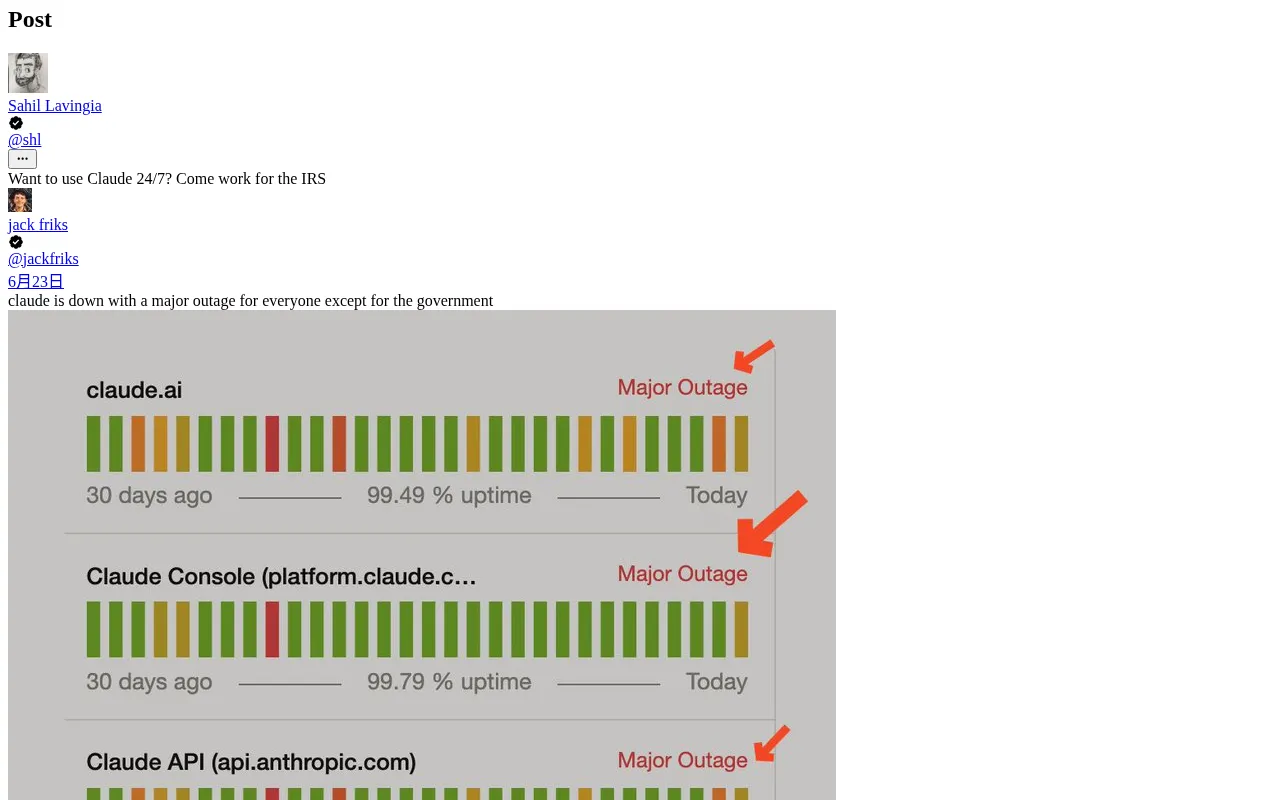
IRS Fully Embraces Claude AI, Accelerating Federal Government's AI Adoption
The IRS is recruiting staff with 24/7 Claude AI access, marking Anthropic's breakthrough into the federal government. Explore the strategic implications and tax use cases.
 Industry Insights
The IRS Mobile App Debate: A Trust Crisis in Government Digital Transformation
The IRS's proposed mobile app has sparked heated debate. This article analyzes the core arguments, exploring data security, privacy, and the trust crisis in government digital transformation.