The Rise of Synthetic Datasets: How ML Researchers Are Solving the Data Shortage with Free Samples

How synthetic data is solving data scarcity, privacy, and cost challenges in machine learning research.
A Reddit post offering 100,000 rows of free synthetic data highlights a growing trend in ML: synthetic datasets are becoming essential for overcoming data scarcity, privacy regulations, and high collection costs. This article breaks down generation techniques, core use cases in finance and user behavior, and critical risks like fidelity gaps and synthetic bias.
A Community Post That Reveals a Deeper Data Problem
A post on Reddit's machine learning community r/learnmachinelearning recently sparked considerable attention: a developer publicly offered 100,000 rows of free synthetic data samples covering finance and user behavior, with the option to generate up to 10 million rows of customized datasets for specific domains such as healthcare, marketing, and insurance.
The post touched on an increasingly central challenge in machine learning — synthetic data is emerging as a key solution to data scarcity, privacy compliance, and cost constraints. Using this post as a starting point, this article systematically explores the value proposition of synthetic data, its core applications, and the risks practitioners should be aware of.
What Is Synthetic Data?
Synthetic data refers to data that is algorithmically generated rather than collected directly from the real world. It mimics the statistical properties and distributions of real data while not corresponding to any actual individual or event.
Three Generations of Generation Techniques
The methods used to generate synthetic data have evolved significantly:
- Rule-based generation: Data is generated according to predefined statistical distributions (e.g., normal distribution, Poisson distribution) and business logic. Best suited for structured tabular data.
- Statistical model-based generation: Methods like Bayesian networks and Copula functions are used to capture real correlations between variables.
- Deep learning-based generation: High-fidelity, complex data is generated using GANs (Generative Adversarial Networks), VAEs (Variational Autoencoders), diffusion models, and large language models.
Financial and user behavior data typically fall into the structured tabular category. The key challenge in synthesizing such data is maintaining logical consistency across fields — for example, preserving the inherent relationship between income and spending. If this consistency breaks down, the effectiveness of model training suffers significantly.
Why Are Researchers Relying More on Synthetic Data?
Breaking Through Three Major Barriers of Real Data
1. Privacy and Compliance Pressure
Data in finance, healthcare, and insurance contains large amounts of sensitive personal information. Under regulations like GDPR and HIPAA, using real data directly is subject to strict limitations. Since synthetic data doesn't correspond to real individuals, it effectively mitigates privacy risks — which is the fundamental reason it continues to gain traction in highly regulated industries.
2. Data Scarcity and Class Imbalance
Low-probability events like fraudulent transactions or rare medical conditions are severely underrepresented in real-world datasets, making it hard for models to learn effectively. Synthetic data can generate large volumes of targeted scenario samples on demand, precisely filling the gaps in a dataset. The original post's mention of generating up to 10 million rows directly addresses this large-scale training need.
3. Collection Costs and Iteration Speed
Collecting, cleaning, and labeling real data is expensive and time-consuming. Synthetic data can be produced quickly and at low cost, making it especially well-suited for prototyping, model validation, and educational demonstrations. For budget-constrained learning communities, freely available synthetic datasets are an invaluable resource.
Breaking Down the Core Use Cases
Finance: Risk Management and Compliance Modeling
The value of synthetic data in finance has been widely validated, particularly in:
- Training fraud detection models to compensate for the inherent scarcity of real fraud samples
- Rapid prototyping and validation of credit risk assessment algorithms
- Running algorithmic stress tests without exposing customer privacy
User Behavior Analysis: Recommendation and Growth Scenarios
Synthetic user behavior data is highly valuable for marketing and recommender systems research. Without relying on real user data, researchers can test personalized recommendation algorithms, user segmentation, and churn prediction models — dramatically lowering the cold-start barrier.
On-Demand Customization: A New Model for Data as a Service
The post author's offer to generate custom data for healthcare, marketing, insurance, and other domains reflects a broader trend toward data as a service. Data is no longer a scarce, static asset — it's a dynamic resource that can be flexibly produced to meet specific research needs.
Key Considerations When Using Synthetic Data
While the potential of synthetic data is substantial, researchers need to exercise careful judgment in practice.
The Inherent Tension Between Fidelity and Utility
The core challenge of synthetic data is whether it can faithfully reproduce the distribution and internal relationships of the original data. If the generation process misses key correlations between variables, models trained on that data often perform poorly when deployed in real environments. Evaluating synthetic data quality requires both statistical similarity metrics and downstream task performance testing — neither alone is sufficient.
Watch Out for the Amplifying Effect of Synthetic Bias
If the generation algorithm itself contains biases, or if the source data carries historical biases, synthetic data can multiply these problems. In high-stakes scenarios like medical diagnosis and credit decisions, such biases can have serious real-world consequences. Always audit the underlying logic of data generation before use.
Data Provenance Transparency Matters
For freely shared community datasets, it's important to thoroughly understand the generation methodology, field definitions, and known limitations before use. The original poster's openness to feedback is a commendable attitude — transparent communication is the foundation for building trust in data quality.
Open Sharing: A New Path to Democratizing ML Research
While this Reddit post may be modest in scale, it reflects a positive and noteworthy trend in the machine learning community: using open sharing to level the playing field for research resources. For students, independent researchers, and small teams with limited budgets, high-quality synthetic datasets can dramatically shorten the path from idea to experiment.
As generation techniques continue to mature, synthetic data will play an increasingly important role in ML research. However, building a systematic quality evaluation framework remains an urgent shared challenge across the field. Interested researchers would do well to start with community resources like this one, and gradually develop their intuition for assessing synthetic data quality through hands-on practice.
Related articles
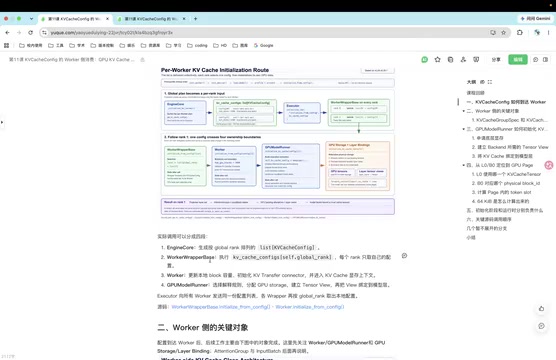
Deep Dive into vLLM Worker-Side GPU KV Cache Initialization
Deep dive into vLLM's Worker-side KV Cache GPU memory allocation, covering the full pipeline from KVCacheConfig generation to physical memory binding via ModelRunner.
Zepto Builds AI Customer Service with MLflow: An Evaluation-Driven Practice Guide
Deep dive into how Zepto built an evaluation-driven AI customer service system using MLflow and Databricks, achieving 60% faster responses and 40% less manual handling. From technical architecture to practical insights.

Iran Captures U.S. Underwater Drone in Strait of Hormuz: A Comprehensive Analysis
Iran announces capture of U.S. Navy underwater drone in Strait of Hormuz. In-depth analysis of the incident, strategic value of UUVs, U.S.-Iran geopolitical competition, and implications for global energy security and military dynamics.