The Rolf Loop: A Complete Guide to AI Automated Iterative Programming in Five Lines of Code

The Rolf Loop uses five lines of code to create an AI-driven automated iterative programming workflow.
The Rolf Loop is a minimalist automation concept that feeds AI-generated output back as input in a continuous loop, enabling automatic code iteration and repair. This guide covers its core mechanics, execution flow, suitable use cases, key risks like infinite loops and false completion, and best practices for safe and effective implementation.
What Is the Rolf Loop?
In the developer community, a concept called the "Rolf Loop" has quickly gone viral. Its core idea is remarkably simple — with just five lines of code, you can have AI automatically iterate and fix code, forming a complete automated programming workflow.
The name comes from the character Rolf Wiggum in the animated series The Simpsons — a lovably dim character who constantly repeats himself, perfectly matching the concept of a "loop." This naming convention itself reflects the humor culture of the developer community.
From a technical standpoint, the Rolf Loop simply takes AI-generated output and feeds it back as input to the AI, repeating this process continuously. The earliest implementation was a simple While loop in a Bash script — crude but effective, and it gave rise to today's popular automation workflow paradigm.

Core Characteristics and Execution Flow of the Rolf Loop
Four Key Characteristics
The most notable feature of the Rolf Loop is that it forms a closed-loop system. It automatically iterates continuously, optimizing based on previous results each time without manual intervention. Specifically, it offers the following capabilities:
- Automatic Iteration: Continuously optimizes output based on feedback — the core mechanism of AI automated iterative programming
- Process Logging: Records all intermediate steps in logs for easy tracing and debugging
- Conditional Termination: Allows setting stop conditions to prevent infinite runs that waste resources
- Multi-Model Support: Can switch between different AI models or roles (hat system) to handle more complex programming tasks
Detailed Execution Flow of the Rolf Loop
The entire execution process can be summarized in the following steps:
- Initialization: Send the task description to the AI
- Generation: AI generates a code snippet or solution
- Save: Save the result to a file while logging the operation
- Validation: Check whether the task is complete (e.g., does the code run successfully?)
- Decision: Stop if the completion condition or maximum attempt count is reached; otherwise, return to step 1
The entire process runs automatically within a single script, making it particularly suitable for automated code repair scenarios that require repeated optimization.
Fundamental Differences Between the Rolf Loop and Other "Loop" Concepts

When people first hear "Rolf Loop," they might think of the lactic acid cycle in biology or the Miller cycle in mechanical engineering. However, there are fundamental differences between them.
Difference from the Lactic Acid Cycle
The lactic acid cycle (Cori cycle) is an energy cycling system within the human body that relies on the liver and muscles working together to convert exercise-produced lactic acid back into glucose. This is a purely biochemical process that follows the physical laws of matter and energy conservation.
Difference from the Miller Cycle
The Miller cycle is an internal combustion engine operating method that separates compression and expansion processes by altering intake valve timing. It belongs to the domains of mechanics and thermodynamics.
Summary of Core Differences
The Rolf Loop is essentially an algorithm-level automation process. It exists entirely in digital space, achieving its goals through the AI model repeatedly generating and correcting its own output. There's no material conversion, no physical work — every step of the loop is driven by AI reasoning and feedback.
Use Cases and Limitations of the Rolf Loop

Suitable Use Cases
The Rolf Loop is best suited for the following types of tasks:
- Tasks with clear objectives that can be verified through external checks
- Automatically fixing code errors (e.g., syntax errors, logic bugs)
- Automatically writing and iterating test cases
- Process-oriented work with clear pass/fail criteria
Unsuitable Use Cases
When tasks involve complex judgment, creative decision-making, or extensive uncontrollable interactions with external systems, the Rolf Loop tends to get stuck or enter infinite loops. The AI's inherent comprehension errors get amplified with each iteration in these scenarios.
Three Key Risks to Watch Out For

- Infinite Loop Risk: The AI may spin in circles on the same problem, wasting massive computational resources without solving anything
- False Completion: The AI sometimes "believes" it has completed the task, causing the loop to terminate early while the actual goal remains unmet
- Resource Overhead: After prolonged execution, file system operations and repeated process restarts introduce additional overhead and potential state inconsistencies
Best Practices for the Rolf Loop
Based on the risks outlined above, here are practical recommendations for using the Rolf Loop in AI automated iterative programming:
- Define Clear Exit Conditions: Clearly define what "done" means, and set a maximum loop count to prevent infinite loops
- Break Down Tasks: Keep each step simple and independent to reduce the probability of errors
- Persist State: Save state to files for easy tracing and debugging
- Set Human Intervention Points: Pre-define manual intervention mechanisms for problems that are difficult to fix automatically
- Control Costs: Use cheaper models or local APIs during testing — don't jump straight to expensive large models
Conclusion
The Rolf Loop represents an important direction in AI programming tooling — achieving automated iterative optimization with minimal code. Its power lies in freeing developers from repetitive debugging work, but it is ultimately just a tool. It can make work more efficient, but it cannot fully replace a developer's judgment and creativity.
For developers looking to try it out, start with simple, clearly-defined tasks and gradually expand to more complex scenarios as you gain experience. In the wave of AI programming, mastering the mindset behind automation workflows like the Rolf Loop may be more important than mastering any specific tool.
Related articles

Osprey: General-Purpose Pretraining Makes Speculative Decoding Draft Models More Efficient
Osprey treats pretraining as a reusable, target-agnostic asset. Through pruning and lightweight adaptation, a single draft model transfers across multiple LLMs, boosting mean acceptance length by 16%-22%.
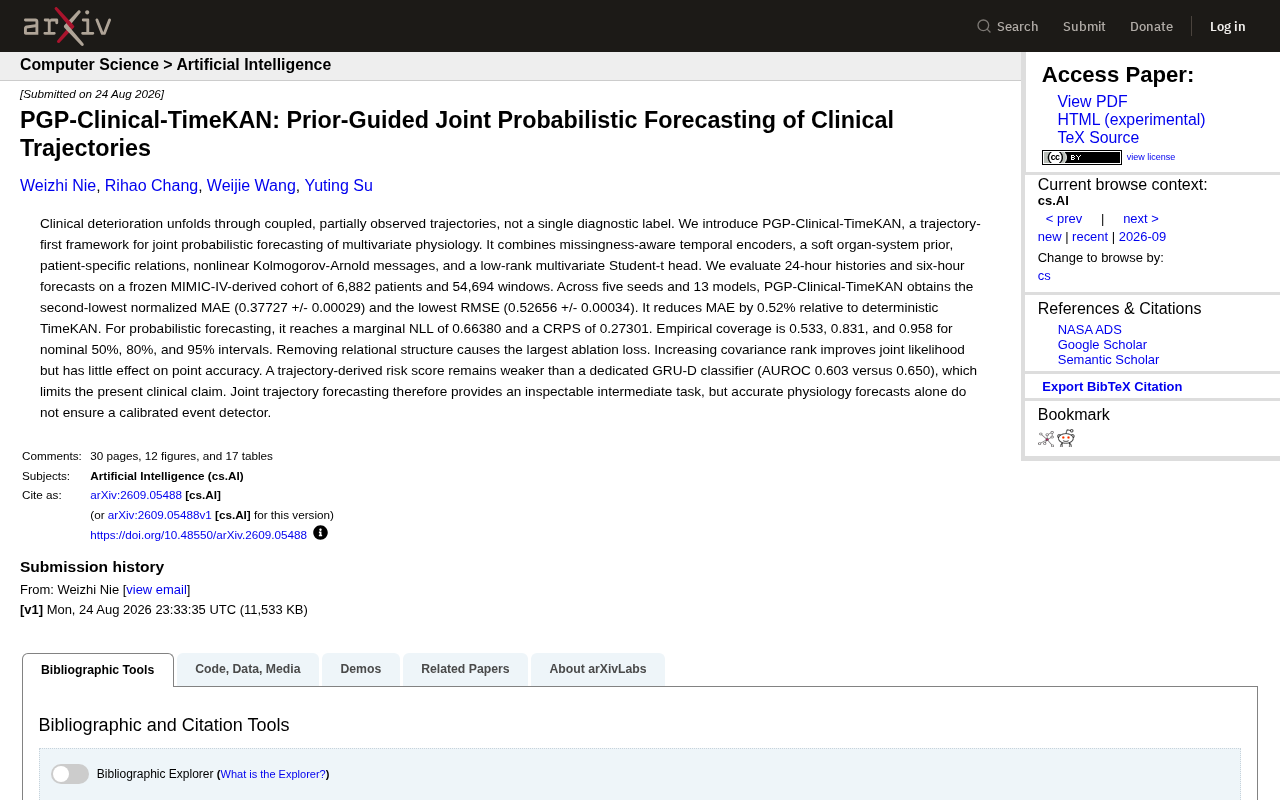
PGP-Clinical-TimeKAN: A Detailed Guide to the Multivariate Physiological Indicator Joint Prediction Framework
An in-depth analysis of the PGP-Clinical-TimeKAN framework for joint probabilistic prediction of multivariate physiological indicators, covering trajectory-first paradigm, KAN message passing, MIMIC-IV validation, and ablation studies.
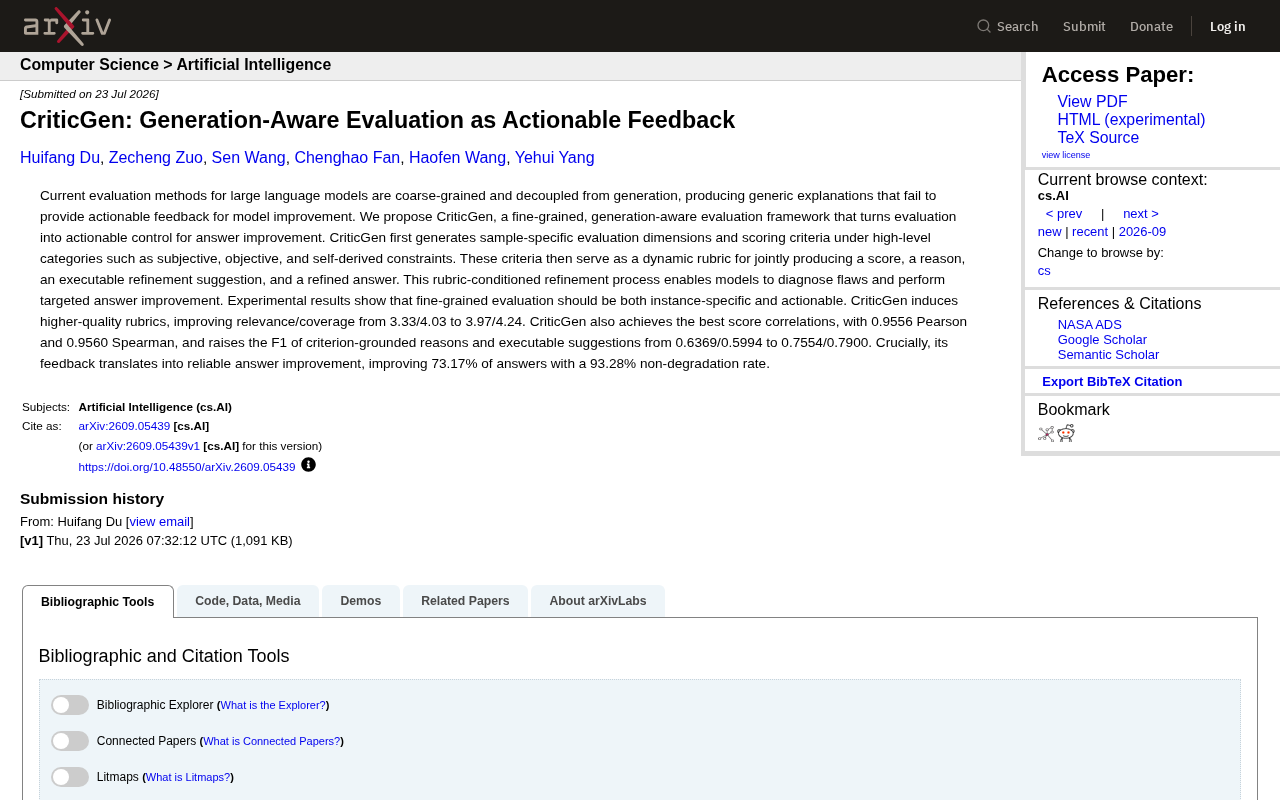
CriticGen: A New Framework That Transforms AI Evaluation into Actionable Improvement Feedback
CriticGen proposes a generation-aware evaluation framework that transforms AI assessment from passive scoring to an active optimization loop, achieving 73.17% answer improvement and 93.28% non-degradation rate.