The Secret Service's 'Zero-Fail' Dilemma: The Systemic Crisis Behind the Butler Shooting

Last Week Tonight uses the Butler shooting to probe the Secret Service's systemic fragility under a zero-fail mandate.
In its latest episode, John Oliver's Last Week Tonight uses the 2024 Butler, Pennsylvania shooting as a lens to examine the Secret Service's rarely scrutinized institutional pressures. Citing an official's blunt admission — "We failed" — the show highlights the agency's zero-fail mission, where any lapse could alter the course of history. The piece argues that recent close calls signal systemic risk accumulation, not isolated incidents. True to form, the episode balances its serious subject with an absurd Russell Crowe auction callback, bringing a critical public safety debate to a mainstream audience.
The U.S. Secret Service typically enters the public consciousness in one of two ways — in Hollywood films, or when a major security failure makes the news. The latest episode of Last Week Tonight turns its focus on this institution, which operates under enormous pressure yet has repeatedly produced alarming close calls, using the 2024 shooting in Butler, Pennsylvania as its entry point.
A note on sourcing: This article is based on material from a political satire talk show and is not an authoritative technical analysis of Secret Service operations. The views presented draw primarily from official statements cited in the episode and commentary from the host.
The Butler Incident: A Failure Impossible to Deny
The most sobering segment of the episode is its retrospective on the Butler shooting. At a rally that should have been under tight security, gunshots rang out — one attendee was killed, and three others were wounded, including a former president.
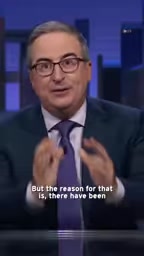
In statements quoted on the show, a Secret Service official said plainly: "We failed. The Secret Service failed." It was a rare, unvarnished admission. As the episode underscores, when gunfire enters a space that was supposed to be secure, no amount of careful wording can sidestep the word "failure."
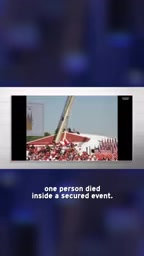
One person killed at a protected event, a former president's ear grazed by a bullet — these are the consequences of a "bad day" for the Secret Service. For an agency whose core mission is protecting key individuals, any lapse risks being permanently entered into the record.
The Butler shooting occurred in July 2024 at a campaign rally in Butler, Pennsylvania. A gunman opened fire from a rooftop near the venue, killing one attendee, seriously wounding two others, and grazing former President Trump's ear. Post-incident investigations revealed significant gaps in perimeter control, rooftop clearing, and communications coordination between the Secret Service and local law enforcement. The incident triggered congressional hearings, after which Secret Service Director Kimberly Cheatle resigned — making it one of the most closely scrutinized public safety failures in recent American history.
The 'Zero-Fail Mission': A Weight Almost Too Heavy to Bear
The episode surfaces a critical and unsparing truth at the heart of the Secret Service's operational logic: this is an agency that has set itself a zero-fail mission.
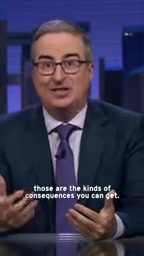
Agents quoted in the episode note that a single failure "could alter the course of history." That statement cuts to the essence of the job — the people being protected are often pivotal figures in the national political landscape, and the cost of a protective failure extends far beyond individual casualties; it can reshape the direction of an entire country.
Host John Oliver acknowledged that this level of pressure is something he "genuinely cannot imagine." Behind that remark lies a meaningful institutional contradiction worth examining: when an agency is required to achieve a perfect, unbroken record, it faces not only an extraordinarily high professional standard but also an ideal state that may be nearly impossible to sustain indefinitely. In any complex system, a pattern of frequent close calls is often a signal that systemic risk is accumulating.
The concept of a "zero-fail mission" carries specific meaning in organizational management and risk research. It refers to institutions whose nature does not permit learning through failure — nuclear plant safety protocols, air traffic control systems, and sterile standards in operating rooms all fall into this category. Unlike ordinary organizations that can absorb small errors as learning opportunities, zero-fail institutions must get it right the first time, because the consequences are irreversible.
Scholars who study High Reliability Organizations (HROs) have found that institutions sustaining zero-fail standards over time tend to share certain traits: heightened sensitivity to weak failure signals, resistance to complacency born of prior success, and decision-making authority delegated to front-line operators. When an agency is compelled to achieve zero failures yet faces structural gaps in resources, staffing, or cross-agency coordination, frequent close calls are rarely isolated accidents — they are early warning signs that the system is approaching a breaking point.
A Serious Subject Wrapped in Satire
Last Week Tonight stays true to its signature style, weaving absurdist humor around a weighty topic. Near the end of the episode, the host spends considerable time updating viewers on a farcical auction saga involving Russell Crowe's athletic supporter: the item had previously been auctioned off to support public media, then resold at auction in Auckland, ultimately fetching ten thousand dollars — at which point the show's team "of course" bought it back.
The sharp contrast between a major public safety topic and this kind of self-deprecating comedy is characteristic of the format. Entertainment lowers the barrier to engagement, while the underlying serious question — the Secret Service's pattern of close calls in recent years — gets placed squarely in front of a mainstream audience.
Conclusion: When a Protective System Develops Cracks
The Butler incident has sustained public attention not only because of its immediate consequences, but because it exposed the real-world fragility of an institution charged with a zero-fail mission. Whether it's the candid official admission of failure or the phrase "close calls" itself, both point toward the same fundamental issue: the credibility of a protective apparatus rests entirely on never getting it wrong, and any exception will be placed under an unforgiving magnifying glass.
For viewers interested in public safety and institutional function, this episode offers more than a news recap — it provides a lens through which to observe how a high-pressure agency operates under standards that are, by any realistic measure, nearly impossible to maintain.
Related articles

Workbuddy for Absolute Beginners: How a Desktop AI Agent Fits Into Real Workflows
A beginner's guide to the Workbuddy desktop AI agent: installation, claiming credits, file management, and building automated workflows—compared with CodeX for fit and cost, helping professionals shift from AI question-askers to AI managers.

OpenAI's New Agent Stack: Computer Use, Decisions API, and Ultra-Fast Workflows
OpenAI Dev Day unveiled a new agent stack: Computer Use outperforms humans, Decisions API delivers ultra-low-latency classification via Luna, Agents API opens the same Computer Use capabilities, and GPT-6.1 Sol costs only one-seventh of Astra. Core updates, benchmark data, and developer insights.

Liang Wenfeng Open-Sources DeepInfo Inference Framework, Takes On U.S. Ban
DeepSeek open-sources its DeepInfo inference framework after its models, featuring GPU/CPU cross-pipelining, small-model prediction with large-model verification, and full Huawei Ascend and NVIDIA chip support—facing the U.S. federal ban head-on. This article analyzes its significance for AI deployment and open-source strategy.