The Software Job Family Tree: The Evolutionary Logic from Programmer to Full-Stack
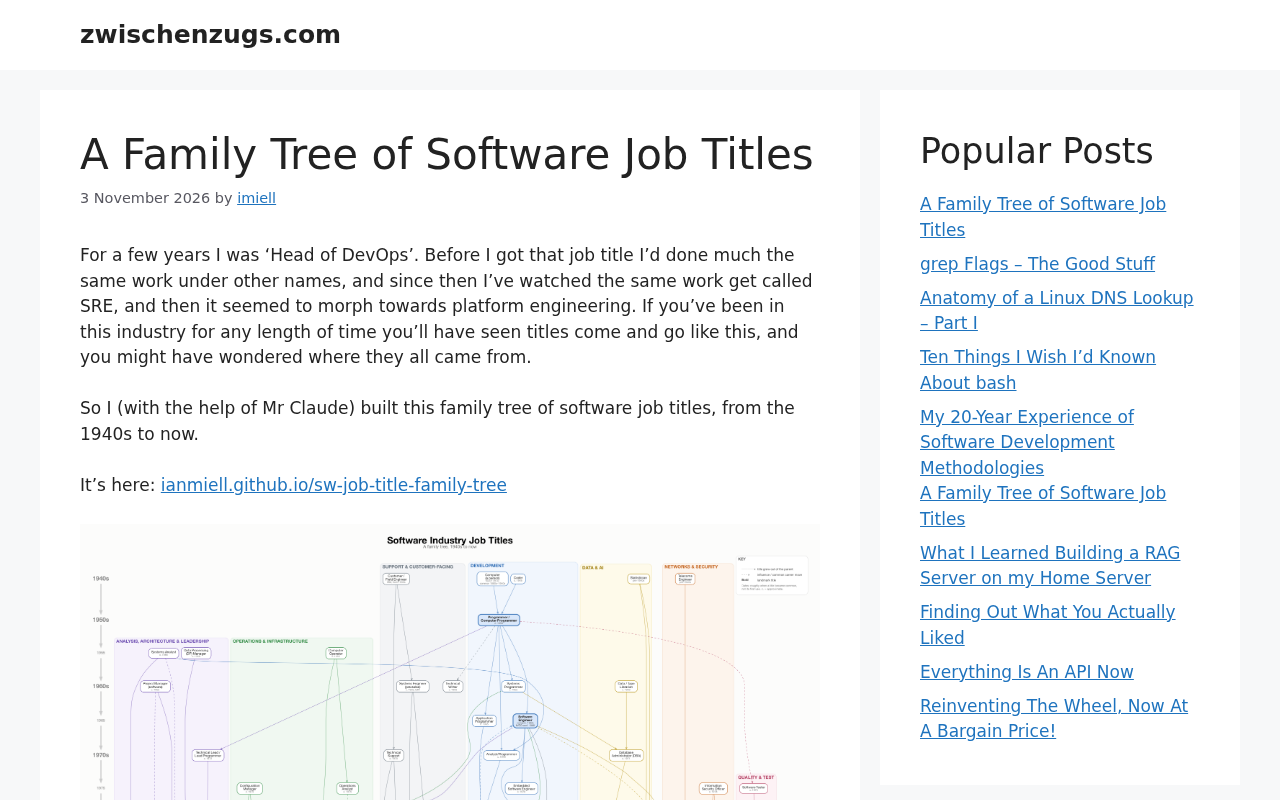
Software job titles mostly branch off from existing roles, reflecting evolving org division of labor and tech stacks.
Using a family-tree metaphor, the article maps software engineer titles, noting new titles rarely appear from scratch but branch off existing roles. Differentiation follows two lines: deep specialization (frontend, backend, mobile) driven by tech stack complexity, and lateral intersection (DevOps, SRE, platform engineering) reflecting delivery and responsibility shifts. More titles don't mean higher capability; title inflation dilutes their reference value, making job content and team structure more telling. Practitioners should ask which role a title branched from and what collaboration problem it solved, recognizing career paths now involve cross-branch moves rather than single-track promotion.
The Software Job Family Tree: The Evolutionary Logic from Programmer to Full-Stack
The inflation of technical job titles is hardly a new topic. One blogger mapped out the genealogy of software engineer titles using a "family tree" approach, sparking over two hundred points of discussion and a flood of comments on Hacker News. Rather than complaining about title inflation, this genealogical perspective is more worth pondering: the birth of each title often corresponds to a specific change in organizational division of labor, tech stack evolution, or the hiring market.
Why Job Titles Keep Splintering
Software industry titles were initially quite plain—programmer, developer, engineer. After specialization took hold, labels like frontend, backend, full-stack, SRE, DevOps, platform engineer, and data engineer emerged one after another. The family tree metaphor works because new titles rarely appear out of thin air; most branch off from existing roles: a certain type of work gets continuously peeled off and professionalized until it ultimately needs an independent name to carry hiring and performance evaluation.
Judging by the discussion heat on Hacker News (the original post earned 258 points and 126 comments), this topic strikes a universal confusion among practitioners: do titles actually reflect differences in ability, or do they merely reflect temporary needs of organizational structure?
Several Main Lines Through the Family Tree Lens
The Depth Direction: From Generalist Developer to Domain Expert
One trunk of the family tree is specialization. The generalist developer subdivides downward into frontend, backend, and mobile, then further into narrower positions. The driving force of this line is usually rising tech stack complexity—when the learning curve of a certain skill is steep enough, the market has an incentive to create a dedicated position for it.
The Lateral Direction: The Intersection of Engineering and Operations
Another line is functional intersection. Titles like DevOps, SRE, and platform engineering sit at the boundary between development and operations; their emergence often accompanies a redistribution of delivery processes and organizational responsibilities rather than being a pure technical classification. This also explains why the same kind of work may carry completely different titles at different companies.
The Difference Between SRE (Site Reliability Engineering) and DevOps
SRE was introduced by Google in the early 2000s, with the core idea of applying software engineering methods to solve operations problems and introducing the quantitative metric of "error budget" to balance release velocity and stability. DevOps, by contrast, leans more toward a culture and collaboration paradigm, emphasizing communication, automation, and continuous delivery between development and operations, and is not bound to a specific position. The key difference between the two is that SRE typically has explicit engineering metrics (such as SLO, SLI, SLA) and is granted the authority in the organization to "reject a release"; DevOps manifests more as the integration of processes and toolchains. Platform Engineering is a new branch that has evolved from DevOps in recent years, advocating treating an internal developer platform (IDP) as a product to provide development teams with self-service infrastructure and toolchains, thereby reducing cognitive load.
The Organizational Causes of Title Intersection Zones
When the delivery process shifts from "development writes code and tosses it to operations" to "you build it, you run it," responsibility boundaries are redrawn, and stability duties that originally belonged to operations are partially transferred to development teams. This responsibility migration often first appears in the form of new titles and then gradually settles into organizational systems. Therefore, the same kind of work may be called "operations development" at traditional enterprises, "SRE" at internet companies, and "platform engineer" in highly platformized organizations—the difference in names reflects differences in responsibility ownership and evaluation methods, not essential differences in the skills themselves.
The Real Signal Behind Title Inflation
A growing number of titles does not equal a growing level of capability. For job seekers, the reference value of titles is declining, while job content descriptions and team structure are more telling; for recruiters, overly granular titles raise matching costs, and the correspondence between the same resume across different companies is becoming increasingly模糊.
The original family tree is more like a map than a conclusion. Its value lies in the reminder: when you see a new title, first ask which role it branched off from and what collaboration problem it solved—this is more meaningful than obsessing over the name itself.
The Mechanism of Title Inflation
Title inflation refers to organizations broadly elevating the "seniority feel" of job titles without changing responsibilities or compensation, for example changing "software engineer" to "senior software engineer" or "analyst" to "architect." Its driving forces include: using titles to replace part of compensation incentives when hiring market competition intensifies; using titles as substitute recognition when flat organizations lack promotion channels; and the "inflationary spiral" of titles in cross-company benchmarking—when most companies raise titles, companies that do not follow suit find themselves at a disadvantage in the talent market. For job seekers, the signal value of titles is thus diluted, and they need to combine structural information such as team size, reporting relationships, and scope of responsibility to judge the real level.
Practical Takeaways for Practitioners
The genealogical nature of titles means that career paths are no longer single-track promotions. Lateral moves (from frontend to platform, from business development to infrastructure) appear on the family tree as cross-branch movement, and the costs and benefits of such moves need to be assessed separately. Rather than chasing title updates, it is better to focus on whether the branch you are on lies on the main trunk of organizational value flow.
The discussion in the Hacker News comment section also confirms this: most comments are concerned not with the definition of titles but with the mismatch between titles and actual responsibilities. This mismatch itself is the phenomenon most worth studying in the family tree.
One-line Summary
Software job titles mostly branch off from existing roles, reflecting the evolution of organizational division of labor and tech stacks.
Paragraph Summary
Using the metaphor of a "family tree," the article maps out the genealogy of software engineer titles, pointing out that new titles rarely appear out of thin air and mostly branch off from existing roles. Title differentiation has two main lines: first, deep specialization, where generalist developers are subdivided into frontend, backend, mobile, etc., driven by rising tech stack complexity; second, lateral functional intersection, where DevOps, SRE, and platform engineering sit at the boundary between development and operations, reflecting the redistribution of delivery processes and organizational responsibilities. A growing number of titles does not equal a growing level of capability; title inflation reduces their reference value for both job seekers and recruiters, and job content and team structure are more telling. The article suggests that practitioners pay attention to which role a new title branched off from and what collaboration problem it solved, and recognize that career paths now feature cross-branch migration, with single-track promotion no longer the only option.
Related articles
Gemini 4 Neon Hands-On: Value King or Confident Catastrophe?
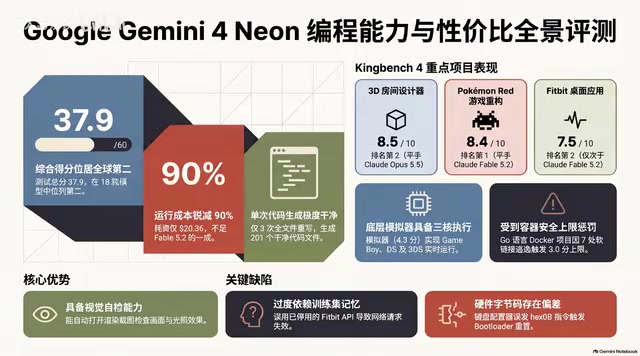
Gemini 4 Neon review: 1M-token context, four thinking levels, 201 files in one KingBench4 pass at one-tenth Fable 5.2's cost—but it hallucinates fake data, leaves 7 symlink escapes, and bricks keyboards.

Google Gemini 4 Neon Hands-On: 6 3D Works That Impress and Fail
Hands-on with Google Gemini 4 Neon on a 3060 laptop: 6 3D works tested. Sunshower Fishing Harbor and mechanical keyboard impress; soft-body physics and faces fall short.
Gemini 4 Neo Web Novel Writing Test: Faint AI Flavor, Textured Dialogue
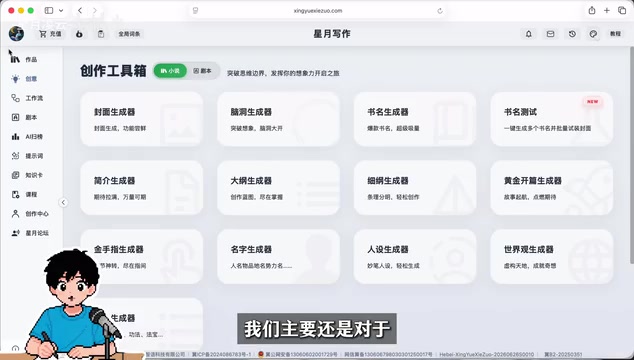
Bilibili creator's first-look review of Gemini 4 Neo for Chinese web novel writing: testing a Three Kingdoms transmigration opening with faint AI flavor, emotionally textured dialogue, and strong crisis building, plus comparison of 4A/4H/4C models and full workflow demos.