The Story Behind Jensen Huang's 'Resurrection': How Trump Handpicked Nvidia's CEO
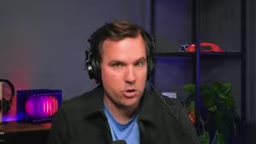
Nvidia's board reversed course unanimously under Trump's intervention, reinstating Jensen Huang and exposing the AI industry's deep dependence on one person and its governance fragility.
Nvidia's board had explicitly refused Huang's return on the earnings call and launched a CEO search, yet flipped unanimously on Monday after Trump personally lobbied over the weekend. Analysts say Huang's supply ties with TSMC and his network of negotiations involving $500 billion in financing are irreplaceable—key to the board's compromise. Meanwhile, The New York Times reported contacts between a woman linked to Huang and Chinese intelligence, and the show questioned whether a genuine security review could be completed in three days. The affair is compared to Sam Altman's power expansion after returning to OpenAI; Huang may now reshape the company as "unshakable." The show argues this didn't reset the system but made the AI industry's dependence on one person deeper and more fragile.
A 72-Hour Boardroom Reversal
Just last week, Nvidia's board was adamant on the earnings call that they "would not bring Jensen Huang back," and had even engaged an external search firm to find a successor. Yet at exactly nine o'clock Monday morning, the same directors voted unanimously to announce Huang's return as CEO. The Vergecast hosts David Pierce and reporter Hayden Field devoted an episode to unpacking this "Game of Thrones-style" power reversal—and why it leaves the entire AI industry more fragile than before.
According to Hayden Field's reporting, the key turning point came over the weekend. Trump reportedly told Vice President J.D. Vance that he wanted to personally help Huang regain his position, and asked Vance to communicate with the board to convey a government assurance that "Jensen Huang does not pose a national security threat." Vance spent the weekend mediating; when the board convened Sunday evening, Trump himself was said to have joined by phone to lobby personally on Huang's behalf.
The board's stance flipped completely. They had previously refused to answer any questions about Huang's return on the earnings call and had launched a formal CEO search. Within just a few days, going from "absolutely impossible" to "unanimously welcome back" formed the most absurd part of the whole affair. The show's verdict was blunt: this wasn't corporate governance logic at work—it was political power directly intervening in the personnel decisions of a private company.
Why "Replacing Jensen Huang" Is So Hard
The show raised a sharp question: in a healthy company, the CEO should be replaceable. But Nvidia is no ordinary company—it is the foundation of the entire AI industry, and Huang himself is deeply embedded at its key nodes.
Citing analysts, Hayden Field noted that Huang's supply relationship with TSMC and his financing negotiations with major financial institutions around AI infrastructure buildout (involving sums as high as $500 billion) were largely hammered out through private dinners, phone calls, and in-person flights. These relationships cannot simply be handed over to a CFO or an externally parachuted CEO. Analysts at Yorkville wrote in a report that the board reversed course because "an Nvidia without its founder, combined with a CEO search extending into next year," represented a greater risk to shareholders.
This exposes the core of the problem: when one person's personal network becomes a company's core asset, the company has already lost its normal governance flexibility.
Governance Differences Between Founder-CEOs and Professional Managers
Modern corporate governance theory typically assumes the CEO is replaceable, a premise built on the idea that "company assets and personal relationships can be separated." When a professional manager hands over, client contracts, supply chain agreements, and bank credit lines all persist under the corporate legal entity, and the successor need only take over the organizational structure. But founder-CEOs often build key transactions on personal credibility and private relationships—especially in areas requiring long-term trust and high customization, such as advanced-node foundry capacity allocation and large-scale project financing. Such relationships are difficult to fully transfer through contract terms, and successors need years to rebuild them. Therefore, when the founder is also the core relationship node, the board's power of removal is substantially weakened in practice, creating a "too big to replace" governance dilemma.
National Security Clouds and the "Three-Day Clearance"
The most controversial part of the show concerned national security concerns arising from Huang's personal relationships. According to a Sunday report by The New York Times, a woman associated with Huang was confirmed to have maintained contact with China's top intelligence agency for nearly a year, with a timeline overlapping her relationship with Huang; her business partner (possibly also her spouse) was likewise alleged to have cooperated with the intelligence agency.
Hayden Field was unequivocal: whatever assurances the Trump administration gave, a genuine security review completed within three days is realistically impossible. Someone in the intelligence community clearly knows the facts and is striving to push information to the public, while the government and Nvidia are trying to suppress it. This tension will only intensify as more insiders speak out.
The show also pointed to a revealing market backdrop: Anthropic's IPO triggered fears of an AI bubble bursting, and the stock market suffered one of its worst trading days in a long time. The temporal overlap between this news and the board reversal made the "save the market first, deal with the rest later" interpretation hard to rule out.
The Timescale of U.S. Security Review Mechanisms
U.S. background checks involving national security are typically completed by multiple agencies working together, including FBI background investigations, intelligence community assessments of foreign contacts, and export control compliance reviews for specific industries. Take security clearance as an example: the standard process from application to adjudication often takes months, and additional counterintelligence evaluations are triggered when foreign government or intelligence agency ties are involved. Even in emergencies, interagency coordination, intelligence verification, and legal opinions are difficult to compress into a few days. The show's skepticism about "completing a genuine security review in three days" therefore has institutional grounding: a review with substantive effect requires time to gather evidence, cross-verify it, and produce written conclusions—and verbal assurances from politicians cannot replace that process.
The "Unshakable" CEO and a More Fragile Industry
David Pierce's assessment is worth pondering: this affair didn't reset everything to the starting point—it made an already unstable system even more unstable. Over the past week, a CEO accused of lying to the board and of ties to foreign intelligence operatives showed up for work as usual on Monday morning—conduct that at any company would be enough to warrant dismissal or even legal consequences.
This sets a dangerous precedent. The show used Sam Altman's behavior after his 2023 return as a reference: after returning, Altman cleared out the board, ushered a group of old guard out the door, and then reshaped the company as he saw fit—because he now knew he "couldn't be killed." Huang is now in the same position. After speaking with Huang on Sunday evening, Trump told CNBC that Huang promised to "work harder than ever before," but another possibility is equally real: he will operate with a "what are you going to do about it" mindset.
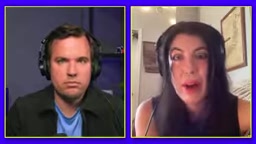
The show also noted a detail: in the same announcement of Huang's return, Nvidia said the board had newly established a national security and export control committee composed of independent directors, and created a chief compliance officer position. Hayden Field's comment was rather cutting—this looked more like the board finding a face-saving way out of its own flip-flop than genuinely rebuilding governance credibility.
The New Survival Rules for Tech Giants
The show closed on a larger picture. With Democrats potentially controlling Congress, the AI industry facing unprecedented regulatory scrutiny and pressure for executives to testify under oath, and Trump still in office and still needing to demonstrate power, the rational choice for tech leaders has become clear: keep playing Trump's game for at least the next two years.
Hayden Field's assessment is that overtures to Trump will only become more blatant than before. Musk and Larry Ellison have been on this path for a decade with considerable returns; Huang is now jokingly dubbed by the show as the third member of the "Trump's special boys" club. And how someone like Dario Amodei, who was briefly cast as an adversary, adjusts his posture over the next six months will be worth watching.
For Huang, cost and exemption arrived together. He kept his job, but he now owes Trump a favor—per the show's phrasing, he is now "owned by Trump." And the entire AI industry's dependence on a single individual is deeper, not shallower, than before the affair.
The Political and Regulatory Environment Facing the Tech Industry
In recent years, U.S. tech giants have faced two lines of pressure simultaneously: first, rising legislative interest from both parties in Congress on AI safety, data privacy, and platform competition, with executive testimony at hearings becoming routine; second, expanding discretion for the executive branch in export controls, antitrust enforcement, and government procurement, binding corporate fortunes tightly to political relationships. In this environment, a rational strategy for business leaders is often not to take sides with a particular party, but to maintain open communication channels with those in power to avoid sudden policy risks. This also explains why tech leaders tend to publicly court controversial political figures rather than keep their distance—silence or confrontation can be read as hostility and invite regulatory retaliation.
Related articles
Running Local AI Agents on Mac: A Full Breakdown of the MLX Four-Layer Stack
A breakdown of Apple engineer Joanna's local Mac AI agent solution: the MLX four-layer stack, a three-step setup, and how the neural network accelerator, continuous batching, and distributed inference solve local agent performance bottlenecks.
52KB Engine Runs 2B LLM in a Browser Tab
52KB Engine Runs 2B LLM in a Browser Tab
A 52KB WebAssembly engine on Hacker News claims to run Qwen3.5-2B in a browser tab. We analyze the engine-model separation, browser inference pros and cons, and the on-device AI runtime race.
MIT PhD Takes You from Scratch to Build DeepSeek: A 25-Hour Hardcore Course
MIT PhD Raj Dandekar launches a 25+ hour Bilibili course building DeepSeek from scratch—MoE, MLA, GRPO, hand-written code plus math derivations, aiming to reproduce mini R1.