The Three Eras of AI Agents: The Capability Leap from Tool Calling to Autonomous Orchestration

The three eras of AI Agents: from reliable tool calling to autonomous, self-orchestrating capability leaps.
AI Agents have evolved through three distinct eras: reliable tool calling (Sonnet 3.5), coherent long-task execution without losing context (Opus 4.5), and autonomous orchestration with metacognition. This framework helps developers match model capabilities to task complexity and understand the trajectory toward multi-Agent collaboration.
The Evolution of AI Agents Is Carving Out Distinct Eras
Looking back at the capability leaps of AI coding models over the past two years, you'll notice their progress isn't a smooth, linear climb—it's more like a series of nameable "eras." Each leap isn't simply about being "a little smarter"; it unlocks an entire class of work patterns that were previously impossible.
From Sonnet 3.5 to Opus 4.5, and now to the latest generation of models equipped with orchestration capabilities, AI Agents have completed a critical transition from "able to use tools" to "able to manage themselves." Understanding the dividing lines between these three eras is crucial for developers deciding how to choose and use models today.
The First Era: Tool Calling Becomes Production-Ready
Tool Calling didn't first appear with Sonnet 3.5—plenty of earlier models claimed to support it. But what truly moved this capability from "demo-grade" to "production-grade" was Sonnet 3.5.
The technical mechanism of tool calling is that a large language model invokes external functions or services through structured interfaces. At its core, it relies on function schema descriptions: during inference, the model decides whether to trigger a call and what parameters to pass, then the host program executes the call and feeds the result back into the context. OpenAI standardized this as Function Calling in 2023, and major model providers soon followed. Notably, the standardization of Function Calling was itself an important engineering milestone—before it, developers had to use prompt engineering to coax models into outputting text in a specific format, then parse it themselves, which was extremely unstable. Standardized interfaces transformed tool calling from a "trick maneuver" into an "engineerable system capability." The deeper significance of this shift is that tool-calling behavior can now be unit-tested, monitored and alerted on, and version-controlled—truly bringing it into the quality-assurance framework of software engineering.
Reliability is the key threshold precisely because the model must get several things right simultaneously: correctly identifying when to make a call, generating valid JSON parameter structures, and gracefully retrying on failure rather than falling into infinite loops—instability in any one of these can lead to cascading failure. A "cascading failure" means that a single tool-call error pollutes the subsequent context, causing the model to keep reasoning on top of a flawed intermediate state and ultimately derailing the entire task, rather than merely stopping at the erroneous step. This error-propagation mechanism closely resembles the "avalanche effect" in distributed systems—a local fault is amplified through chains of state dependency until it causes global failure. For this reason, the reliability threshold for tool calling is far more demanding than intuition suggests: even with a per-step success rate as high as 95%, in a task requiring 20 consecutive tool calls, the probability of completing the entire sequence without any error is only about 36%.
The key breakthrough isn't "whether it can make calls," but "whether it can make calls stably and reliably." This was the first model capable of executing tool calls consistently and reliably enough that you could actually use it for everyday coding work, not just running demos.
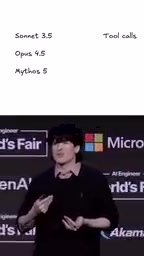
This difference may seem subtle, but it determines success or failure. A tool-calling system that succeeds 90% of the time and errors 10% of the time is nearly unusable in practice—you'd spend more effort checking and correcting mistakes, which only adds to your burden. Only when reliability crosses a certain threshold does AI go from a "toy" to a genuine "tool." Sonnet 3.5 hit exactly this tipping point, ushering in the first era in which AI Agents truly became practical.
The Second Era: Sustained Long-Task Execution Without Losing Context
If tool calling addresses "whether a single action is reliable," then the second era addresses "whether the model wanders off during long-running tasks."
Opus 4.5 represents this leap. It can handle longer-running tasks without losing track of the current work state during execution.

The significance of this for real-world development is severely underrated. To appreciate its difficulty, you need to understand the "context window" mechanism of large language models—it determines how much historical information the model can "see" in a single inference pass, usually measured in tokens. Early models had small context windows (4K–8K tokens); in long tasks, earlier instructions and intermediate states would get "squeezed out" of the window, causing the model to forget its goal. Even when context windows expanded to 100K+, models faced the "Lost in the Middle" problem documented in research—Stanford University's 2023 paper of the same name found that models pay significantly less attention to information positioned in the middle of the window than to the beginning and end, exhibiting a pronounced U-shaped attention distribution curve. The root cause of this phenomenon lies in the computational characteristics of the attention mechanism in the Transformer architecture: positional encoding combined with the training data distribution causes the model to assign higher implicit weight to information at the "edges." From an engineering standpoint, this means simply piling on context length does not linearly improve long-task performance—developers once tried to work around it with prompt strategies like "place important info first + repeat important info at the end," essentially manually fighting against the model's attention distribution bias. Opus 4.5's advance is not merely an expansion of window capacity, but an improvement in the model's ability to maintain attention weights on key states across long sequences—the result of both training objectives and architectural tuning—so that developers no longer need to rely on such fragile prompt patches.
Real-world software engineering tasks often require dozens or even hundreds of steps: read a file, modify code, run tests, then adjust based on the results. Early models easily "forgot" their original goal amid such long chains, or drifted off into irrelevant directions midway.
Opus 4.5's core advance lies in context coherence—it can consistently "remember" what it's doing and what its goal is throughout a lengthy execution process. This elevated AI Agents from "help you write a function" to "help you complete an entire feature module," significantly enlarging the granularity of tasks they can undertake.
The Third Era: Autonomous Orchestration and Metacognition
The latest generation of models brought yet another qualitative change: the leap toward "orchestration" capabilities. This is perhaps the most imagination-stirring of the three eras.
Not Just Understanding Code, but Understanding Itself
What makes this generation of models special is that it not only understands your codebase, but also understands itself—the boundaries of its own capabilities.

Previous models acted passively according to instructions, but models with orchestration capabilities begin to possess a kind of "metacognition": they know the scope of their own abilities, know how to break down what kinds of tasks, and even know when to call on additional resources to help complete the work. Metacognition is a concept from cognitive science, proposed by psychologist John Flavell in the 1970s, originally referring to humans' "cognitive awareness of their own thought processes," including the perception of the limits of one's own knowledge and the active regulation of learning strategies. In educational psychology, metacognition is regarded as the core of higher-order learning ability—learners skilled in metacognition can monitor their level of understanding and adjust strategies in time, rather than blindly plowing ahead. Transferred to the context of AI models, it manifests as the model's ability to assess its own confidence, identify capability boundaries, and dynamically decide whether to seek external assistance accordingly. One concrete example: a model with metacognition will proactively express uncertainty when encountering a problem beyond the edge of its knowledge, and suggest calling a search tool or a more specialized sub-model, rather than generating an answer that sounds fluent but is actually wrong (i.e., a "hallucination")—this is the core hallmark of the shift from the "executor" role to the "planner" role, and one of the key mechanisms for reducing the hallucination risk of AI Agents. The emergence of this capability marks the point where models are no longer merely "tools that follow instructions," but begin to possess a degree of self-modeling ability.
Autonomous Decomposition, Spawning Subtasks, and Result Verification
Going further, this class of models can autonomously spawn additional model instances, breaking complex work into smaller subtasks so that each part can be completed more reliably, and then performing automatic verification afterward.

This architecture is known in engineering as the "Orchestrator-Subagent Pattern": the orchestrator model handles task planning and dispatch, spawning multiple sub-model instances to execute subtasks in parallel or in series, then aggregating the results for logical consistency checks. The technical prerequisites for this architecture to work include: the model supporting concurrent calls, having stable structured output to pass subtask context, and possessing enough reasoning ability to judge the quality of subtask results. From a system design perspective, this pattern is highly isomorphic to the "Divide and Conquer" philosophy in software engineering—decomposing a large task that cannot be reliably completed within a single context into multiple verifiable smaller tasks, then ensuring global consistency through an aggregation layer. Notably, the automatic verification step is not a simple output comparison; it requires the orchestrator model to possess cross-subtask semantic reasoning ability: it must judge whether the output of subtask A is logically consistent with the output of subtask B, and when it discovers contradictions, decide whether to re-execute a subtask or escalate to human review—this in itself is a meta-task requiring higher-order reasoning ability. Standardized protocols such as the MCP (Model Context Protocol) introduced by Anthropic exist precisely to make such inter-Agent communication interoperable—it defines a unified specification for tool descriptions, call formats, and result passing, enabling different model instances and different services to collaborate with low friction, without needing to build a dedicated adaptation layer for each integration scenario.
The key point is that all of this requires almost no tedious manual instruction—give it a goal, and the model will directly begin planning and executing. This means the developer's role is shifting from "hands-on direction" to "setting high-level goals," while the model itself handles the complete loop of planning, division of labor, execution, and self-checking.
The Underlying Logic of the Three Eras
Stringing these three eras together, a clear throughline of capability advancement emerges:
- The Tool Calling Era: solving "the reliability of a single action"—AI Agents learn to use external tools stably.
- The Long-Task Era: solving "the coherence of multi-step tasks"—AI learns not to lose its goal amid lengthy processes.
- The Orchestration Era: solving "the self-organization of complex systems"—AI learns to manage itself, divide up work, and self-verify.
The essence of each leap is a rise in the upper bound of task complexity that an AI Agent can reliably undertake. From a single action, to continuous processes, to work systems capable of self-organization, AI Agents are steadily evolving along the axis of "autonomy."
Practical Takeaways for Developers
The practical value of understanding this "era" framework lies in helping you precisely match model capabilities to task types—avoiding using an underpowered model for a high-complexity task, and avoiding over-consuming resources for simple needs.
- If your need is simply to reliably call a particular API or tool, a tool-calling-level model is already sufficient;
- If you need to complete a continuous development task spanning multiple steps, you need a model capable of long-task tracking;
- Only when you want to hand a vague, high-level goal directly to the AI and let it plan, divide up work, execute, and verify on its own do you truly need the latest generation of models with orchestration capabilities.
You may not have noticed, but this framework is essentially an observational analysis, and the division of model generations carries a degree of subjective judgment. Still, it offers a highly valuable perspective: measuring the progress of an AI Agent should not be about how much "smarter" it is, but about how complex a task it can reliably complete autonomously.
Looking ahead along this throughline, the next era may well be the normalization of multi-Agent collaboration. Multi-Agent Systems (MAS) are a classic research direction in distributed artificial intelligence, dating back to distributed problem-solving research in the 1980s, and are now being reactivated and given new engineering forms in the era of large language models. In traditional MAS research, inter-Agent communication relied on predefined formal protocols (such as FIPA ACL), with extremely high integration costs that limited its ability to break out of academia. Through standardized inter-Agent communication protocols such as MCP and A2A (Agent-to-Agent), different model instances can discover one another, negotiate task boundaries, and pass intermediate states. Compared with traditional MAS, LLM-based multi-Agent systems use natural language as a universal interface, greatly lowering integration costs; but how to prevent errors from cascading between Agents, how to ensure the global goal isn't derailed by local optimization, and how to maintain a consistent world state in distributed execution remain core challenges that current engineering practice must continue to tackle. AI will not only be able to manage itself, but will also collaborate with other AI systems to jointly accomplish complex engineering goals that exceed the capability boundary of any single model.
Key Takeaways
Related articles

FlipPrice: An Open-Source Pricing Copilot for Vintage Resellers
FlipPrice is an open-source pricing copilot for vintage resellers: snap a photo, fill a few fields, and get a listing draft, fair price range, and net take-home after fees — with local open-source inference and zero per-item cost.

Alguard: Building a Dual-Layer Trust Defense for AI Agent Shopping
Alguard, an Amazon Developer Hackathon project, designs a dual-layer trust architecture for Alexa+ agent shopping. Through physical isolation between an MCP server and a human approval channel, it replaces prompt defenses with structural constraints to block unauthorized purchases caused by prompt injection.

Food Poisoning: Causes, Symptoms, Treatment, and Prevention Explained
Food poisoning is caused by bacteria, viruses, parasites, or toxins contaminating food, with common symptoms including vomiting, diarrhea, and dehydration. This article explains the causes, symptoms, treatment, and prevention of food poisoning to help you safeguard food safety.