The Trust Gap Between Progressives and Black Voters: A Deep Dive into One Political Interview

Progressives consistently fail to win Black voter trust due to poor communication and a lack of genuine relationships.
This article examines a controversy sparked when a progressive congressional candidate called older Black political leaders pillars of the establishment, a remark perceived as singling out Black leadership rather than critiquing all forever-war advocates. The incident illuminates a systemic divide between progressives and Black voters — one that claimed Bernie Sanders and Abdul El-Sayed as well — exposing the fundamental failure of persuading voters through policy "rationality." The core problem: objective policy benefits don't automatically become political trust, which can only be built through long-term, equal, and genuine relationships on the ground.
The Trust Gap Between Progressives and Black Voters: A Deep Dive into One Political Interview
A political interview on YouTube centers on an issue that has long existed in American politics but is rarely discussed head-on: why do progressives, who claim to represent the interests of working people, so often run into a wall of distrust in Black communities? The interview revolves around a controversial statement made by a congressional candidate early in his campaign, pulling into focus the persistent gap between policy intentions and voter trust.
A Controversy Sparked by One Statement
The interview's entry point is a problem the candidate encountered on the campaign trail. The Congressional Black Caucus (CBC) initially objected to his candidacy because of a previous remark. He had said that older Black political leaders had "been pillars of establishment, capitalist, imperialist American power" and had "blunted the edge of the white left."
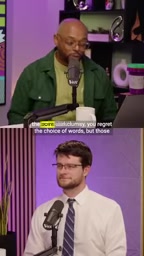
The candidate later apologized, calling his words "clumsy" and saying he "regretted the choice of words." But the interviewer shrewdly pointed out that those words were actually quite precise. When pressed on what he really meant, the candidate's response was revealing — he admitted that even before he said it, he knew "this might not be something I should say" and that he "probably shouldn't go in that direction."

The interviewer cut right to it: "You hear yourself saying that, and you say it anyway." This contradiction between self-awareness and impulsive expression perfectly mirrors the broader predicament progressives face on racial issues — clear convictions, poor communication.
Anti-War Context and the Feeling of Being "Singled Out"
The candidate explained that his remarks were made in conversation with a Black organizer working to build an anti-war movement within African American communities — a movement aimed at reassessing U.S. foreign policy and opposing Washington's "forever war" agenda.
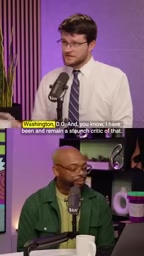
He emphasized that he has been and remains a staunch critic of the forever war agenda, and added a key qualifier: "I criticize everyone who has pushed the forever war," while acknowledging that "Republicans have a larger share of that than Democrats."
The interviewer then identified the crux of the problem: criticizing the political establishment in general may be one thing, but the backlash was driven largely by the feeling that "black leadership was being singled out."
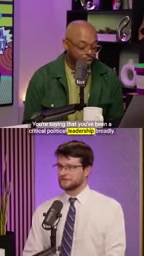
This is a subtle but important political distinction. The same criticism, directed at a generic "establishment" versus specifically at "Black political leaders," lands very differently with audiences. Progressives often believe they are making legitimate structural critiques, while underestimating the historical sensitivity and identity defensiveness those critiques can trigger within specific communities.
The Congressional Black Caucus (CBC), founded in 1971, is the congressional caucus representing African American interests in the U.S. Congress. It currently has roughly 50 members, all Democrats. The CBC has long served as the central platform for Black political elites and wields significant endorsement and veto power within the Democratic Party. However, the CBC's political stance has historically leaned toward the mainstream establishment wing of the party, and it has supported U.S. military actions on multiple occasions, creating longstanding tension with the progressive left. Criticizing CBC members externally is easily read within Black communities as a denial of Black political representation itself — because the CBC represents an institutional foothold that Black Americans fought hard to secure within the federal power structure over decades. That symbolic weight means any criticism of CBC leadership carries emotional stakes far exceeding the policy disagreements involved.
The Progressive Struggle with Black Voters Is Not an Isolated Case
The interview then broadened to a wider perspective. The interviewer pointed to a series of precedents: Bernie Sanders' presidential campaigns hit the same wall in Black communities; Abdul El-Sayed's run in Michigan ran into the same barrier.
This suggests the divide between progressives and Black voters is "not without basis." There's a genuinely puzzling paradox here: if progressive policies — as many supporters argue — genuinely benefit Black communities, why has trust never taken hold?
This question strikes at something fundamental about politics: a policy's objective benefits do not automatically translate into voter trust and support. Data, platforms, and analytical frameworks cannot substitute for real relationships.
Sanders' 2016 and 2020 presidential campaigns are the most textbook examples of this phenomenon. Sanders performed extremely well among white working-class voters and young voters, but consistently trailed far behind Hillary Clinton (2016) and Joe Biden (2020) in primary states with large Black electorates, such as South Carolina. Analysts noted that Sanders' campaign narrative focused heavily on class inequality and economic structure, while relatively downplaying the distinct dimension of racial justice — he tended to frame racial issues as an extension of class issues, whereas many Black voters felt this framework obscured the historical specificity of racial oppression. Abdul El-Sayed's 2018 run for Michigan governor faced similar difficulties: despite being a person of color and a Muslim himself, with policy positions widely seen as beneficial to minority communities, his mobilization in predominantly Black cities like Detroit fell far short of expectations. These cases collectively point to a systemic mismatch between the progressive structural critique framework and the political-cultural logic of Black communities — not simply individual candidates' communication failures.
Trust Comes from Relationships, Not Policy Superiority
Faced with this pointed question, the candidate offered an answer that was simple but profound: "I think trust is built through relationships, through actually showing up and doing the work."
This line can be read as the thematic heart of the entire interview. Progressives have long tended to persuade voters through the "rational superiority" of their policies — our plan is better for you, so you should support us. But Black communities' political experience has taught them that throughout history, countless well-intentioned policies ultimately failed to deliver, or failed to genuinely respect the community's autonomy and voice.
The trust gap is, at its core, a relationship gap. If progressives truly want to connect with Black communities, they won't get there with a more polished platform. They need long-term, substantive, equal-footing engagement on the ground — showing up in communities, listening rather than lecturing, building together rather than speaking on behalf of others.
Conclusion: Lessons in Political Communication
Brief as it is, this interview distills a central tension in American progressive politics: good intentions cannot compensate for poor communication, and policy goodwill cannot substitute for building real relationships.
The candidate's self-deprecating admission that he failed to stop himself when he should have, paired with his closing observation that "trust comes from relationships," together sketch out a clear lesson — in political terrain where race and identity are highly charged, genuine humility and sustained presence go far further than sharp pronouncements in winning hearts and minds. For any political force trying to bridge community divides, that is a lesson worth sitting with.
Related articles

JobRunner MCP Server: AI Agents Can Now Fix Failed Java Jobs
JobRunner launches an open-source MCP server enabling AI agents to view cluster status, diagnose failures, and recover Java jobs—incident response from any cloud coding environment or existing agent.

MLAI Digital Launches 9 Security Agents: MCP Server Safeguards the Full Lifecycle of Agentic AI
MLAI Digital launches Security MCP Server with nine built-in specialized security agents covering vulnerability discovery, attack simulation, prompt injection detection, API and infrastructure assessment, and accelerated remediation—embedding security validation across the full Agentic AI lifecycle from development to production.

Running Isaac Lab on H100 GPUs: Exploring Better Approaches
Exploring optimization methods for running Isaac Lab on NVIDIA H100 GPUs, including MIG configuration, mixed precision, TensorRT acceleration, and community experience to improve robotics simulation and reinforcement learning efficiency.