The Truth About Data Center Water Usage: Real Data from Abilene, a Small West Texas City

Data center water usage is far below expectations, but total volume control under AI growth remains a challenge.
Using Abilene, Texas as a case study, a data center's annual water consumption is less than what local residents use in a single day, thanks to closed-loop cooling and other technologies that dramatically improve water efficiency. Data centers bring employment, tax revenue, and infrastructure upgrades to declining small towns. However, as AI computing demand grows explosively, cumulative effects cannot be ignored — 'total volume control' is more fundamental than 'efficiency improvement,' and communities must establish long-term environmental monitoring while embracing these opportunities.
As the AI wave sweeps across the globe, data center construction is expanding at an unprecedented pace. However, the accompanying water consumption, power demands, and environmental impacts have become focal points of public concern. A discussion from Abilene, a small city in West Texas, provides us with a micro-level sample for examining the real impact of data centers.
Data Center Water Usage: Actual Numbers Far Below Expectations
The cooling systems of data centers require significant amounts of water — one of the public's top concerns. Especially in the water-scarce American West, every new data center triggers worry among local residents.
Local officials in Abilene provided a specific data point: A data center's entire annual water consumption is less than what Abilene's residents and wholesale customers use in a single day. This comparison is quite intuitive — if a city's normal daily water usage far exceeds what a data center needs for an entire year, then from a total volume perspective, the data center's pressure on local water resources is indeed limited.

The key lies in advances in cooling technology. Modern data centers widely adopt Closed-Loop Cooling Systems, which dramatically reduce water waste by recirculating cooling water. Compared to traditional open evaporative cooling, closed-loop systems circulate the cooling medium through sealed piping, transferring heat to external dissipation media via heat exchangers — the cooling water itself doesn't directly evaporate. This is similar in principle to an automobile engine's water cooling system. More advanced variants include Direct Liquid Cooling (DLC) and Immersion Cooling, the latter of which submerges server chips directly in insulating coolant for extremely high heat exchange efficiency with nearly zero water consumption. Traditional evaporative cooling towers consume roughly millions of liters of water per year for every 1MW of heat dissipated, while the adoption of closed-loop technology has brought data centers' Water Usage Effectiveness (WUE) metric down from a previous 2.0L/kWh to below 0.2L/kWh — making it a key technological pathway toward "greener" data centers.

That said, caution is warranted. A single data center's water usage may be modest, but when multiple large data centers are concentrated in one area, the cumulative effect cannot be ignored. As AI model training and inference demands grow exponentially, the scale and density of future data centers will only increase further, requiring forward-looking water resource planning.
The Survival Dilemma and Economic Revitalization of Small West Texas Towns
A deeper topic in this discussion is: what do data centers mean for small towns?
Many small towns in West Texas are facing severe population loss and economic decline. Taylor County, where Abilene is located, historically relied on cotton agriculture and the oil industry. As agricultural mechanization advanced and the energy sector fluctuated, massive numbers of jobs disappeared. According to U.S. Census Bureau data, between 2010 and 2020, multiple counties in West Texas experienced negative population growth, with young workers continuously migrating to major cities like Dallas and Austin. This phenomenon is widespread across America's Rust Belt and agricultural heartland, referred to by economists as "Geographic Inequality." Young people leaving, hollowed-out industries, aging infrastructure — this is the shared predicament of many remote areas. Against this backdrop, the arrival of data centers is viewed as a rare "revitalization opportunity" that happens to align with these regions' core advantages: cheap land, low population density, and the pricing flexibility afforded by Texas's independent power grid (ERCOT).

The direct benefits data centers can bring to local communities include:
- Full-time jobs: While data center operations staff are limited in number, they cover a range of positions from technical engineers to security and maintenance
- Infrastructure upgrades: Data centers demand high standards for power, networking, roads, and other infrastructure — investments that often benefit the entire community
- Tax revenue: Large data center projects typically generate significant property tax and sales tax revenue for local governments
- Supply chain stimulus: Both the construction and operational phases drive local dining, hospitality, building materials, and other related industries

Data Center Site Selection: A Multi-Dimensional Balance of Business, Community, and Policy
Data center site selection and construction is fundamentally an equation requiring multi-stakeholder balance.
From a business perspective, West Texas offers cheap land, abundant solar and wind energy resources, and a relatively relaxed regulatory environment — making it an ideal location for data centers. From a community perspective, the allure of economic revitalization is strong, but residents also have the right to understand the true environmental costs. From a policy perspective, local governments must find a balance between attracting investment and protecting resources.
Interestingly, global attention on the environmental impact of data centers is intensifying. Tech giants like Microsoft and Google have published their respective water usage data and made commitments to achieve "Water Positive" status by 2030 — meaning they will return more water to nature than they consume. Specific approaches include reducing usage in high water-stress areas, funding watershed restoration projects, and developing zero-water cooling technologies. However, these commitments face skepticism from environmental organizations: there is no unified standard for measuring "water replenishment," and replenishment projects are often geographically mismatched with actual consumption sites (for example, planting trees in water-abundant regions while consuming heavily in arid areas). This controversy reflects a deep structural tension between AI infrastructure expansion and environmental sustainability: the growth rate of computing demand far outpaces advances in water-saving technology, making "total volume control" a more fundamental challenge than "efficiency improvement." The industry is moving toward greater transparency and sustainability, but this requires continuous technological innovation paired with rigorous regulatory oversight.
A Rational View of AI Infrastructure's Resource Costs
The Abilene case reminds us that when discussing the environmental impact of data centers, we need to rely on specific data rather than vague fears. Technological advances like closed-loop cooling are significantly reducing resource consumption per unit of computing power, but the explosive growth of AI computing demand means total volume control remains a serious challenge.
For small towns like Abilene, data centers may indeed serve as an economic shot in the arm. But communities should establish long-term environmental monitoring mechanisms while embracing the opportunity, ensuring development remains sustainable. After all, in an era where water resources grow increasingly precious, any claim that consumption "isn't much" requires ongoing verification.
Key Takeaways
- Abilene's data center uses less water annually than local residents consume in a single day; closed-loop cooling systems (WUE as low as 0.2L/kWh) dramatically improve water efficiency
- Data centers bring employment, infrastructure upgrades, and tax revenue to declining West Texas towns, aligning with local advantages of cheap land and ERCOT grid flexibility
- Individual data center water consumption is limited, but cumulative effects amid explosive AI computing demand growth remain a concern — "total volume control" is more fundamental than "efficiency improvement"
- Tech giants' "Water Positive" pledges face controversy due to inconsistent measurement standards; communities should establish long-term environmental monitoring while embracing data center economic benefits to ensure sustainable development
Related articles
Meta Muse Hits 900K Downloads in Six D…
Meta Muse Hits 900K Downloads in Six Days: The AI Agent Era Has Officially Arrived
Meta's AI agent Muse hit 902K downloads in 6 days, topping US App Store and Google Play charts above ChatGPT and Claude. A deep dive into Muse's capabilities and the AI Agent race.
 Industry Insights
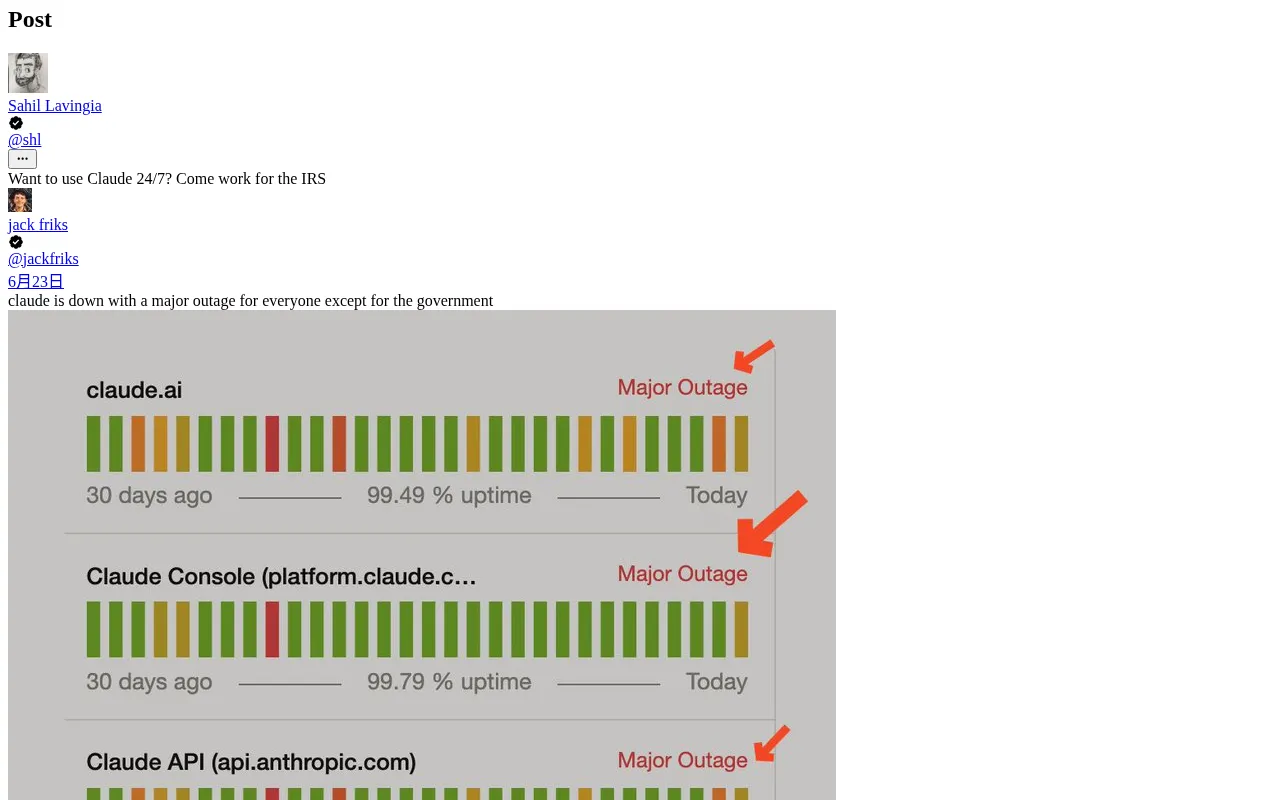
IRS Fully Embraces Claude AI, Accelerating Federal Government's AI Adoption
The IRS is recruiting staff with 24/7 Claude AI access, marking Anthropic's breakthrough into the federal government. Explore the strategic implications and tax use cases.
 Industry Insights
The IRS Mobile App Debate: A Trust Crisis in Government Digital Transformation
The IRS's proposed mobile app has sparked heated debate. This article analyzes the core arguments, exploring data security, privacy, and the trust crisis in government digital transformation.