The Truth About "GPT-5.6": Debunking Fake Rumors and Third-Party Top-Up Scams

"GPT-5.6" is a fabricated rumor used to lure users into risky third-party top-up scams.
The viral claim of a "ChatGPT 5.6 release" is fake—OpenAI never made such a model. This article debunks the rumor by explaining AI model naming conventions, exposes the serious account-security and payment risks of third-party top-up channels, and teaches you how to identify AI misinformation and safely subscribe via official channels.
The Red Flags Behind a "Major Release"
Recently, certain social media platforms have been circulating a rumor about the "official release of ChatGPT 5.6," claiming that OpenAI launched "the world's most powerful AI model" under the codename "sol luna terra," accompanied by numerous "GPT Plus top-up tutorials." As a content creator who has long followed the AI field, I feel it's necessary to calmly examine this kind of information—it not only contains a great deal of content that contradicts the facts, but also conceals genuine account security risks.
Let's clarify a basic fact first: OpenAI has never released a model called "GPT-5.6," and the so-called "sol luna terra" codename has no official source to back it up. Understanding this isn't difficult—the model naming conventions of large AI labs reflect their research roadmaps and product philosophies.
The naming systems of major AI labs are not arbitrary; they are visual expressions of the evolution of research paradigms. Behind OpenAI's version number progression lie deep architectural transformations: GPT-1 (2018) first validated the feasibility of large-scale unsupervised pretraining, with just 117 million parameters; GPT-2 (2019) expanded parameters to 1.5 billion and once sparked an ethical debate over "whether it should be publicly released" due to its high-quality generation; GPT-3 (2020) demonstrated the effectiveness of the Scaling Law with 175 billion parameters—that is, model capability improves in a predictable power-law fashion as parameters, data, and compute increase; GPT-4 introduced multimodal capabilities and stronger reasoning alignment. Behind every major version number is an entirely new research paradigm, which is fundamentally conceptually different from the incremental iteration logic of "major.minor.patch" in traditional Semantic Versioning.
It's worth adding that the Transformer architecture underlying the GPT series was proposed by the Google Brain team in the 2017 paper "Attention Is All You Need." Its core innovation is the "Self-Attention" mechanism, which completely replaced the previously dominant recurrent neural networks (RNN/LSTM), enabling models to process entire sequences in parallel within a single forward pass and dramatically improving training efficiency. The Scaling Law was systematically demonstrated by OpenAI researcher Jared Kaplan and others in 2020, with the core finding that: there exists a power-law relationship between a language model's cross-entropy loss and model parameter count, training data volume, and computation, with all three influencing performance independently and predictably. This discovery fundamentally changed the direction of AI research—rather than pursuing architectural innovation, it's better to continually stack resources on existing architectures, which also explains why each major version number implies such enormous resource investment.
OpenAI followed a major-version-incrementing logic from GPT-1 to GPT-4, where each major version number signifies a major transformation in model structure or training paradigm rather than a gradual iteration of features; the "o" in GPT-4o stands for "omni" (full modality), marking the direction of core capability expansion; the o1 and o3 series are independent reasoning model product lines. Anthropic uses the "capability-tier" naming of Claude 3 Haiku/Sonnet/Opus, where the three names correspond to speed-first, balanced, and performance-first inference cost tiers, allowing users to judge applicable scenarios from the name alone; Google DeepMind adopts the Gemini Ultra/Pro/Nano hierarchical system, which likewise directly conveys product positioning information. These naming conventions all have clear product logic, and would never feature a number like "5.6" implying gradual minor-version iteration—that's more like a patch version number for traditional software and is completely inconsistent with the R&D cadence of foundation models.
The Training Costs and Iteration Cadence of Large Language Models
The training cost of foundation models easily runs from tens of millions to hundreds of millions of dollars, and behind this figure lies massive investment in compute infrastructure. Take GPT-4 as an example: the industry estimates its training cost to be on the order of $100 million, requiring thousands of A100 or H100 GPUs to run continuously for months. It's worth mentioning that the H100 chip was launched by NVIDIA in 2022, using the Hopper architecture, offering roughly 3x the throughput of the previous-generation A100 for large-scale Transformer model training, with a per-card price that once reached as high as $40,000, highlighting the scarcity of top-tier compute resources. Investment of this magnitude determines that the iteration cadence of foundation models is fundamentally different from the "minor version updates" of traditional software—a 0.1 version increment in traditional software might require only a few engineers working several weeks, while each major iteration of a large model means redesigning the architecture, reprocessing trillions of tokens of training data, and re-completing the human feedback alignment (RLHF) process.
RLHF (Reinforcement Learning from Human Feedback) is the core component of current mainstream large language model alignment technology: first, human annotators rank the quality of multiple candidate responses generated by the model, then these preference data are used to train a "Reward Model," and finally, using this reward model as a signal, the language model is fine-tuned through reinforcement learning algorithms such as PPO (Proximal Policy Optimization) to make its outputs better match human expectations. PPO was proposed by OpenAI in 2017, and its core design limits the magnitude of each policy update through a "clipped objective function" to prevent catastrophic performance collapse of the model during the reinforcement learning phase—this is especially critical in language model fine-tuning, because overly large parameter updates could damage the language capabilities accumulated during pretraining. Notably, the academic community has in recent years begun exploring more streamlined alignment schemes: DPO (Direct Preference Optimization) was proposed in 2023, bypassing the training of an explicit reward model through mathematical derivation and directly optimizing language model parameters from preference data, significantly reducing the engineering complexity of the alignment process, and has been adopted in production environments by multiple labs. The entire RLHF process requires large amounts of high-quality annotated data and multiple rounds of iteration, which in itself constitutes a significant barrier of time and resources. It is precisely for this reason that the model release cadence of mainstream labs is typically measured in years, and a version number like "5.6" implying frequent minor-version iteration is completely disconnected from this industry reality. Each of OpenAI's official releases is accompanied by an official blog technical report, API documentation updates, and media announcements, and the real internal R&D codenames of models likewise would not be publicly circulated in a marketing form in social media content that guides users toward top-ups. Such information habitually uses "major release" and "limited-time upgrade" as hooks, with the real purpose of luring users into third-party top-up channels.


Why Third-Party Top-Ups Deserve High Vigilance
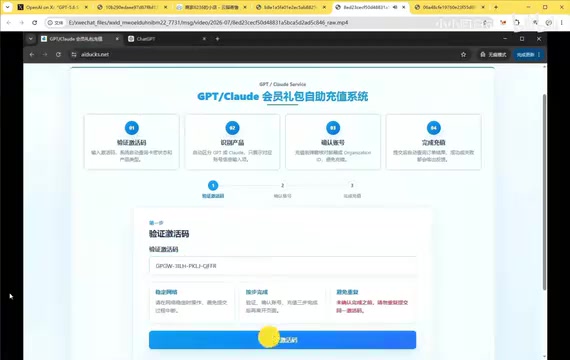
The original circulated content repeatedly mentions channels like "self-service top-up URLs," "card codes," and "Xianyu customer service," endorsing them with claims like "no need to hand over your account and password, super simple." But examined from a technical and security perspective, there are several problems here that cannot be ignored.
The Top-Up Process Itself Exposes Your Account
The so-called "top-up tutorial" requires users to log into their ChatGPT account in a browser, then copy and paste the "entire content" of the page into a third-party URL. To understand why this step is extremely dangerous, one needs to understand the basic principles of modern web authentication.
When a user logs into ChatGPT, the server generates a unique Session Token and stores it in the browser as a Cookie. For every subsequent request, the browser automatically carries this credential, and the server identifies the user's identity accordingly, without requiring the password to be re-entered. This mechanism itself has security design—Cookies are usually set with the HttpOnly flag, making them unreadable directly by JavaScript, to guard against cross-site scripting (XSS) attacks.
OAuth 2.0 and Session Token Mechanisms
The design essence of the OAuth 2.0 protocol lies in decoupling "who you are" (Authentication) from "what you can do" (Authorization). Under this framework, users do not need to expose their original password to third-party applications; instead, resource access is completed via restricted tokens issued by an authorization server. However, the security of this mechanism relies heavily on the confidentiality of tokens—the entire token system is split into two layers: the access_token is a short-term credential, typically valid for only hours to days, used to directly access protected resources; while the refresh_token is a long-term credential, valid for up to months, specifically used to silently obtain a new access_token after the access_token expires, thereby avoiding frequent re-logins by the user. The security assumption of this design is that the refresh_token is always securely stored on the client and never exposed externally.
Modern browsers protect these credentials through multiple layers of defense such as the SameSite Cookie attribute, the HttpOnly flag, and CSRF Tokens. However, the essence of Social Engineering attacks is "getting the victim to voluntarily perform a harmful operation," which bypasses all technical defenses—a user is tricked into actively opening the developer tools (F12) and copying the Authorization Header or Cookie value from a network request, which is equivalent to handing the key of the safe to a stranger with one's own hands. In the phishing field, this kind of attack is called a "Browser-in-the-Browser attack" (BitB), because the attack behavior itself simulates legitimate user operations—this is precisely where the core danger of such scam techniques lies.
The OAuth 2.0 protocol was officially standardized by the IETF in 2012 through RFC 6749, with the core design idea of "separating authorization from authentication." The Auth0 authentication system used by OpenAI is based on this protocol. Auth0 is an Identity-as-a-Service (IDaaS) platform adopted by numerous SaaS platforms, and its underlying implementation follows the OpenID Connect (OIDC) standard—an identity authentication layer built on top of OAuth 2.0 that passes user identity information to clients via ID Tokens. Attackers exploit precisely this mechanism: once they obtain the refresh_token by guiding the user to open developer tools or visit a specially crafted page, they can silently refresh the access_token in the background, achieving continuous control of the account—even if the user changes their password afterward, the existing token chain remains valid until it is actively revoked on the server side. In the security field, this is called "Session Hijacking," where the account is completely taken over without the user's knowledge.
"No need to hand over your account and password" is merely a rhetorical trick; the harm of session credentials is in no way less than that of the password itself.
Zero Guarantees for Payment and After-Sales
The circulated content mentions that the original Xianyu shop was "already banned" and "went through a wave of major purges," which precisely indicates that the compliance of these channels is seriously problematic. Third-party top-up services typically operate on several gray-area models:
First is "carpool accounts," where the quota of a single Team-plan account (supporting multiple seats) is split and sold to multiple users, violating OpenAI's prohibition on account sharing in its terms of service;
Second is "virtual credit card arbitrage," which uses BIN attacks (Bank Identification Number Attack) or stolen prepaid cards to complete subscriptions. A BIN (Bank Identification Number) is the first 6 to 8 digits of a credit card number, publicly encoding information such as the issuing bank, card type, and card network. A BIN attack refers to an attacker targeting a specific BIN range, then using the Luhn algorithm (a card-number format validation algorithm designed by IBM scientist Hans Peter Luhn in 1954) to batch-generate candidate card numbers matching the format, and then, combined with automated scripts, launching small-amount trial authorization requests to the payment interface to filter out real, valid card numbers. The Luhn algorithm is essentially a mod-10 checksum that validates format legitimacy by performing a weighted sum of each digit of the card number; its original purpose was to prevent accidental digit-entry errors, not to resist deliberate attacks—which makes it unable to effectively block BIN attacks that programmatically batch-generate candidate card numbers. The reason such attacks are rampant in subscription services is that some platforms' payment interfaces have insufficiently strict rate limits on high-frequency, small-amount authorization requests. Accounts activated with such stolen card numbers—once the original cardholder initiates a Chargeback with the bank—will be identified by the payment processor or OpenAI as fraudulent transactions and closed en masse; users not only lose their top-up fees but may also be permanently banned because the account is associated with fraudulent transactions;
Third is exploiting OpenAI's differential pricing in regions such as Turkey, Argentina, and India. Purchasing Power Parity (PPP) pricing is a common pricing strategy for multinational tech companies in global markets, with the core logic of adjusting product prices based on the actual purchasing power of residents in each country—ChatGPT Plus is officially priced at $20 per month in the US, but in some markets with weaker purchasing power the monthly fee, when converted to RMB, may be only 20 to 30 yuan. The economic metric of Purchasing Power Parity (PPP) was first systematically expounded by Swedish economist Gustav Cassel in 1918, used to measure the differences in the real purchasing power of different countries' currencies; the theoretical basis for tech companies applying it to pricing strategy is that uniform dollar pricing would cause massive user churn in low-income countries, while differential pricing helps optimize total global revenue. This pricing system is technically based on "Geo-fencing," limiting the applicable scope of discount regions through dual verification of IP address and the issuing region of the payment card—IP geolocation relies on databases such as MaxMind GeoIP2 to provide IP-to-location mapping, while the payment card BIN code provides the country of the issuing bank. Gray-market service providers batch-register low-price-region accounts and use virtual credit cards from the corresponding regions to bypass both layers of verification simultaneously, reselling to users at prices above cost but below official pricing, violating OpenAI's terms of service that prohibit account transfer and regional price arbitrage. When accounts are batch-banned for violations, the losses are entirely borne by the end user, while the service provider has long completed the fund transfer through untraceable payment channels.
Platforms blocking keywords and banning shops is precisely because such transactions involve fraud, illegal use of overseas services, and consumer rights protection issues. Once a user encounters account theft, abnormal charges, or service interruptions, there is almost no channel for recourse.
Official Channels Are the Only Reliable Choice
If you truly need to use ChatGPT's paid features, the correct approach is to complete your subscription through OpenAI's official channels.
Recognize the Official Entry Point
Paid plans such as ChatGPT Plus, Team, and Pro can all be subscribed directly on the OpenAI official website (chat.openai.com or openai.com), with payment completed entirely through official partner channels. The entire process requires no third-party "card codes" and no handing over of account information to anyone.
Beware of the Real Cost Behind "Low Prices"
The circulated content repeatedly emphasizes "just one to seventy-five yuan per month to renew," using low prices as an attraction. But abnormally low prices often mean higher risk: it may be a shared account, an account activated with a stolen credit card, or a "black card" service that can fail at any time. Such accounts may suddenly get downgraded at best, or leak your personal information along with it at worst.
How to Identify Fake Information in the AI Field
The essence of the "GPT-5.6" rumor is a classic "riding the hype + traffic monetization" scheme, and it's worth all AI users taking it as a warning.
Step One: Cross-Verify Information Sources
For any news of a "major model release," you should immediately go to the OpenAI official blog, official X (Twitter) account, or authoritative tech media to verify. A genuine model release necessarily comes with an official announcement, technical documentation, and detailed capability descriptions—not merely appearing in some short video that guides users toward top-ups.
Beware of Emotional Phrasing Like "Most Powerful" and "Finally Here"
Exaggerated wording like "the world's most powerful AI model" and "finally here" is a classic signal of content marketing. Genuine technical reporting explains model progress with specific Benchmark data and descriptions of capability boundaries. In the AI field, credible evaluation of model capabilities relies on standardized benchmark tests. Common evaluation sets include:
- MMLU (Massive Multitask Language Understanding): contains about 15,000 multiple-choice questions across 57 disciplines, used to evaluate a model's cross-domain knowledge reserve; the question bank is public and independently reproducible;
- HumanEval: designed by OpenAI, contains 164 Python programming problems, automatically verifying code correctness through unit tests, with objective and uniform scoring standards;
- MATH: contains 12,500 competition math problems, divided into five difficulty levels, focusing on reasoning rather than memorization;
- GPQA (Graduate-Level Google-Proof Q&A): specifically collects graduate-level scientific questions whose answers are hard to find directly even via Google search, aiming to test genuine reasoning ability.
The Limitations of Benchmarks and the Data Contamination Problem
Benchmarks function in the AI field similarly to peer review in academia—providing a reproducible standardized evaluation framework. However, "Goodhart's Law" also applies here: when a measure becomes a target, it ceases to be a good measure. As major labs incorporate benchmark scores into their competitive metrics, targeted optimization around specific test sets (colloquially known as "benchmark gaming") has become increasingly common.
These benchmarks face two systemic challenges. The first is "Saturation": when multiple mainstream models all score above 95% on a certain test set, that test set loses its discriminative power. MMLU has already shown such signs on top-tier models, which is why more difficult evaluation sets like GPQA continue to be developed. The second is "Data Contamination": test question banks publicly available on the internet may be incorporated into the training corpus during the model's pretraining phase, causing the model to essentially be "memorizing questions" rather than truly reasoning, so a high score does not necessarily reflect real capability.
Notably, the academic community has begun to attempt various approaches to address this: "Held-out Benchmarks" keep test questions completely confidential, opening them only to vetted research institutions; "Adversarial Evaluation" specifically designs questions that can expose a model's "Shortcut Learning" behavior, rendering memorization strategies ineffective; the LMSYS Chatbot Arena adopts "human blind-test voting" combined with the ELO rating system—the ELO system was designed by the Hungarian-American physicist Arpad Elo, calculating a player's relative strength by weighting for opponent strength, better reflecting real skill gaps than simple win rates; its advantage in AI evaluation is that preference data generated by natural user behavior is hard to "game"—letting real users make preference ratings without knowing the identity of the conversing model, thereby avoiding the data contamination problem; some frontier research teams have also turned to "Dynamic Benchmarks," which generate new questions in real time during testing, fundamentally eliminating the possibility of contamination.
A credible benchmark evaluation should also satisfy the following conditions: the un-searchability of questions (answers cannot be directly obtained through search engines), cross-institution evaluation consistency (independent test results from different research institutions converge), and full disclosure of test conditions (including few-shot settings, temperature parameters, and whether N-gram overlap contamination detection was performed). Therefore, even when facing model promotions accompanied by benchmark data, one should ask: were the test conditions strictly isolated from the training set? Has a third-party institution independently reproduced and verified the results?
When encountering "most powerful" type promotions, you might as well directly ask: specifically on which benchmark, by how many points, and over which baseline model was it surpassed? A "major release" that cannot answer this question can almost be dismissed as lacking credibility outright.
The Bottom Line: Stop Immediately for Any Operation Involving Account Credentials
No matter how "considerate" the other party's rhetoric, as long as the operation involves copying account information or pasting login credentials into a third-party website, please stop immediately. Such guidance almost inevitably leads to account theft.
Conclusion
The rapid evolution of AI technology has made "new model releases" a rich vein of traffic, and has also spawned a large amount of traffic-driving and scam content masquerading as such. For ordinary users, cultivating the ability to discern information is far more valuable than chasing the so-called "most powerful model."
Remember three principles: subscribe only through official channels, never hand over account credentials to third parties, and cross-verify any major news first. Only by using AI tools rationally can you truly enjoy the technology's benefits, rather than becoming prey for the gray-market industry chain.
Key Takeaways
Key Takeaways
Related articles

Felix Rieseberg Personal Homepage
Felix Rieseberg's personal homepage sparks attention on Hacker News. This article covers the Slack engineer's technical background, the rise and fall of nativefier, and the value of a developer homepage as a tech calling card.

@ai-sdk/vue 3.0.306 Patch Release Syncs with [email protected] Update
@ai-sdk/vue 3.0.306 released, synced with [email protected]. A routine patch release for the Vercel AI SDK ecosystem with no public API changes; the Vue adapter layer stays version-aligned with the core package.

Gemini 4 Argon API Launches: The Era of Million-Token Output Begins
Google launches Gemini 4 Argon with sparse MoE architecture, up to 1M output tokens, and a 68.90% Vals Index score, available across API, AI Studio, and the Gemini app.