The Truth About Running DeepSeek v4.1 Flash Locally: 23 Seconds Per Token
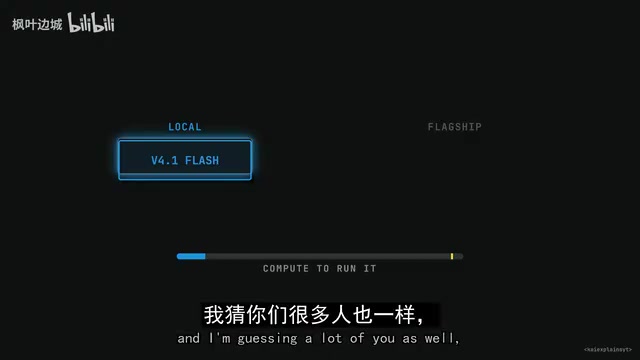
DeepSeek v4.1 Flash leads benchmarks and is MIT-licensed, but its 510GB footprint makes local deployment far costlier than the hype suggests.
DeepSeek v4.1 Flash scores 74.2 on DeepSWE v1.1, topping Claude Opus 5 and GPT flagships, and ships under a genuine MIT license. But real-world testing exposes what marketing numbers obscure: the model weighs ~510GB because MoE architecture requires all 378 inactive experts to stay resident in memory; a Mac Mini delivers 23 seconds per token; weights already ship at FP4, leaving no room for community quantization; and running it properly requires four DGX Spark units totaling ~$18,796 — still only a quarter of API speed, with a break-even horizon exceeding four years. Local deployment only makes sense under hard data-compliance constraints; for most users, the open weights' greatest value is simply keeping hosted API prices honest.
MIT license, benchmark performance that beats its own flagship, open-source and commercially usable — when DeepSeek v4.1 Flash launched, countless people had the same thought: we can finally break free from cloud APIs and run this model on our own hardware. But when one overseas reviewer actually sat down to run the numbers and do the deployment, excitement quickly gave way to something closer to relief — grateful they'd hit the brakes in time.
This article is based on that reviewer's complete analysis, unpacking the true costs hidden behind the marketing numbers when it comes to local deployment — from storage and hardware to that soul-crushing 23-seconds-per-token generation speed.
Why This Model Deserves the Excitement
Let's start with the good news. DeepSeek v4.1 Flash is a genuine technical achievement, not just another marketing stunt.
On DeepSWE v1.1 — an agentic coding benchmark that tests real-world software engineering capabilities — v4.1 Flash scored 74.2. For context, Claude Opus 5 sits at 74.0, and GPT flagship models are around 73.0. In other words, an open-weight model that anyone can download and run themselves has topped one of the industry's most competitive benchmarks, and by a meaningful margin.
More importantly, it ships under a genuine MIT license — not "research only," and not the fake-open-source kind that says "contact our lawyers if you're making money." This means you can build products with it, commercialize services, essentially use it however you want.
DeepSeek then drove the point home by retiring their flagship model v4.1 Pro — the 1.6-trillion-parameter behemoth — and routing all Pro API calls directly to Flash. The company itself is telling you: the smaller model won. They built something that beats their own flagship while using a fraction of the compute. It's a compelling story, and it's exactly what got so many people — including the reviewer himself — excited about running it at home.
What "It Runs" Actually Means
Within a day of the weights being released, people had v4.1 Flash running on all kinds of hardware: 16-core Mac Minis, multi-node clusters, gaming rigs, even some home server held together with zip ties and prayers. Every post said the same thing — it runs.
What those posts didn't put up front — what you'd only find buried deep in the comments — was the speed.
One developer running uncompressed raw weights on a Mac Mini with 16GB of RAM got a generation speed of 23 seconds per token. Not 23 tokens per second — 23 seconds to generate a single token. The first word appeared 108 seconds after submitting the prompt — a full minute and forty-eight seconds staring at a cursor.
People celebrated anyway, because "it technically succeeded": the model ran, it read the image, it got the answer right. But at that speed, a roughly 150-word response takes over an hour, writing a short email would outlast your lunch break, and asking it to debug a 200-line script means you could go grocery shopping, cook dinner, and come back to find it still running.
The reviewer's question was blunt: at what point does "it runs" stop being a meaningful statement? Technically, you can also heat your home by burning dollar bills — that "works" too, it's just not great.
The Misread Numbers: Selective Computation ≠ Selective Storage
This is where almost every report gets it wrong. DeepSeek's official figures show the model activates roughly 8 billion parameters when reading code and about 16 billion when generating a response. Those numbers sound small — a 16B model would run fine on a decent gaming GPU with room to spare. People were sizing their hardware based on these figures.
That's accurate, but deeply misleading.
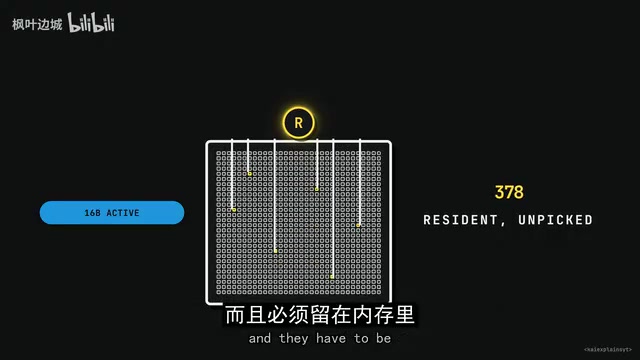
v4.1 Flash is a Mixture-of-Experts (MoE) architecture: each layer contains 384 routed expert networks plus 1 shared expert, and a router selects 6 of them for each token. So yes, only about 16 billion parameters are active at any given moment. But the other 378 experts still have to sit in memory — because the next token will pick a different 6, the selection is dynamic, you can't predict which ones will be needed, so they all have to stay loaded.
"Selective computation" does not mean "selective storage." That sentence is the key to understanding everything.
On top of that, this version introduces a new mechanism called Ngram: 2 of the 40 layers contain conditional memory tables, with 196 billion parameters sitting in a lookup table that matches sequences of up to 4 tokens against a 16-million-entry vocabulary. It's not a computation layer — it's a giant "index card drawer," and answers are pulled out of it.
So the actual download from Hugging Face is 48 files, roughly 510GB. If you sized your machine based on activated parameters, you underestimated by about 494GB. Your OS will show roughly 475GB — some people have already been confused by unit conversion, unable to figure out why the download won't fit on their drive.
That Mac Mini streaming weights from its SSD at 23 seconds per token wasn't broken — it was the inevitable result of physics: forcing a small, fast storage device to constantly seek and read scattered ~9.5GB of data to generate a single token produces exactly that outcome.
Mixture of Experts (MoE) architecture is the foundation for understanding all of this. In a traditional dense Transformer, all parameters in every layer participate in computing every token. MoE replaces the feed-forward network in each layer with multiple parallel "expert" sub-networks, plus a router that decides which experts handle each token. Since only a small number of experts activate at a time, the total parameter count can be very large while the compute per forward pass (FLOPs) stays comparable to a much smaller dense model — this is the technical foundation for "beating the flagship with less compute."
However, MoE memory characteristics differ fundamentally from dense models. For dense models, parameter count, compute, and memory footprint are tightly correlated. For MoE models, compute is far less than total parameters, but memory footprint still equals total parameters. Routing decisions are made dynamically per token; the system can't predict which experts the router will select before generating the next token, so all experts must simultaneously reside in addressable memory (RAM or VRAM). This is an architectural constraint, not an engineering implementation flaw.
Quantization Is a Dead End Here
Everyone's (including the reviewer's) first instinct when seeing the problem is: can't we just quantize it down?
The previous generation v4 Flash (released in July, 284 billion parameters) absolutely could be. The community repackaged the experts as 4-bit gguf files, and within a week there was a 128GB version that people ran on four secondhand RTX 3060s (a few hundred dollars each) — genuinely accessible to regular people.
But that path is now blocked. The reason: DeepSeek already quantized it before you downloaded it. v4.1 Flash's expert weights ship natively in FP4 (4 bits per parameter), already near the compression floor for that format without destroying structural integrity, and no 8-bit version was ever released to fall back on. Push below 4 bits, and the people who professionally do quantization releases will tell you directly: these models aren't fit for agentic tasks.
The only remaining lever is the Ngram table, which ships at 8 bits — converting it to 4 bits saves about 100GB, bringing things from ~475GB down to ~385GB. That's real progress, but it's a far cry from 128GB, and 385GB is still an unsolvable memory problem for most people's existing hardware.
Quantization is the process of compressing model weights from high-precision floating-point (such as FP16, 16 bits per parameter) to lower-precision formats (such as INT8 or INT4, 8 or 4 bits per parameter), with the goal of dramatically reducing memory footprint and bandwidth requirements at an acceptable performance cost. GGUF is a quantized weight format widely used in the llama.cpp ecosystem, which the community uses to package large models into versions runnable on consumer hardware.
FP4 (4 bits per parameter) is the practical floor for mainstream inference ecosystems. Below this precision, the numerical range weights can represent narrows sharply, and the model becomes extremely sensitive to small variations in input distribution — especially for agentic tasks requiring multi-step reasoning, tool calls, and self-correction, where errors accumulate and amplify across steps. DeepSeek shipping natively at FP4 means the community has lost the starting point of "quantizing down from a higher-precision version" — this is one of the most critical differences between v4.1 Flash and the deployment ecosystem of its predecessor.
How Much Does a Workable Setup Actually Cost?
Someone actually built a working configuration and published the specs — a transparency worth appreciating, because it lets others do the math before wasting money.
The setup requires 4 NVIDIA DGX Spark units, each a GB10 Grace Blackwell chip with 128GB unified memory. Each currently retails for $4,699 (up from $3,999 at launch), putting the four-unit total at $18,796 — before tax, before the networking hardware to connect them, and before storage.
They run under VLLM with Tensor Parallel 4, with the Ngram table offloaded to SSD and sharded across machines. This is the first real-world decoded speed data available: roughly 70 tokens/sec for code and HTML, dropping to 45 for JSON, and around 30 for prose and planning tasks.
For comparison, DeepSeek's own API runs the same model at over 300 tokens/sec.
The most painful detail: the previous generation v4 Flash fit on two Sparks. Six weeks later, its successor needs four. The hardware didn't change — the barrier just went up. A perfectly capable two-Spark setup became one generation behind the day the new model launched. The new model is not only stronger on benchmarks; it's heavier to host — a cost nobody officially announced.
Running the Numbers: Four Years to Break Even
Putting the numbers on paper is the only way to really feel the weight of this decision.
During off-peak hours, DeepSeek's API is priced at $0.15 per million input tokens and $0.60 per million output tokens. Take a meaningful workload: 1 million input tokens and 100,000 output tokens — the whole task costs about $0.21.
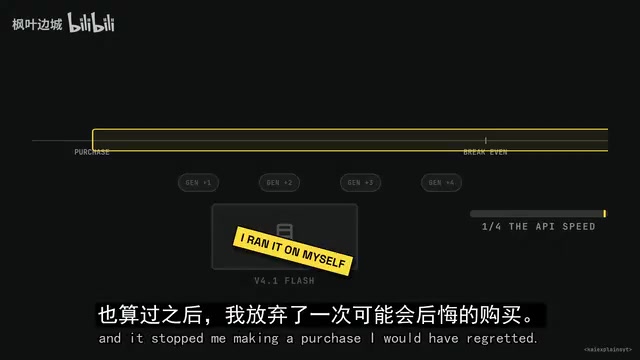
At $0.21 per task, that cluster needs to run approximately 89,500 tasks just to break even — and that's before a single cent of electricity. At 70 tokens/sec, 100,000 output tokens takes 24 minutes; 89,500 tasks works out to roughly 35,500 hours of pure generation time. Running 24 hours a day without interruption, that's over four years to break even.
Four machines drawing close to a kilowatt continuously for four years is roughly 35,000 kWh — at $0.15/kWh, add another ~$5,300. So you don't even break even in four years. And by that point, this model will be four or five generations obsolete, running at a quarter the speed of whatever the API is offering then.
The speed gap is equally stark: a task producing 100,000 output tokens takes about 5 minutes via API and 24 minutes on that cluster. You spent $18,796 to wait an extra 19 minutes per task.
When Local Deployment Actually Makes Sense
To be fair, all of the above is completely irrelevant for certain people.
If your data cannot leave the building — medical records, defense contracts, businesses subject to data residency regulations, or client agreements that explicitly prohibit third-party data processing — then the API was never an option you were allowed to choose. The comparison was never "local vs. hosted"; it's "local vs. not doing this at all." Put $18,796 next to one compliance violation or audit failure, and suddenly it looks reasonable.
There's also a subtler point: the existence of open weights is precisely what keeps the API priced at $0.21. When anyone can download and self-deploy the model, any provider's pricing has a ceiling. That ceiling benefits everyone — including users who never download the weights. The open-source release is what keeps hosted pricing honest.
So if you already have hardware that can fit the model, the experiment costs you some electricity and an afternoon — that's a completely different decision from ordering four new machines. Run it, measure the token economics on your own hardware, don't trust anyone else's numbers, because the only number that matters is the one your machine gives you.
This Model Was Built for Data Centers
The final piece of the puzzle is this: DeepSeek built v4.1 Flash for data center-scale problems — thousands of concurrent conversations where KV cache devours memory budgets. They've optimized the cache to an extraordinary degree: each token now requires only 890 bytes, roughly a quarter of the previous Flash generation. For a service running a thousand concurrent sessions, that's a massive win.
But alone in a room, you've inherited that trade backwards: you're saving the 1GB you'd never notice anyway, while paying full price for the 510GB you cannot avoid.
The model is real. The benchmarks are real. The MIT license is real. And so is the 510GB, the 23 seconds per token, and the $18,796 cluster. If you're planning to deploy locally, go in with your eyes open: size your machine for what has to stay in memory, not for what activates per token — those are two completely different numbers.
The KV cache (Key-Value Cache) is the core source of memory consumption in Transformer inference. During autoregressive generation, the model needs to access the attention key-value vectors for all previous tokens every time it generates a new one; to avoid recomputing these, they're cached. In single-user scenarios, KV cache is relatively limited. But in data centers serving thousands of concurrent sessions simultaneously, KV cache rapidly becomes the largest consumer of the memory budget — often exceeding the model weights themselves.
DeepSeek compresses per-token KV cache to 890 bytes (about a quarter of the previous generation) using MLA (Multi-head Latent Attention), which compresses key-value vectors into a compact latent space via low-rank projection, dramatically reducing cache footprint. This optimization is decisive for high-concurrency services — it lets the same memory hardware support four times as many concurrent sessions. But for a single-user local deployment scenario where concurrent sessions approach 1, this optimization has almost no practical value, and the user has already paid the full storage and memory cost for 510GB of weights.
Related articles

LynnReal-Omni: 32B Unified Video Diffusion Model Goes Open Source with Multi-Task Coverage in Four Steps
LynnReal-Omni is a 32B unified video diffusion model on MiniMax H3, covering text-to-video, pose guidance, style transfer, restoration in 4 steps. Flash version generates 540p video in 377ms on one H100.

Anthropic Co-Founder: AI 'Kill Switch' May Need to Be Mandatory by Law
Anthropic's co-founder tells the BBC that AI 'kill switches' may need to be legally mandated. We analyze the industry logic, technical challenges, and the tension between regulation and innovation.

The AI Data Center Boom Is Colliding With Cities Scarred by Heavy Industry
The AI data center boom is clashing with post-industrial communities. Philadelphia's case reveals structural conflicts between AI growth, energy use, water, and environmental justice.