The Truth About SSRI Antidepressants: Questionable Efficacy and Overlooked Side Effects

SSRIs offer limited clinical benefit over placebo, with underreported side effects and difficult discontinuation.
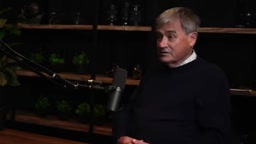
Medical social historian Andrew Scull systematically challenges the real-world value of SSRIs like Prozac on the Lex Fridman podcast. He argues that the "serotonin imbalance" hypothesis is a pharmaceutical marketing narrative rather than established science; that SSRIs show only marginal clinical improvement over placebo in trials; and that side effects like emotional blunting and permanent sexual dysfunction have long been underestimated. Discontinuation is deeply difficult for many patients, trapping them on long-term medication with poorly understood consequences. With over 40% of depression patients showing no response to SSRIs, and no way to predict outcomes in advance, Scull calls for a return to cautious prescribing and greater use of first-line therapies like CBT.
In a Lex Fridman podcast episode, medical social historian Andrew Scull offers a deep analysis of SSRIs (selective serotonin reuptake inhibitors) — the class of antidepressants that has dominated global prescribing since the late 1980s. Drugs like Prozac were positioned by pharmaceutical companies as the definitive solution to depression, but Scull's analysis reveals a picture far more complicated than the marketing narrative suggests.
From Prozac to the Commercial Story of the "Serotonin Hypothesis"
In the late 1980s, pharmaceutical companies introduced a new class of drugs that lacked the common side effects of older antidepressants. The most famous of these was Prozac, an SSRI — a selective serotonin reuptake inhibitor. Serotonin is a substance produced in the body — primarily in the digestive system, in fact — where it serves multiple functions, and it also acts as a neurotransmitter in the brain.
These drugs work by slowing the reuptake of serotonin in the brain. Pharmaceutical companies built a highly persuasive marketing narrative around this: depression is caused by insufficient serotonin in the brain, and these pills fix exactly that. This "chemical imbalance" explanation was simple to understand and quickly took root in public consciousness.
Scull cites Tipper Gore, former wife of the former Vice President, as one of the drug's prominent public advocates. Like many political spouses, she experienced depression, was prescribed SSRIs after seeing a psychiatrist, and publicly endorsed them. To this day, SSRIs remain the most widely prescribed class of antidepressants.
It's worth noting that the hypothesis that "serotonin imbalance causes depression" has never been conclusively proven in the scientific community. Neuroscience researchers have long pointed out that the neurobiological mechanisms of depression are far more complex than the rise and fall of a single neurotransmitter — involving dopamine, norepinephrine, the HPA axis (hypothalamic-pituitary-adrenal axis) stress response, and even neuroplasticity and hippocampal atrophy. A 2022 systematic review published in Molecular Psychiatry explicitly concluded that available evidence does not support the idea that reduced serotonin activity causes depression. Yet this hypothesis has been deeply embedded in public consciousness over decades of direct-to-consumer (DTC) advertising. Pharmaceutical companies compressed complex neuroscience into the accessible metaphor of a "brain chemical imbalance," paired with a pill to correct it — a highly effective marketing logic, even if its scientific foundations have always been shaky.
Statistical Significance ≠ Clinical Significance
Does the medication actually work? Scull flags a critical trap here. Every time controlled studies are run on these antidepressants, they do beat placebo by a statistically significant margin — but that doesn't necessarily translate to clinically meaningful improvement.

"When you see a drug advertisement, be very careful," Scull warns. When an ad says a drug "significantly improves" some measure, does it mean clinical improvement — or merely statistical improvement? Measuring depression improvement typically relies on various rating scales, and on a major 60-point scale, an increase of just one or two points may be enough to achieve statistical significance.
His conclusion is blunt and pointed: for most patients, antidepressants are only marginally better than placebo, and much of their effect comes from the placebo response itself. This judgment poses a serious challenge to the widespread use of SSRIs.
This distinction is critical in drug evaluation practice. Statistical significance (meeting a p-value threshold) measures whether an observed difference is likely due to random error, while clinical significance measures whether that difference is large enough for patients to feel a meaningful improvement. On the Hamilton Depression Rating Scale (HAM-D), commonly used in depression research with a maximum score of 52, regulatory agencies like the FDA typically accept an average difference of 3 points as an approval threshold — but many clinicians consider a difference of 7 or more points necessary for genuine clinical significance. Researchers like Irving Kirsch, analyzing all clinical trial data submitted to the FDA (including unpublished negative results), found that the average gap between SSRIs and placebo is only about 1.8 points — virtually no clinical significance for patients with mild to moderate depression, with a more meaningful net benefit only appearing in severe cases. This is also why the placebo effect is particularly powerful in the depression field: patients' subjective expectation of "being cared for" and "receiving treatment" can itself produce quantifiable symptom improvement.
Downplayed Side Effects: Emotional Blunting and Loss of Sexual Function
Alongside limited efficacy, SSRIs come with considerably troublesome side effects. Many people describe them as "emotional blunters" — they flatten everything, leaving people unable to experience the highs and lows we consider part of the human experience.

More seriously, this numbness can extend to other aspects of life. Scull specifically highlights that large numbers of patients experience complete loss of libido: inability to achieve erection, inability to achieve orgasm in women, and the complete disappearance of sexual function. And most alarmingly — in some cases, even after stopping the medication, these functions do not recover.
This side effect has long been underestimated, yet it directly impacts patients' quality of life and intimate relationships, making it a critical component of SSRIs' "hidden costs."
The Discontinuation Dilemma and "Trapped" Patients
Another layer of the problem emerges at the discontinuation stage. For some people, stopping SSRIs is a nightmare: they fall into a depression worse than before they started the medication, experience terrifying sensations, feel as though their brain is "firing electricity," and have a clear sense that something is wrong.
The result is that many patients find themselves trapped — taking the drugs long-term but unable to safely stop, and the consequences of that long-term use are not yet fully understood. This gives the entire situation a highly complex character.
For this reason, bodies like the UK's NICE (National Institute for Health and Care Excellence) advocate for CBT (cognitive behavioral therapy) as a first-line treatment rather than medication.
SSRI discontinuation reactions (sometimes called "withdrawal syndrome" — pharmaceutical companies deliberately avoid words like "dependence" or "addiction") primarily stem from adaptive changes in the brain following prolonged external intervention in the serotonin system. When the drug is abruptly reduced, serotonin receptor sensitivity in neurons has not yet recovered, producing a range of neurological symptoms that patients often describe as "brain zaps" or "electric shock sensations," accompanied by dizziness, anxiety, irritability, and flu-like symptoms. Some patients cannot fully avoid withdrawal difficulties even when tapering extremely slowly over months or even years. This phenomenon prompted the Royal College of Psychiatrists in the UK to update its guidelines in 2019, acknowledging that the severity of discontinuation reactions may have been systematically underestimated, and recommending that doctors inform patients about the risks of long-term use and discontinuation at the time of the very first prescription — rather than waiting until the patient wishes to stop.
Three Patient Groups and an Unknowable Cost-Benefit Calculation

Scull cites a recent Lancet study indicating that patients — whether on antipsychotics or antidepressants — can broadly be divided into three groups:
- Those who respond well: The medication works, and side effects are tolerable or nearly absent. For them, it's good news.
- Those who don't respond: Among depression patients, this proportion is as high as 40% or more. The drug does nothing for them, yet they bear all the risks.
- Those in the middle: They experience partial improvement but also endure side effects.
The real problem is that you don't know in advance which group you'll fall into — and neither does your doctor. This makes the "cost-benefit analysis" extraordinarily difficult.
Scull also emphasizes a structural shift brought about by the pharmaceutical revolution: the power to diagnose and prescribe has moved away from psychiatrists. Today, many antidepressants are prescribed by primary care physicians (general practitioners) rather than psychiatric specialists, further amplifying the risks of misuse and overprescribing.
This inability to predict treatment response in advance has driven the field of psychopharmacology to explore "precision psychiatry." Researchers have attempted to use genetic testing (such as cytochrome P450 enzyme polymorphisms affecting drug metabolism rates), neuroimaging biomarkers, and machine learning models to predict an individual's probability of responding to a specific antidepressant. However, none of these approaches have achieved reliable large-scale application in clinical practice to date. Meanwhile, the structural shift toward primary care-led prescribing means that efficacy assessment and discontinuation management — which should occur in a psychiatric context — are often completed in general practice settings with limited resources and expertise, further narrowing the space for individualized decision-making.
Conclusion: A Complex Picture That Demands Careful Consideration
Scull's analysis is not a wholesale rejection of antidepressants — they do work for some patients. But he urges us to take a more clear-eyed look at their true efficacy, their downplayed side effects, and the discontinuation dilemma. In an era when medication has become the default option, reassessing the value of non-pharmacological therapies like CBT and rebuilding a culture of cautious prescribing may be the more responsible path forward in addressing depression.
Related articles

Chain of Thought Isn't Just for AI: How Humans Can Use CoT to Improve Thinking Quality
Chain of Thought isn't just a prompt trick for large models. Starting from a Hacker News discussion, this article analyzes why CoT works for human thinking too, breaks down actionable ways to transfer it, and highlights the key differences between human CoT and machine CoT.
Cloudflare Teams Up with OpenAI: Closi…
Cloudflare Teams Up with OpenAI: Closing the Loop from Vulnerability Discovery to Defense with AI
Cloudflare uses OpenAI Daybreak to investigate security vulnerabilities and generate reviewable remediation plans, while developers use Codex to boost coding efficiency and quality.

Orca Multi-Agent Orchestration in Practice: A Guide to Parallel Collaboration with Claude and Codex
Orca is Stable AI's free open-source agent workbench supporting 34 agents like Claude Code and Codex in parallel. Learn its Git worktree isolation, multi-model orchestration, and mobile management.