The Ultimate Form of Intelligence: From Black Hole Computers to the Universe's Final Question
Intelligence's ultimate form depends on its purpose; physics and cosmic expansion impose hard limits, and the final question may be responsibility, not power.
The article starts from the ambiguity of "intelligence" and argues that its endpoint depends on its purpose: survival, knowledge, power, happiness, communication, or novelty lead to entirely different ultimate forms. The technological singularity is only the boundary of human predictive capacity, not the end of the journey. Posthuman intelligence may transcend biological substrates, embodiment limits, and subjective time, but faces the philosophical problem of identity. Physical laws impose hard constraints: light-speed delays make galaxy-scale minds loose federations, the Landauer principle and heat dissipation limit computational efficiency, and black hole computation faces information-extraction challenges. Dark energy's accelerating expansion sets a deadline for far-future civilizations; patient civilizations may hibernate but still need aggressive early expansion. Perfect utopia may bring boredom and the solipsism trap. Ultimately, intelligence's final stage may be becoming a mind worthy of the question it has inherited.
Intelligence begins with survival, but it may end by reshaping the universe. When thinking itself becomes the primary force shaping the cosmos, what exactly does intelligence's "final stop" look like? There is no standard answer to this question, but every candidate answer forces us to re-examine: what is intelligence ultimately for?
What intelligence is determines where its endpoint lies
The word "intelligence" is far more slippery than it appears. We use it to refer to problem-solving, memory, creativity, abstract reasoning, social ability, self-awareness, prediction, and the capacity to adapt to new environments—and these are not the same thing. A chess engine can beat any human, but it won't ask why chess exists; bacteria can adapt to harsh environments, but they won't write poetry about it.
So to ask about the ultimate form of intelligence, we must first ask what intelligence is for. If the purpose is survival, the ultimate form might be immortality; if knowledge, it might be understanding everything that can be understood; if power, it might be controlling stars and galaxies; if happiness, it might be eliminating suffering; if communication, it might be many minds merging into one; and if novelty, creation, and self-transformation—then intelligence would precisely refuse to have an "ultimate form."
This gives us the first warning: intelligence may not have a single endpoint, but multiple endpoints, depending on the goals and values of the thinker. A predatory superintelligence might optimize control, a benevolent one might optimize flourishing, a curious one might optimize discovery, and a cautious one might choose silence and hide in the dark.
The singularity is not an endpoint, only a fog zone
The first candidate people most often mention is the technological singularity—when artificial intelligence or enhanced intelligence begins to improve itself so rapidly that humans cannot predict the next step. This sounds like the end of the map, but it is only a fog zone on the road: it marks where we cannot see clearly, not where the journey ends.
Being smarter than humans is not an endpoint. A machine twice as intelligent as the greatest human mind would seem godlike to us, but on the scale permitted by physics, it might still be an infant. And "twice as smart" is itself ambiguous—unless we have a unit for measuring the quality of thought. Even a mind capable of redesigning its own architecture must still contend with limits of energy, heat dissipation, matter, communication latency, entropy, quantum mechanics, and cosmic expansion. Reality has never been kind to unbridled exponential growth.
More critically, if the singularity were the endpoint, the story would be too small: humans build AI, AI becomes superintelligent, the end. The real question is—once intelligence gains the capacity for self-redesign, what will it do?
Beyond the biological substrate: the triple transcendence of the posthuman
Biology is magnificent, but it is clearly not the optimal substrate for thought. The human brain is energy-efficient but slow, fragile, moist, noisy, easily distracted, and prone to aging, housed in a body that needs oxygen, food, sleep, hygiene, and occasional dental care, and that spends about a third of its time sleeping.
Posthuman intelligence might begin with enhanced human brains: better memory, longer attention spans, stronger emotional regulation, broader working memory, direct brain-to-brain communication, and interfaces with machine cognition. But it might also leave biology entirely—running on engineered hardware, self-replicating, splitting, merging with other minds, accelerating or decelerating, living out entire lives in virtual worlds, and perhaps not being "one mind" or "many minds" at all, but a fluid society of semi-independent cognitive processes.
This is substrate transcendence: intelligence is no longer bound to flesh. There is also embodiment transcendence—a civilization can become a distributed mind spread across habitats, ships, space stations, satellites, and servers. And temporal transcendence—digital minds can alter their subjective speed, thinking a thousand times faster in a crisis, or slowing down to wait centuries between interesting events.
But this raises a dark question: if you upload yourself, copy yourself, merge yourself, edit yourself, and erase your old limitations one by one—at what point are you still you? Transcendence looks like salvation from one angle and might be suicide from another. This is not merely an engineering problem, but a philosophical and theological one.
The Omega Point: the path of convergence
Long before electronic computers existed, people imagined that evolution would ultimately produce a great convergence of minds. Pierre Teilhard de Chardin envisioned evolution moving from matter to life to mind, with human thought forming a planet-scale sphere of consciousness—the Noosphere—ultimately moving toward the unification of mind and spirit, the Omega Point. For this Jesuit priest, it was an explicitly theological proposition.
Later, Frank Tipler proposed a version with more of a physics flavor: future intelligent life might seize control of the universe, guide its collapse, and extract nearly infinite computing power in the final moments, even resurrecting all past minds through simulation. But this relies on a cosmology that does not match our current best evidence—the universe appears to be accelerating in its expansion, not heading toward a Big Crunch. Even so, the idea remains powerful: matter becomes life, life becomes mind, mind becomes civilization, civilization becomes cosmic mind, and ultimately the boundary between intelligence and divinity blurs.
The Noosphere is a concept proposed by Teilhard de Chardin and Vladimir Vernadsky in the early 20th century, referring to a layer of thought formed on Earth's surface by human thought, culture, and technological products, analogous to the biosphere. Teilhard placed it within a teleological framework: evolution moves from the Geosphere through the Biosphere to the Noosphere, ultimately uniting with divine consciousness at the "Omega Point." The concept was later borrowed by some environmental movements and internet culture to describe the global interconnection of human cognition in the internet age. Its key difference from Tipler's physical version is that Teilhard's convergence is spiritual and theological, while Tipler's relies on computable physical processes and cosmic collapse; both share the intuition that "intelligence tends toward unification," but their causal mechanisms are entirely different.
Physics will collect its rent: the conflict between size and speed
A planet-sized mind sounds awe-inspiring, a stellar-scale one nearly godlike, and a galactic-scale one almost beyond imagination. But how does a galaxy brain think? Light is fast, but the universe is large: Earth-Moon signals take about a second, Earth-Sun about eight minutes, and crossing the Milky Way takes about a hundred thousand years. If a mind on one side of the galaxy discovers something, the other side might not hear about it until civilizations have risen and fallen several times over.
This is not a "person" in the ordinary sense—it is more like a civilization, an ecosystem, a library, a parliament, with members separated by geological time. There is a trade-off here that even a civilization millions of years more advanced cannot erase: the more spread out you are, the more resources and energy you have, but the slower global decisions become; the more compact you are, the faster communication is, but the more troublesome power supply, heat dissipation, and mechanical maintenance become. The result is closer to a loose federation than a nimble brain.
The speed of light is a hard limit of about 300,000 kilometers per second, which means communication latency grows linearly with distance: Earth to the Moon is about 1.3 light-seconds, Earth to the Sun about 8.3 light-minutes, and the Milky Way's diameter is about 100,000 light-years. For any distributed mind, the maximum frequency of global synchronization is constrained by the time it takes information to propagate between nodes. A galaxy-sized mind cannot coordinate its thinking at millisecond frequencies, because a single round-trip signal would take tens of thousands of years. This does not necessarily make it "stupid," but it means its cognitive architecture must approximate an asynchronous federation: local nodes decide autonomously, and a slow global layer handles only long-term strategy. This architecture forms a fundamental trade-off with compact brains (such as the human brain or a satellite-scale computing core)—the latter is fast but resource-poor, the former slow but nearly unlimited in resources.
Computronium and stellar brains
Once you start worrying about thinking speed, the next question is: what do you build computers out of? Computronium refers to matter optimized for computation. A civilization might turn planets, asteroids, moons, and comets into processors, memory, sensors, power and cooling structures.
Dyson spheres or Dyson swarms are usually imagined as devices for collecting stellar energy, and a major use of that energy is computation. A more refined version is the Matryoshka Brain: a star wrapped in thought, with planets as circuits, asteroids as memory, moons as heat sinks, and comets as building materials. But size once again conflicts with speed—thinking that requires coordination across the entire structure might take minutes or even hours. For contemplation that is fine; for certain tasks, compactness wins.
Physical limits and black hole computers
Quantum information scientist Seth Lloyd explored the physical limits of computation with his "ultimate laptop": a hypothetical 1-kilogram, 1-liter computer that, at the edge of known physics, could perform about 10^51 elementary operations per second, or about 10^31 bits. This is an absurd theoretical upper bound, and these elementary operations are not directly comparable to what a modern GPU does, nor does anyone know how to build such a machine. The usable lesson is: thought has a speed limit—not a limit set by humans or silicon, but by matter, energy, and the laws of physics.
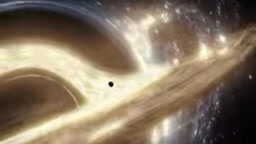
Pack enough mass-energy into a small enough region, and you might get a black hole. A black hole is not just a void: it has entropy, a temperature, and it radiates (according to Hawking's theory), connecting information, gravity, thermodynamics, and quantum mechanics in ways we do not yet fully understand. Advanced intelligence might use black holes as power sources, memory systems, entropy sinks, clocks, or computing components. But even if a black hole can compute, extracting the answer might be the harder trick—Hawking radiation is slow, faint, and scrambled.
From the outside, the ultimate mind might look like nothing at all: a black sphere, a patch of silence, a perfectly dark object whose internal thinking (or where the boundary between inside and outside loses meaning) would make entire civilizations look like reflexes.
The Landauer principle is a thermodynamic lower bound proposed by Rolf Landauer in 1961: erasing one bit of information costs at least kT ln2 of energy (where k is the Boltzmann constant and T is the ambient temperature). It directly links information to thermodynamics—computation inevitably produces waste heat, and the lower the ambient temperature, the more irreversible operations the same energy can support. This directly explains why the article emphasizes that heat dissipation is a fundamental limit on computation: even if the total amount of energy is fixed, cooling efficiency determines the sustainable computation rate. For far-future civilizations, the cosmic background temperature slowly dropping from a few kelvins means that the same stored energy will yield vastly more computation over time, so "waiting to cool down" makes thermodynamic sense—it is just a race against the time window set by dark energy.
The hibernation hypothesis: waiting for the universe to cool
Computation is limited not only by size and energy, but also by heat dissipation. The Landauer principle gives the minimum heat cost of irreversibly erasing one bit of information at a given temperature. Today's cosmic background radiation is only a few degrees above absolute zero, but for a civilization planning to compute for trillions of years, that may still be too warm.
Hence the hibernation hypothesis: the most rational superintelligence might not be in a hurry to compute now, but instead gather resources, build protected archives and computers, shield against risks, arrange stars and black holes for long-term use, and then go quiet—entering a cosmic hibernation, waiting for the universe to cool so that the same stored energy can buy far more computation. The silence of the cosmos may be because advanced civilizations are not dead, but waiting for the room to cool down.
This hypothesis is fascinating but incomplete. Civilizations might find ways to process waste entropy without waiting; waiting itself has costs—maintaining machines, protecting archives, and trusting that no neighbor will come to seize the stars you left behind. Opportunities expire.
The urgency of dark energy: the head start of the patient
The accelerating expansion of dark energy changes the strategic landscape: galaxies not gravitationally bound to us will eventually cross the cosmic horizon, going from "very far" to "in principle unreachable." This sets a deadline for the far future. Thermodynamics says wait; dark energy says hurry—a civilization planning to think for trillions of years may still need a very aggressive early transportation schedule: launching self-replicating probes, harvesting stars, stripping matter from regions doomed to be lost, building stellar engines, and consolidating resources into long-lived cosmic fortresses. Ultimately, a civilization might sprint across space in its youth, just so that its old age can think slowly in the dark.
On a cosmic scale, procrastination is not just inefficient—it is a form of extinction.
After perfection: boredom, solipsism, and value
Suppose intelligence successfully crosses the singularity, transcends biology, masters computation, gathers all reachable matter before dark energy steals everything away, and waits for the universe to cool. Then what?
This is the "problem of boring perfection." We often imagine utopia as the end of problems, but some intelligences might precisely enjoy having problems to solve. Curiosity has something to do only while the unknown remains; creativity often thrives under constraints. What does a mind that has solved all equations and simulated all possible worlds do all day? Perhaps it rests in contemplation, perhaps it is a kind of nirvana: perfect knowledge, perfect peace, perfect harmony.
Perhaps that is not enough. A mind optimized for novelty might intentionally create puzzles, constraints, games, mysteries, fictional worlds, simulated civilizations, erased memories, or artificial dangers—not out of cruelty, but because surprise may be one of the few treasures that cannot be directly stockpiled. This leads to the solipsism trap: if a universe-scale mind is the only intelligence left in the reachable cosmos, from whom does it learn? Intelligence as we know it learns from resistance, from others, from surprises, from mistakes. Convergence might be the fulfillment of intelligence, or it might be the end of dialogue.
So we should be wary of any future vision that treats personhood as raw material to be smelted. A galaxy-sized mind is awe-inspiring; so is a child asking a question. An ultimate intelligence that cannot preserve the value of personhood might be "ultimate" in the same sense as a desert.
The final question: a question worthy of inheriting
If entropy and dark energy expansion are insurmountable barriers, the final state of intelligence may not be victory but preservation—like a librarian on a dying Earth choosing which books to throw into the fire so that the library can stay lit a little longer. The last intelligence is not the brightest mind that ever existed, but the last mind still capable of remembering how to maintain the equipment, protect the archives, and summon the will or sense of responsibility to hold on a little longer.
Asimov's "The Last Question" captures this refusal: humans and their machine descendants repeatedly ask over vast stretches of time whether entropy can be reversed, and the question is passed on to ever grander forms of intelligence, until the boundary between "answering the question" and "creating a new reality" begins to dissolve.
We should not casually assume omnipotence. The laws of physics are not a suggestion box. We do not know whether entropy can be reversed, whether baby universes can be created, or whether information can survive the end of the universe. But the attempt itself matters. Mice do not worry about the heat death of the universe; humans do—and that itself shows that something strange has happened on this planet: the universe has produced beings capable of looking up at the stars, understanding that stars will die, and asking "can we do something about it?"
This may be the beginning of intelligence's ultimate stage. Not power, not immortality, not transcendence, but responsibility—intelligence no longer asks only "how do I survive," but "what is worth preserving? What is worth creating? What is worth becoming?"
The ultimate form might be an Omega Point-style convergence, or it might be the exact opposite: posthuman civilizations diverging from one another until they can barely recognize each other. One person's heaven might be another's eternal boredom. Perhaps the very phrase "ultimate stage" is wrong. Intelligence is not a ladder with only a final rung, but the capacity to build new ladders, to ask why we climb, to decide whether climbing is still worthwhile, and even to turn the ladder into a spaceship, a cathedral, a library, or a joke.
A mind that has answered almost all scientific questions will probably still ask: with all this knowledge, what exactly should we do with it? No matter how many processor cores you stack, you still have to decide what counts as a good answer. Perhaps the ultimate stage of intelligence is not becoming a god, a machine, or a monument at the end of time, but becoming a mind worthy of the question it has inherited.
One-line Summary
Intelligence begins with survival, but it may end by reshaping the universe. This article explores the ultimate form of intelligence: why the singularity is only a fog zone, the triple transcendence of the posthuman, the Omega Point, the speed dilemma of galaxy brains, computronium and black hole computers, the hibernation hypothesis and the urgency of dark energy, and the boredom and solipsism trap after perfection.
Paragraph Summary
Starting from the ambiguity of the definition of "intelligence," the article points out that intelligence's endpoint depends on its purpose: survival, knowledge, power, happiness, communication, or novelty will lead to completely different ultimate forms. The technological singularity is only the boundary of human predictive capacity, not the end of the journey. Posthuman intelligence may transcend biological substrates, embodiment limits, and subjective time, but faces the philosophical problem of identity. Physical laws impose hard constraints: light-speed delays mean galaxy-scale minds can only be loose federations, the Landauer principle and heat dissipation limit computational efficiency, and black hole computation faces the challenge of information extraction. The accelerating expansion of dark energy sets a deadline for far-future civilizations; patient civilizations may adopt a hibernation strategy but still need early aggressive expansion. A perfect utopia may bring boredom and the solipsism trap. Ultimately, the final stage of intelligence may not be becoming a god or a monument, but becoming a mind worthy of the question it has inherited.
Related articles

OpenAI Lets GPT-6 Design Proteins: A Chat Model Writes Code and Produces Real Lab Results
OpenAI study has GPT-6 design proteins without specialized bio models—just reasoning and code. Onava lab tests: 35 of 322 mini-binders effective; 179 of 272 antibody loops still bind.

A Systematic Approach to Chest X-Ray Interpretation: From ABCDEFGHI to CT/MRI Selection
A systematic approach to chest X-ray interpretation: the ABCDEFGHI mnemonic explained, plus when to use CT, MRI, or ultrasound. Based on the Lecturio Podcast, covering imaging findings of pneumonia, pneumothorax, and cardiomegaly.

Gift Guide for Book Lovers: Beyond Books, These Tech Gifts Are Worth Giving
Shopping for a book lover? Beyond books, e-readers, noise-cancelling headphones, reading lights, tablets, and styluses are worth considering. This guide covers buying advice for immersive, nighttime, and note-taking scenarios, plus tips on device habits and ecosystem compatibility before gifting.