Gift Guide for Book Lovers: Beyond Books, These Tech Gifts Are Worth Giving

Choosing tech accessories around the entire reading chain is less likely to guess the taste wrong than simply giving a book, and it improves the reading experience more.
The article suggests that for book lovers, rather than only giving books, choose digital accessories and devices around the reading experience. Reading spans book selection, purchasing, immersive reading, and note organization, with hardware to optimize each stage. It recommends by scenario: e-readers and noise-cancelling headphones for immersion; reading lights, stands, and page turners for nighttime and desktop reading; stylus-supporting tablets and cases for notes and cross-device reading. Confirm existing devices and ecosystem compatibility, and keep room for returns.
Title
Gift Guide for Book Lovers: Beyond Books, These Tech Gifts Are Worth Giving
Meta Description
Shopping for a book lover? Beyond books, e-readers, noise-cancelling headphones, reading lights, tablets, and styluses are also worth considering. This article offers buying advice across three scenarios—immersive reading, nighttime reading, and note-taking—and reminds you to confirm the recipient's device habits and ecosystem compatibility before gifting.
Article Content
Picking a gift for someone who loves reading, a book from their wishlist never goes wrong. But if you want the gift to go beyond the printed page and focus on the reading experience, digital accessories and devices are actually worth considering more seriously. They don't replace books—they make reading more comfortable, more continuous, and less interrupted.
Why Reading-Related Tech Gifts Deserve Careful Thought
Reading is a long chain that runs from choosing books and buying them to immersive reading and note organization. Every link in that chain has corresponding hardware or accessories that can optimize it: e-readers handle the comfort of staring at text for long periods, noise-cancelling headphones solve environmental distractions, reading lights improve nighttime eye comfort, and tablets plus accessories fill in the needs of note-taking and reference lookup.
The advantage of giving this kind of gift is that it carries less risk of "guessing the taste wrong" than giving a book. Books are content consumption, and taste varies from person to person; reading-related tech products are experience investments, and as long as the recipient has a stable reading habit, chances are they'll actually use them. The key is to choose around the recipient's reading scenarios rather than piling on specs.
Immersive Reading: E-Readers and Noise-Cancelling Headphones
An e-reader is the most direct option among reading-related gifts. Compared with phones and tablets, its screen is better suited to reading text for long periods, and its weight and grip feel closer to "holding a book." When choosing, pay attention to screen size, whether it supports nighttime color temperature adjustment, water resistance, and whether the bookstore ecosystem covers the languages and genres the recipient usually reads.
If the recipient is used to reading on commutes, in cafés, or in open offices, noise-cancelling headphones often improve the experience more immediately than an e-reader. Once active noise cancellation suppresses ambient noise, attention returns to the text more easily. When choosing, prioritize wearing comfort and battery life—in long reading sessions, these two matter more to actual use than audio quality specs.

Electronic ink (E-ink) is the core technology that distinguishes e-readers from phones and tablets. It displays images by rearranging black and white particles in microcapsules under an electric field, consuming power only when turning pages, so battery life can reach several weeks; at the same time, it does not emit light itself and relies on ambient light or a front light-guide layer to reflect light into the eyes, giving a look close to paper and reducing fatigue during long reading sessions. This also explains why you should pay attention to "nighttime color temperature adjustment" when buying—that is actually color temperature control of the front light-guide layer, not self-emission from the screen. E-ink has a low refresh rate, and page turns show brief ghosting; this is a technical characteristic rather than a defect, and it should be taken into account when evaluating.
Active noise cancellation (ANC) and passive sound isolation are two different mechanisms. Passive isolation relies on the physical seal of ear cups or ear tips to block high-frequency noise; active noise cancellation uses microphones to capture ambient noise and generates anti-phase sound waves to cancel it, and is especially effective against sustained mid- and low-frequency noise such as air conditioning, engines, and crowded voices. In reading scenarios, the main distractions in cafés and on commutes are exactly this kind of sustained mid- and low-frequency noise, so active noise cancellation clearly helps "bring attention back to the text." Note that turning on noise cancellation usually slightly increases ear pressure and affects battery life, so when choosing, try them on first to feel the comfort rather than looking only at the noise-cancellation depth spec.
Nighttime and Desktop Reading: Lights, Stands, and Accessories
Reading lights are often overlooked, but their impact on reading comfort is very direct. Reading lights with adjustable color temperature and brightness can reduce visual fatigue during nighttime reading, and whether to choose a clip-on or standing design depends on whether the recipient reads in bed or at a desk.
Stands and page-turner accessories fall into the category of "small things that solve real problems." A tablet stand keeps the screen at a suitable eye level and avoids prolonged head-down posture; a Bluetooth page turner means no need to keep raising a hand while curled up on the sofa or in bed reading. These gifts are not expensive, but they are often used very frequently, making them suitable as supplements to a main gift.
Note-Taking and Cross-Device Reading: Tablets, Styluses, and Cases
For people who like to take notes while reading, a tablet that supports a stylus is a choice between an e-reader and a laptop: reading e-books, looking up information, and writing annotations can all be done on the same device. When choosing, focus on how the screen looks when reading text, the stylus latency, and whether there is an app ecosystem suited to reading and annotation.
Cases and storage accessories may seem inconspicuous, but they directly affect whether a device can be carried around. A case that doubles as a stand, or a splash-resistant sleeve, often determines whether the device is used every day or left in a drawer.
Stylus latency refers to the time difference between the pen tip passing over the screen and the handwriting appearing, usually measured in milliseconds. The lower the latency, the closer writing and annotation feel to pen and paper; when latency is high, fast writing shows handwriting "chasing" the finger. Latency is affected not only by the pen itself but also by screen refresh rate, touch sampling rate, and the system's handwriting prediction algorithms, so the same pen may perform noticeably differently on different tablets. When choosing a tablet for reading and annotation, besides looking at the manufacturer's claimed latency figure, a more practical approach is to actually write quickly and draw lines to observe whether the handwriting keeps up and whether there is visible lag.
Three Things Worth Thinking Through Before Gifting
First, confirm the recipient's existing devices and usage habits. If they already have a frequently used e-reader or tablet, giving another one is not very meaningful—better to put the budget toward accessories or experience upgrades. Second, consider ecosystem compatibility: whether the bookstore, note-taking apps, and account system match what the recipient is already using affects long-term experience more than hardware specs. Third, leave room for returns and exchanges. Tech products involve personal preference, so including a purchase receipt or choosing a channel that supports returns makes the gift more relaxed.
The idea behind giving a book is to share content; the idea behind giving reading-related tech products is to improve the experience. The two do not conflict—a book paired with a suitable reading accessory is often more moving than giving either one alone.
One-line Summary
Choosing tech accessories around the entire reading chain is less likely to guess the taste wrong than simply giving a book, and it improves the reading experience more.
Paragraph Summary
The article proposes that when choosing a gift for someone who loves reading, rather than only giving books, it is better to choose digital accessories and devices around the reading experience. Reading is a long chain from choosing and buying books to immersive reading and note organization, and each link has corresponding hardware that can optimize it. The article recommends by scenario: e-readers and noise-cancelling headphones enhance immersion; reading lights, stands, and page turners improve nighttime and desktop reading; tablets that support styluses and cases balance note-taking and cross-device reading. Before gifting, confirm the recipient's existing devices and usage habits, pay attention to ecosystem compatibility, and leave room for returns and exchanges. The core idea is: giving books shares content, giving reading tech products improves the experience, and combining the two is often more moving.
Related articles

The Ultimate Form of Intelligence: From Black Hole Computers to the Universe's Final Question
Intelligence begins with survival but may end by reshaping the universe. This article explores the ultimate form of intelligence—from black hole computers to the Omega Point—and asks what intelligence is ultimately for.

AI Wiki Clones Are Hurting Your Favorite Wiki
AI-generated wiki clone sites are diverting search traffic from original wikis and eroding editor communities. This article analyzes how clone sites operate, the hidden damage to the wiki ecosystem, and possible community responses.
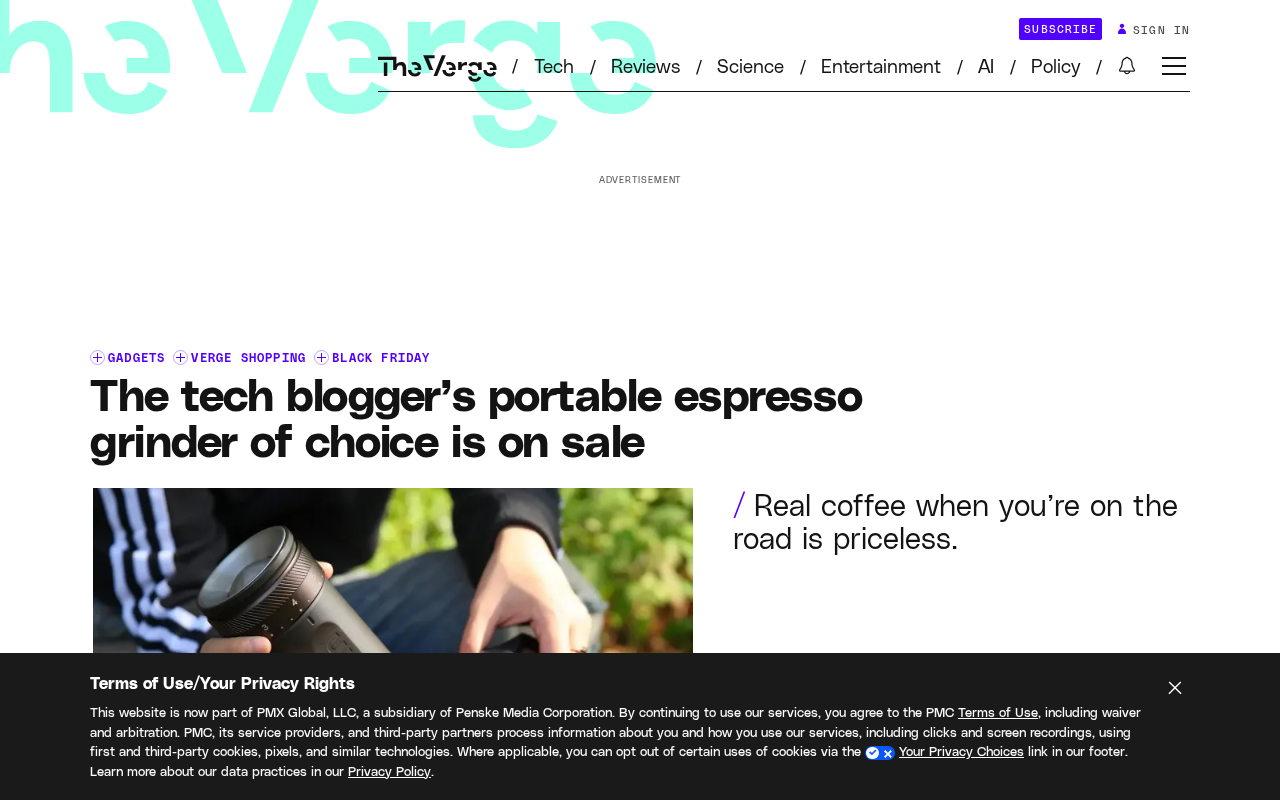
The CES Travel Hack: Why This Portable Coffee Grinder Became a Tech Blogger's Go-To
A tech blogger ditches hotel coffee after years of CES and turns to travel coffee gear. This portable espresso grinder is on sale—here's why it's central to travel coffee setups and what to consider before buying.