The Underrated AI Agent Tool: Apify MCP Lets Agents Scrape the Entire Web

Apify MCP Server lets Agents call 80,000 scrapers with one line of config — five scenarios tested for just $2.71.
The article argues that the real bottleneck for AI Agents isn't reasoning but reliably acquiring real data from Google Maps, Instagram, TikTok, and LinkedIn, where traditional per-site integration is costly to maintain. Apify uses 80,000+ ready-made actors to handle anti-blocking, proxy rotation, and structured output, with an MCP Server that connects Claude, Cursor, and ChatGPT via one line of config so Agents can autonomously find and invoke tools. The author tested five notoriously hard scenarios — Google Maps leads, Instagram posts, TikTok topics, LinkedIn jobs, and YouTube analysis — for $2.71 total, and combined multiple actors into a `/prospect` Skill in Claude Code for automated lead generation at ~$0.37 per run. The piece also notes source-site data limits, linear cost scaling, and the need for Skill iteration.
An AI Agent's biggest weakness isn't its reasoning ability — it's its ability to acquire real-world data. Sites like Google Maps, Instagram, TikTok, and LinkedIn either block automated traffic, rely on scroll-loaded content, or overhaul their layouts every few weeks. Getting an Agent to reliably pull data from these platforms the traditional way means building integrations one by one, maintaining proxy pools, and re-fixing everything every time a site changes — weeks of work dumped in before the Agent even starts doing real work.
In a recent video, a YouTube tech creator demonstrated a solution that sidesteps all of this: Apify's MCP Server. With a single line of configuration added to Claude, the Agent can invoke over 80,000 ready-made data scrapers (actors) on the Apify Store, covering major platforms like Google Maps, Instagram, TikTok, LinkedIn, and YouTube.
Why AI Agents Can't Scrape Data
The video runs a straightforward comparison. First, the creator asks Claude to directly query the ratings and phone numbers of all dental clinics in a Miami neighborhood. The result: only 10 records, missing ratings, incomplete phone numbers — data quality that's completely unusable.
The problem isn't the model itself. Claude can search the web and read page content, but target websites were never designed to serve AI Agents. They block automated requests, load content dynamically via JavaScript, and constantly shuffle their page structures. The Agent is facing a constantly moving target.
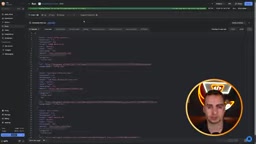
Apify's approach is to centralize all this dirty work. Each actor is a micro-program running in the cloud that does one thing and does it well. The user provides input (e.g., "coffee shops + Austin"), and the actor handles scraping, proxy rotation, and anti-blocking on Apify's servers, ultimately returning structured data. Billing is based on actual results, and new signups get $5 in free credits.
Anti-bot and proxy pools are foundational infrastructure problems in the web scraping space. When automated programs frequently hit a target site, the site blocks them via IP rate limiting, fingerprint detection (such as identifying headless browser signatures), CAPTCHA challenges, and similar measures. One countermeasure is a proxy pool: using a large number of IPs distributed across different regions to rotate requests so that any single address's access frequency looks normal. Platforms like Apify build proxy rotation, fingerprint spoofing, CAPTCHA solving, and request retries into their cloud execution environments, so users only need to worry about input parameters and output fields. This is also why, for the same query, Claude's direct access returns only an incomplete set of 10 records, while the actor can return a complete dataset — the difference isn't the model, but these underlying engineering details.
MCP Server: One Line of Config to Connect Your Agent
Apify's most valuable capability is providing an MCP Server. MCP (Model Context Protocol) is the current standard protocol for connecting AI applications to external tools, and it's already supported by Claude, Cursor, ChatGPT, and others.
The integration process is simple: add a custom connector in Claude's Connectors settings, enter the URL mcp.apify.com, and complete authorization via OAuth. The Agent immediately gains the ability to call all of Apify's actors.
The difference here is worth noting. In the traditional approach, you'd write separate integration code for each website. After connecting via MCP, the Agent can search across 80,000 actors, read usage instructions, select the right tool, and execute — all by describing your needs in natural language, without needing to know in advance which actor to use.
MCP (Model Context Protocol) is an open protocol proposed by Anthropic in late 2024 to standardize how AI applications connect with external tools and data sources. Before MCP, connecting a new tool required developers to write separate adapter code for each client (Claude, Cursor, ChatGPT, etc.); MCP abstracts "tool exposure" and "tool invocation" into a unified interface, so a server-side implementation can be plugged into any compatible client. Its core concepts include: Tools (functions callable by the model), Resources (readable data), and Prompts (preset prompt templates). Apify's MCP Server packages 80,000 actors into standard Tools, letting Agents retrieve and call them via natural language.
Real-World Performance Across Five Scenarios
The creator tested five data scraping scenarios in sequence, covering platforms widely considered the hardest to scrape:
Google Maps business leads: The same dental clinic query from the intro now yields a complete leads.csv with fields including ratings, phone numbers, and addresses. The few missing phone numbers and ratings were verified to be absent from Google Maps' original data. Cost per run: 10 cents.
Instagram account content: Pulling Duolingo's last 30 posts, identifying the distribution of reels, carousels, and image content types. Cost: 5 cents. Instagram has always been strict about blocking automated traffic, and this result shows the actor's anti-blocking strategy is effective.

TikTok topic search: Finding the 30 most-viewed videos under the #AI tools hashtag. This request scanned over 300 videos, and the Agent then read the video transcripts and output a structured CSV file. Unlike account-based queries, topic-based search requires the actor to have broader discovery capabilities.
LinkedIn hiring data: Scraping the 50 most recent AI Engineer job listings in the US from the past week. Results covered 45 companies, with 78% disclosing salaries ranging from $150K-$250K, and the highest at $388K from TikTok. Top skill tags included LLM, Python, Agent, RAG, PyTorch, and Evals.
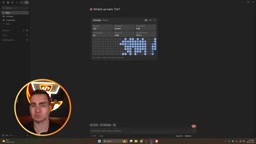
YouTube video analysis: Finding the 20 most-viewed videos about Claude Code in the past 30 days. The Agent automatically calculated outlier ratios (views relative to channel average), identified breakout hits from small channels, and read transcripts to analyze video structure.
All five scenarios ran to completion for a total cost of $2.71.
Advanced Play: Combining Multiple Actors into an Automation Skill
A single actor solves a single point of data acquisition. The real value lies in combining multiple actors into a Skill.
The creator demonstrated a lead-generation scenario aimed at social media management or AI automation agencies: the ideal client is a growing business with good reviews but no social media presence.
The logic chain of this Skill is: Google Maps finds target businesses and reviews → Instagram checks social media activity → LinkedIn checks whether they're hiring (to gauge budget and growth) → TikTok finds popular content in that niche → YouTube finds high-view topics → the Agent produces a composite score and generates a personalized pitch for the client.
Setup involves defining the Skill in Claude Code with a prompt (named /prospect), after which you just input a category and city to trigger it.
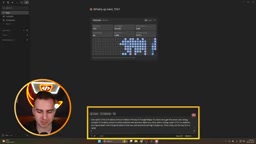
A test run of barber shops in London produced a complete HTML report including a business list, competitor content analysis, personalized pitches for the top 5 leads, and scores — for about 37 cents total.
The core advantage of this combined approach: the Skill pre-defines each actor's invocation format and response structure, so the Agent doesn't have to re-figure things out on every run, reducing wasted tool calls.
Skills in Claude Code are a reusable encapsulation mechanism: define a task's execution flow, the tools involved, and their invocation parameters in a natural-language prompt, save it, and trigger it via a slash command (like /prospect). The value of a Skill is that it moves the uncertainty of "making the Agent figure out on the fly which actor to use, what the input format is, and what result fields exist" forward to the definition stage, thereby reducing wasted tool calls and token consumption at runtime. This mirrors the function-encapsulation mindset in traditional software: lock down stable processes, leave variable parameters to user input. For data workflows that run repeatedly (lead generation, competitor monitoring, content analysis), this pattern can significantly cut costs and improve result consistency.
Multi-Source Cross-Verification and Industry Trends
Among similar tools, Apify isn't the only option. Firecrawl, Bright Data, and others do similar things. But Apify's differentiation lies in the native MCP Server integration experience and the scale of its 80,000-actor ecosystem.
An industry signal worth noting: the median US AI Engineer salary hits $150K-$250K (based on real-time data scraped by Apify's LinkedIn actor), and the top skill tags are uniformly LLM, Agent, RAG, and Evals. This shows that Agent engineering has moved from the experimental stage into production deployment, and demand for data pipeline infrastructure is growing rapidly.
Firecrawl and Bright Data are Apify's main competitors in the data scraping space, with different positioning: Firecrawl focuses on converting individual websites into LLM-friendly Markdown (leaning toward crawling and structuring), Bright Data is known for its large-scale proxy network and data collection infrastructure (leaning toward the underlying layer), while Apify emphasizes a one-stop experience of "ready-made actor marketplace + cloud computing + MCP integration." When choosing, weigh several factors: whether ready-made scrapers exist for your target platforms, differences in cost models between pay-per-result and subscription pricing, the ceiling on anti-blocking capabilities, and support for Agent-native integrations like MCP. There's no universally recognized winner in the industry yet, and multi-source cross-verification is itself a sensible way to reduce dependence on any single platform.
Practical Limitations
A few things to keep in mind:
- Data completeness depends on the source site. Missing ratings or phone numbers may not be a scraping failure — they may simply not exist on the source site
- Costs scale linearly with data volume. The $5 free credit looks like a lot, but for large-scale lead generation, expenses rise quickly
- Skills need iteration. The creator also notes that a freshly generated Skill needs to be run and gradually tuned
The core problem Apify MCP Server solves is giving AI Agents full-web structured data access with a single line of configuration. For users who need Agents to do real research, competitive analysis, or lead generation, this is currently one of the most practical paths available.
One-line Summary
Apify MCP Server lets Agents call 80,000 scrapers with one line of config — five real-world scenarios tested for just $2.71.
Paragraph Summary
The article argues that the real bottleneck for AI Agents isn't reasoning ability but reliably acquiring real data from platforms like Google Maps, Instagram, TikTok, and LinkedIn, where traditional per-site integration carries extremely high maintenance costs. Apify's approach uses 80,000+ ready-made actors to handle anti-blocking, proxy rotation, and structured output centrally, with an MCP Server that lets Claude, Cursor, and ChatGPT connect via a single line of config, allowing Agents to autonomously search for and invoke tools. The author tested five notoriously difficult scenarios — Google Maps leads, Instagram posts, TikTok topics, LinkedIn jobs, and YouTube analysis — for a total cost of $2.71; further combining multiple actors into a /prospect Skill in Claude Code enables automated lead generation for about $0.37 per run. The article also notes that data completeness is limited by source sites, costs scale linearly with volume, and Skills require iterative tuning.
Related articles

FastAPI: A High-Performance Python Framework and a Production-Ready API Development Powerhouse
FastAPI is a high-performance web framework based on Python type hints, supporting async and automatic OpenAPI docs. With over 100k GitHub stars, this article analyzes its core strengths, production readiness, and selection advice.

Tesla Optimus Begins Mass Production: Can the Goal of 20,000 Units Per Week Be Achieved?
Tesla Optimus officially begins mass production as Musk sets a target of 20,000 units per week. This article analyzes the supply chain challenges behind mass production, the real gap in capacity ramp-up, and the competitive landscape for humanoid robots.

PCL: A Minecraft Launcher with 8.5k Stars — Why Was It Written in VB.NET?
An in-depth analysis of PCL, the GitHub Minecraft launcher with 8,500+ stars: why it chose VB.NET, its features and China network advantages, and the limits of Windows-only.