Third-Party Report Confirms: AI Recursive Self-Improvement Has Begun, With No Signs of Slowing

A third-party assessment finds Anthropic is very likely already self-improving, with no short-term bottlenecks in sight.
After gaining deep internal access to Anthropic, independent evaluator Meter reports that model capability is improving at roughly twice the historical rate, driven mainly by AI's own progress rather than compute or headcount. Model gains and compute-efficiency gains form a compounding loop, and Meter found no clear bottlenecks over the next 12 months. Yet transparency has limits: Anthropic kept approval and redaction powers and canceled compute-allocation verification. Unreleased internal models accelerate next-gen R&D, benchmarks are continually hardened, and autonomous experimentation shows signs of life. The report turns developer impressions into citable evidence, but recursive self-improvement remains a strong signal, not a final verdict.
An Independent Assessment From the Inside Confirms the Most Unsettling Hypothesis
A few months ago, the heads of top AI labs like Anthropic and OpenAI collectively called for "slowing the frontier pace," citing concerns about recursive self-improvement (RSI) and the eventual emergence of superintelligence. At the time, they promised to allow third-party evaluators "near-employee-level" access to internal systems, models, employees, and even chat logs.
Now, the first batch of independent evaluation results is out. Independent evaluation firm Meter, working closely with Anthropic, obtained near-complete internal access and published the report Independent Assessment of AI R&D Acceleration at Anthropic and OpenAI. According to the judgment of multiple Meter researchers involved in the project: as of the report's publication, Anthropic is very likely already engaged in self-improvement.
This is not science fiction speculation but a conclusion drawn from internal data, employee interviews, and production-line observations. Meter deployed only 2.5 full-time equivalent staff and completed the assessment within a few months, answering three core questions: Is the pace of capability growth inside Anthropic accelerating? How much of the acceleration is attributable to AI? Are there key bottlenecks that could slow the acceleration in the short term? All three answers point in the same direction: acceleration is real, the dominant factor is AI itself, and no obvious obstacles have yet been found.
Recursive Self-Improvement (RSI) is a core concept in AI safety, referring to an AI system's ability to improve its own code, architecture, or training pipeline, with the improved version further enhancing its improvement capabilities, forming a positive feedback loop. Theoretically, such a loop could cause intelligence levels to surge dramatically in a short time, beyond human understanding and control. Philosopher Nick Bostrom described it in Superintelligence as the key mechanism of an "intelligence explosion": once AI crosses a certain capability threshold, it can design ever more powerful successor versions at an accelerating rate. The current debate centers on whether existing large models are approaching this threshold—whether they can autonomously propose high-value research hypotheses, design experiments, and validate results, rather than merely executing tasks specified by humans. What Meter's report calls "very likely already self-improving" refers precisely to AI playing an increasingly substantive accelerating role in the R&D process, though it has not yet reached a fully autonomous recursive loop.
Evidence of Acceleration: A Clear Inflection Point in the Model Curve
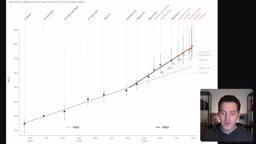
How does Meter prove that "acceleration" is not an illusion? They constructed a counterfactual chart: with Anthropic's internal model capability metric AECI on the vertical axis, a linear extrapolation of historical trends should yield a relatively gentle upward line. But the actual data clearly turns upward after a certain point, forming a steep inflection point.
According to Meter's assessment, the rate of capability improvement in Anthropic's models on well-defined tasks (especially those related to the AI R&D process, such as writing code for supporting systems) has reached approximately twice that of a certain historical period. Meter even states that the current pace may be closer to 1.3 to 3 times the historical rate. More critically, they ruled out other explanations: it is not due to hiring more researchers, not due to an explosion in compute scale, and not due to accidental breakthroughs by human researchers. Through multiple lines of evidence—including employee interviews, self-reported efficiency gains, lines of code, experiment usage, and qualitative feedback from leadership—Meter pinned the main cause of acceleration on AI progress itself.
Quotes from employee interviews are telling: "A speedup of more than 2x is entirely credible," "the biggest effect comes from model acceleration; AI acceleration is bigger than all other effects combined," "the bottleneck now is only ideas and compute, no longer code." These intuitive impressions from internal researchers corroborate the data curves.
The Compounding Loop: Efficiency Gains Are Feeding Back Into Themselves
What makes Meter's report truly "nerve-wracking" is the compounding nature of the acceleration. Stronger models can more quickly discover methods to make themselves even stronger; at the same time, models are learning to use limited compute more efficiently. In its S-1 filing ahead of its IPO, Anthropic disclosed that its compute utilization efficiency rose from 0.67x to 2x within a few quarters—driven by the models themselves optimizing inference efficiency.
This compounding loop has external corroboration as well. In Google's previously published Alpha Evolve paper, AI was used to improve Google's own hardware architecture, delivering about a 1% efficiency gain. A single percentage point seems tiny, but at Google's scale it means billions of dollars in cost savings. AI helps design more efficient AI infrastructure, and that infrastructure in turn feeds stronger AI—this is the real-world version of the "intelligence explosion" narrative.
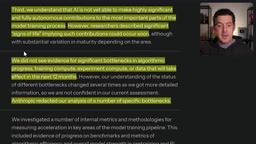
Meter states bluntly in the report: they found no clear bottlenecks—whether in algorithmic progress, training compute, experiment compute, or data—that would significantly block this compounding acceleration over the next 12 months. The report reads: "We did not find obvious bottlenecks or limited inputs that would prevent further growth, nor did we find steep diminishing marginal returns to further scaling that would impede this compounding acceleration." In other words, from the current state to recursive self-improvement, there are for now no brake pads in sight.
The S-1 filing is a registration statement form required by the U.S. Securities and Exchange Commission (SEC) that companies must submit before an initial public offering (IPO), disclosing key information such as business model, risk factors, financial condition, and operating metrics. Because S-1 filings are governed by securities law and misstatements can trigger legal liability, the data disclosed therein is generally regarded as relatively reliable first-hand information. Anthropic's disclosure in its S-1 that compute utilization efficiency rose from 0.67x to 2x means its models can perform a substantially larger amount of effective computation on the same hardware, which could stem from either model inference optimization or improved scheduling algorithms. Placed in the context of the RSI discussion, the significance is that the efficiency gain itself may be the result of AI participation in optimization, thus constituting evidence of a compounding loop of "AI improving AI infrastructure."
The Boundaries of Access: Anthropic Can See, Modify, and Delete
The credibility of this report comes partly from Meter's independence and depth of access, but its limitations must also be clearly understood. Meter could request any information it deemed relevant, but Anthropic had unilateral power to approve or deny requests. In practice, the two sides often negotiated, compromising on data that was "informative, not extremely sensitive, and easy to share."
A further detail: this project is not the "employee-level access" program Anthropic previously promised. Both Meter and Anthropic explicitly stated that this project does not involve full employee-level permissions, nor is it the independent evaluation project described in Anthropic's October 15 update. In other words, the world is still waiting for an evaluation with truly "unrestricted access" to materialize.
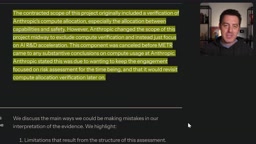
There was also a mid-project scope change: Meter was originally to verify Anthropic's compute allocation—how much went to R&D, how much to inference serving, how much to other uses—but Anthropic canceled this part midway, narrowing the project scope to assessing only AI R&D acceleration. Anthropic's explanation was that it wanted to keep the project focused on risk assessment, leaving compute verification for later. This decision inevitably invites speculation, especially against the backdrop of Anthropic's advancing IPO process.
Additionally, analysis concerning certain specific bottlenecks was redacted by Anthropic in the report. Meter stated that it received "convincing evidence" that the acceleration did not stem from an expansion in training compute scale, but the details of that evidence were excised. These information gaps remind readers: this is an independent assessment completed under constrained conditions, not a fully transparent audit.
Internal Unreleased Models and Benchmark Saturation: More Profiles of Acceleration
The report's appendix reveals several telling signals. First, Anthropic is using unreleased internal models to accelerate its own R&D; before facing the outside world, these models are used to improve the next generation of models. Meter believes this pattern makes "continuous slope change" more credible than "one-time jump"—in other words, the massive improvement brought by Mythos Preview is not an accident of some particular model but an inevitable manifestation of compounding acceleration.
Second, Anthropic has had to continually raise the difficulty of internal benchmarks because new models are rapidly saturating existing tests. For the first time, researchers say these models are beginning to become genuinely useful for autonomous experimentation. Although Meter cautiously notes that AI has not yet made "highly important and fully autonomous" contributions at the most critical stages of model training, researchers describe "significant signs of life," hinting that such contributions may soon appear.
This raises a deeper concern: when AI begins to be able to propose meaningful hypotheses about research directions, will the last unique value of human researchers—intuition and sense of direction—also be gradually eroded? Meter's report does not give a definitive answer, but the trend line it records is clear enough.
Benchmark saturation refers to AI models approaching or reaching the ceiling on a given evaluation benchmark, causing that benchmark to lose its discriminating power. For example, once models exceed 90% on tests like MMLU or HumanEval, researchers can hardly use that test to determine whether a new model is stronger. Benchmark saturation is itself a byproduct of rapid AI capability gains, but it also creates an evaluation dilemma: external observers may underestimate the pace of progress because public metrics have topped out, while internal teams are forced to continually design harder tests closer to real R&D tasks. The repeated hardening of Anthropic's internal benchmarks precisely shows that model capability growth has exceeded the coverage of existing measurement tools. This phenomenon mutually supports the judgment of "continuous slope change"—if progress were merely sporadic jumps, benchmark saturation would not exhibit systematic, sustained characteristics.
What This Means: A Realistic Projection for the Next One to Two Years
Putting this report back in context, it confirms what many developers have felt over the past year: model releases are becoming more frequent, coding capability underwent a qualitative change at some point, and the entire development workflow has been reshaped. Meter, using a third-party identity and internal data, has turned these impressions into citable evidence.
But the report's real impact lies in its "no bottlenecks" judgment. If Meter's assessment holds, then within the next year we may see capability progress accelerate further rather than follow a linear extrapolation. One employee interview stated that "a year of progress exceeding two years is entirely credible, and even four times is not crazy." A speedup of this magnitude puts direct pressure on safety research, alignment work, and the pace of regulation.
Of course, caution remains necessary. The report acknowledges that AI still has limitations in autonomously proposing high-value research directions, that transparency on compute allocation was actively withdrawn, and that some analysis was redacted. The employee-level third-party access promised by Anthropic and OpenAI has not yet been truly delivered. The "evidence" for recursive self-improvement is a strong signal, but not a final verdict.
What is certain is that the acceleration of AI R&D is no longer just a verbal warning from lab heads. It appears in third-party assessment charts, in internal employee interviews, and in benchmark tests that have been repeatedly made harder. The question is no longer "is it accelerating" but "are we prepared to keep understanding amid the acceleration."
One-line Summary
A third-party assessment concludes that Anthropic is very likely already self-improving, with no short-term bottlenecks in sight.
Paragraph Summary
After obtaining deep internal access to Anthropic, independent evaluation firm Meter published a report concluding, based on internal data, employee interviews, and production-line observations, that Anthropic's model capability improvement rate is roughly twice the historical rate and is mainly driven by AI's own progress rather than compute or headcount expansion. Model improvement and compute efficiency gains form a compounding loop, and Meter says it found no clear bottlenecks that could significantly block acceleration over the next 12 months. But the report's transparency has limits: Anthropic retained approval and redaction powers and canceled the compute allocation verification midway. Unreleased internal models are being used to accelerate next-generation R&D, benchmarks are being continually hardened, and autonomous experimentation shows "signs of life." The report turns developers' impressions into citable evidence, but recursive self-improvement remains a strong signal rather than a final verdict.
Related articles
 Tech Frontiers
MuJoCo: An Analysis of DeepMind's Open-Source General-Purpose Physics Simulator
An in-depth analysis of Google DeepMind's open-source physics simulator MuJoCo: high-performance C++ kernel, MJCF modeling format, contact solving principles, MJX GPU acceleration, and robot reinforcement learning use cases.
 Tech Frontiers
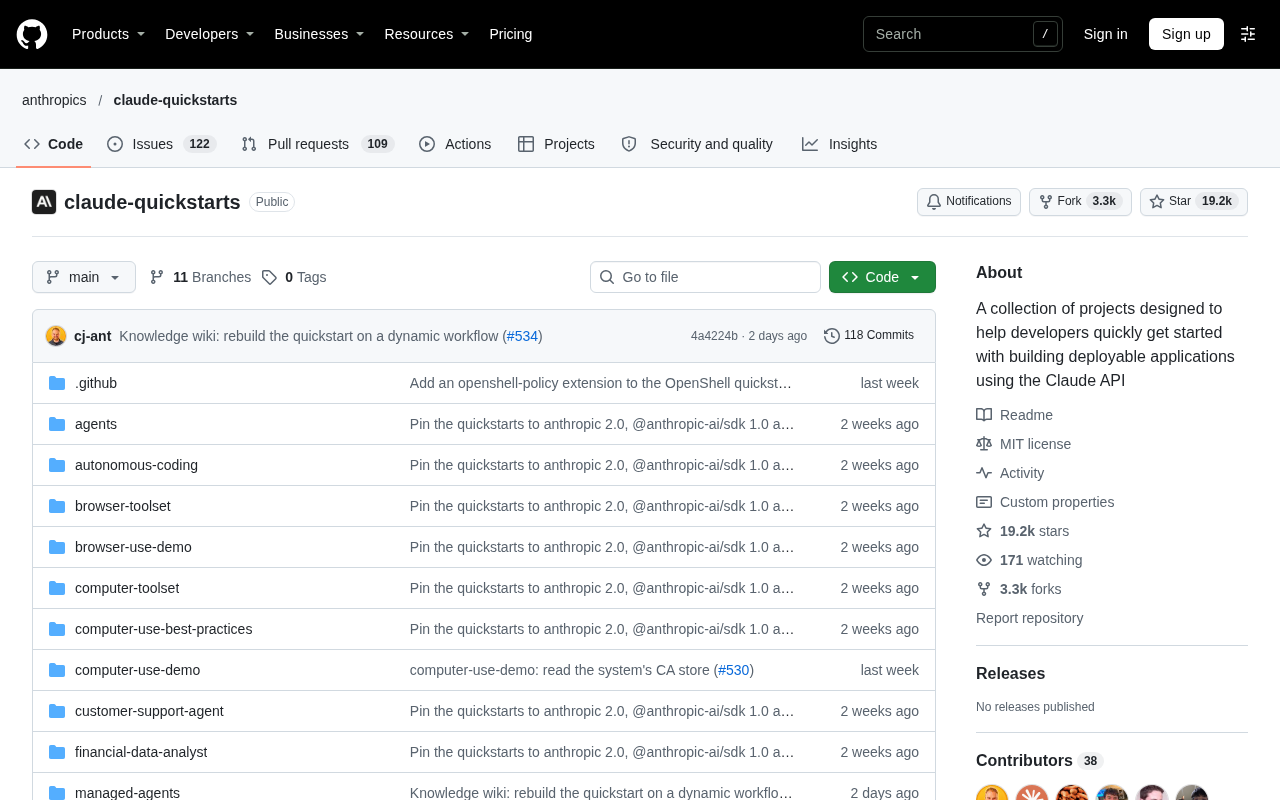
Claude API Quick Start: The Official Quickstarts Project Collection
Anthropic's official claude-quickstarts project collection helps developers quickly build deployable apps with the Claude API. Nearly 20k stars, Python-based, great for beginners and prototyping.
 Tech Frontiers
AI Agents Connecting Directly to APIs: Which Calls Can Be Safely Allowed?
AI agents can call any API, but the real challenge is deciding which calls can be safely allowed. This article analyzes allowance decisions from three dimensions—intent matching, least privilege, and controllable impact—and argues that the control layer should sit outside the agent, combined with audit traceability to build a trustworthy API call governance mechanism.