Three Influential Tech Blog Posts: Leaky Abstractions, Migrations, and the Engineer/Manager Pendulum
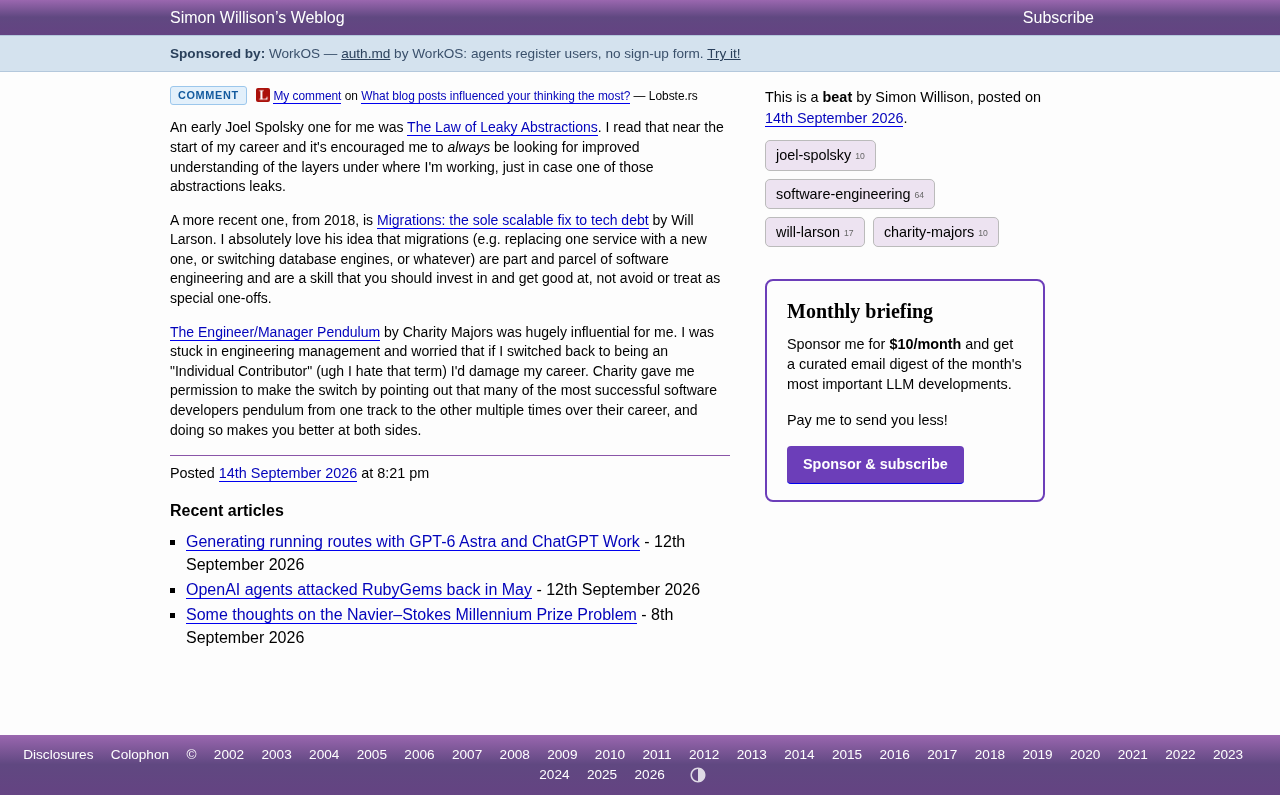
Simon Willison recommends three classic posts covering abstraction, tech debt, and engineering career paths.
Developer Simon Willison highlighted three articles that deeply shaped his engineering mindset: Joel Spolsky's Law of Leaky Abstractions argues that all non-trivial abstractions eventually fail, so engineers must understand the layers beneath them; Will Larson's piece on migrations makes the case that systematic migrations are a core, reusable skill for tackling tech debt at scale; and Charity Majors' Engineer/Manager Pendulum challenges the idea that management is the natural endpoint above engineering, arguing that swinging between both tracks makes you stronger in each. Together, the three articles form a foundation for thinking about technical depth, engineering practice, and career development.
Well-known developer Simon Willison, in a Lobste.rs discussion thread asking "Which blog posts influenced your thinking the most?", shared three classic articles that shaped his professional mindset. Spanning from low-level technical understanding to career development, these three pieces are worth revisiting for any software engineer.
The Law of Leaky Abstractions: Always Understand the Layers Beneath You
The first article Simon mentioned is Joel Spolsky's early classic, The Law of Leaky Abstractions, which he read early in his career and says has had a lasting influence on him.
The core argument is that all non-trivial abstractions are "leaky" to some degree. No matter how thoroughly a framework, library, or platform encapsulates its underlying details, those details will eventually surface and force you to understand them.
Simon's takeaway: you should always maintain a deep understanding of the layers beneath whatever level you're currently working at — in case one of those abstractions springs a leak. This mindset stands in sharp contrast to the "just call the API, don't worry about the internals" attitude common among many developers. When abstractions inevitably fail, the engineers who understood the underlying mechanics ahead of time are the ones who can quickly diagnose and fix the problem.
Migrations: The Only Scalable Fix to Tech Debt
The second article is Will Larson's more recent piece, Migrations: the sole scalable fix to tech debt.
Larson's argument challenges the conventional wisdom many teams hold about "migrations" — the kind of work involved in replacing an old service with a new one, or switching database engines. Many teams tend to avoid this kind of work, or treat it as a special, one-off undertaking.
But Larson argues that migrations are an inseparable part of software engineering — a core skill that should be continuously invested in and refined, not avoided or treated as an exception. Simon says he strongly agrees.
From an engineering management perspective, this is especially valuable. As systems scale, technical debt inevitably accumulates, and piecemeal patches rarely address the root cause. Only by treating migration as a reusable, scalable capability — with standardized processes, tooling, and accumulated experience — can a team truly and sustainably pay down technical debt.
The Engineer/Manager Pendulum: Freedom to Swing Between Two Tracks
The third article, and the one that influenced Simon most deeply, is Charity Majors' The Engineer/Manager Pendulum.
Simon candidly admits that at the time, he felt stuck in an engineering management role and worried that switching back to being an Individual Contributor (a term he openly dislikes) would damage his career trajectory.
Charity Majors' article gave him "permission" to make a change. She argues that many of the most successful software developers swing back and forth between management and technical tracks multiple times throughout their careers — and that these transitions actually make you stronger on both sides.
This perspective dismantles the linear career view that management is the natural endpoint above engineering. It treats management and technical work as two parallel, complementary capabilities rather than rungs on a ladder. For engineers standing at a career crossroads, the "pendulum" framework offers a healthier and more flexible way to think about their own path.
What These Three Articles Have in Common
Taken together, these three pieces form the intellectual foundation of a mature engineer's mindset:
- Technical depth: The Law of Leaky Abstractions reminds us not to be lulled by surface-level convenience — understand the full stack.
- Engineering practice: The migrations philosophy shows how to handle system evolution and technical debt in a scalable way.
- Career development: The Engineer/Manager Pendulum offers a framework that breaks free from the anxiety of linear promotion paths.
Lists like this — "blog posts that changed how I think," curated by experienced practitioners — tend to deliver far more long-term value than straightforward technical tutorials. They don't just teach you a specific skill; they change the way you think. For anyone looking to go further in software engineering, all three of these articles belong on the must-read list.
Related articles
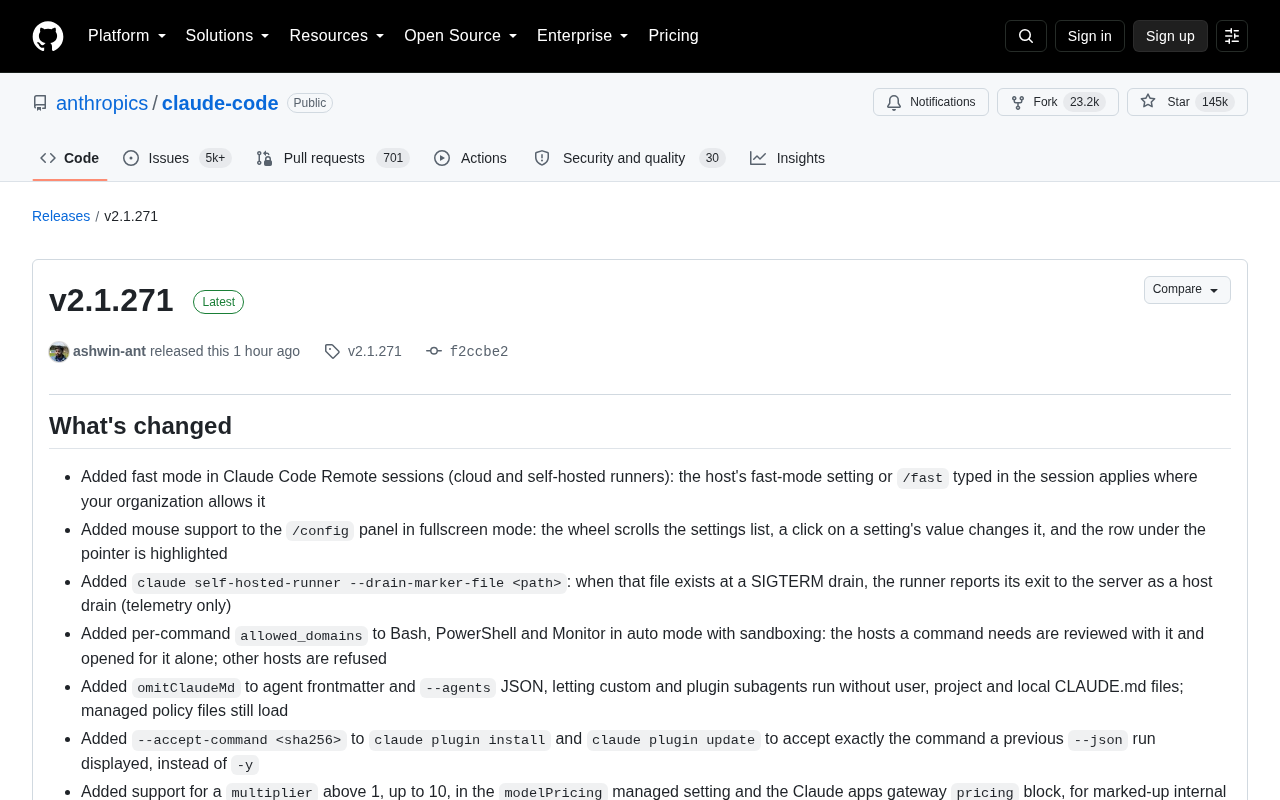
Claude Code v2.1.271 Update Deep Dive: Fast Mode, Sandbox Security, and Enterprise Improvements
Claude Code v2.1.271 adds fast mode for remote sessions, per-command sandbox network controls, enterprise policy fixes, MCP protocol improvements, and terminal/IDE enhancements.
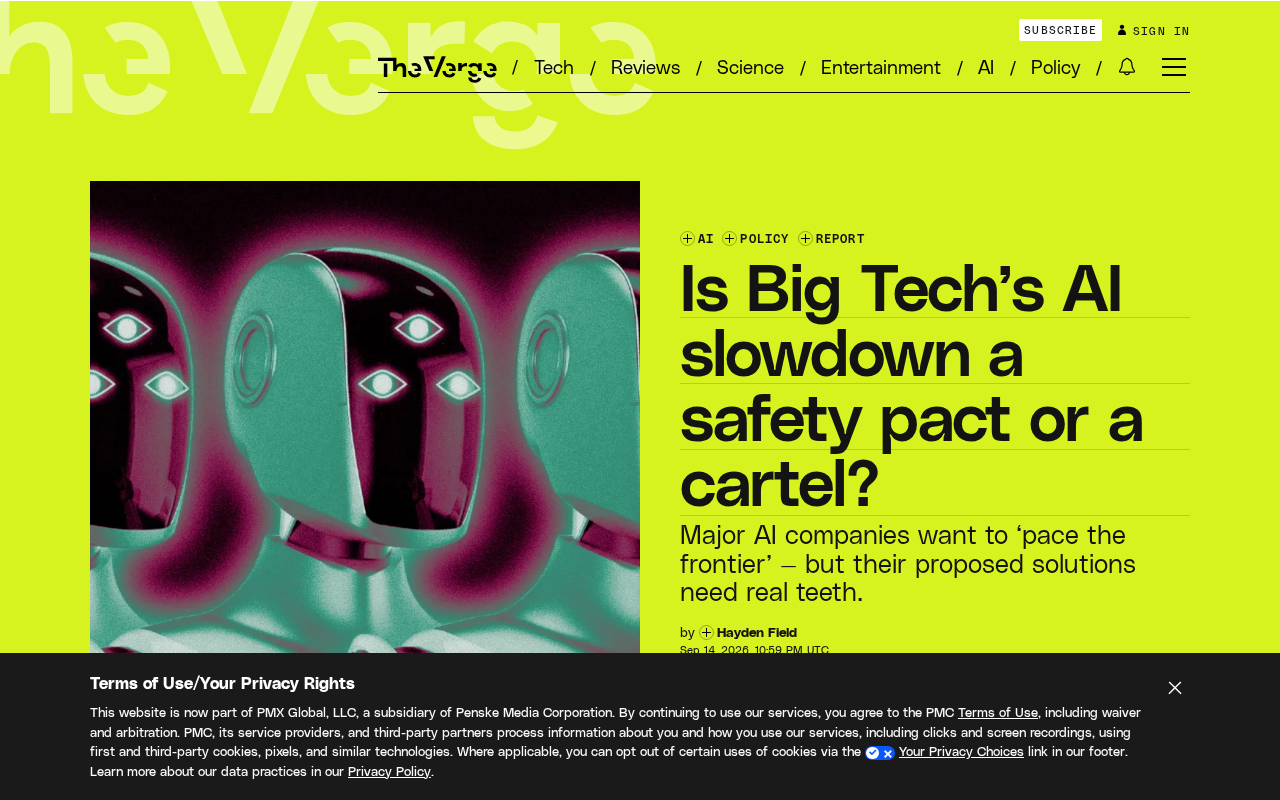
AI Giants Collectively Hit the Brakes: Safety Protocol or Industry Cartel?
OpenAI, Anthropic, Google DeepMind, and SpaceX leaders agree to slow AI development. Is this a responsible safety pact — or an oligopolistic cartel in disguise?

Apple Home Gets AI Camera Features with iOS 27: Up to $60/Month
iOS 27 and tvOS 27 bring Apple Intelligence to Apple Home with AI video summaries for HomeKit Secure Video — but unlocking them costs up to $60/month via subscription.