ThunderPhone: A Self-Serve Platform for Building AI Phone Agents Starting at 2 Cents per Minute

ThunderPhone lets businesses build AI phone agents at 2¢/min, with testing, monitoring, and 47-language support built in.
ThunderPhone is a self-serve platform for building AI phone agents, launched on Product Hunt by Alex Kolchinski. It bundles all AI model costs into a single per-minute rate starting at 2 cents, supports 47 languages, and offers a full workflow covering AI-simulated testing, real-time call monitoring with human intervention, and automatic issue detection — lowering the barrier for businesses to deploy production-grade voice agents.
When Phone Customer Service Meets AI Agents
Phone remains an irreplaceable channel in customer communication. Whether it's appointment reminders, order confirmations, or post-sale support, voice interactions carry a significant volume of high-value business exchanges. Traditional call centers, however, are expensive and difficult to scale — and early voice bots earned a poor reputation for their limited comprehension. Early IVR (Interactive Voice Response) systems relied on fixed decision trees and keyword matching, forcing users to follow rigid scripts that often led to frustrating dead ends. With the maturation of ASR (Automatic Speech Recognition), NLU (Natural Language Understanding), and TTS (Text-to-Speech) — and especially with the emergence of large language models (LLMs) — voice agents have gained near-human contextual understanding and multi-turn conversation management, moving "AI phone calls" from research experiment to commercial reality.
ThunderPhone, recently launched on Product Hunt, aims to solve this pain point with a self-serve platform: one that lets businesses quickly build, test, and deploy their own AI phone agents without assembling a complex engineering team. Product Hunt is one of the world's most influential platforms for launching new tech products, where community members submit and vote on new releases daily — a high ranking translates directly into early-user attention and media exposure. Built by Alex Kolchinski, ThunderPhone earned 77 upvotes and ranked 14th on its launch day, appearing across the Customer Communication, SaaS, and Artificial Intelligence categories. A ranking of 14th with 77 votes is a solid mid-tier result — enough to signal genuine community interest, though not yet a breakout hit.
ThunderPhone's Core Value Proposition: Balancing Low Cost with High Intelligence
Starting at 2 Cents per Minute, AI Model Costs Included
ThunderPhone's most immediate draw is its pricing — starting at just 2 cents per minute, with AI model costs already bundled in. Businesses don't need to separately budget for LLMs or speech models; pricing is transparent from the start. For companies running large-scale outbound or inbound call operations, cost predictability often matters more than raw cheapness.
To appreciate why this pricing is compelling, it helps to understand how AI voice agent costs are typically structured. In conventional setups, a single AI phone call racks up charges across multiple layers: ASR fees, LLM inference fees, TTS fees, plus telephony and platform service costs — each billed separately, making final costs hard to forecast. ThunderPhone collapses all of this into a single per-minute rate. This "all-inclusive" model dramatically simplifies cost accounting and budgeting, allowing non-technical teams to make purchasing decisions quickly without needing to evaluate which underlying models are being used or how they're billed — just the per-minute cost.
The Storm Tier and Big Bench Audio Benchmark Results
On the capability side, ThunderPhone offers a premium tier called Storm with an "extra-intelligence" option. According to official figures, this configuration achieved a score of 99.4% on the Big Bench Audio benchmark, which has been publicly released on Hugging Face.
Some context is useful here. Big Bench was originally a large-scale LLM evaluation framework initiated by Google, covering hundreds of tasks to measure reasoning, language understanding, and other capabilities. Big Bench Audio is an audio-domain extension of that framework, specifically designed to assess model performance on speech comprehension, instruction-following, and related audio tasks. Hugging Face is the world's largest open-source AI model and dataset hosting platform; publishing a benchmark there means any researcher or developer can download the raw data and independently reproduce the results.
The public benchmark is worth noting. It signals that ThunderPhone is willing to let third parties reproduce and verify its performance claims, rather than relying solely on marketing copy. At a time when "benchmark inflation" is a widespread concern in the AI industry, an openly verifiable standard meaningfully increases credibility.
Full Lifecycle Management for AI Phone Agents
ThunderPhone is more than a "robot that makes and receives calls" — it provides a complete workflow around AI phone agents:
Agent Building and AI-Caller Simulation Testing
Users can build agents on the platform and test them using AI-caller simulation. This is an "AI testing AI" paradigm where the system generates virtual callers with varying personalities, accents, emotional states, and question complexity to simulate the full range of real-world conversation scenarios — including interruptions, topic drift, and emotionally charged edge cases. Compared to manual testing, this approach can cover thousands of conversation paths in a short time at a fraction of the cost.
This feature is particularly practical. Traditional voice bots are notoriously difficult to thoroughly test before going live, and using AI to simulate callers allows teams to rehearse edge cases repeatedly without consuming real human resources — catching logic flaws before they reach customers.
Real-Time Call Monitoring and Human Intervention
The platform supports monitoring and steering live calls in real time. This is a classic Human-in-the-Loop (HITL) collaboration model: the AI handles the vast majority of routine conversations while human agents watch a monitoring dashboard for live progress. When the AI's confidence drops below a threshold, a sensitive topic arises, or a customer explicitly requests a human, the agent can seamlessly step in or send real-time guidance to adjust the AI's response strategy.
In practice, this means that when an agent hits a difficult situation mid-call, a human can intervene and course-correct — providing a safety net for human-AI collaboration rather than leaving the AI to handle every unpredictable scenario on its own. This model effectively addresses the "runaway conversation" risk inherent in fully autonomous AI deployments while keeping labor costs to a minimum.
Automatic Issue Detection and Intelligent Fix Suggestions
Going further, ThunderPhone automatically detects problems in calls and surfaces fix suggestions. This automates what has traditionally been a manual quality-assurance process — listening to recordings and triaging issues one by one — dramatically reducing operational overhead. For teams continuously iterating on agent quality, this kind of closed-loop feedback mechanism is quietly invaluable.
47 Languages Supported, Opening Global Market Opportunities
ThunderPhone claims support for 47 languages, giving multinational companies and multilingual markets direct deployment capability. In a global customer service context, language coverage often determines whether a product can enter additional regional markets. Broad multilingual support combined with competitive pricing makes it particularly attractive in cost-sensitive, linguistically diverse markets like Southeast Asia and Latin America.
Is ThunderPhone Worth Watching? A Balanced Assessment
From a positioning standpoint, ThunderPhone addresses several key factors in the AI voice agent space: transparent pricing, verifiable performance, and a complete workflow. Compared to infrastructure-layer API providers, it leans toward a ready-to-use self-serve platform that lowers the barrier to entry for small and medium-sized businesses.
That said, a few things are worth watching going forward. First, a 99.4% score on Big Bench Audio is impressive, but there may still be a gap between academic benchmark performance and real-world call quality in noisy environments — actual deployment results will need more user case studies to validate. Second, AI phone outreach faces increasingly strict compliance regulations in several jurisdictions, and how well the platform helps users meet those legal requirements will be a key factor in whether it can scale.
The compliance challenge deserves attention. The US FCC clarified in 2024 that AI-generated voices fall under the Telephone Consumer Protection Act (TCPA), with potential fines of up to $1,500 per call for unconsented AI outreach. The EU's GDPR and AI Act impose strict requirements on automated decision-making and AI transparency — including a mandatory disclosure that users are speaking with an AI. China similarly has restrictions on automated outbound call frequency and content review. These regulations directly affect market access and business model design for AI phone products. If ThunderPhone wants to expand globally, building compliance tooling into the product itself will be a prerequisite.
Overall, ThunderPhone represents the broader shift in AI phone agents from "technical capability" to "productization and platformization." When building, testing, monitoring, and optimization are all integrated into a single self-serve platform, the barrier to deploying voice agents is being lowered fast.
Key Takeaways
Related articles

Gemini Omni 1.1 Hands-On Review: 40-Second Long Video Generation Compared with Seedance 2.5
Hands-on review of Google's Gemini Omni 1.1 Flash video model: 40-second scene extension, keyframe control, 360p draft workflow, and side-by-side comparison with Seedance 2.5.
The Pearl Club: An Anti-Efficiency Haven on the Internet
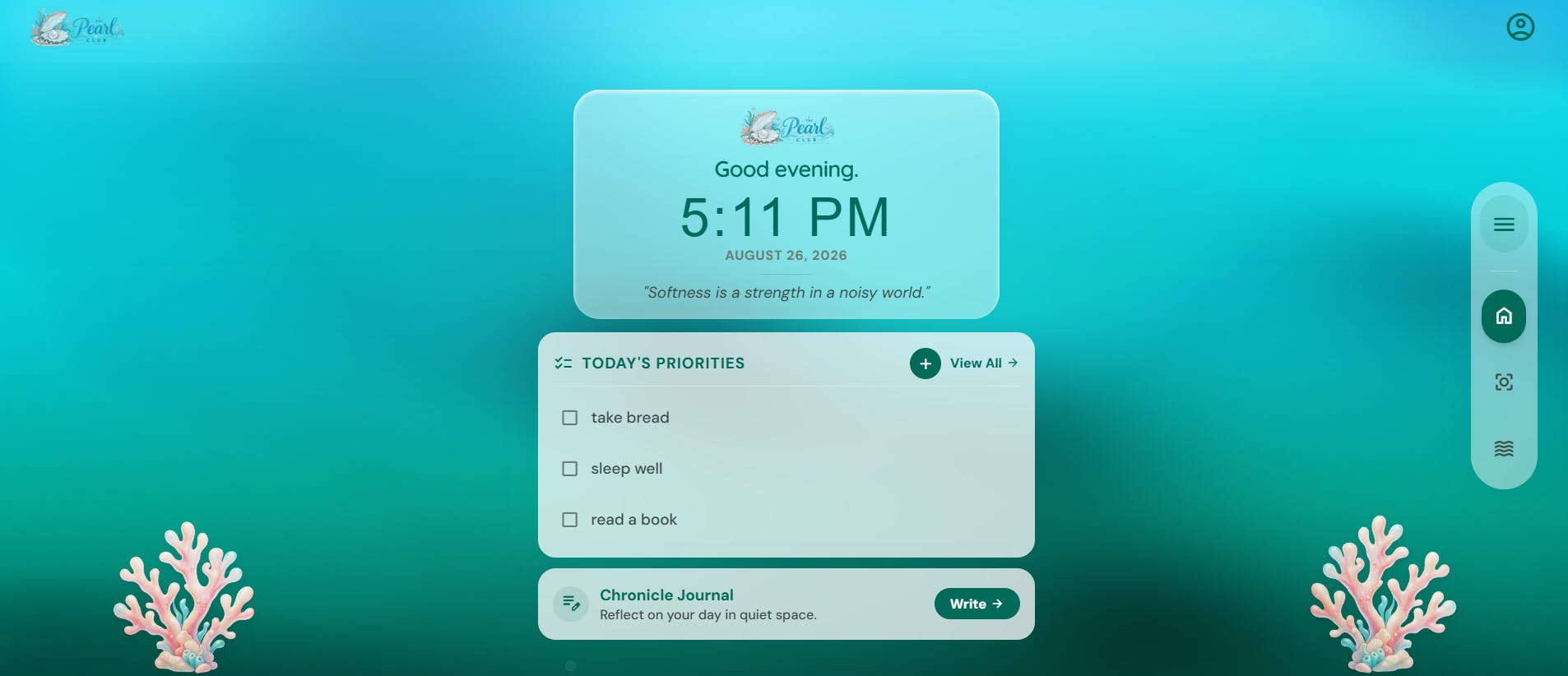
The Pearl Club is a healing app emphasizing 'slowing down,' offering journaling, mini-games, and marine life collection. This article analyzes its anti-efficiency design philosophy, market performance, and opportunities in the emotional product space.
SheerID Verification Stuck? Solutions for Failed AI Student Discount Claims
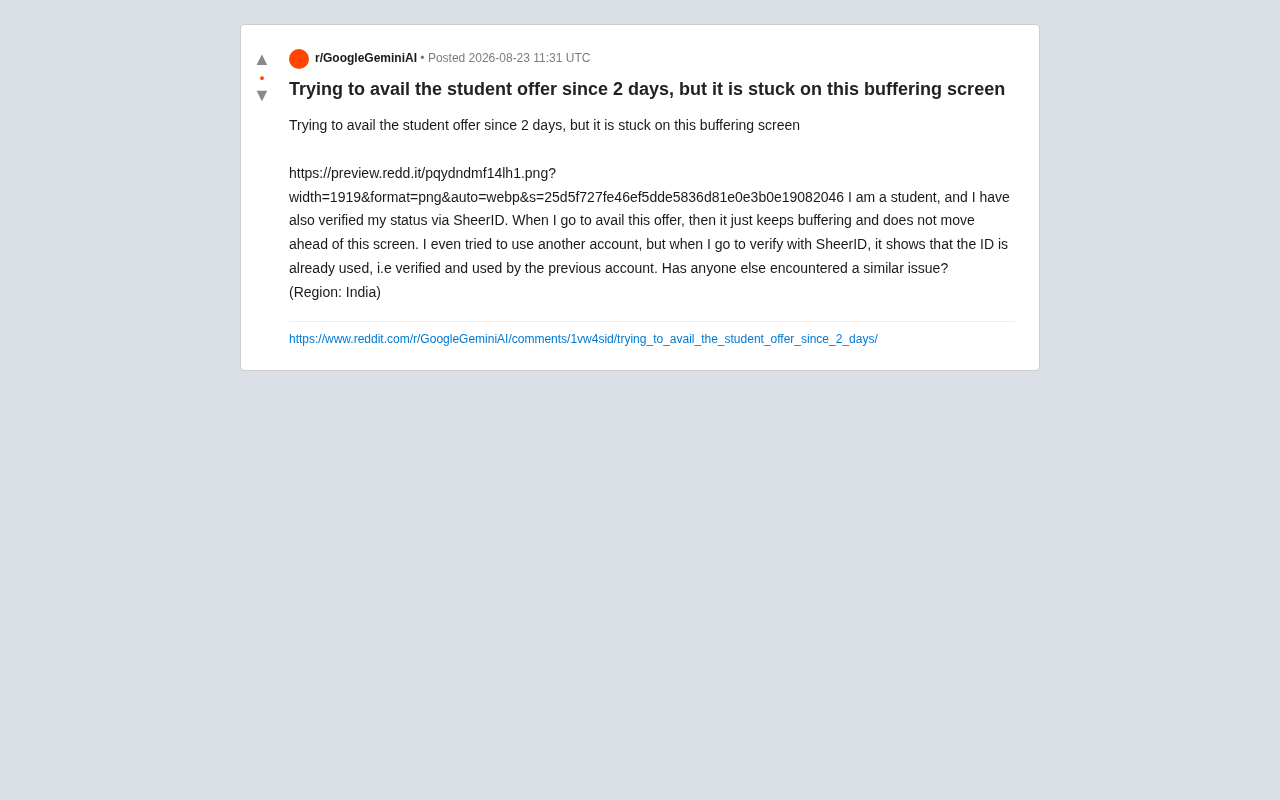
SheerID verification stuck when claiming AI student discounts? This guide explains why verification gets stuck, how student IDs show as already used, and provides practical solutions including browser troubleshooting and customer service contact for verification reset.