TikTok Launches Official MCP Server: AI Assistants Can Now Manage Ad Accounts Directly

TikTok's official MCP server lets AI assistants directly manage ad accounts end to end—efficiency and risk go hand in hand.
TikTok has officially launched an MCP server that lets AI assistants like Claude and Perplexity connect directly to its ad platform via the Model Context Protocol. The server wraps roughly 400 tools covering reporting, ad creation, targeting changes, and Smart Plus automated delivery, with a lightweight version that loads only about 40 core tools. TikTok reports that advertisers using MCP grew over 200%, though no baseline is given. The article also flags risks: advertisers may lose visibility into agent behavior, and frequent AI adjustments can repeatedly interrupt the roughly 25-result or 7-day learning phase. It recommends starting in reporting-only mode, setting daily budget caps, reviewing plans before launch, and checking change logs afterward—treating AI as a probationary employee, not an ad manager.
TikTok has officially launched an MCP server that allows AI assistants to connect directly to its ad platform and handle everything from data analysis to budget adjustments. This isn't just an upgrade to an advertising tool—it could reshape how ad teams work.
What Is MCP? Why It's Like a "Universal Plug"
MCP stands for Model Context Protocol, which can be understood as a standardized interface between AI assistants and external tools. According to analysis on a YouTube channel, TikTok built this connection itself rather than relying on third parties. That means the AI assistant sits on one end, the ad account on the other, and TikTok's official plug handles the connection in between.
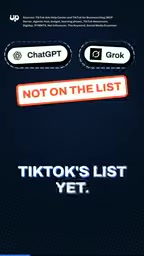
TikTok announced the feature at its annual advertising conference in May, and by October it supported connections to assistants including Claude and Perplexity. ChatGPT and Grok do not yet appear on TikTok's official support list.
Connecting works much like adding a regular app: find TikTok in the assistant's connector list, log in with a TikTok for Business account, and authorize. Authorization is valid for 30 days and must be renewed after it expires.
MCP was open-sourced by Anthropic in November 2024 and uses a client-server architecture: the AI assistant acts as the client and discovers and calls the "tools," "resources," and "prompts" exposed by external servers through a unified JSON-RPC interface. Before MCP, connecting to an external system often required writing custom integration code for each model separately, resulting in fragmented N×M integrations. MCP abstracts this layer into a standard protocol, so a single development effort can be reused by multiple compatible assistants. TikTok's MCP server plays the "server" role, wrapping the ad platform's hundreds of APIs into standard tools that compatible clients like Claude and Perplexity can call after OAuth authorization—this is the technical origin of the "universal plug" metaphor in this article.
Behind the 400 Tools: Full-Chain Control from Data to Budget
The MCP server provides roughly 400 tools covering campaigns, reporting, audiences, and creative assets. There is also a lightweight version that loads about 40 core tools first and looks up the rest on demand.
What can it actually do? The safest part is reporting queries. For example, ask "Which ads wasted money this week?" and the assistant pulls the data and explains it in plain language. Going further, it can create campaigns, modify targeting, pause ad groups, and even set up Smart Plus (TikTok's automated delivery mode, where the platform automatically selects audience, budget, and placements).

TikTok's official data shows that the number of advertisers using its MCP grew by more than 200%. Note, however, that this is self-reported by TikTok with no starting baseline provided—it only indicates growing interest, not a direct improvement in campaign performance.
The reason the tool count reaches about 400 relates to the fine-grained design of the TikTok Ads API: each action—creating a campaign, ad group, or creative, querying reports, managing audiences—typically corresponds to a separate endpoint, and the MCP server maps each one to a callable tool. Too many tools creates a "context bloat" problem—cramming all tool descriptions into the model's context at once both consumes tokens and tends to reduce selection accuracy. The lightweight version therefore uses a progressive disclosure strategy: it exposes only about 40 high-frequency core tools first, and the model loads the remaining tools on demand through a retrieval mechanism when needed. This aligns with the "tool search" pattern recommended by Anthropic and can significantly reduce call error rates and latency.
Efficiency and Risk Go Hand in Hand: Where Are the Limits of AI-Managed Budgets?
An assistant that can adjust budgets can also make mistakes quickly. Ad tech experts warn that advertisers may lose visibility into what agents are querying on the platform.
A more subtle trap lies in TikTok Ads' learning phase mechanism. Ads need about 25 results or 7 days to complete learning, and major changes can restart the learning phase. An overly aggressive assistant making around-the-clock micro-adjustments could repeatedly interrupt the learning process—this is a warning raised by analysts, not an official TikTok statement.

In addition, spending minimums still apply: a minimum of $50 per day per campaign and $20 per day per ad group.
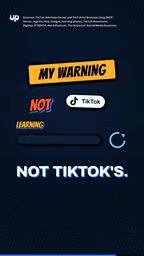
The ad learning phase is a machine learning mechanism common to all major ad platforms: the system needs to accumulate enough event samples (such as conversions) early in a campaign to calibrate its bidding and audience models. TikTok's threshold is about 25 results or 7 days, during which the model is in an exploratory state and costs fluctuate significantly. If budget, bid, targeting, or creative are significantly changed, the system determines that prior learning is invalid and restarts learning, causing costs to climb again. This is the technical root of the "AI around-the-clock micro-adjustment" risk: an agent optimizing at minute-level frequency may look diligent but can actually keep ads stuck in the learning phase long-term, dragging down overall performance. Industry practice generally recommends spacing major adjustments until after the learning phase ends.
Getting Started Safely: Treat AI as an Intern, Not a Manager
Given these risks, the recommendation is to set guardrails before delegating authority. Start in reporting-only mode and don't let the assistant make any changes; set daily budget caps; require reviewing the plan before anything goes live; and check the change log afterward.
One ad tech professional's assessment: an AI assistant will first become your analyst, and only much later might it become your ad manager. Treat it like a new employee on probation—it does the work, and you read every report.
For businesses looking to try it, starting with reporting queries and gradually verifying accuracy before granting limited operational permissions is likely the safest path at this stage.
Related articles

The Truth About AI Coding: Code Output Soars, So Why Is Delivery Still Hard to Speed Up?
Engineering leaders from Databricks, Uber, and Google Maps discuss AI coding's real impact: code output soars but delivery bottlenecks shift, code review faces rethinking, and enterprises begin fine-grained token governance.

A New Paradigm for Text Editing in Compose: TextFieldState Replaces the Old API
Jetpack Compose introduces the TextFieldState API to fix dropped characters and cursor jumps from async input. The old value/onValueChange callbacks will be deprecated in 1.13. This article covers InputTransformation, OutputTransformation, four state hoisting patterns, and new formatted text editing capabilities.

Remote Compose: A New Document-Driven Paradigm for Cross-Platform UI on Android
Remote Compose transmits compact binary documents instead of screen pixels, enabling efficient UI rendering on remote surfaces like Wear OS and widgets. This article covers its document creation API, expression animations, size optimization techniques, and Wear OS progress.