Tim Ferriss's Learning Method and Mental Allocation Techniques
Ferriss's trend-spotting, time management, and trauma disclosure form an actionable life operating system.
The article distills Tim Ferriss's core methodology from the Huberman Lab replay: using absolute statements as stress-test starting points, asking what tech geeks and the wealthy are doing, treating location as strategic leverage, volunteering proactively in high-density environments, writing late at night, doing annual reviews on one sheet, forcing "do more/do less" lists onto the calendar, and turning depression and childhood abuse disclosure into credibility and meaning, while advocating friends as behavioral references and paid coaches for accountability.
Tim Ferriss appeared in a curated replay on the Huberman Lab, and the conversation was extraordinarily dense: from how to spot emerging trends, to how to complete an annual review on a single sheet of paper, to how to turn your deepest pain into value for others. On the surface it's about "learning," but in essence it's about an actionable operating system for life.
Start with "Absolute Statements" to Find a Future That Hasn't Spread Yet
One of the simplest filters in Ferriss's methodology: if someone in a given field says "always," "never," or "should," he stops and writes the sentence down. The person isn't necessarily wrong, but absolute claims are the most worth stress-testing.
He applied this skepticism to the field of physical performance in 2008–2009. At the time, a set of technologies was spreading from small circles outward: wearable accelerometers were just getting started, and continuous glucose monitoring (CGM) was basically limited to people with type 1 diabetes. He heard that a professional race car driver was using CGM to monitor blood sugar while driving, and immediately realized the tool might be equally valuable for healthy people. He later used an early version of Dexcom himself—the insertion process was quite painful—but that's exactly the price early adopters pay.
The three questions he repeatedly asks form the basic framework for his trend-spotting:
- What are tech geeks tinkering with on weekends and late at night?
- What are wealthy people doing now that could become everyday life for tens of millions a decade from now?
- Where are people making do with clumsy workarounds, and is there room for innovation there?
He cites William Gibson's line as the underlying logic: the future is already here—it's just not evenly distributed. He doesn't predict the future; he looks for seeds that are sprouting.
Continuous glucose monitoring (CGM) is a technology that uses a tiny sensor implanted under the skin to automatically measure glucose concentration in interstitial fluid every few minutes. It was first aimed at people with type 1 diabetes, replacing traditional finger-prick blood sampling and helping provide real-time warnings of high and low blood sugar. Ferriss was interested in it because it turned "blood sugar" from an occasional lab metric into a continuously observable data stream, allowing even healthy people to observe the immediate effects of food, exercise, and sleep on metabolism. This idea later gave rise to products like Levels and Supersapiens aimed at the "metabolic health" consumer market, and it also explains why he was willing to endure the pain of early Dexcom insertion—he was betting on the behavioral change brought about by continuous data, not the device itself.
Treat Location as Leverage: High-Density Environments and "Selling Your Labor" Socializing
Ferriss emphasizes that choosing where to live is itself a strategy. When a person is in a period of rapid capability-building and has relatively light family obligations, putting yourself in a high-density environment—Silicon Valley, New York, Los Angeles, or places like Ottawa driven by Shopify or Pittsburgh driven by Duolingo—greatly increases the "surface area for luck to stick to."
When he first moved to Silicon Valley, he knew no one. His approach was to volunteer at events: hauling water, taking out trash, checking name badges. Most volunteers do only the bare minimum, so as long as you step up proactively, event organizers quickly notice you. A few months later he was pulled into planning meetings, and later he was responsible for recruiting speakers and setting the agenda, which led him to meet Jack Canfield, co-author of Chicken Soup for the Soul, who years later introduced him to his book agent.
He offers another, more specific tip: at large conferences, speakers get mobbed after they leave the stage, but the host doesn't. Go directly to the host, sincerely thank them, chat for a bit, and then ask them to introduce you to "people you might hit it off with." This often leads to three to five genuinely deep relationships. He explicitly advises against pestering every VIP within ten minutes of meeting them. What truly makes people remember you is being professional, punctual, anticipating their needs in advance, and quietly solving them.
The "Witching Hour" of Writing and the Annual Review
Ferriss is almost obsessive about record-keeping: every training session since age 16 has been logged, and supplement use is documented in detail. While writing The 4-Hour Body, he spent the day interviewing, reading, and taking in information, training in between and using himself as a guinea pig, and then entering the integration phase at night—usually writing from nine or ten at night until four or five in the morning, pushing forward when he was in a good state and not forcing it when he wasn't. He observed that many writers' works that truly gave them "escape velocity" were completed late at night or early in the morning, when their social circles were inactive.
In terms of allocating attention, he does a "review of the past year" around New Year's Eve every year: draw a vertical line down the middle of a sheet of paper, write on the left the people, places, activities, and commitments that brought peak positive emotions, and on the right those that brought peak negative experiences, then use that to make a "do more" and "do less" list. He emphasizes that if it isn't on the calendar, it isn't real—"the urgent crushes the important."
In his weekly rhythm, he leaves Monday for errands and administration and schedules exercise as much as possible after lunch to reduce the cost of cognitive switching. He believes most people actually have more time than they think to do the important things, because those extremely productive people have the same amount of time as you do.

"The urgent crushes the important" comes from the classic distinction in the Eisenhower Matrix (the urgent/important four-quadrant framework): urgent matters have time pressure and demand immediate response, but they don't necessarily advance long-term goals; important matters determine long-term value, yet often have no deadline. Ferriss's "if it isn't on the calendar, it isn't real" is precisely an operational response to this dilemma—by pre-blocking important matters on the calendar, you artificially create a "deadline" for them so they don't get squeezed out when urgent matters pour in. This also explains why he leaves Monday for administrative chores and fixes exercise after lunch: using structured time blocks reduces the decision cost of "should I do this or not" each time, letting important things happen by default.
Turn Pain into Medicine: The Chain Reaction of Vulnerable Sharing
The heaviest part of the conversation is about mental health. In college, Ferriss had a clear suicide plan—the date, method, and location were all decided. The turning point was almost absurd: he had reserved a book related to euthanasia at Princeton's Firestone Library, but because he forgot to update his address at the registrar's office, the pickup notice was sent to his parents' home. His mother saw it and called in a panic, and he lied that he had borrowed it for a friend. That phone call pulled him out of his daze and made him realize that suicide is like putting on a vest of explosives and walking into a room full of your closest loved ones.
Years later, a reader asked him after an event to sign something for his brother who had committed suicide, and asked whether he had considered speaking publicly about mental health. He eventually wrote about that experience, and he is convinced it has saved at least dozens of lives.
Another, deeper secret was that he was sexually abused as a child by his nanny's son. He had originally planned to write about it only after his parents passed away, but changed his mind at a dinner in Costa Rica and invited Debbie Millman, who had first publicly disclosed a similar experience on his show, to have a conversation. Before publishing, he decided not to look at social media for several weeks, because he knew he was too vulnerable and didn't want to give himself a chance to be shaken. He calls it the most important podcast he has ever done.
The most surprising feedback was this: among his high-achieving close male friends, about half told him about their own experiences of sexual abuse for the first time. He quotes an experienced psychedelic guide—"make your pain part of your medicine"—to explain why these experiences instead gave him credibility: people who are never suspected of falling apart are willing to listen to him precisely because he has stood there too.
On mentorship, he doesn't recommend directly asking, "Will you be my mentor?"—that sounds like asking for a "free life coach for life." His approach is to use the people around him whom he wants to become as references: when emotions spiral, he asks, "What would Matt do?" (Matt Mullenweg is known for staying calm amid extreme chaos), and he also pays coaches and therapists as people he is accountable to. After all, you tend to move toward the average of the five or six people you spend the most time with—including the podcasts and creators you listen to for several hours a week.
"Make your pain part of your medicine" is often traced to the Jungian archetype of the "wounded healer": a person has credibility and empathy for healing others precisely because they have experienced the same trauma. In psychotherapy and mutual-help groups (such as 12-step programs), this principle is institutionalized—facilitators are often recovering people themselves. Ferriss quotes the psychedelic guide's line to point precisely at this mechanism: public trauma is not a performance of self-exposure, but the transformation of former vulnerability into a kind of qualification, making those high achievers who are "never suspected of falling apart" willing to lower their guard. This also resonates with "therapeutic narrative" in narrative medicine—organizing fragmented pain into a story that can be told is itself integrative and restorative.
One-line Summary
Ferriss's trend-spotting, time management, and public disclosure of trauma form an actionable operating system for life.
Paragraph Summary
This article distills the core methodology of Tim Ferriss in the Huberman Lab replay conversation: use absolute statements like "always/never/should" as a starting point for stress-testing, ask what tech geeks and wealthy people are doing to catch a future that isn't evenly distributed yet; treat where you live as strategic leverage, building trust and connections through proactive gap-filling volunteer work in high-density environments; write in a solid block from late night to early morning, do an annual review on one sheet of paper, and force a "do more/do less" list onto the calendar; finally, he publicly discloses depression and childhood sexual abuse and finds that about half of his high-achieving close male friends confide similar trauma for the first time, so pain is transformed into credibility and meaning. On mentorship, he advocates using specific friends as behavioral references and paying coaches for accountability rather than directly asking for guidance.
Related articles
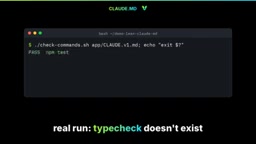
How to Streamline CLAUDE.md: Cut 322 Lines to 24 and Drastically Reduce Costs
From 322 lines to 24: a systematic guide to writing CLAUDE.md and AGENTS.md correctly, covering load mechanics, streamlining principles, on-demand rules and skills, subagent model routing, and sharing one instruction file across Claude Code, Cursor, and Codex.
Larry Lawton Reveals the Reality of Day One in an American Prison
Former inmate Larry Lawton describes day one in an American prison on the Lex Fridman podcast: strip searches, dry cells, ramen for hunger, and how extreme conditions reshape survival psychology.

T3 Code in Practice: An AI Coding Experience with Built-in Browser and Multi-Model Switching
A hands-on walkthrough of T3 Code: loading a local directory, creating a Flask to-do app with UVS, switching models, testing via the built-in browser, taking control, and iOS/Android device emulation.