Token Maxing: YC CEO's Methodology for Achieving 400x Programming Efficiency with AI

YC CEO Gary Tan returns to coding after 13 years with AI tools, achieving 400x efficiency gains
After 13 years away from coding, YC CEO Gary Tan used AI programming tools (Claude Code, Codex, etc.) to produce hundreds of thousands of lines of code in months, building multiple popular open-source projects. He introduced the "Token Maxing" philosophy, converting AI tokens' low cost and high output into productivity gains, and developed the G-Stack toolset and "Thin Harness, Fat Skills" architectural philosophy, achieving a stunning cost compression from $4 million down to $200 for building equivalent products.
Starting with Gary's List: Becoming a Builder Again
YC (Y Combinator) is the world's most influential startup accelerator. Founded in 2005, it has incubated unicorn companies like Airbnb, Stripe, Dropbox, and Reddit, investing in over 4,000 companies with a combined valuation exceeding $600 billion. Gary Tan became YC's CEO in 2023, having previously served as a YC partner and co-founder of Initialized Capital. He's an engineer by training, having worked as a design engineer at Palantir before co-founding the blogging platform Posterous (acquired by Twitter in 2012). This arc from "engineer to investor back to builder" gives his AI programming practice unique credibility.
After stopping coding for 13 years, Gary Tan used AI tools to produce hundreds of thousands of lines of code within a few months, building multiple popular open-source projects (over 100,000 GitHub stars). He calls this methodology "Token Maxing" — maximizing output value by consuming large amounts of AI tokens. This special Light Cone episode reveals his workflow and thinking framework in detail.
Tokens are the basic unit of measurement for how large language models process text — roughly 1-1.5 tokens per English word, and 2-3 tokens per Chinese character. Major AI services charge by token consumption, with GPT-4 level models costing $5-30 per million tokens. Gary's "Token Maxing" philosophy is essentially a cost-value repricing: in traditional software development, engineer time is the scarcest resource; in the AI era, token costs are extremely low but output density is extremely high, fundamentally reversing the economics of "trading money for time."
Gary Tan's return began with a political advocacy project — Gary's List. He cared about algebra education in San Francisco public schools and wanted to build a research journalism platform. This project isn't just a blog platform — it's an AI system capable of performing high-quality investigative journalism.
The platform's core capability lies in the "Boil the Ocean" philosophy: rather than settling for one information source, it simultaneously calls the Perplexity API, X's API, Grok API, and other channels, obtaining 20+ sources for cross-verification. The system can identify that 13 sources support a viewpoint while 7 sources dissent, then feeds all context into the core prompt to make better judgments than humans clicking links and reading headlines.
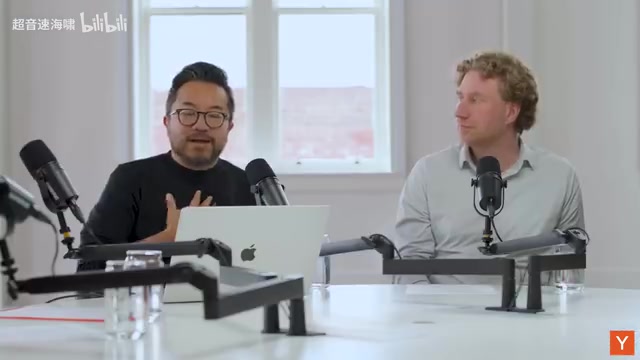
The key data comparison is staggering: Gary's List as a full-featured blog platform cost $4 million, 6-7 people, and a year and a half the first time; $100,000, 2 people, and 3 months the second time; and just $200 (Claude Code Max account at $155) and 5 days this time.
The Birth of G-Stack: From Repetitive Operations to Systematic AI Programming Workflow
G-Stack is a toolset that naturally evolved as Gary built projects. He found himself repeatedly typing the same instructions into Claude Code, so he organized these common patterns into Skills, forming a reusable AI programming framework.
The two most critical skills:
Plan-Eng-Review: Requires Claude to create ASCII diagrams before starting to code — data flows, state machines, dependency graphs, processing pipelines, decision trees. This simple step loads the model with complete context, enabling more thorough task execution.
CEO Plan: Inspired by Brian Chesky's "10-star experience" concept, it includes a "10x check" — what solution can deliver 10x value with only 2x the effort? This two-sentence prompt unlocks remarkable creativity.
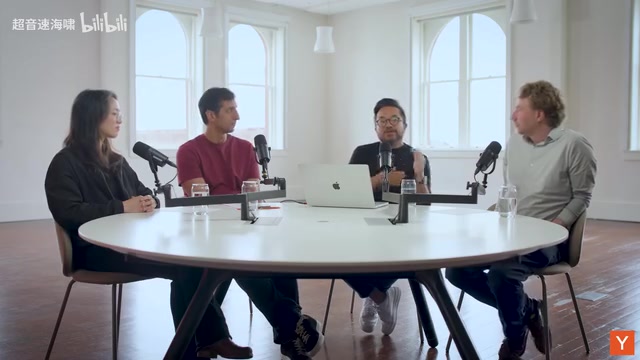
Daily Workflow: 15 AI Agents Running in Parallel
Claude Code is Anthropic's command-line AI programming tool, deeply integrated into the terminal environment, excelling at understanding the overall architecture of large codebases, coordinating multi-file modifications, and handling complex tasks requiring long-context reasoning. OpenAI Codex is a model series specifically optimized for code generation, whose successor capabilities have been integrated into products like GitHub Copilot. Gary positions the two as complementary: Claude handles "CEO-level" strategic planning and architectural decisions, while Codex serves as a "non-verbal CTO" focused on precise bug detection and code review. This multi-model collaboration strategy avoids single-model blind spots, similar to the "four-eyes principle" in software engineering.
Gary's actual workflow uses Conductor (a task orchestration tool) to manage multiple AI agents. His typical process:
- Use CEO Skill to conceive feature direction
- Use Eng Skill to ensure thorough test coverage
- Complete detailed planning in Plan mode
- Click Approve to let Claude execute the coding
- Use Codex for cross-validation (he calls it a "200 IQ non-verbal CTO")
He submitted 13 PRs in 48 hours, with up to 15 features queued simultaneously. When manual QA became a bottleneck, he had Claude Code wrap Microsoft Playwright to build an automated browser testing system.
Microsoft Playwright is an open-source browser automation framework released in 2020, supporting Chromium, Firefox, and WebKit browser engines, widely used for end-to-end (E2E) testing as a modern replacement for Selenium. Gary having Claude Code automatically wrap Playwright to build a testing system demonstrates a key pattern in AI programming: combining "metaprogramming" (writing code that generates code) with AI, compressing test infrastructure setup costs from days to hours. This validates the engineering philosophy of "when something becomes a bottleneck, automate it with AI."
Thin Harness and Fat Skills: The Architectural Philosophy of AI Programming

Gary proposed the "Thin Harness, Fat Skills" architectural philosophy. The Harness is the core loop that receives user input, passes it to the LLM, and executes tool calls — this should be as thin as possible. Skills are detailed instructions written in Markdown — these should be as thick as possible.
He uses wedding planning as an analogy: write a checklist in Markdown for "how to plan a wedding" (the fuzzy, general scenarios LLMs excel at), while deterministic operations like "call 20 venues" are implemented in code (e.g., calling the Twilio API).
The core insight lies in the concept of Latent Space: latent space is a fundamental concept in deep learning, referring to the compressed representation space that neural networks learn from high-dimensional data. For large language models, latent space means the model has internalized abstract representations of human language, logic, common sense, and domain knowledge during training. Code is brittle — it can only handle explicitly programmed cases and doesn't understand edge cases; the LLM's latent space enables it to understand who you are and what your motivations are, with the ability to generalize to unseen scenarios — this is the underlying logic behind "writing Fat Skills in Markdown rather than code." The engineer's core competency becomes judging which logic belongs on the LLM side versus the code side.
The Real Data Behind 400x Programming Efficiency
Regarding "lines of code"
Related articles
 Expert Opinions
Rethinking Scaling Laws: Parameters Are Not the Only Answer
Deep analysis of Scaling Law evolution from Kaplan to Chinchilla to the MoE era, exploring why blindly stacking parameters is a mistake, and how GLM-5.3 proves scaling has multiple knobs.
When AI Treats Humans as Subagents: Ro…
When AI Treats Humans as Subagents: Role Reversal and Hidden Risks in Human-AI Collaboration
Exploring the paradigm shift where humans become "subagents" in AI Agent architectures. Analyzes human node design in LangChain and AutoGen, and the risks of ceding control and cognitive atrophy.
 Expert Opinions
The Lazy Person's Productivity Theory: Why Being 'Lazy' Actually Drives Peak Performance
Explore the engineering philosophy behind 'lazy people are most productive': how constructive laziness drives automation, AI tools amplify efficiency, and systems thinking eliminates wasted effort.