Toonflow: Open-Source AI Short Drama Tool That Turns Novels Into Animated Series
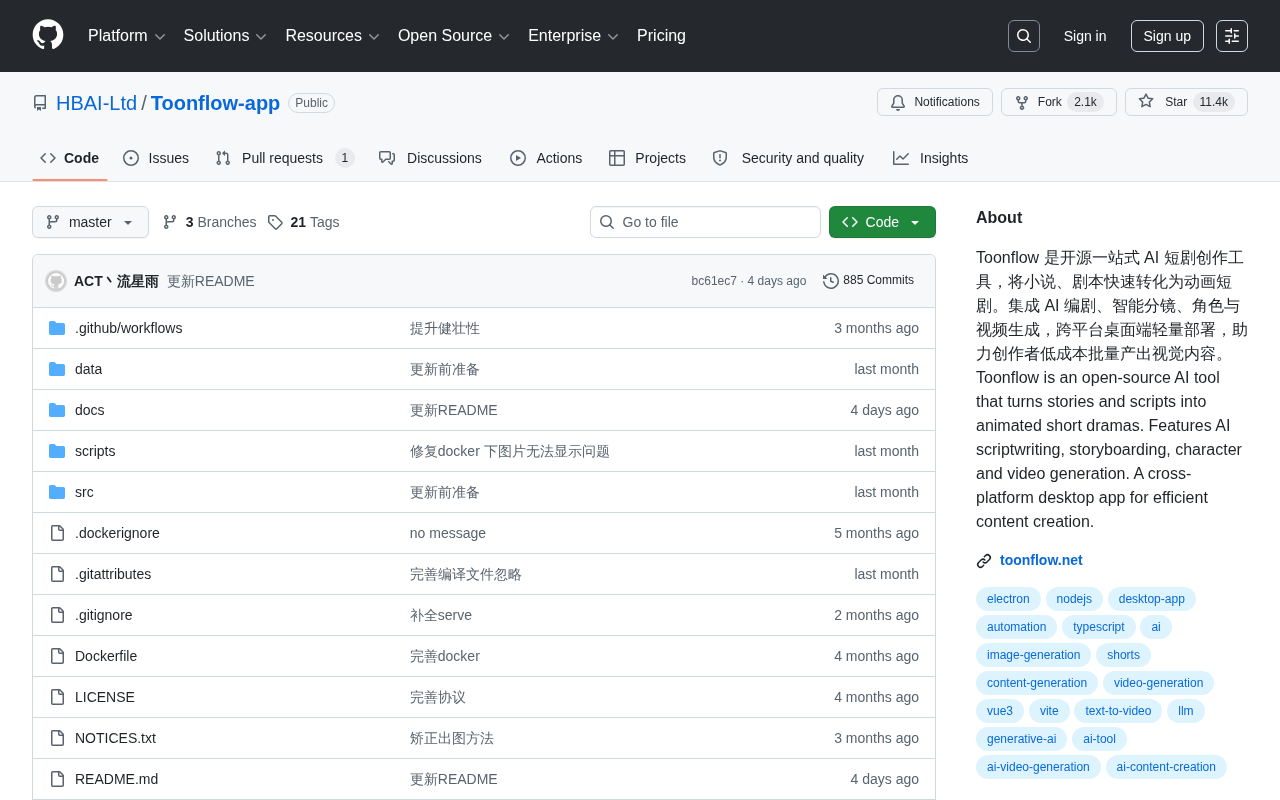
Toonflow is an open-source AI tool that automatically converts novel text into animated short dramas.
Toonflow is a desktop AI short drama creation tool open-sourced by HBAI-Ltd, designed to convert novels and scripts into animated short dramas with characters, storyboards, and video in one click. It integrates four modules — AI scriptwriting, intelligent storyboarding, character generation, and video generation — creating a complete text-to-video pipeline. Built on a cross-platform web-based stack, it has earned 7,712 Stars and 1,316 Forks on GitHub. While it offers strong value for independent creators, IP holders, and short video operators seeking low-cost batch production, AI video consistency and multi-step error accumulation remain ongoing challenges.
When AI Short Drama Meets an All-in-One Workflow
The short drama market has been booming over the past couple of years, yet for most creators, the gap between text and finished video remains enormous — both technically and financially. Writing a script requires a screenwriter, breaking it into shots requires a director's eye, generating characters and visuals requires a designer, and stitching everything together into a coherent video requires yet another set of skills. Any one of these steps can stall the entire creative pipeline.
Toonflow, open-sourced by the HBAI-Ltd team, compresses this entire workflow into a single desktop application. It positions itself as an "all-in-one AI short drama creation tool," with a core promise: take pure-text content like novels and scripts and rapidly transform them into animated short dramas complete with characters, storyboards, and video. The project has already accumulated 7,712 Stars and 1,316 Forks on GitHub — impressive traction for a relatively niche creative tool, and a clear signal that it's addressing a real pain point.
How the Creative Process Is Broken Down
What makes Toonflow worth paying attention to isn't any single AI generation capability — it's the fact that it packages the entire short drama production pipeline into one tool. According to the project description, it integrates four key modules.
AI Scriptwriting and Intelligent Storyboarding
Creators input a passage of novel text or a script, and the system first uses the AI scriptwriting module to understand the narrative structure, then automatically generates intelligent storyboards — breaking continuous text into discrete shot units suited for visual presentation. This step traditionally demands the most experience in production. Toonflow aims to standardize and automate it with AI, significantly lowering the barrier for non-professional creators.
Character and Video Generation
Once the storyboard is set, the tool handles character generation and video generation. Character generation maintains visual consistency for the same character across different shots — one of AI-generated content's longstanding challenges. Video generation then transforms static storyboard panels into dynamic footage. Together, these two modules theoretically enable end-to-end output from text to finished video.
A Lightweight, Cross-Platform Desktop Approach
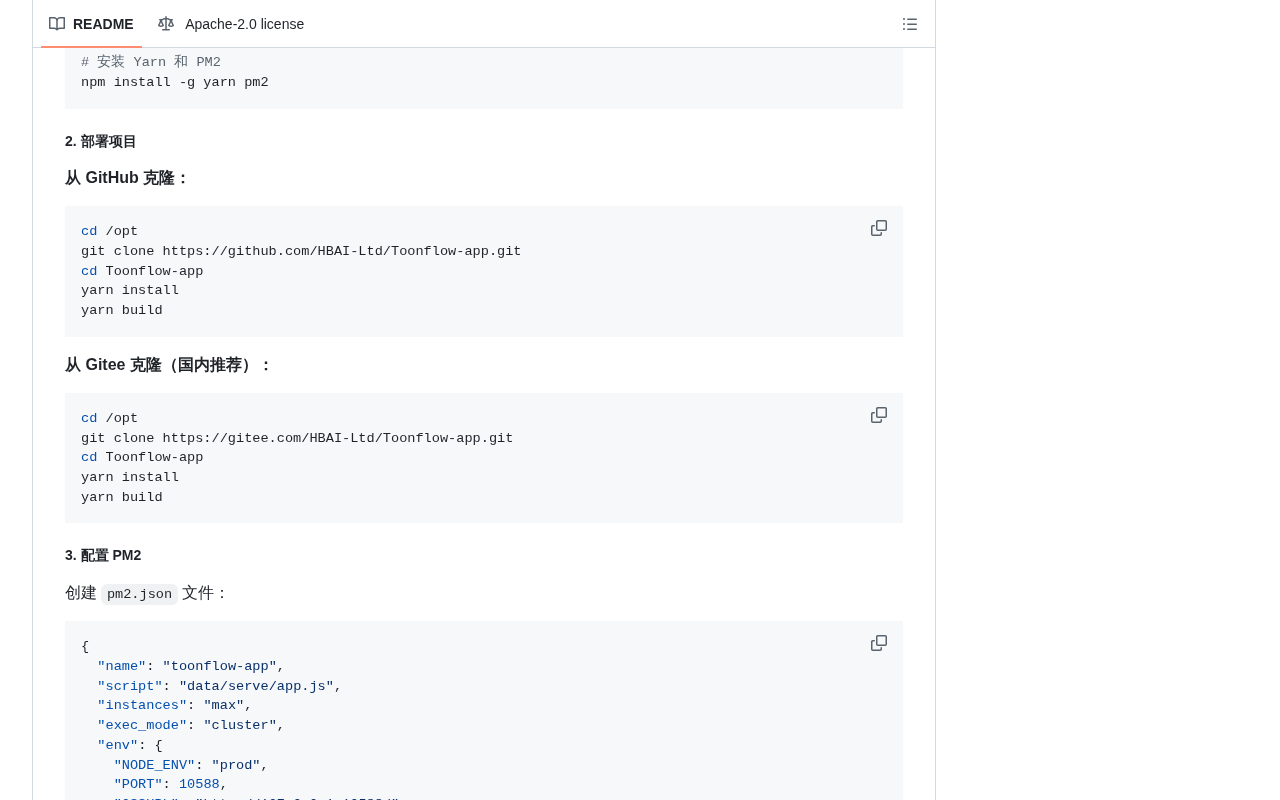
Unlike many AI video tools that rely heavily on cloud computing, Toonflow takes a lightweight desktop deployment approach with an emphasis on cross-platform support. This means creators can run the tool in their local environment without being fully tied to an online service.
Looking at the tech stack — the project's primary language is listed as HTML — and given its desktop application positioning, it most likely uses an Electron-style web technology wrapper that bundles the frontend interface and backend AI calls into a single installable client. The advantages of this architecture are fast iteration, low cross-platform adaptation costs, and a lower barrier for open-source community contributors. Frontend developers can jump in with relative ease, which may partly explain how the project accumulated over a thousand Forks so quickly.
It's worth noting that "lightweight desktop deployment" typically refers to the ease of installing the application itself. The actual model inference may still require connecting to external APIs or local compute resources — the specific compute dependencies would need to be confirmed by consulting the project documentation.
What This Means for Creators
Toonflow's core value proposition is "low-cost, high-volume visual content production." In contexts like short dramas, animation, and content marketing, the ability to produce at scale often matters more than maximizing the quality of any single piece. A tool that can batch-convert novels into animated short dramas has clear appeal for several types of users:
- Independent content creators: Those without a full production team who still need to consistently publish visual content;
- Novel authors and IP holders: Those looking to adapt written IP into animated teasers or derivative content on a tight budget;
- Short video operators: Those who need to rapidly produce large volumes of short drama material suited to platform requirements.
The open-source nature further expands the possibilities. Compared to subscription-based commercial tools, open source means users can self-host, customize the codebase, and even integrate their preferred generative models — avoiding lock-in to a single platform. For the team, it's also a strategy for leveraging community contributions to rapidly improve the product.
A Grounded Assessment of Where Things Stand
Beyond the buzz, it's worth staying clear-eyed about tools like this. AI video generation as a whole is still in a period of rapid evolution. Issues like character consistency, visual coherence, and narrative pacing remain unsolved, and Toonflow — as a tool that chains multiple generation steps together — faces the reality that the longer the pipeline, the higher the risk of compounding errors.
Additionally, the flip side of being "all-in-one" is that no single capability is necessarily best-in-class. It's more useful to think of Toonflow as a productivity framework for improving efficiency and lowering barriers, rather than a finished-film tool that can replace professional production. For creators who want to try it, the most pragmatic approach is to run through one complete short film workflow first, then evaluate where it fits in your actual process.
Overall, Toonflow represents a clear trend in AI content tools: moving from "single-point generation" toward "full-pipeline integration." For creators and developers keeping an eye on the AI short drama space, it's well worth giving it a hands-on try.
Related articles
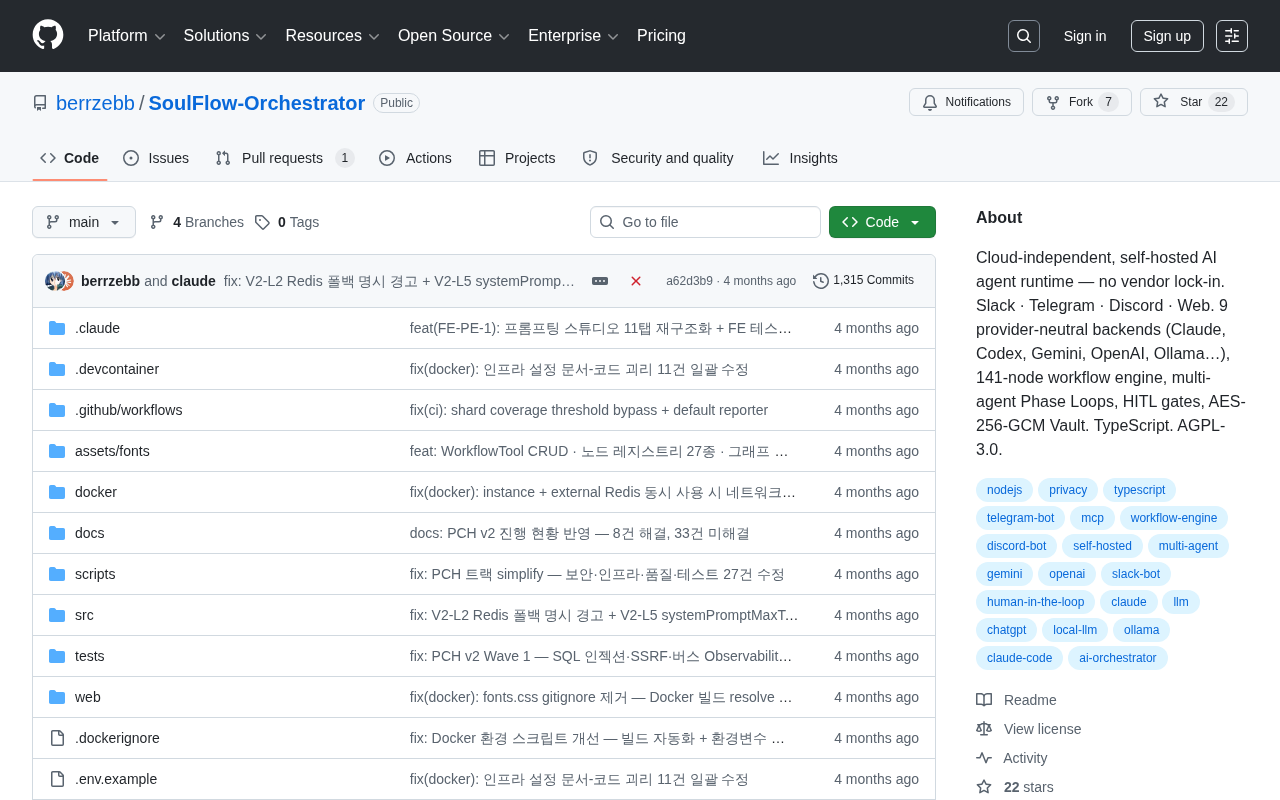
SoulFlow-Orchestrator: A Self-Hosted, Vendor-Lock-In-Free AI Agent Runtime
SoulFlow-Orchestrator is an open-source, self-hosted AI agent runtime with no vendor lock-in. Supports 9 neutral backends (Claude, OpenAI, Ollama), 141-node workflow engine, multi-agent loops, and HITL gates.
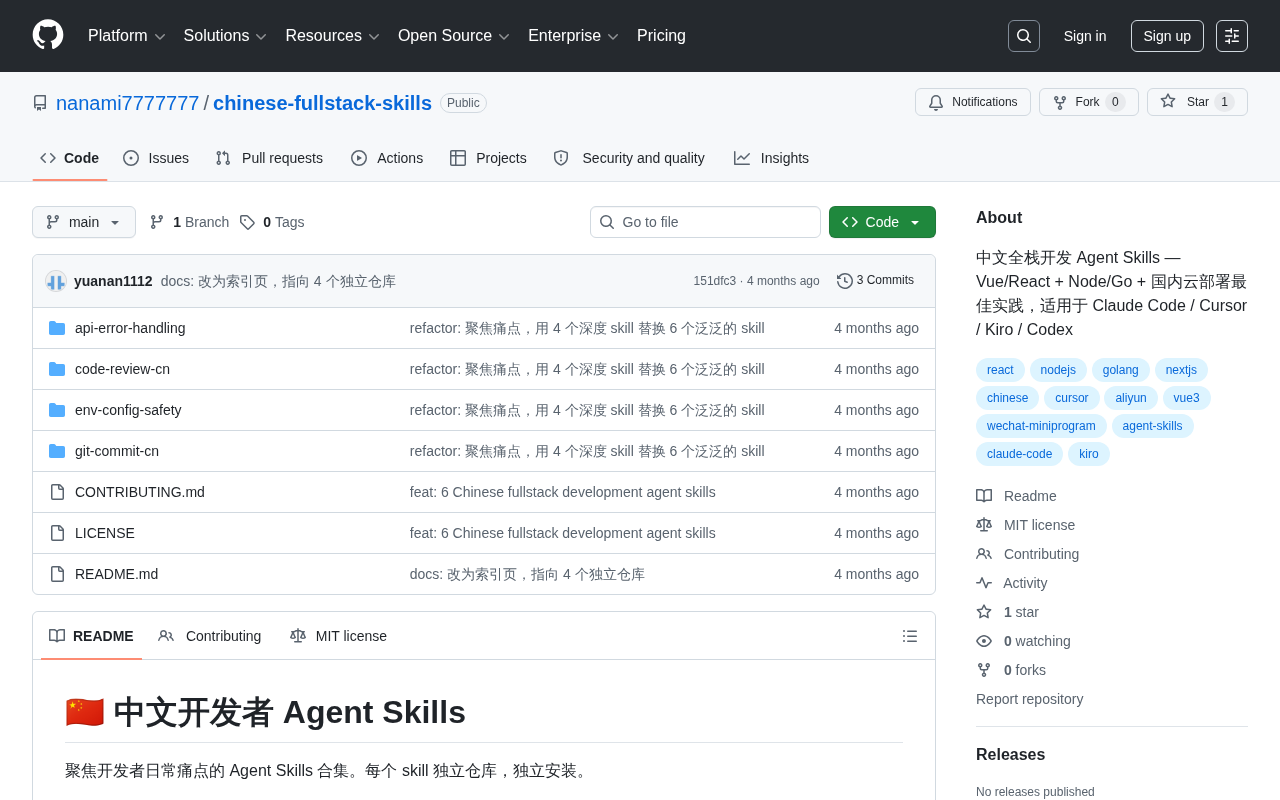
Chinese Full-Stack Agent Skills: A Skill Library Tailored for Domestic AI-Assisted Development
chinese-fullstack-skills is an Agent Skills library for Chinese full-stack development, covering Vue/React, Node/Go, and domestic cloud deployment best practices. Compatible with Claude Code, Cursor, Kiro, and Codex.
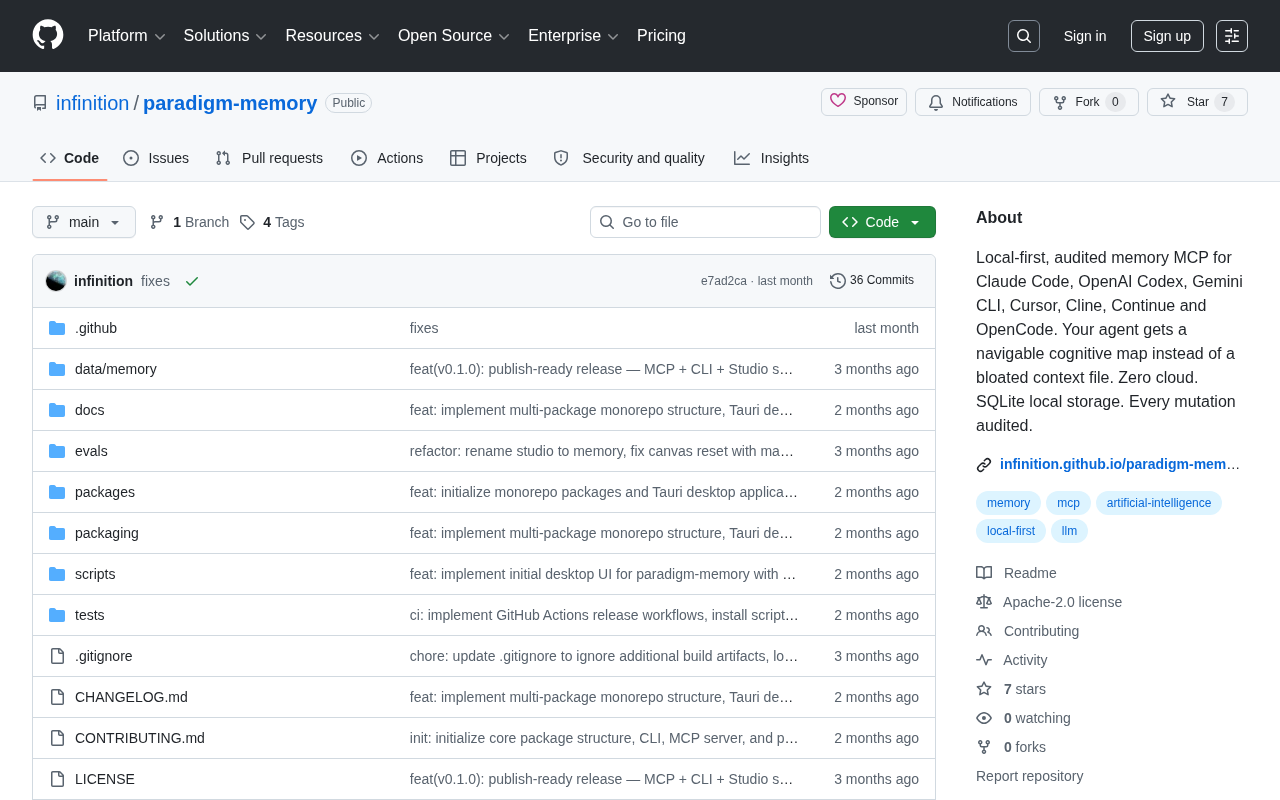
Paradigm Memory: A Local-First Memory System for AI Coding Assistants
paradigm-memory is a local MCP memory tool for Claude Code, Cursor, and Cline. It uses SQLite local storage, zero cloud, full audit trails, and a navigable cognitive map instead of bloated context files.