Top 10 Hottest AI Skills in the Programming World: From Methodologies to Workflows Fully Explained

A curated guide to the 10 most impactful AI Skills reshaping programming workflows and productivity.
This article reviews the top 10 AI Skills trending in the programming community, spanning methodology enforcement (Super Powers, Coding Guidelines), front-end design workflows, automated testing, security auditing, MCP server generation, and 1000+ app connectivity via Composio. It explains how Skills transform scattered prompts into structured, reusable capability modules that bring top-tier development practices to every developer.
As AI programming tools like Claude Code and Cursor gain widespread adoption, a new technical concept is rapidly trending in the programming community—Skills. Unlike ordinary prompts, Skills are reusable, composable capability modules that enable AI to execute complex tasks following standardized workflows. Based on hands-on experience, this article curates the 10 most noteworthy AI Skills along with their core use cases and applicable scenarios.
What Are AI Skills and Why They Matter
Skills essentially package a domain's methodologies, rules, and workflows into capability units that AI can directly invoke. Compared to scattered prompts, their advantage lies in being "structured" and "reusable"—you don't need to manually describe requirements every time. Instead, you let AI follow a proven, standardized process.
To understand the value of Skills, we need to revisit the evolution of Prompt Engineering. Early AI coding assistance relied on single instructions—users had to carefully craft language to describe requirements and constraints every time. This approach had obvious bottlenecks: prompts were hard to reuse, results were unstable, and it demanded strong articulation skills from users. The emergence of Skills is analogous to the leap from "manual command-line operations" to "Shell script automation"—it codifies verified best practices into standardized capability interfaces. In the AI Agent architecture, Skills occupy the "capability layer," sitting between the underlying model capabilities and upper-level business logic, serving as a bridge connecting general intelligence with domain-specific expertise.
According to the reviewer, all 10 Skills have been battle-tested, with accompanying quick-reference installation guides, usage documentation, and even a research Agent and Skills repository (approximately 86 projects) covering the entire workflow from "literature search to paper submission." This demonstrates that Skills applications have long extended beyond pure programming into research, design, and other professional domains.
Methodology and Rules Skills: Making AI Programming More Reliable
The core objective of this category is to constrain and standardize AI behavior, solving the long-standing problem of large models "going off the rails when given free rein."
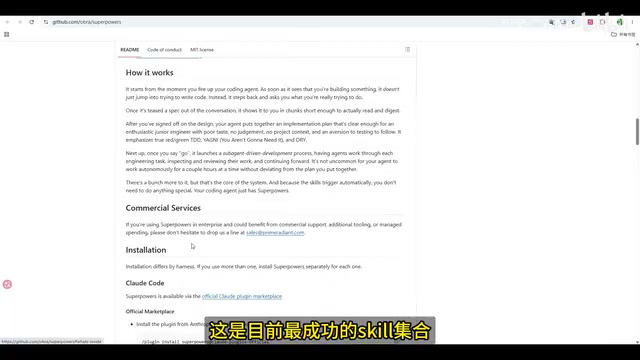
1. Super Powers: The Most Successful Skills Collection
Described by the author as "the most successful Skills collection to date." It has a built-in comprehensive software development methodology that forces AI to follow standard procedures when executing complex tasks, preventing logical jumps and missed critical steps when handling large projects.
This addresses a core technical challenge: large language models tend to experience "attention drift" when handling complex tasks requiring multi-step reasoning—as context grows longer, models may forget constraints from earlier steps or produce logical breaks at intermediate stages. This is particularly evident in large projects involving dozens of files and multi-layer dependencies. Super Powers mitigates this through a preset phased execution framework (e.g., requirements analysis → architecture design → module decomposition → incremental implementation → verification review), breaking complex tasks into shorter-chain subtasks that models handle better, while inserting checkpoints at each phase to ensure AI stays on track. This "external scaffolding" approach essentially uses structured workflows to compensate for the model's weaknesses in long-range planning.
2. Coding Guidelines: AI Coding Standards
The core function is to change AI's coding behavior patterns. By implanting standardized coding rules, it improves the conciseness and accuracy of generated code. This Skill essentially gives AI a "team coding standards document," making outputs more aligned with engineering conventions and reducing rework.
In practice, inconsistent code style is one of the primary friction sources in team collaboration. Traditional solutions rely on static analysis tools like ESLint and Prettier for post-hoc correction, while Coding Guidelines shifts normative constraints to the code generation phase—AI outputs code following team-agreed naming conventions, function length limits, and comment standards from the start, eliminating style differences at the source.
8. GFD: Skip Planning and Execute Directly
This forms an interesting contrast with the previous two. GFD's approach is to skip unnecessary planning steps and execute directly to boost efficiency. However, the author specifically warns: only use it when you're 100% certain about what you want to do, otherwise it's easy to crash and burn. This also highlights that efficiency and robustness require trade-offs—faster isn't always better in AI programming.
From a cognitive science perspective, GFD corresponds to "System 1" fast execution mode, while Super Powers corresponds to "System 2" deliberate reasoning mode. When a task is already fully decomposed with clear boundaries (e.g., "add parameter validation to this function"), extra planning steps only increase token consumption and response latency. GFD's value lies in identifying such scenarios and providing a fast lane.
Design and Front-End Skills: Breaking Free from Cookie-Cutter AI Interfaces
3. Front End Design: AI Front-End Design Workflow
AI-generated front-end code is often criticized for being "visually identical and lacking design sense." Front End Design provides a complete workflow covering design direction, typography, color schemes, and animations, guiding AI to generate distinctive, recognizable front-end interfaces that effectively avoid cookie-cutter template outputs.
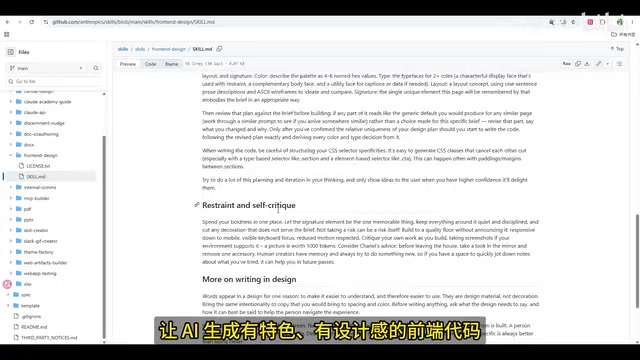
The root cause of this problem lies in the training data distribution of large models: a massive amount of front-end code on the internet uses similar UI frameworks (like Bootstrap or Tailwind's default configurations). Without additional constraints, models tend to generate the statistically most "average" design—the most common, least distinctive solution. Front End Design injects design system constraints (such as specific color theory, spacing rhythm, and micro-interaction specifications), forcing the model to break out of the "statistical mean" and produce more distinctive design solutions.
For indie developers and small teams, this type of Skill enables quickly obtaining visually competent interface solutions without a professional designer.
Testing and Security Skills: Quality Safety Nets for Code
4. App Testing: Automated Testing
It can write and execute test scripts on your behalf, covering end-to-end testing and even automatically running UI tests and interaction validation for external applications. Testing is often the most overlooked part of development, and automating it significantly improves delivery quality.
In the context of AI-assisted programming, the importance of testing is further amplified. Since AI-generated code may contain subtle logic errors (model output looks reasonable but fails under edge conditions), automated testing becomes the core defense line for verifying AI output quality. App Testing can not only generate unit tests but also simulate user operation paths for end-to-end verification—this is crucial for catching hidden bugs in AI code that "look correct but are actually wrong."
5. Security Review: Code Security Auditing
This is a built-in Skill for Claude Code that can automatically run vulnerability scanning and code security audits before submitting PRs, reducing security risks at the source. Shifting security checks earlier in the development workflow is an important marker of AI programming tools maturing.
This concept is known as "Shift-Left" in security engineering—moving security activities as far left as possible to earlier stages of the development lifecycle. In traditional models, security audits typically happen before or even after code goes live, at which point the cost of fixing vulnerabilities is already dozens of times higher than during development. In AI programming scenarios, this need is even more pressing: research shows that large models may inadvertently introduce known vulnerability patterns (such as SQL injection, path traversal) because these patterns are prevalent in training data. Security Review builds an automated security guardrail by automatically scanning for OWASP Top 10 and other common vulnerability types with every code change.
Extension and Connection Skills: Breaking Through to the External World
Simply writing code no longer meets the demand. Connecting AI with external tools and services is the real key to unlocking productivity.
6. MCP Builder: Auto-Generate MCP Servers
Through natural language descriptions, you can automatically generate MCP (Model Context Protocol) servers, quickly completing the integration between external services and Claude. MCP is an important emerging standard in the AI ecosystem, and MCP Builder dramatically lowers the barrier to building custom connectors.
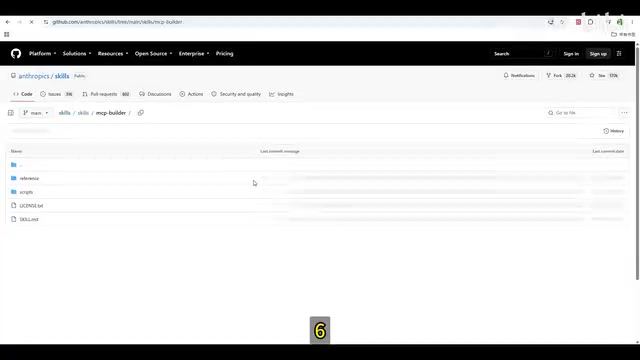
MCP (Model Context Protocol) is an open protocol standard released by Anthropic in late 2024, designed to solve the fragmentation problem of connections between AI models and external data sources/tools. Before MCP, every AI application that needed to interface with external services (databases, APIs, file systems) required custom integration code, leading to the "N×M integration problem"—N AI applications connecting to M services required N×M sets of code. MCP defines a unified communication protocol (similar to what USB-C does for hardware devices), allowing any MCP-compatible AI client to plug-and-play with any MCP server. MCP Builder's value is this: originally, setting up an MCP server required understanding protocol specifications, writing server code, and handling authentication and error mechanisms. Now you just describe in natural language what capabilities you want to expose, and it automatically generates the complete server implementation.
7. Skill Creator: The Skill of Skills
Truly the "Skill of Skills"—it can package repetitive workflows into new Skills without manual coding. This means users can continuously build proprietary capabilities based on their own business needs, forming personal or team knowledge assets.
From a knowledge management perspective, Skill Creator implements a form of "meta-capability"—the ability to create abilities. It makes tacit knowledge (best practices existing in team members' heads) explicit as executable workflow definitions. This aligns with the "Infrastructure as Code" philosophy in software engineering: codifying operational knowledge to make it versionable, reproducible, and collaborative.
10. Composio: Connector for 1000+ Applications
This is a powerful connector that enables AI to interact with external tools, directly operating 1000+ external applications. From email and calendars to various SaaS services, Composio gives AI Agents genuine "hands-on capability" rather than just generating text suggestions.
Composio represents a pivotal shift in AI Agent development: from "can only talk" to "can actually do." In technical implementation, it wraps standardized Tool Definitions for each external application, including authentication methods, API endpoints, parameter formats, and error handling logic. This enables AI models to accurately understand each tool's capability boundaries and correctly assemble call parameters during Function Calling. This pattern is called Tool-Augmented LLM and is one of the core architectural patterns in current AI Agent frameworks (such as LangChain and CrewAI). Composio's 1000+ application coverage means AI Agents can genuinely intervene in users' daily workflows—sending emails, creating Jira tasks, updating databases, calling third-party APIs—rather than staying at the level of "suggesting you do this."
Workflow Philosophy Skills: Learning from Top-Tier Teams
9. GStack: The Coding Workflow Championed by YC's CEO
This Skill encapsulates the coding workflow championed by Y Combinator's current CEO, with the core philosophy of rapid iteration and continuous delivery. It's particularly suited for fast-paced startup development and products requiring frequent iteration.
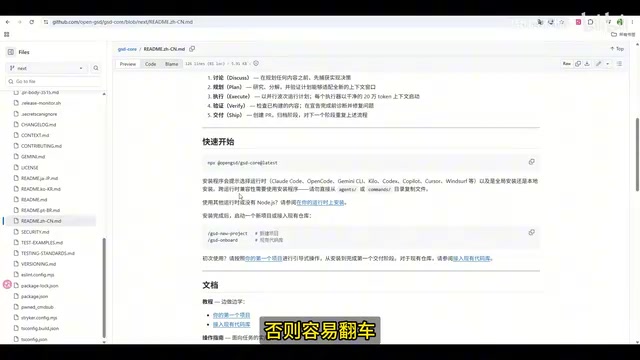
Y Combinator (YC) is the world's most renowned startup accelerator, having incubated companies valued at over $10 billion including Airbnb, Stripe, and Dropbox. Its current CEO Garry Tan, known for his technical background, has long advocated a development philosophy of "small rapid steps driven by user feedback." The workflow encapsulated in GStack embodies the core development principles refined within the YC ecosystem: minimum viable product (MVP) first, daily deployment, feature flag management, and A/B test-driven decisions. The essence of this methodology is—rather than spending weeks on perfect planning, quickly ship a usable version and iteratively optimize based on real user feedback. Codifying this philosophy into a Skill means AI automatically follows these principles when assisting development: prioritizing generating the minimum runnable implementation, suggesting incremental improvement paths rather than pursuing a one-shot "perfect solution."
For speed-focused startup teams, codifying proven workflow methodologies into Skills enables the entire team to stand on the same foundation of efficient practices.
Summary: AI Skills Are Reshaping the Programming Paradigm
Looking across these 10 Skills, several important trends in AI programming become clearly visible:
- From prompts to workflows: Single instructions give way to structured, reusable capability modules;
- Quality and security shift-left: Testing and security audits are built into the development workflow;
- Explosion of connectivity: MCP, Composio, and others let AI truly connect with the external world;
- Methodology preservation: Super Powers, GStack, and others turn top-tier team practices into callable capabilities.
From a broader perspective, the rise of Skills marks AI programming tools transitioning from "toys" to "tools" to "infrastructure." Early AI code completion (like early GitHub Copilot) primarily solved line-by-line generation efficiency problems; the Skills system represents system-level capability—it's not just about "what code to write" but "how to organize the development process." This evolution aligns closely with software engineering's own development trajectory: from focusing on point technical capabilities to focusing on processes and methodologies.
It's worth noting that Skills are not a silver bullet. As GFD demonstrates, efficiency and robustness still require trade-offs, and tool selection should match specific scenarios. For developers, rather than chasing every trending Skill, it's better to select 2-3 that align with your workflow, use them deeply, and gradually build your own AI programming capability system.
Related articles

Chain of Thought Isn't Just for AI: How Humans Can Use CoT to Improve Thinking Quality
Chain of Thought isn't just a prompt trick for large models. Starting from a Hacker News discussion, this article analyzes why CoT works for human thinking too, breaks down actionable ways to transfer it, and highlights the key differences between human CoT and machine CoT.
Cloudflare Teams Up with OpenAI: Closi…
Cloudflare Teams Up with OpenAI: Closing the Loop from Vulnerability Discovery to Defense with AI
Cloudflare uses OpenAI Daybreak to investigate security vulnerabilities and generate reviewable remediation plans, while developers use Codex to boost coding efficiency and quality.

Orca Multi-Agent Orchestration in Practice: A Guide to Parallel Collaboration with Claude and Codex
Orca is Stable AI's free open-source agent workbench supporting 34 agents like Claude Code and Codex in parallel. Learn its Git worktree isolation, multi-model orchestration, and mobile management.