Traceable AI Analysis: Linking Every Data Point and Claim Back to the Source Passage
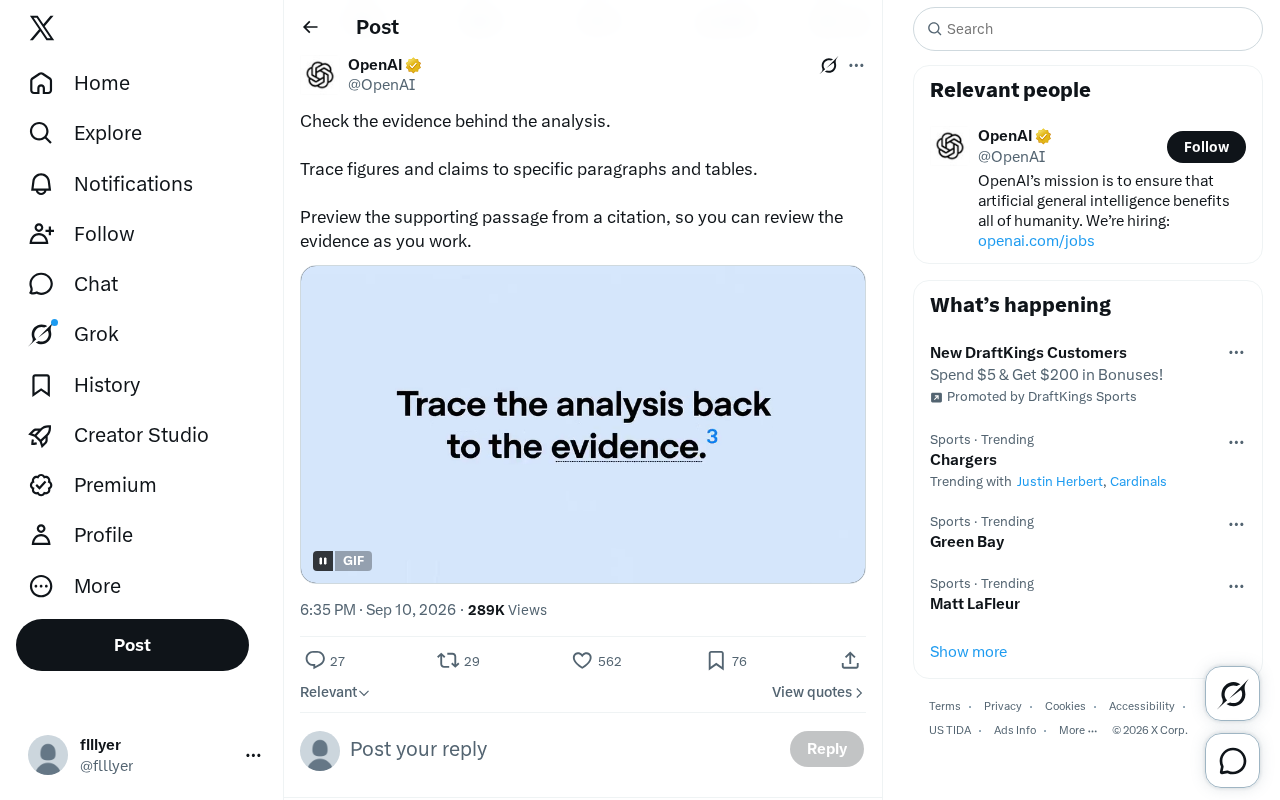
AI analysis tools are evolving from giving answers to giving verifiable, source-traceable answers.
This article examines a feature that traces AI analysis conclusions back to specific paragraphs and tables in source documents — a key step toward addressing hallucination and building trust in professional contexts. Unlike tools that only provide document-level citations, paragraph- and table-level precision meaningfully lowers the cost of verification. Inline citation previews further reduce friction by keeping evidence accessible within the workflow. The article argues that for high-stakes fields like research, law, and finance, verifiability is becoming the defining metric of AI tool maturity — marking the shift from AI as a creative aid to AI as a serious research partner.
When AI Analysis Becomes Verifiable
A persistent pain point when using AI for literature research or data analysis is this: where exactly do the AI's conclusions come from? When a model produces what looks like a polished, professional analysis, users often have no reliable way to tell whether the numbers and claims are grounded in reality — or simply the product of hallucination.
A post shared on Twitter highlights a practical capability: tracing every data point and every claim in an AI analysis back to the specific paragraphs and tables in the source documents. In other words, the analysis is no longer an opaque black box — it becomes a chain of reasoning that can be verified line by line.
Tracing Back to Specific Paragraphs and Tables
The original post emphasizes three core capabilities. The first is the ability to check the evidence behind the analysis — meaning the system not only delivers conclusions but also preserves the underlying source material that supports them.
The second is the ability to trace figures and claims to specific paragraphs and tables. This is particularly critical. The key data in academic papers and research reports is typically spread across body paragraphs and data tables. Being able to pinpoint the exact location is what makes verification truly actionable, rather than vaguely pointing users toward a document as a whole.
Why Pinpoint Accuracy Matters
Many AI tools do offer "cited sources," but they typically only provide document-level links — leaving users to hunt through lengthy materials on their own. Drilling citations down to the paragraph and table level is what genuinely reduces the cost of verification. For researchers working with large volumes of literature, this level of precision directly determines whether the tool is actually useful.
Previewing Evidence Without Breaking Your Flow
The third capability is the ability to preview the supporting passage from a citation, allowing users to view the evidence itself without leaving their current workflow.
The value of this design lies in integrating verification into the work process itself. Traditionally, checking a source means exiting the current interface, opening the original document, and manually searching for the relevant content — repeatedly interrupting the workflow. An inline citation preview lets users review the evidence as they work, preserving continuity of thought.
Implications for AI Research Tools
This kind of feature reflects an important direction in the evolution of AI tools: shifting from generating answers to generating trustworthy answers. As large language models are deployed in increasingly specialized contexts, verifiability is becoming a key benchmark for evaluating a tool's maturity.
In fields like scientific research, law, and finance — where accuracy is non-negotiable — an AI output that cannot be traced to its sources has almost no practical value. But when every claim can be traced back to an original passage, AI genuinely advances from assisting with creative work to supporting rigorous, serious research.
It's worth noting that the original tweet is a brief, promotional-style post. It does not provide a specific product name, technical implementation details, or empirical test data. The analysis above is based solely on the three capabilities described in the original post. Readers looking to evaluate real-world effectiveness should consult the full product documentation and try it firsthand.
Related articles
Session-Based Home Server: Running a Low-Power Homelab on an Old Laptop
A Reddit user runs Plex, qBittorrent, and Watcharr on a 10-year-old laptop for just 10–12 hrs/day, using only 305MB RAM idle. Exploring session-based vs. 24/7 Homelab trade-offs.

OpenAI Launches ChatGPT for Financial Services: Built-in Financial Data + GPT-6 Reasoning
OpenAI launches ChatGPT for Financial Services, combining built-in financial data with GPT-6 Astra reasoning to support research, financial modeling, and client materials for financial institutions.
When AI Controls Your Credit Card: The Hidden Risks of Autonomous Payments
When AI agents gain credit card access, hidden dangers emerge: vague authorization, prompt injection attacks, and unclear liability. Learn the real risks and how to stay protected.