Trae 2.0 Solo Mode Deep Dive: How ByteDance Is Redefining AI Coding Tools

ByteDance launches Trae 2.0 with Solo mode, enabling AI-driven full-pipeline software development automation.
ByteDance's AI coding tool Trae has released version 2.0, with Solo mode as its flagship feature — billed as the industry's first "Context Engineer." Driven by natural language input, Solo automates the entire development workflow: writing PRDs, configuring environments, generating code, and handling testing and deployment. This marks a qualitative leap from code completion assistant to full-pipeline engineering automation, poised to reshape competitive dynamics and redefine the programmer's role.
Trae 2.0 Launch: AI Coding Enters the Era of Full-Pipeline Automation
ByteDance's AI coding tool Trae has officially released version 2.0, with the most significant update being the brand-new Solo mode. The team positions it as the industry's first "Context Engineer" — a designation that signals a fundamental shift in AI coding tools, from "code completion assistant" to "full-pipeline engineering brain."
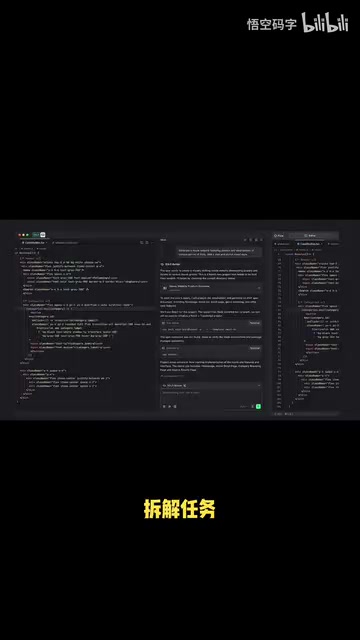
Unlike traditional AI coding assistants that focus on localized tasks like code completion and bug fixing, Trae Solo aims to take over the entire software development lifecycle — from requirements gathering to final delivery. This isn't just a feature upgrade; it represents a qualitative transformation in the role AI plays within software engineering.
Background on AI Coding Tool Evolution: The evolution of AI coding tools has broadly gone through three stages. The first stage, exemplified by GitHub Copilot (launched in 2021), used OpenAI's Codex model to deliver line-level and function-level code completion — essentially "intelligent autocomplete." The second stage, exemplified by Cursor, introduced conversational editing, multi-file awareness, and codebase indexing, enabling AI to understand cross-file relationships and perform localized refactoring — the "coding assistant" era. The third stage, represented by Trae Solo, is the "Agentic Coding" phase — AI no longer waits for step-by-step human instructions but autonomously plans task paths, invokes tool chains, iterates, and delivers complete software artifacts. This evolution closely mirrors the maturation of AI Agent technology: breakthroughs in foundational capabilities like the ReAct framework, Function Calling, and multi-step planning are what drive coding tools from "assistant" to "engineer."
Solo Mode Core Capabilities: Full-Pipeline Ownership from Requirements to Deployment
A One-Stop Development Experience Driven by Natural Language
Solo mode's biggest breakthrough is that users simply describe their goal in natural language, and the system handles the entire development workflow automatically. For example, when a user types something as vague as "build a toy e-commerce website," Solo can automatically complete the following steps:
- Requirements documentation: Transforms the vague description into a structured PRD (Product Requirements Document)
- Development environment setup: Automatically configures the dev environment and manages dependencies
- Code generation: Generates complete functional code based on the requirements document
- Testing and deployment: Runs automated tests and deploys the application
Notably, Trae Solo places PRD generation as the very first step in the pipeline — a decision with deep engineering significance. A PRD (Product Requirements Document) is the critical intermediary layer in software engineering that bridges business intent and technical implementation. In traditional development, it's written by a product manager and includes feature descriptions, user stories, acceptance criteria, edge cases, and other structured content. By front-loading PRD generation, Solo essentially forces the AI to "concretize" vague natural language requirements into verifiable, structured specifications before writing a single line of code — dramatically reducing the risk of rework caused by misunderstood requirements downstream. This design embodies the philosophy of Spec-Driven Development: user review and edits at the PRD stage represent low-cost requirements validation, rather than expensive post-hoc corrections at the code level.
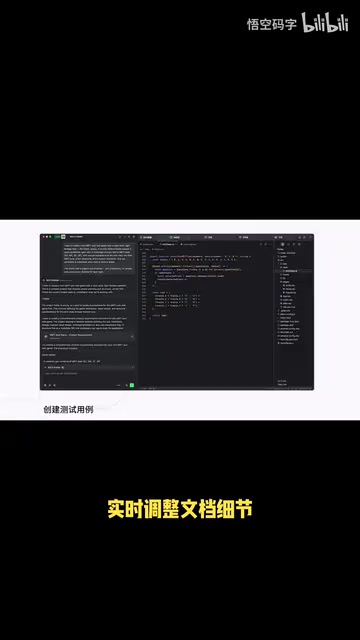
This end-to-end capability means Solo is no longer a supplementary tool in a developer's hands — it's more like an "AI engineer" capable of working independently. It can adjust document details in real time based on user feedback, demonstrating a genuine ability to understand and adapt to complex business logic.
Context Engineering: The Technical Foundation of Solo
The key to Solo's high degree of autonomy lies in its underlying Context Engineering capabilities — which is precisely why the Trae team positions Solo as a "Context Engineer."

Context Engineering is a core engineering paradigm that has emerged in recent years within the large language model application space. Unlike early "Prompt Engineering," which focused primarily on crafting individual input instructions, Context Engineering takes a systematic approach to managing all the information a model can "see" throughout an entire task lifecycle — including conversation history, external documents, tool call results, code state, and more. At its core, it addresses the "short-sightedness" problem of large models: a model's reasoning quality is highly dependent on the completeness and relevance of its input, yet the information needed for real-world engineering tasks is often scattered across heterogeneous sources like codebases, documentation, and environment configs. Through techniques like dynamic retrieval, information compression, and priority ranking, Context Engineering injects the most relevant information into the model's effective perception window in real time — enabling AI to make globally consistent decisions rather than reasoning from isolated fragments.
Traditional AI coding tools have limited context windows, typically only able to perceive the current file or a small amount of related code. Trae Solo, by contrast, can dynamically retrieve and integrate multi-dimensional context:
- Global codebase awareness: Understanding the project's overall architecture and code dependencies
- Design document parsing: Reading product design specs and UI requirements
- Deployment environment recognition: Understanding the configuration and constraints of the target environment
- Interaction history memory: Remembering user preferences and past modification decisions
Armed with this rich context, Solo can plan reasonable task paths and make decisions that align with the project's overall logic — rather than simply performing localized optimizations at the code level.
Trae Solo's Impact on the AI Coding Industry Landscape
Competition Shifts from Code Completion to Engineering Automation
The launch of Trae Solo pushes AI coding tool competition into an entirely new dimension. Previously, products like Cursor and GitHub Copilot competed primarily on the track of "improving coding efficiency." Cursor, developed by Anysphere and deeply customized on top of VS Code, rapidly accumulated a large base of professional developer users through powerful codebase indexing and multi-model support, reaching a valuation of over $2.5 billion in 2024. GitHub Copilot, backed by Microsoft and GitHub's ecosystem advantages, boasts over 1.8 million paying users and has been steadily evolving toward more engineering-oriented features like Copilot Workspace. The competition between these two previously centered on "how fast can you write code" — metrics like code completion accuracy, depth of context understanding, and IDE integration experience. Solo has directly elevated the battlefield to "full software engineering pipeline automation," reframing the competitive narrative around "can you independently complete a software project" — a move that puts significant pressure on existing players.
This competitive escalation means that the core moat for AI coding tools going forward will no longer be code generation accuracy, but rather the ability to understand, decompose, and coordinate complex engineering tasks. Whoever can better integrate contextual information and more accurately understand business intent will hold the advantage in this competition.
Redefining the Role of the Programmer
As AI becomes capable of autonomously understanding business logic, coordinating tool chains, and delivering runnable software, the focus of a programmer's work will shift away from "writing code"
Related articles
 Product Reviews
The Programmer's Desk Setup Guide: Building a Workspace That Feels Like Home
Discover how programmers build productive, comfortable workspaces. From multi-monitor setups to ergonomic design, explore the desk philosophy that drives focus and flow.
 Product Reviews
Qoder vs Cursor Real-World Comparison: Which $20/Month AI IDE Is Better?
Hands-on comparison of Qoder vs Cursor AI IDEs: Agent autonomy, human interaction count, and architecture decisions. Qoder needed only 2 interactions vs Cursor's 8.
 Product Reviews
Cursor Cloud Agent Demo: Eliminating Bottlenecks Across the Entire Software Development Lifecycle
Deep analysis of Cursor's Cloud Agent demo showing how cloud VMs, automated test artifacts, and a full-chain control plane systematically eliminate human bottlenecks across the software development lifecycle.