TRAE + Seed-2.0 Hands-On Review: Three Real-World Challenges for This Free Chinese AI Coding Assistant

ByteDance's TRAE integrates Seed-2.0, validated through hands-on challenges for engineering-grade AI coding.
ByteDance's AI coding tool TRAE integrates its proprietary Seed-2.0 model, emphasizing domestic development, free access, and strong reasoning. Three real-world challenges validate its capabilities: building a Jump-Jump game from scratch demonstrates its engineering workflow, Skill Creator automates subtitle proofreading, and generating trend charts from financial screenshots verifies low-hallucination multimodal understanding. Core improvements include enhanced reasoning, practical multimodal capabilities, and an Agent Skills ecosystem—all completely free for Chinese developers.
ByteDance's AI coding tool TRAE recently integrated the Seed-2.0 model, playing three key cards: "domestic (Chinese-made), free, and strong reasoning." In an era where reasoning models are emerging left and right but most remain stuck at solving puzzles and casual chatting, can this update actually hold its ground in real-world programming scenarios? This article puts TRAE + Seed-2.0 through three practical challenges to find out.
Background: The Current State of AI Coding Tools TRAE is ByteDance's AI coding assistant, powered by Seed-2.0, ByteDance's proprietary large language model. The AI coding tool space has become fiercely competitive in recent years, with products like GitHub Copilot, Cursor, and Windsurf emerging one after another. However, most of these tools are essentially still operating in a "code completion + conversational generation" mode, lacking engineering-oriented systematic thinking. By integrating Seed-2.0, TRAE aims to differentiate itself in this space—not just writing code, but "doing engineering" like a real engineer.
Challenge One: Building a Jump-Jump Web Game from Scratch with TRAE
The first test had TRAE develop a complete "Jump-Jump" web game from the ground up. You might not notice at first, but TRAE didn't just start spitting out code like most AI coding tools do. Instead, it demonstrated a structured engineering workflow.
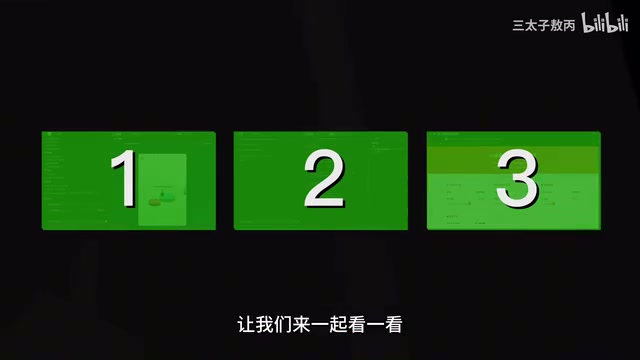
First, it invoked the Brainstorming Skill to collaborate with the user on brainstorming, refining the game concept into a design document. Then through Writing Plans, it broke down the entire development process into small 2-5 minute tasks, each containing precise file paths, complete code, and verification steps. The final code ran successfully on the first try with zero errors.
During this process, TRAE called upon multiple Skills from its Super Power Skills library, completing complex coding tasks like a real engineer would. In the original video creator's words: "Ordinary AI writes code like pulling gacha cards; TRAE writes code like engineering." This complete pipeline from design to implementation to verification is precisely what many current AI coding tools lack.
Deep Dive: What is TDD (Test-Driven Development)? Test-Driven Development (TDD) is an important practice in software engineering, popularized by Kent Beck through the Extreme Programming (XP) methodology. Its core process follows the "Red-Green-Refactor" three-step cycle: first write a failing test case (red), then write the minimum amount of code to make the test pass (green), and finally optimize the code structure without changing functionality (refactor). This approach of "defining expectations before implementing functionality" fundamentally improves code quality, reduces regression errors, and forces developers to think through requirement boundaries before writing code. When an AI coding tool spontaneously adopts a TDD mindset to plan tasks, it signals that its reasoning capabilities are beginning to approach the working habits of senior engineers, rather than merely responding mechanically to prompts.
Challenge Two: TRAE Skill Creator Automatically Builds a Subtitle Proofreading Skill
The second challenge targets a real pain point for content creators—subtitle proofreading. Anyone who's made videos knows that manually proofreading subtitles for a 10-minute video often takes 30 minutes to an hour, and it's both tedious and error-prone.
This test used TRAE's Skill Creator feature to create a dedicated subtitle proofreading Skill. TRAE packaged the entire workflow into a .md document, covering error identification, terminology standardization, format correction, and more—all transformed into a reusable skill package.

The real-world results were quite impressive: a video's subtitle file could be automatically proofread in just a few minutes, and not in some half-baked, rough manner—the output was professional-grade. According to the creator, the subtitles for the review video itself were proofread using this very Skill.
The key value here lies in two points:
- Reusability: A Skill is created once and usable permanently—no need to re-describe requirements each time
- Full automation: From one hour of manual labor down to a few minutes of automated processing
Deep Dive: The Technical Logic Behind AI Agents and Skills Ecosystems An AI Agent refers to an AI system capable of autonomously planning goals, invoking external tools, and executing multi-step tasks—fundamentally different from traditional single-turn conversational LLM applications. The core capability of an Agent lies in the "perceive-plan-act" closed loop: it doesn't just answer questions but can decompose complex goals, select appropriate tools, execute operations, and adjust strategies based on results. Building a Skills ecosystem further modularizes and makes Agent capabilities reusable, similar to "function libraries" or "microservice" architectures in software engineering—each Skill is an encapsulated capability unit that can be called and composed across different scenarios. This design evolves AI tools from "one-off conversations" to "programmable automation platforms," representing a crucial direction for engineering-oriented AI product deployment and the core design philosophy that distinguishes TRAE from ordinary chat-style coding assistants.
Challenge Three: Generating Trend Charts from Financial Report Screenshots—The Value of Seed-2.0's Low Hallucination
The third challenge targets AI coding's Achilles' heel—the hallucination problem. AI might fabricate data, pretending it understood the content, which is unacceptable in serious scenarios like financial analysis.
Deep Dive: What Are AI Hallucinations? Why Are They So Dangerous? AI hallucination refers to large language models generating content that appears reasonable and reads fluently but is actually incorrect or entirely fabricated. This phenomenon stems from the fundamental nature of LLMs—they are systems that predict the next token based on statistical patterns and don't possess genuine "understanding" or "fact-checking" abilities. Hallucinations are particularly dangerous in scenarios like: fabricating data metrics in financial analysis, incorrectly citing drug dosages in medical contexts, or inventing legal precedents in legal documents. Reducing hallucination rates typically relies on multiple technical approaches: Retrieval-Augmented Generation (RAG, having models answer based on real documents), multimodal alignment training (enabling models to truly "see" images rather than guess), and Chain-of-Thought reasoning (forcing models to reason step by step rather than directly outputting conclusions). Seed-2.0's improvements in multimodal understanding are precisely aimed at building credibility on this dimension.
The test fed a Xiaomi financial report screenshot to TRAE, asking it to generate trend charts based on the tabular data. Seed-2.0's multimodal capabilities were fully demonstrated here: it wasn't fabricating data—it genuinely understood the data in the charts. Every data point could be traced back to the source, and every conclusion could be independently verified.
This is the practical value of low hallucination. In financial analysis, deep research, and similar scenarios, "reliable beats clever." An AI that can accurately read chart data and generate verifiable conclusions is far more practically valuable than one that seems smart but might be making things up.
Three Core Capability Improvements of the Seed-2.0 Model
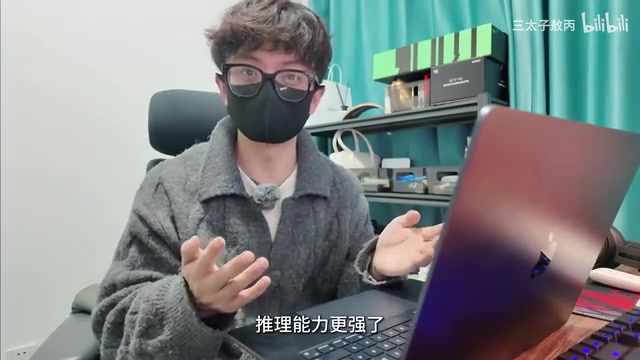
Looking at performance across all three challenges, the core improvements of TRAE + Seed-2.0 can be summarized in three areas:
1. Significantly Enhanced Reasoning
From brainstorming to task decomposition, from test-driven development to automated verification, Seed-2.0 demonstrates thinking patterns similar to a senior engineer. It doesn't simply generate code snippets from prompts but constructs complete engineering workflows. This TDD-style approach significantly improves the reliability of AI-assisted programming.
2. Multimodal Understanding That Actually Delivers
Multimodal is no longer just a marketing buzzword. The precise interpretation of financial report charts shows that Seed-2.0's understanding of visual information—charts, spatial relationships, motion—is substantive and capable of supporting real business scenarios. True multimodal capability means AI tools can process information types beyond pure text, extending to images, tables, screenshots, and other rich real-world inputs, dramatically broadening applicable business boundaries.
3. Agent Capabilities and Skills Ecosystem Building
The Skills feature transforms workflows into knowledge packages—created once, reusable forever. This design philosophy of crystallizing experience into executable skills evolves TRAE from a "conversational coding assistant" into a "programmable engineering platform." From a broader perspective, this also reflects the entire AI industry's evolution from "model capability competition" to "ecosystem and workflow competition"—whoever enables developers to more efficiently embed AI capabilities into real workflows gains the competitive initiative for the next phase.
TRAE's Free Strategy and Open-Source Ecosystem
It's worth noting that the TRAE China edition is completely free—not a trial, not time-limited, just free. Against the backdrop of overseas models like Claude and GPT raising prices, this strategy is extremely attractive to domestic developers.
The team also used TRAE + Seed-2.0 to create a "TRAE Bao Spring Festival Temple Fair" project, showcasing its creative coding potential through festive-themed interactive experiences.
Related articles
 Product Reviews
The Programmer's Desk Setup Guide: Building a Workspace That Feels Like Home
Discover how programmers build productive, comfortable workspaces. From multi-monitor setups to ergonomic design, explore the desk philosophy that drives focus and flow.
 Product Reviews
Qoder vs Cursor Real-World Comparison: Which $20/Month AI IDE Is Better?
Hands-on comparison of Qoder vs Cursor AI IDEs: Agent autonomy, human interaction count, and architecture decisions. Qoder needed only 2 interactions vs Cursor's 8.
 Product Reviews
Cursor Cloud Agent Demo: Eliminating Bottlenecks Across the Entire Software Development Lifecycle
Deep analysis of Cursor's Cloud Agent demo showing how cloud VMs, automated test artifacts, and a full-chain control plane systematically eliminate human bottlenecks across the software development lifecycle.