Trained Entirely on Ascend NPU! Phai-A1-35B Code Model Hands-On Test

Hands-on test of a 35B MoE code model trained entirely on domestic Ascend: mid-to-upper scores, friendly barrier to entry.
Bilibili creator hands-on tested Phai-A1-35B-1M, a 35B MoE model built on Qwen 3.6 with 256 experts activating 8 at a time, supporting six languages with an attached vision tower, 260K native context expandable to 1.01M. Its biggest feature is that post-training was done entirely on Huawei Ascend NPUs: fine-tuning followed by reinforcement learning, using GRPO to run 4,000 code execution and unit test sandboxes, with training data expanded from 16K to 1M entries covering repository-level long context. Official benchmarks show 83.6% on software engineering (base model 73.4%), tool calling 69.6, multilingual 74, long context 75—all vendor figures. Weights can be pulled with a single command from Hugging Face and ModelScope; official quantizations are only Q3/Q4; the license claims Apache 2.0 but the base model license should be checked.
In China's domestic compute ecosystem, a model that goes "from training to inference without ever touching NVIDIA" has always been something of a milestone. Bilibili creator "Logic Restaurant" recently put a model called Phai-A1-35B-1M through hands-on testing. Its selling points are straightforward: it's built on the 35B expert model from Qwen 3.6, targets code and Agents, and its entire training pipeline was completed on Huawei Ascend NPUs.
According to the creator, this information comes mainly from the official model card. The weights have been released, and the community has already produced quantizations and repackaged versions. Below, drawing on both the hands-on test and official statements, let's look at what this model actually does, how to interpret its scores, and what ordinary developers should watch out for before getting started.

Architecture: A 35B Expert Model, Plus a Vision Tower
Phai-A1-35B-1M is built on Qwen 3.6 and uses a Mixture-of-Experts (MoE) structure with 35B total parameters and 256 experts, activating only 8 per inference. The point of this design is to "run bigger models with less compute"—large total capacity, but controllable per-inference cost.
Language support covers six languages: Chinese, English, Japanese, Arabic, German, and Russian. Somewhat unexpectedly, it also comes with a vision tower, and is officially classified as a multimodal image-text model that can read both images and text. For a model focused on code and Agents, vision is a bonus—for example, it opens up possibilities for scenarios like reading screenshots or looking at design mockups.
The context window is another highlight. According to official statements, the native context is 260K, multiplied by a 4x extension—the base documentation says it can be extended to 1.01M. This is where the "1M" in the name comes from.
Mixture-of-Experts (MoE) is a sparsely activated model architecture: the model contains multiple parallel "expert" subnetworks, but each forward pass activates only a few of them based on a routing mechanism. Phai-A1-35B-1M has 35B total parameters, 256 experts, and activates only 8 per pass, meaning the actual compute per inference is far lower than a dense model with the same total parameter count—thus reducing inference cost while maintaining large-capacity knowledge storage. The challenge with MoE lies in routing balance and training stability, which are key areas requiring careful tuning in the post-training stage.
Vision Tower refers to the vision encoder module in the model responsible for processing image input. It is usually independent of the language backbone and encodes images into feature vectors that are aligned and injected alongside text tokens. A model with a vision tower can understand both image and text input, but vision capabilities require additional multimodal data training, and their effectiveness depends on how well the vision tower aligns with the language model—it cannot simply be equated with a dedicated multimodal model.
Training: Two-Step Post-Training, Entirely on Ascend Cards
According to information disclosed in the official model card, Phai-A1-35B-1M's post-training is split into two steps: fine-tuning first, then reinforcement learning, all completed on Ascend cards.

The reinforcement learning portion used GRPO and ran 4,000 sandboxes. These sandboxes contained code execution and unit tests, using execution results directly as feedback signals—a pragmatic approach for code models, since whether unit tests pass is a natural reward. In addition, training also covered tool-calling and multi-step planning capabilities.
In terms of data scale, training data was expanded from 16,000 entries to 1 million, covering both short conversations and full code-repository-level long-context training, with context extension enabled throughout. This data composition shows that its goal isn't just "can write functions," but rather handling cross-file, cross-module tasks in real engineering environments.
GRPO (Group Relative Policy Optimization) is a policy optimization algorithm in reinforcement learning and a variant of PPO. It does not rely on a separate value network (critic); instead, it samples a group of outputs for the same prompt and estimates the advantage function using relative rewards within the group, thereby reducing memory usage and training complexity. In code model scenarios, GRPO is often combined with verifiable rewards: after the model generates code, it is placed in a sandbox to execute unit tests, and a reward signal is given based on the pass rate, driving the model to optimize toward "code that runs." This "execution feedback" is more objective than manual annotation or reward models, but it is also limited by the quality of the test cases covered by the sandbox.
Sandbox refers to an isolated runtime environment used to safely execute model-generated code and capture results, exceptions, and resource consumption. 4,000 sandboxes means maintaining a large number of isolated environments in parallel during training to run unit tests—an engineering challenge that requires solving environment scheduling, dependency isolation, and result collection. This is an easily overlooked engineering threshold beyond "all on Ascend."
Benchmark Scores: Vendor Figures, Mid-to-Upper Range
The officially published benchmark results are as follows (all vendor-reported scores):
- Software engineering benchmark: 83.6%, versus 73.4% for the base model
- Harder engineering problems: 65
- Multilingual: 74
- Long context: 75
- Instruction following: 69.4
- Tool calling: 69.6
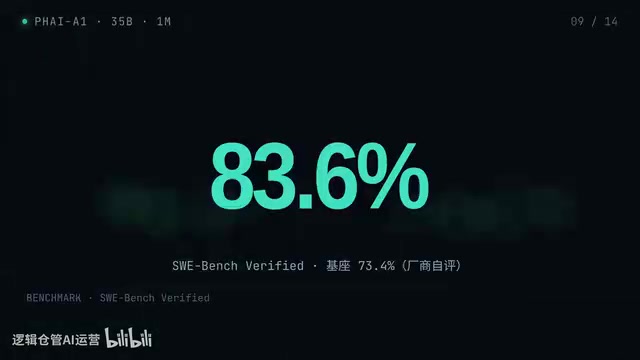
Looking at these numbers, the software engineering benchmark shows a clear improvement over the base model, indicating that code reinforcement learning in the post-training stage was effective. Tool calling at 69.6 and multilingual at 74 are mid-to-upper level, and long context at 75 basically lives up to the "1M" marketing point. It should be noted that these are all vendor figures, and actual experience will be affected by prompts, task types, and quantization level. The creator's own hands-on assessment was "pretty good"—positive but not exaggerated feedback.
Getting Started: Pull Weights with One Command, Watch the Base Model License
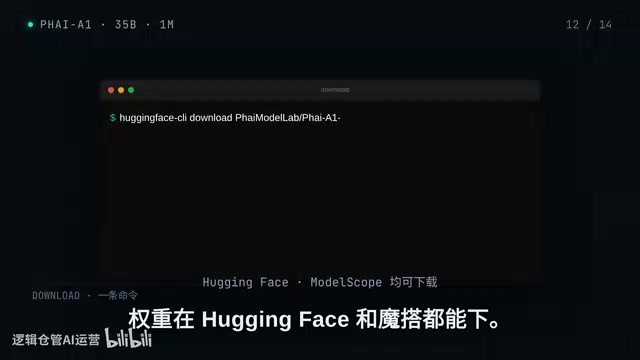
The deployment barrier is low. Weights are available on both Hugging Face and ModelScope, and can be pulled with a single command. Domestic users will find ModelScope downloads faster. The community has already produced quantizations and repackaged versions; officially, only Q3 and Q4 quantizations are provided.
Be careful with licensing. The weights license claims to be Apache 2.0, but the base model is Qwen 3.6, so before use it's best to check the base model's license terms carefully, especially for commercial scenarios. When an open-source license and a base model license overlap, the stricter one prevails—this is common sense but often overlooked.
Apache 2.0 is a permissive open-source license that allows commercial use, modification, and redistribution, but requires retaining copyright notices and license text, and provides no warranty. It's important to distinguish: the model weights claiming Apache 2.0 does not automatically cover the license of its base model. Qwen-series base models typically have their own usage terms (such as scale thresholds, commercial use declaration requirements, etc.), and when they overlap, the stricter one prevails. Before commercial use, you should check the restrictive clauses in the base model license one by one, and avoid judging solely based on the license label on the weights page.
Two Points Worth Noting
First, the significance of training entirely on Ascend isn't just "domestic substitution." It proves that running the complete post-training pipeline—"fine-tuning + reinforcement learning + long context"—on the Ascend ecosystem is feasible, and it offers reference value for teams wanting to do similar things.
Second, competition in code models is shifting from "completion" to "Agent." Phai-A1-35B-1M's investment in tool calling and multi-step planning, plus its training approach using sandbox execution feedback, is headed in the right direction. But the tool-calling score of 69.6 shows it's not yet in the top tier; it's suitable as a localized, cost-controllable option rather than a no-brainer replacement for your primary model.
For developers wanting to run code Agents on their own machines, the 35B MoE with Q3/Q4 quantization offers a relatively friendly hardware threshold; for teams interested in the domestic compute stack, this model's training path itself is worth dissecting.
Related articles

Xenon Flash Bug Returns: Radxa Dragon Q8B Affected
The Xenon flash bug resurfaces, this time on the Radxa Dragon Q8B board. This article reviews early Hacker News discussion and analyzes the potential impact and community concerns.

ChatGPT Plus Subscription Guide for Users in China: Official Top-Up Channel Walkthrough and Comparison
A complete guide to subscribing to ChatGPT Plus from China via official top-up platforms: plan selection, account login, copying account info, payment verification, plus a comparison of top-up, proxy, and self-supplied card channels.

The Complete Guide to Subscribing to ChatGPT Plus in China: Hands-On Walkthrough of Third-Party Top-Up Channels and Risk Analysis
How can users in China subscribe to ChatGPT Plus? This article breaks down the complete process of third-party top-up platforms, analyzes account security, renewal sustainability, and risk-control risks to help you decide which subscription option suits you better.