Training a Video Generation Model from Scratch on a Laptop: How to Break Through a Loss Plateau
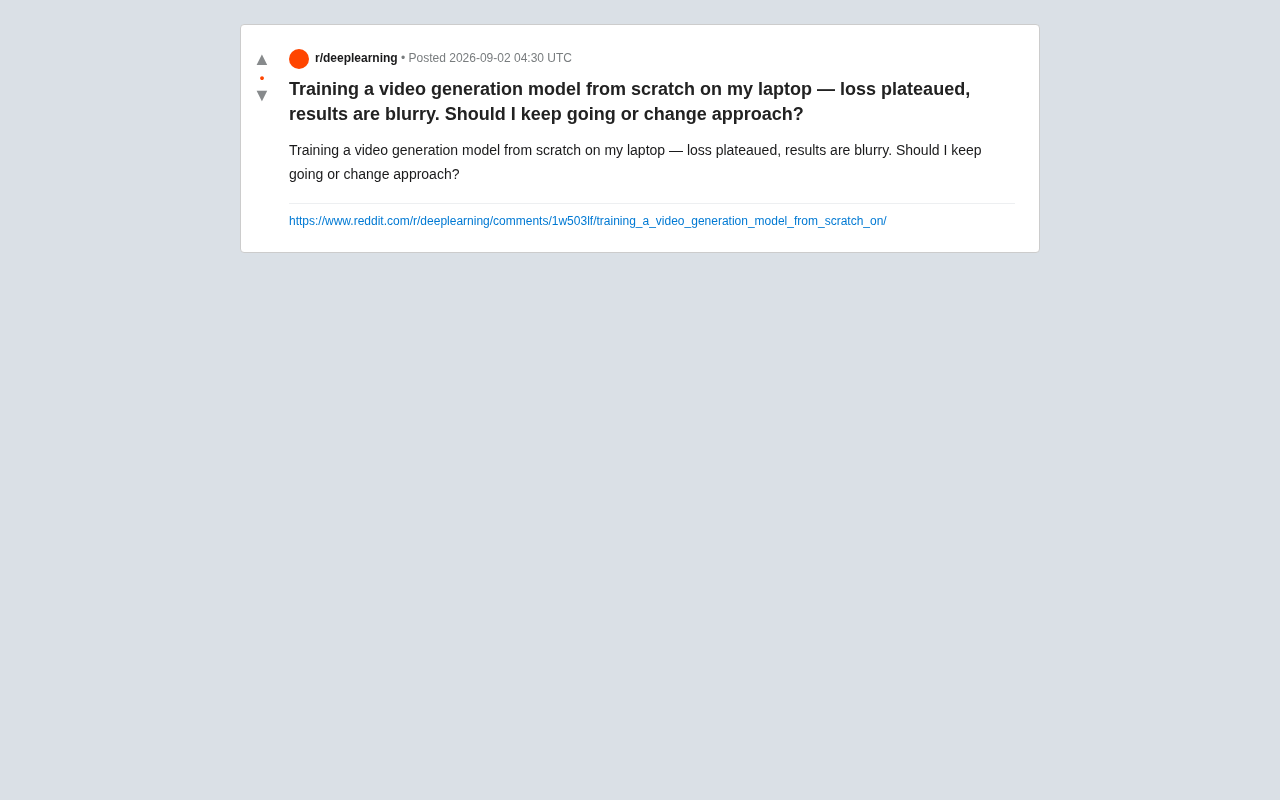
Why training video generation models from scratch on laptops fails, and practical strategies to break through.
Training a video generation model from scratch on a laptop often leads to loss plateaus and blurry outputs due to insufficient compute, VRAM limitations, and inadequate data. This article explains the technical reasons behind these issues and offers practical solutions: leveraging pretrained models with LoRA fine-tuning, validating approaches with toy datasets, and using cloud GPU platforms for affordable high-performance computing.
A Common Yet Very Real Dilemma
In a machine learning community on Reddit, a developer posted this question: he had been trying to train a video generation model from scratch on his laptop, but the loss function quickly plateaued during training, and the generated results were nothing but a blur. He was stuck in a dilemma: should he push through and keep training, or completely change his approach?
This might seem like just one person's failed technical experiment, but it reflects a universal challenge that countless beginners face when diving into generative AI. Video generation is one of the most compute-intensive, data-hungry tasks in the AI field today, and training one from scratch on a consumer-grade laptop is an experiment almost destined to be an uphill battle.
Why Loss Plateaus and Results Turn Blurry
The Nature of Loss Functions and the Optimization Dilemma
A loss function is a mathematical metric that measures the gap between a model's predictions and the ground truth. During neural network training, the optimizer continuously adjusts model parameters through backpropagation, aiming to progressively reduce the loss value. Common loss functions include Mean Squared Error (MSE), cross-entropy, and others. When the loss curve remains flat for an extended period during training, it typically means the model is stuck in a local optimum, or that an improper learning rate has caused parameter updates to stagnate. In generative models, loss design is especially critical—overly simplistic pixel-level losses push the model toward generating "safe but mediocre" blurry results, while more sophisticated adversarial losses or perceptual losses can encourage sharper, more realistic details.
Hardware Is an Inescapable Ceiling
Video generation models (whether based on diffusion models, autoregressive Transformers, or GAN architectures) need to model temporal continuity. Compared to image generation, video adds a time axis, causing parameter count, VRAM usage, and compute requirements to grow by orders of magnitude.
Video generation models have gone through multiple generations of technical evolution. Early GAN (Generative Adversarial Network) architectures generated video through adversarial training between a generator and discriminator, but training was unstable and hard to scale. Autoregressive Transformer models treat video as a token sequence and generate frames one by one, but computational complexity grows quadratically with sequence length. The current mainstream approach—Diffusion Models—generates high-quality video through iterative denoising, with notable examples including Stable Video Diffusion and Sora. These models typically operate in latent space rather than pixel space, first compressing video into low-dimensional representations using a VAE, then performing the diffusion process, which dramatically reduces computational overhead. The introduction of spatiotemporal attention mechanisms allows these models to simultaneously capture spatial structure within frames and temporal coherence across frames—this is the core technical challenge that distinguishes video generation from image generation.
Mainstream video generation models in the industry (such as Sora, Runway, Pika, etc.) routinely use hundreds or even thousands of A100/H100 GPUs for training. NVIDIA's A100 and H100 are data center-grade GPUs designed specifically for large-scale AI training. The A100 features 40GB or 80GB of HBM2e memory with peak performance of 312 TFLOPS (FP16), while the H100 reaches 4 PetaFLOPS (FP8) and supports specialized acceleration units like the Transformer Engine. By comparison, a consumer laptop GPU like the RTX 4060 Laptop has only 8GB of VRAM and roughly 1/10th the compute power of an A100. The more critical gap lies in memory bandwidth and interconnect technology—data center GPUs are linked via NVLink or InfiniBand high-speed interconnects, enabling thousand-GPU clusters for distributed training. A single laptop, facing models that require terabytes of VRAM, can barely manage inference through techniques like model sharding and gradient checkpointing—training is virtually infeasible.
Even with a mobile RTX GPU, a laptop typically has only 6–16GB of VRAM and computing power tens or even hundreds of times less than data center-grade GPUs. Under these conditions, training from scratch means the model often prematurely converges to a mediocre local optimum before it has learned any meaningful spatiotemporal features, simply because of insufficient capacity and data. This is the classic signal behind a plateaued loss and blurry outputs.
The Technical Reasons Behind the Blur
Blurry generation results typically point to several possible issues:
- Model underfitting: The network capacity is too small or the number of training steps is insufficient to capture high-frequency details;
- Reconstruction loss dominance: If pixel-level losses like MSE/L1 are used, the model tends to output an "average image" to minimize error, naturally resulting in blur;
- Insufficient data volume and diversity: Small datasets cannot support the model in learning complex motion patterns;
- Improper learning rate or optimization settings: A loss plateau may simply indicate that optimization has stagnated, not that the model has hit its capacity ceiling.
Keep Training or Change Approach?
Facing this decision, the answer is actually quite clear: under these hardware constraints, stubbornly continuing to train from scratch yields an extremely poor return on investment. The more pragmatic move is to adjust the overall strategy.
Prioritize Transfer Learning and Fine-tuning
Rather than starting from scratch, stand on the shoulders of giants. There are now numerous open-source pretrained video/image generation models available (such as Stable Video Diffusion, AnimateDiff, CogVideo, etc.) that have already learned universal spatiotemporal representations from massive datasets. Fine-tuning or lightweight LoRA training based on these models can achieve far better results than training from scratch at a fraction of the compute cost.
LoRA (Low-Rank Adaptation) is a parameter-efficient fine-tuning method proposed by Microsoft Research in 2021. Its core idea is to freeze the pretrained model's original weights and only train low-rank decomposition matrices inserted into each layer. For example, for a weight matrix W, LoRA adds ΔW=BA (where B and A are matrices with rank much smaller than W), and only A and B are updated during training. This reduces trainable parameters to 0.1%–1% of the original model, dramatically cutting VRAM usage and training time. In video generation scenarios, LoRA enables style adaptation or content-specific customization of large models like Stable Video Diffusion on consumer hardware, without retraining the entire model. Similar techniques include Adapter, Prefix-tuning, and others, which together form a fine-tuning toolbox accessible to individual developers in the era of large models.
This not only saves compute but also gives laptop-grade hardware a genuine role to play—fine-tuning a LoRA module may require only a fraction of the VRAM needed for full training.
Scale Down the Problem to Validate Your Approach
If you're determined to understand the mechanics of training from scratch, it's advisable to dramatically reduce the problem scope first:
- Start with image generation rather than video generation to verify that your pipeline works correctly;
- Use very low resolutions (e.g., 64×64) and short sequences (a few frames) for prototyping;
- Use toy datasets (like MovingMNIST) to confirm that the model architecture can converge normally.
MovingMNIST is a classic benchmark dataset in the video prediction and generation field, consisting of simple dynamic sequences made from MNIST handwritten digit images—typically 1–2 digits moving, bouncing, or overlapping within the frame. While visually extremely simple, it captures the core challenges of video modeling: temporal coherence, motion prediction, and occlusion handling. For algorithm validation, the value of toy datasets lies in their controllability and rapid iteration—small data volume (thousands to tens of thousands of samples), low resolution (64×64), and simple motion patterns allow a complete training cycle to finish in minutes to hours. This lets developers quickly verify whether model architecture, loss function design, and training pipeline are correct, avoiding the waste of weeks of compute on large-scale data only to discover fundamental errors.
Only when small-scale experiments run successfully and loss decreases normally should you consider gradually scaling up.
Leverage Cloud Computing
If the goal is to train a truly usable model, a laptop is ultimately not the right platform. Google Colab offers limited free GPU access (typically a T4), and the paid Colab Pro (about $10/month) provides access to V100 or A100 GPUs. Kaggle offers 30 hours of free GPU time per week. Professional cloud GPU rental platforms such as AWS, GCP, Lambda Labs, and Vast.ai offer high-end GPUs on a pay-per-hour basis—A100 rentals run about $2–3/hour, and H100s about $4–8/hour. For personal projects, a complete video generation model fine-tuning run might require 10–50 hours of GPU time, with total costs ranging from tens to a few hundred dollars—far less than the tens of thousands of dollars needed to purchase professional hardware. Another advantage of cloud platforms is elasticity—you can scale resources up or down based on your experiment phase, and take advantage of Spot Instances for 50%–70% discounts.
These platforms offer on-demand, high-performance compute at manageable costs, making them a far more realistic choice for individual researchers.
Advice for Independent Developers
This Reddit user's experience provides a valuable reference for all generative AI enthusiasts. Here are a few core principles:
- Clarify your goal: Are you trying to learn the underlying principles, or produce something usable? For the former, scale down and experiment. For the latter, fine-tune directly from open-source models.
- Respect hardware limitations: Video generation has rigid compute requirements. Recognize the capability boundaries of a laptop and avoid wasting time going in the wrong direction.
- A loss plateau doesn't mean failure: It's more of a signal telling you that your current model capacity, data scale, or optimization configuration has hit a bottleneck. What's needed is a strategic adjustment, not blind persistence.
- Embrace the open-source ecosystem: Open-source models for video generation are maturing rapidly. Leveraging them effectively is the key to breaking through as an individual developer.
Conclusion
Training a video generation model from scratch on a laptop is a courageous but methodologically flawed attempt. Loss plateaus and blurry results aren't so much failures as they are clear signals from your hardware and methodology. A shift in thinking—from training from scratch to fine-tuning, from video to image prototyping, from local to cloud—can often breathe new life into a project that seemed completely stuck. In the era of generative AI, working smart by "leveraging existing resources" is far more important than brute-forcing the creation of everything from scratch.
Key Takeaways
- Video generation models demand compute and VRAM far beyond what consumer-grade hardware can provide
- Loss plateaus and blurry outputs typically stem from insufficient model capacity, poor loss function design, or limited data scale
- LoRA fine-tuning on pretrained models is the most realistic technical path for individual developers
- Using toy datasets to validate algorithm correctness prevents wasting resources on large-scale training
- Pay-as-you-go cloud GPU platforms are truly democratizing access to high-performance computing
Related articles
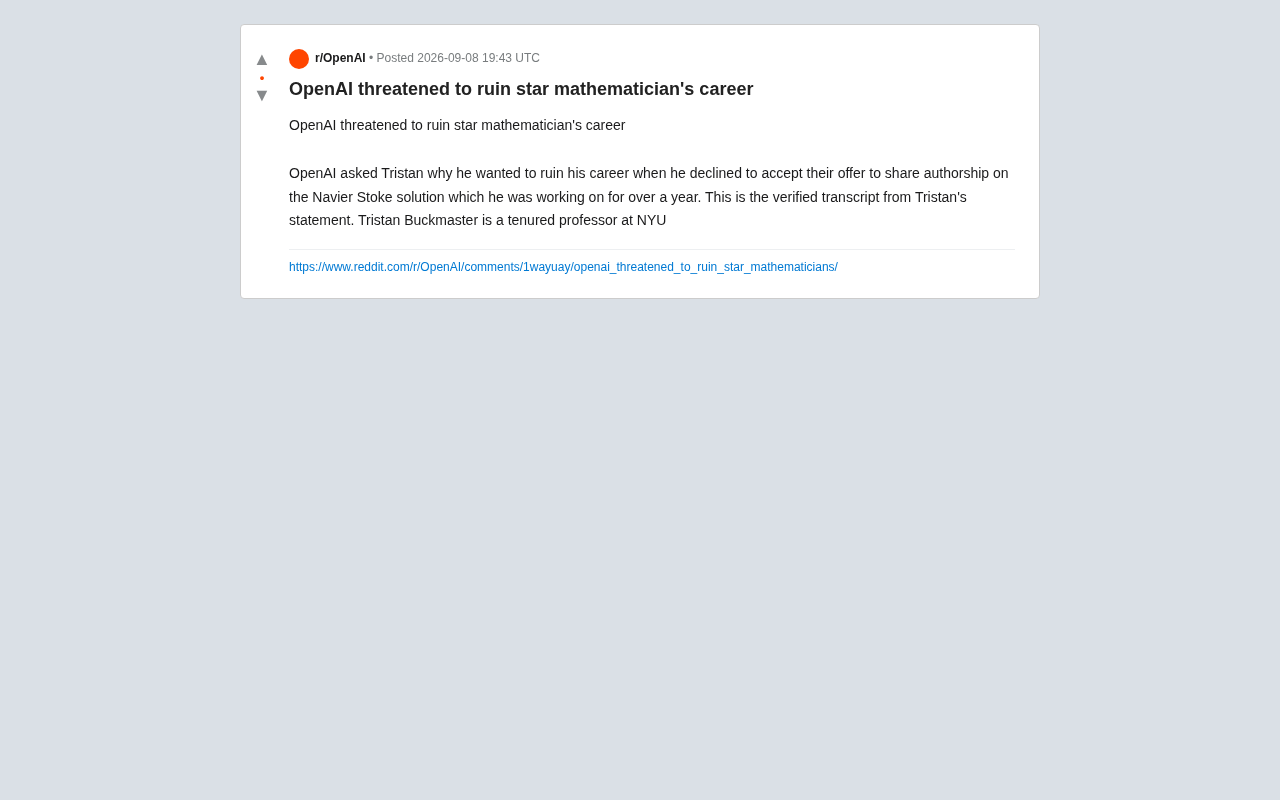
OpenAI Authorship Dispute: The Battle Over Academic Boundaries in the AI Era
OpenAI disputes authorship with mathematician Tristan Buckmaster over Navier-Stokes research, raising ethical questions about AI involvement in science.
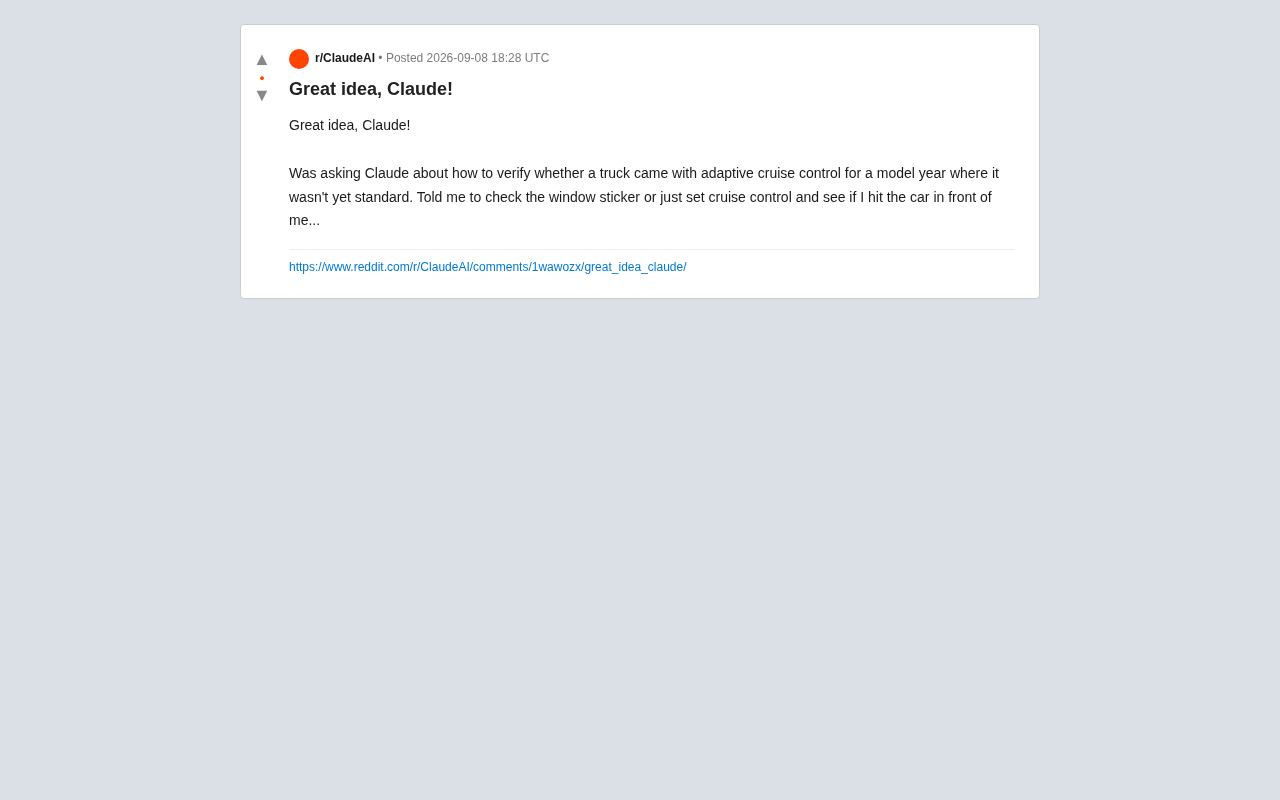
Claude Suggests User Test ACC by Crashing Into Car Ahead: Where Are AI Safety Boundaries?
Claude suggested a user test ACC by crashing into the car ahead—this absurd response sparked AI safety discussions. This article analyzes why LLMs generate implicitly dangerous advice and the blind spots in AI safety guardrails.
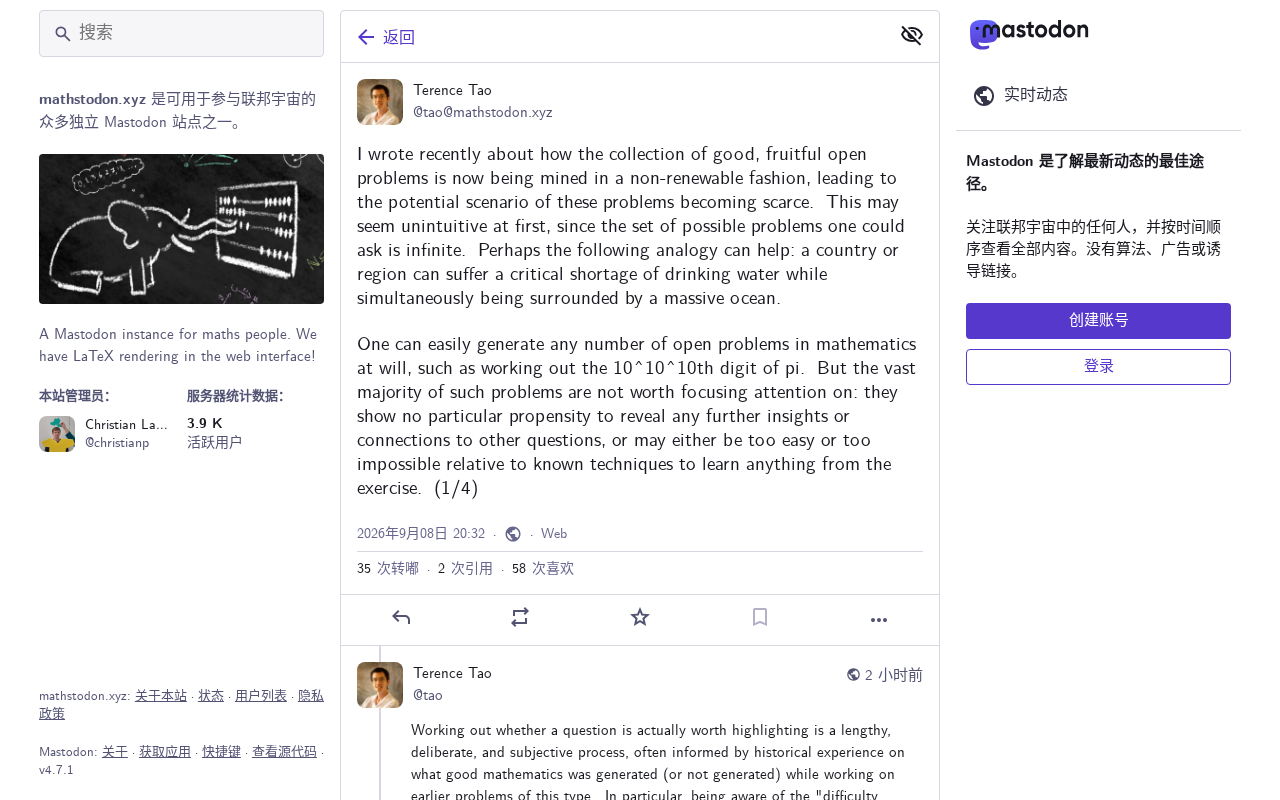
Terence Tao's Warning: AI Is Depleting the Non-Renewable Resource of Mathematical Problems
Fields Medalist Terence Tao warns that AI is mining mathematical problems in a non-renewable way. Exploring sustainability of math research in the AI era, the evolving role of human mathematicians, and balancing AI power with human creativity to maintain academic ecology.