Trump Orders Federal Documents to Replace 'AI' with 'Superintelligence'; DeepSeek Open-Sources Ascend Software Stack

Trump rebrands AI as 'superintelligence' while DeepSeek open-sources its Huawei Ascend software stack to challenge CUDA.
Four stories dominate this week: Trump's executive order rebranding 'AI' as 'superintelligence' and a symbolic safety pact with tech execs, followed almost immediately by FTC confirmation of ongoing investigations into OpenAI and Anthropic; DeepSeek open-sourcing its full Huawei Ascend software stack with TileLang at its core, offering a hardware-agnostic path that challenges NVIDIA's CUDA lock-in; AI data centers' HBM buying spree squeezing conventional memory supply and driving up smartphone prices; and a landmark Tokyo court ruling recognizing voice as legally protected under the right of publicity, contrasting with China's earlier statutory protections under the Civil Code.
This week's news spans aviation safety, financial regulation, AI governance, and hardware competition. Two stories stand out as directly relevant to the AI industry: Trump signing an executive order requiring federal documents to replace "artificial intelligence" with "superintelligence," and DeepSeek open-sourcing its full software stack for Huawei Ascend chips. The former reflects the complex interplay between AI regulation and industry interests in the US; the latter marks a substantive challenge to NVIDIA's CUDA ecosystem from China's homegrown AI training stack.
Trump's "Superintelligence" Rebrand: A Regulatory and Industry Showdown
On September 29 (Eastern Time), Trump signed an executive order directing federal agencies to replace the term "artificial intelligence" with "superintelligence" in official documents. The same day, he displayed a two-page agreement at the White House signed by six tech executives — including OpenAI President Greg Brockman and NVIDIA CEO Jensen Huang — in which each company committed to responsible safety practices in their own development.
Trump described the agreement as "morally binding" — meaning it carries no legal force. According to The Guardian, the signature block on the agreement even misspelled the word "America," a detail many commentators took as emblematic of the rushed and largely symbolic nature of the document.
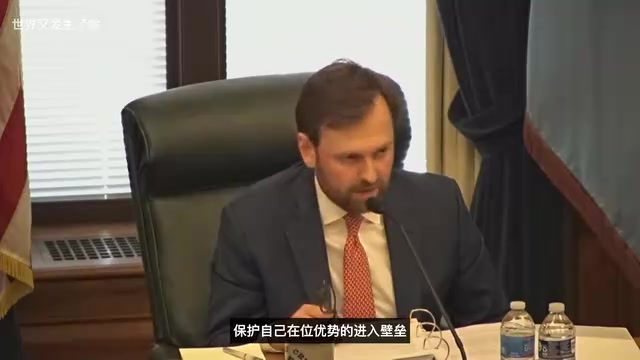
What makes this especially telling is that less than a day after the agreement was signed, the Federal Trade Commission (FTC) confirmed it had already been investigating frontier AI companies including OpenAI and Anthropic — an investigation that quietly began last summer. Acting under its authority to police "unfair or deceptive business practices," the FTC is drafting civil investigative demands requiring executives at these companies to testify about potential risks their products pose to consumers.
A senior official indicated that a string of recent reported "AI agent runaway" incidents helped trigger the investigation. FTC Chair Ferguson's remarks on September 15 are also worth noting: if companies are simultaneously lobbying Washington for regulation while seeking antitrust exemptions, what they're really after is "regulatory barriers to entry that protect incumbents" — and everyone should be deeply skeptical. This suggests the investigation could point in two directions: either scrutinizing how dangerous these products actually are, or examining whether companies are deliberately exaggerating those dangers to build a competitive moat.
DeepSeek Open-Sources Ascend Software Stack: A Direct Challenge to CUDA
According to reports, DeepSeekAd founder Liang Wenfeng once told investors that training large models on Huawei chips was one of the company's biggest bets. On September 30, that bet produced a public result: DeepSeek announced it was open-sourcing its complete low-level software stack for Huawei Ascend chips, mirroring what it had previously built for NVIDIA hardware.

TileLang: Freeing Operators from Single-Hardware Lock-In
At the core of this software stack is TileLang, a programming language originating from Peking University, designed specifically for writing "operators" — the fundamental computational steps in model training. DeepSeek says that every TileLang operator used during training now has a high-performance Ascend version.
The longstanding pain point was this: most operators had been written and tuned specifically for NVIDIA's CUDA platform, meaning migrating to a different chip required rewriting each one from scratch — an enormous engineering cost. TileLang's approach is to write operators in a hardware-agnostic form, with DeepSeek and Huawei then filling in the Ascend-specific implementations one by one. Instead of a full rewrite, migration becomes a matter of swapping out the underlying backend adapter, allowing the same training codebase to run on Ascend hardware.
CUDA (Compute Unified Device Architecture) is a parallel computing platform and programming model launched by NVIDIA in 2006, enabling developers to harness GPU compute directly. After nearly two decades of ecosystem development, CUDA has become the de facto industry standard for AI training: the acceleration libraries underlying PyTorch, TensorFlow, and other major frameworks rely heavily on CUDA, and the vast majority of publicly available operator libraries and performance optimization techniques are written with CUDA in mind. This ecosystem lock-in means that even when teams obtain non-NVIDIA chips with competitive raw performance, they often can't realize that performance in practice due to missing software layers — existing operators either won't run or require essentially hand-written, assembly-level code to retune from scratch. TileLang attempts to break this pattern by introducing a hardware-neutral intermediate representation: developers describe computational logic in a unified syntax, and a backend compiler handles mapping to each hardware's specific instruction set. Similar approaches have appeared in projects like Apache TVM and OpenAI Triton, but DeepSeek's release — deeply co-tuned with Ascend hardware and fully open-sourced — represents one of the most substantial engineering efforts in this direction to date.
Hardware Co-Optimization and Performance Claims Yet to Be Independently Verified
Huawei has pledged full support, and the two sides jointly tuned a 128-card Ascend 910B superpod, with official claims that communication bandwidth approaches the hardware ceiling. That said, all published performance figures so far are self-reported by the parties involved and have not yet been independently verified. Real-world competitive standing will require third-party benchmarks and testing under genuine training workloads.
From an ecosystem perspective, however, the symbolic significance of this step should not be underestimated: it lowers the barrier for domestic compute hardware to handle mainstream training workloads, and provides a replicable engineering path away from single-vendor dependency on NVIDIA's ecosystem.
Memory Price Surge: How AI Data Centers Are Hitting Consumer Electronics
A wave of domestic flagship smartphones released before China's National Day holiday all launched at prices roughly 1,000 RMB higher than their predecessors. The new flagships from vivo and OPPO both started at 5,499 RMB for equivalent configurations, while Xiaomi's latest flagship and the iPhone 18 Pro also came in pricier than their respective predecessors.
The culprit is memory. According to market research data, smartphone memory prices rose more than 80% quarter-over-quarter in Q2 of this year, with memory now surpassing the processor as the single most expensive component in high-end phones. The reason: AI data centers are bulk-buying high-bandwidth memory (HBM), squeezing out production capacity for the conventional DRAM used in phones and computers. Micron has noted that, on a per-capacity basis, HBM consumes roughly three times the wafer area of standard memory.
The chain of causation is clear: surging AI compute demand → HBM crowds out wafer capacity → conventional memory prices spike → consumer electronics costs rise. Interestingly, the price hikes may have actually helped Apple: the iPhone 18 Pro series sold more units in China during its first three days on sale than the previous Pro lineup sold in its entire first week. Some analysts suggest that the across-the-board price increases on domestic flagships have raised consumers' mental benchmark for what a flagship costs, making Apple's premium feel comparatively smaller.
High Bandwidth Memory (HBM) is a stacked DRAM architecture designed for high-performance computing, achieved by vertically stacking multiple memory dies and connecting them with through-silicon vias (TSVs), delivering data transfer bandwidths far exceeding conventional DDR memory. NVIDIA's H100 and H200 data center GPUs both use HBM as their video memory, with per-card HBM capacity reaching 80GB or even 141GB and bandwidths exceeding 3TB/s. Because HBM manufacturing is complex and yield-sensitive, only three major suppliers exist globally — SK Hynix, Samsung, and Micron — and producing HBM shares some wafer capacity with the standard LPDDR memory used in consumer devices. As the AI compute arms race drives data centers to procure HBM at scale, fabs have tended to allocate more capacity to the higher-value HBM, compressing supply of conventional memory for consumer electronics and creating a structural supply-demand mismatch that ultimately gets passed on to end consumers in the form of higher prices.
AI Voice Infringement: Japanese Court First to Recognize Legal Protection for Voice
According to Kyodo News, on September 30 a Tokyo district court ruled in a case brought by voice actor Kenjiro Tsuda against TikTok that a person's voice, like their likeness, is a symbol of individual personality and is protected under the right of publicity; unauthorized use may constitute infringement. This is the first time a Japanese court has recognized a person's voice as legally protected.
Tsuda is the Japanese voice of Nanami Kento in Jujutsu Kaisen and has a highly distinctive voice. The dispute arose when an anonymous account posted more than 180 urban legend videos on TikTok featuring AI-generated narration that closely resembled his voice — an account reportedly earning between 500,000 and 750,000 yen per month from the content. Strictly speaking, Tsuda did not win outright — the court dismissed the takedown request and did not rule on whether the videos constituted infringement — but the account in question was deleted during the litigation, and his attorneys said "the original objective has been achieved."
By comparison, China moved earlier on this front: the Civil Code explicitly provides that protections for a natural person's voice shall apply mutatis mutandis to the provisions governing the right of likeness. In 2024, the Beijing Internet Court also ruled on the country's first AI voice infringement case — a voice actor whose voice had been used to create an AI voice product sold commercially — with the defendant ordered to pay 250,000 RMB in damages at first instance. As AI voice synthesis technology becomes widespread, the legal boundaries around personality rights such as voice will be an issue every country must confront.
The right of publicity originated in US case law and refers to a natural person's exclusive right to control the commercial use of their identifiable personal attributes — name, likeness, voice, and similar characteristics. Unlike personality rights, which emphasize non-economic, dignitary interests, the right of publicity focuses on protecting economic value, making it especially relevant in commercial disputes in entertainment, sports, and related fields. Japan currently has no dedicated right-of-publicity legislation; courts have historically addressed such disputes primarily through the Unfair Competition Prevention Act or case law. The Tokyo district court's explicit extension of right-of-publicity protection to voice in this ruling carries significant precedential value. By contrast, China is ahead legislatively: Article 1023 of the Civil Code, which took effect in 2021, explicitly provides that protections for a natural person's voice shall apply mutatis mutandis to the provisions on the right of likeness, providing a direct statutory basis for AI voice-cloning infringement claims — the very provision that enabled the Beijing Internet Court to issue its damages ruling in 2024.
Related articles

Felix Rieseberg Personal Homepage
Felix Rieseberg's personal homepage sparks attention on Hacker News. This article covers the Slack engineer's technical background, the rise and fall of nativefier, and the value of a developer homepage as a tech calling card.

@ai-sdk/vue 3.0.306 Patch Release Syncs with [email protected] Update
@ai-sdk/vue 3.0.306 released, synced with [email protected]. A routine patch release for the Vercel AI SDK ecosystem with no public API changes; the Vue adapter layer stays version-aligned with the core package.

Gemini 4 Argon API Launches: The Era of Million-Token Output Begins
Google launches Gemini 4 Argon with sparse MoE architecture, up to 1M output tokens, and a 68.90% Vals Index score, available across API, AI Studio, and the Gemini app.