Trump Says Pardoning Jensen Huang 'Is an Option'? The Information Vacuum Behind a Rumor

The New York Post says Trump called pardoning Jensen Huang 'an option,' but the report is thin and needs cautious reading.
An exclusive New York Post interview reports that Trump said pardoning NVIDIA CEO Jensen Huang 'is an option' but that he sees no need to use it. The report is only one sentence and omits the specific grounds, full Q&A context, and legal background. As a core AI supply chain company, NVIDIA's leader being linked to presidential pardon power has drawn tech-world attention and may be amplified by markets and political observers. Yet no second outlet has independently confirmed the full context, making it single-source. The article advises distinguishing confirmed facts, unconfirmed details, and non-inferable parts, treating it as a signal to verify rather than established fact, and notes its value lies in marking an observation node where AI industry leaders intersect with top executive power.
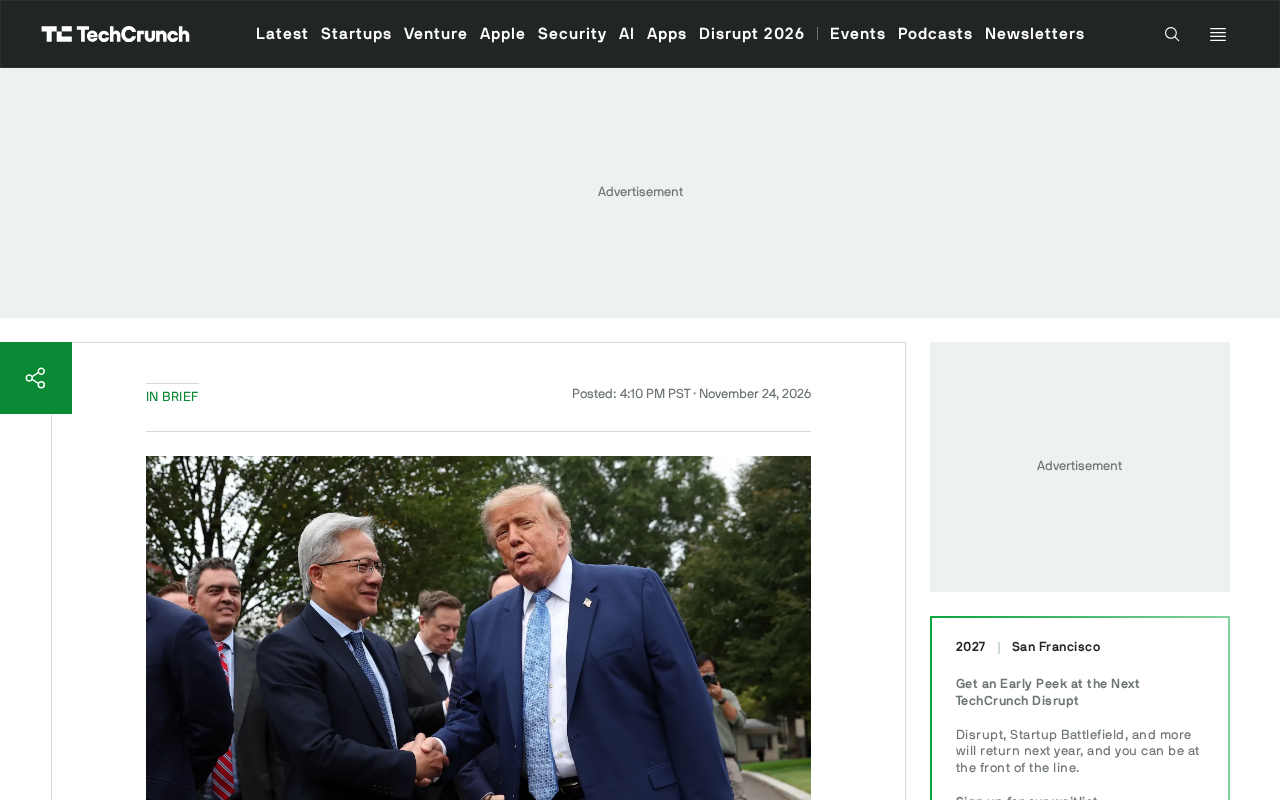
An exclusive interview report from the New York Post has placed NVIDIA co-founder and CEO Jensen Huang and the U.S. president's pardon power in the same sentence. The report states that Trump said in the interview that pardoning Jensen Huang "is an option," but that he did not believe it would be necessary. The news itself is only a sentence long, yet it is enough to stir ripples at the intersection of technology and politics.
One-Sentence News, Three Information Gaps
The core facts of this report are extremely limited: the source is an exclusive interview with the New York Post, the phrasing is "an option," and the qualifier is "did not think it would need to be used." Beyond that, there is no explanation of what the pardon refers to, what the legal background is, or whether the two parties have communicated on the matter.
The first gap is the subject and grounds of the pardon. The report calls Huang a "co-founder" of NVIDIA—a phrasing that itself warrants attention. In public records, Jensen Huang is one of NVIDIA's co-founders, but the pardon power typically targets specific federal crimes or potential charges, and the report provides no background on this at all.
The second gap is context. What was the full question in the exclusive interview? How did the reporter lead into this topic? Under what hypothetical premise did the president give his answer? None of this is in the brief. An "an option" taken out of context can be read as a serious statement or as a polite response to a hypothetical question.
The third gap is timing and related events. The report does not link this statement to any specific investigation, lawsuit, or policy controversy. In the absence of these anchors, any further causal inference is mere speculation.
The U.S. president's pardon power is a prerogative granted to the president by Article II, Section 2 of the U.S. Constitution, primarily used to pardon crimes against federal law, including reprieves, commutations, respites, and remissions of fines. The power applies only to federal offenses, not state crimes. Pardons typically target individuals who have been convicted or may face federal charges, and the president has broad discretion in exercising this power, but it cannot be used to exempt parties in impeachment cases. Historically, presidential pardons have often sparked political controversy, especially when involving individuals close to the president. In the report, Trump says pardoning Jensen Huang "is an option," but does not specify what federal crime or potential charge this refers to, leaving the legal background of the statement entirely absent. Understanding the nature of the pardon power helps readers judge: without a specific federal legal proceeding, this "option" reads more like a hypothetical response than an actual legal action.
Why the Tech World Is Nervous
Despite the thin information, this news is still worth attention because of NVIDIA's current position in the industry. As a core company in the AI computing supply chain, NVIDIA's every move is intertwined with export controls, antitrust scrutiny, and government-business relations. If the company's leader is linked in any literal way to the president's pardon power—even at the level of rumor—it will be amplified by markets and political observers.
This amplification effect has structural causes: AI chips have become a key resource in great-power competition, and the CEOs of leading companies are no longer just business figures but actual participants in industrial policy. Any legal or political signal involving such figures quickly transmits to supply chain expectations and capital market sentiment.
But conversely, precisely because the transmission chain is sensitive, it is all the more necessary to remain cautious about a one-sentence report from a single source. Currently, no second media outlet has independently confirmed the full context of this statement, and there are no official records or subsequent statements for cross-verification.
How to Read Single-Source Reporting
When faced with this kind of information, a more prudent approach is to distinguish three levels.
Confirmed: A certain media outlet published an exclusive interview report containing the above quote. This is a verifiable fact.
Unconfirmed: The full Q&A behind the quote, the specific matter the pardon refers to, and whether any actual legal proceedings exist. All of these are absent from the original material.
Not inferable: Whether Jensen Huang himself or NVIDIA is aware, whether the White House has made any other statement, and whether this matter is related to any pending policy issue. On these questions, silence itself is information—it reminds readers that the story is far from taking shape.
For tech professionals, the actual value of this news lies not in "what happened" but in the fact that it marks a node worth continued observation: when leading figures in the AI industry intersect with the highest executive power, information often spreads faster than facts can be clarified. Until more sources emerge, treating it as a signal to be verified is more rational than treating it as an established fact.
One-line Summary
The New York Post says Trump stated that pardoning Jensen Huang is an option, but the report is thin on information and requires cautious interpretation.
Paragraph Summary
An exclusive interview report by the New York Post states that Trump said pardoning NVIDIA CEO Jensen Huang "is an option," but that he does not think the power would need to be used. The report is only one sentence long and does not explain the specific grounds for the pardon, the full Q&A context, or the relevant legal background. As a core company in the AI computing supply chain, NVIDIA's leader being literally linked to the president's pardon power has drawn attention in the tech world and may be amplified by markets and political observers. However, no second media outlet has independently confirmed the full context of the statement, making it single-source information. The article advises readers to distinguish confirmed facts, unconfirmed details, and non-inferable parts, treating this as a signal to be verified rather than an established fact, and notes that the value of this news lies in marking an observation node where leading figures in the AI industry intersect with the highest executive power.
Related articles
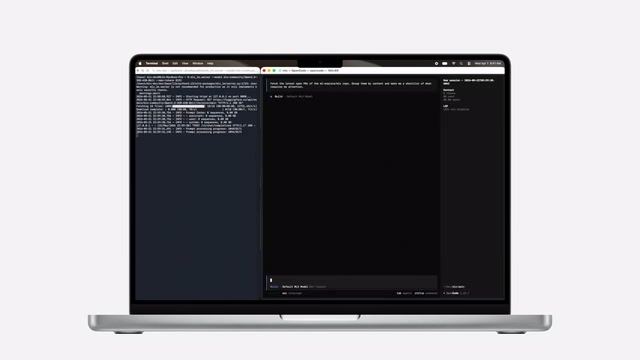
Running Local AI Agents on Mac: A Full Breakdown of the MLX Four-Layer Stack
A breakdown of Apple engineer Joanna's local Mac AI agent solution: the MLX four-layer stack, a three-step setup, and how the neural network accelerator, continuous batching, and distributed inference solve local agent performance bottlenecks.
52KB Engine Runs 2B LLM in a Browser Tab
52KB Engine Runs 2B LLM in a Browser Tab
A 52KB WebAssembly engine on Hacker News claims to run Qwen3.5-2B in a browser tab. We analyze the engine-model separation, browser inference pros and cons, and the on-device AI runtime race.
MIT PhD Takes You from Scratch to Build DeepSeek: A 25-Hour Hardcore Course
MIT PhD Raj Dandekar launches a 25+ hour Bilibili course building DeepSeek from scratch—MoE, MLA, GRPO, hand-written code plus math derivations, aiming to reproduce mini R1.