Trump Suggests Cook Should Succeed Huang Renxun: Cross-Industry Joke or Signal of AI Chip Shakeup?
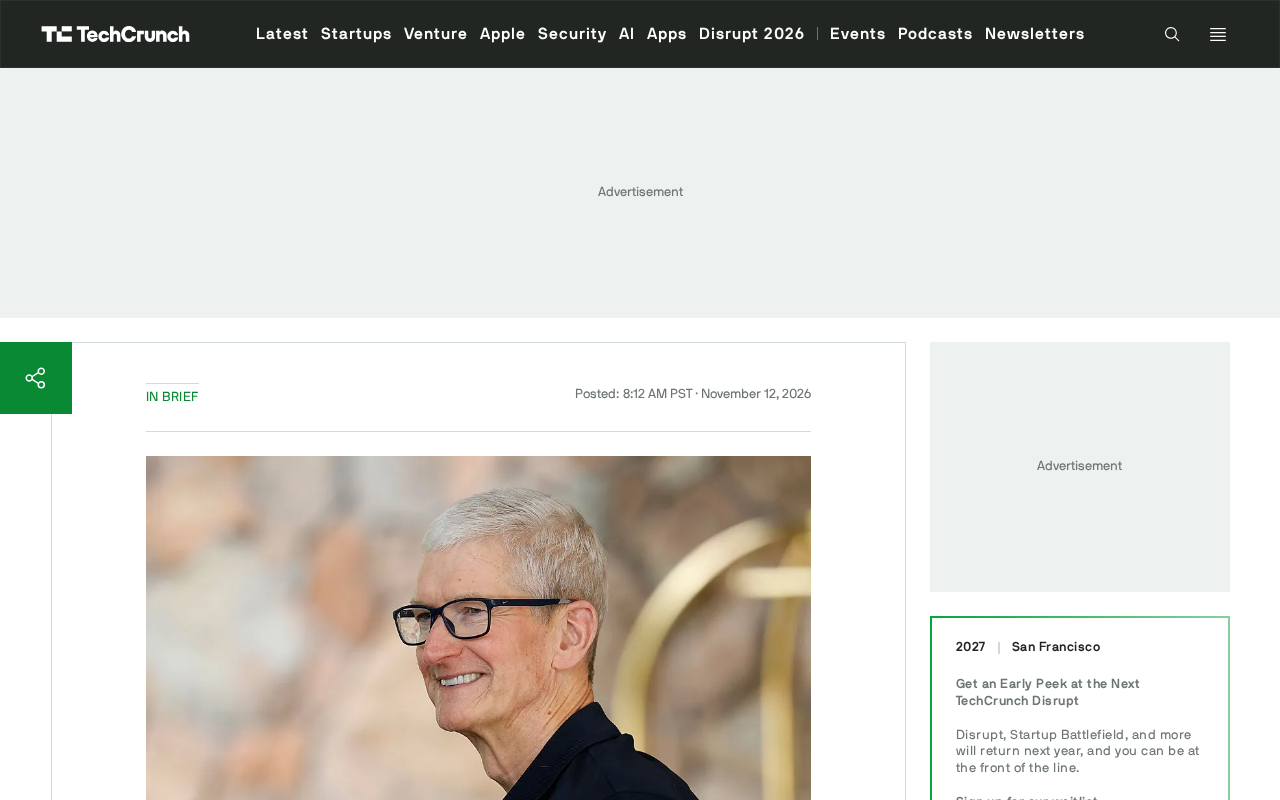
Trump posted that Cook is the only candidate to succeed Huang Renxun, sparking discussion about Nvidia governance and leadership types.
Trump posted on Truth Social that only Apple Chairman Tim Cook could succeed Huang Renxun at Nvidia. The statement provided no background or reasons and has no actual appointment effect; the original report contains very little information. The article notes that the reason this news is taken seriously is that Huang Renxun is deeply tied to Nvidia's CUDA ecosystem and technology roadmap, and the succession question has long been unresolved; while Cook's supply chain and operational capabilities fit Nvidia's needs during capacity-constrained periods, they are misaligned with Nvidia's architecture-driven and developer-ecosystem-driven model. Multi-party discussions only confirm the fact of the statement itself, with clear divergence at the interpretive level. The author believes its true value lies in reflecting that leadership succession at core AI chip companies has become a public topic.
A "Personnel Appointment" on Truth Social
Trump posted on Truth Social claiming that only one person could succeed Huang Renxun (Jensen Huang) at the helm of Nvidia — Apple Chairman Tim Cook. The news comes from an RSS source, with a screenshot capturing the original report's title and core statement.

The message itself is extremely brief, offering no background explanation, and Trump did not explain why Cook would be suited to lead a company whose core business centers on GPUs and AI training chips. Precisely because the information is so thin, the statement reads more like a typical impromptu social media remark than a serious personnel discussion.
But what makes it worth noting is precisely the identities of the two protagonists: Huang Renxun is the central figure in the current AI computing power wave, while Cook is the head of the world's most valuable consumer electronics company. Putting these two names in the same sentence inherently creates a collision of narratives.
Why This Statement Is Being Taken Seriously
Nvidia's "Huang Renxun Dependency"
Nvidia's position in the AI chip field is deeply tied to Huang Renxun's personal technical judgment and ecosystem strategy. He is both the person who explains the computing roadmap externally and the driving force behind long-term investment in the CUDA ecosystem. Discussions about "who will succeed" have long existed externally, but there has never been a clear public answer.
By pushing Cook into the spotlight, Trump is effectively placing an unresolved governance question on the table in a joking manner. Even though the statement itself has no substantive binding force, it still triggers associations about Nvidia's management continuity.
CUDA (Compute Unified Device Architecture) is a parallel computing platform and programming model introduced by Nvidia in 2006, allowing developers to write general-purpose computing programs directly on GPUs using C-like languages. After nearly two decades of accumulation, CUDA has formed a vast library, toolchain, and developer community, becoming the default underlying acceleration backend for deep learning frameworks (such as PyTorch and TensorFlow). Its moat lies not only in the technology itself but also in migration costs: a large amount of AI model code has been deeply optimized for CUDA, and switching to other platforms requires rewriting and re-tuning. Therefore, the long-term CUDA ecosystem investment promoted by Huang Renxun is one of the key reasons why Nvidia is difficult to replace in the AI training chip field, and it also explains why the outside world binds the company's fate so tightly to individual judgment.
Cook's Management Label and the Overlooked Technical Gap
Cook's capability labels are supply chain, operational efficiency, and scaled delivery — precisely what Nvidia needs during capacity-constrained periods. But Nvidia's core competitiveness comes more from architecture roadmaps and developer ecosystems, which differs from Apple's product-driven model.
Putting Cook in Huang Renxun's position is more like a management metaphor: whether chip companies also need an "operations-type CEO" to take over a rapidly expanding organization. As for whether this metaphor holds, Trump's post provides no answer.
The so-called "operations-type CEO" typically refers to a professional manager whose core capabilities are supply chain management, cost control, process efficiency, and scaled delivery, rather than a founder-type leader known for product vision or technical roadmaps. Tim Cook's track record at Apple is a typical example of this type: he was responsible for global supply chain during the Jobs era, compressing inventory cycles to industry-low levels, and after becoming CEO, he led the expansion of services business and the gradual transition to self-designed chips. This type of CEO excels at efficiently distributing already-validated products to global markets, but in scenarios requiring the creation of new technological paradigms from scratch, their decision-making style tends to favor risk control and incremental improvement rather than all-in architectural bets. This is the real tension behind the "management metaphor" mentioned in the article.
From One Sentence to a Discussion: Cross-Verification of Multi-Source Observations
According to reports from RSS sources, the core information of this statement is only the sentence "the only candidate is Cook." Multi-party discussions reached consensus on two points: first, Trump did indeed post this statement on Truth Social; second, the statement has no actual appointment effect.
Divergence centers on interpretation. Some observers view it as a joking intervention in Nvidia's governance topic, while others tend to read it as public affirmation of Cook's personal track record. Since the original material provides no further context, neither interpretation can be falsified.
It should be noted that whether Cook will leave Apple or whether Nvidia has succession arrangements is not addressed in the original material, and no extended inferences are made in this article.
What This News Means for the Industry
In the short term, it does not constitute any substantive industry signal. Nvidia's operations and product cadence will not change because of a social platform statement, nor will Apple's architecture be adjusted as a result.
The truly informative part lies in the focus it reflects: leadership succession at AI chip companies has become part of public discourse. When a company's technology roadmap is tightly bound to individual judgment, the outside world's imaginative space regarding its governance structure gets amplified — even if the trigger is merely a joking remark.
For readers, a more prudent attitude is to treat this news as an observation lens — it highlights what kind of public opinion position the core companies of the AI computing era occupy, rather than consuming it as a personnel news item.
One-line Summary
Trump posted that Cook is the only candidate to succeed Huang Renxun, sparking discussion about Nvidia governance and leadership types.
Paragraph Summary
Trump posted on Truth Social that only Apple Chairman Tim Cook could succeed Huang Renxun at the helm of Nvidia. The statement provided no background or reasons and has no actual appointment effect; the original report contains very little information. The article notes that the reason this news is taken seriously is that Huang Renxun is deeply tied to Nvidia's CUDA ecosystem and technology roadmap, and the succession question has long been unresolved; while Cook's supply chain and operational capabilities fit Nvidia's needs during capacity-constrained periods, they are misaligned with Nvidia's architecture-driven and developer-ecosystem-driven model. Multi-party discussions only confirm the fact of the statement itself, with clear divergence at the interpretive level. The author believes its true value lies in reflecting that leadership succession at core AI chip companies has become a public topic.
Related articles
Yung Pueblo on Self-Awareness: A 365-Day Guide to Inner Transformation
Yung Pueblo shares his new book Journey's 365-day self-awareness structure on Talks at Google, discussing meditation, intuition, co-leadership in relationships, and gratitude practices.

FBI and USDA Hit by Cyberattacks: Critical Infrastructure Security Alarms Sound Again
FBI and USDA reportedly hit by cyberattacks; the FBI was breached for the second time in recent months, this time targeting the National Crime Information Center (NCIC). This article analyzes the incident details, NCIC's strategic value, and common security challenges facing government agencies.
How Do UK Grid Battery Storage Systems Make Money?
How UK grid battery storage makes money: stacking frequency response, capacity market, and wholesale arbitrage revenue, plus operational trade-offs and market risks.