Twitter Teaser: This Week's Featured Launch Pushed to Next Week — Worth the Wait?

A Twitter post reveals this week's featured launch is delayed to next week, teasing it's "worth the wait."
A tech figure tweeted that their most anticipated launch of the week has been pushed to next week, framing the delay with "worth the wait." This proactive disclosure is a common expectation-management tactic in the tech community — softening disappointment while sustaining interest. However, the tweet offers no product names, feature details, or firm release dates. The article advises readers to stay rational and avoid over-interpreting such teaser posts until the actual launch arrives.
A Tweet That Sparked Anticipation
On social media, a brief tweet can often ignite a community's imagination. This post from Twitter reads: "the main thing i was excited about launching this week will be next week instead, but imo worth the wait!"
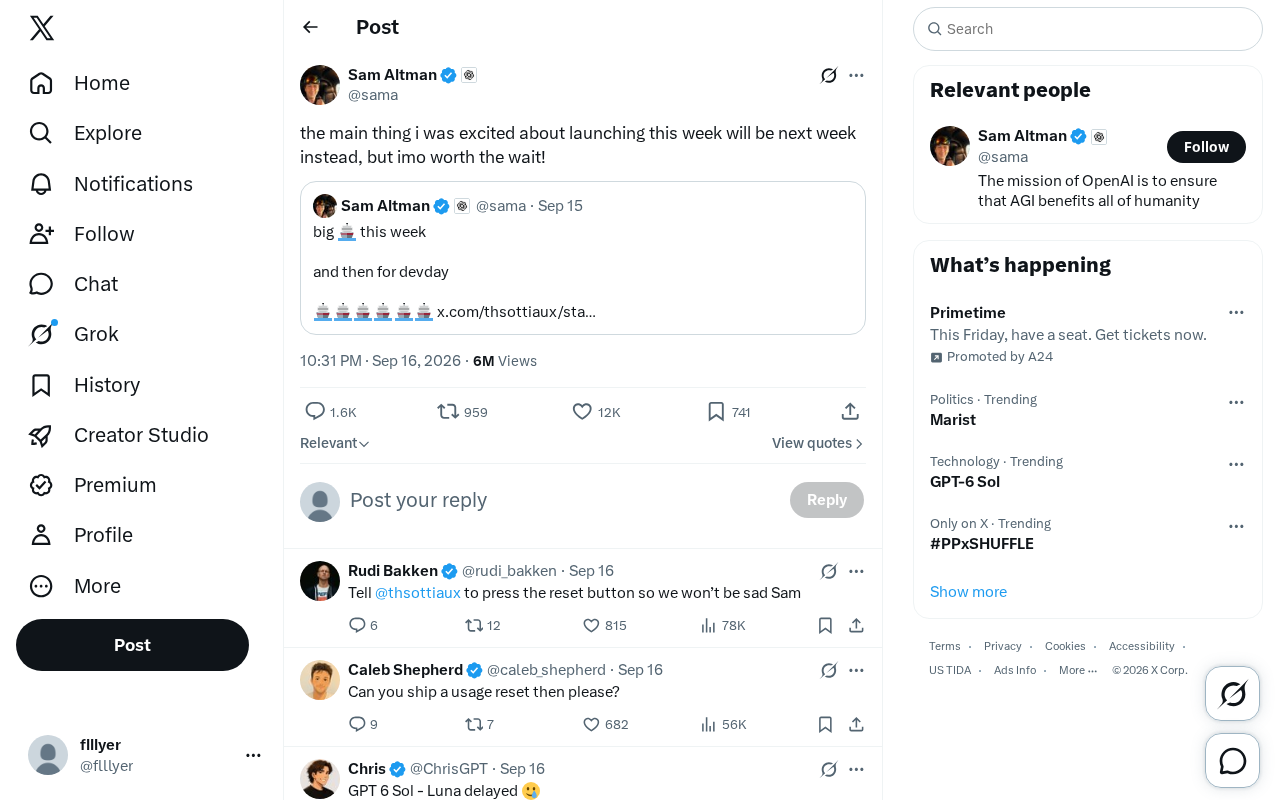
This kind of teaser post is nothing new in the tech world — especially now, when AI products iterate at a rapid pace and even minor adjustments to release schedules can become focal points for community discussion. By framing the delay with "worth the wait," the poster signals that whatever is coming carries some real weight.
Why Products Get Delayed: Common Reasons
There are several ways to interpret a product or feature delay. On one hand, it may mean the team wants to complete more thorough testing before shipping, avoiding the pitfalls of a rushed launch. On the other, it could be about waiting for a more complete feature set or a better release window.
The fact that the poster proactively disclosed the delay — rather than quietly pushing it back — is itself a community communication strategy. Setting expectations early helps soften potential disappointment, while phrases like "worth the wait" keep the excitement alive. This approach is fairly common among tech teams that are serious about community management.
In the AI product space, managing release timing is particularly complex. Shipping a large language model or a major AI feature typically involves safety evaluations, infrastructure scaling, and content moderation — any one of which can cause a delay. Unlike traditional software, the quality bar for AI products is harder to define. What counts as "good enough" is highly subjective, which adds significant uncertainty to the question of when to ship. Competitor activity also plays a role — choosing a window with less competitive noise often yields more focused media and user attention. A brief delay, then, can sometimes be a deliberate, calculated decision rather than a purely technical obstacle.
Limited Information — Keep Expectations in Check
One important caveat: this tweet revealed no specific product names, feature details, or concrete release dates. It reads more like an emotional teaser than a formal product announcement. For followers, the only two things that can be confirmed are that the originally planned release has been pushed back, and that the poster is confident in what's coming.
Without further information, any specific speculation around this tweet should be approached with caution. A real value judgment will only be possible once the actual release lands.
Closing Thoughts
A single line of anticipation reflects one facet of expectation management in tech product launches. For the community, staying tuned without over-interpreting is probably the healthiest response to this kind of teaser. Next week's actual release will be the true test of whether "worth the wait" was a promise worth making.
Related articles

JobRunner MCP Server: AI Agents Can Now Fix Failed Java Jobs
JobRunner launches an open-source MCP server enabling AI agents to view cluster status, diagnose failures, and recover Java jobs—incident response from any cloud coding environment or existing agent.

MLAI Digital Launches 9 Security Agents: MCP Server Safeguards the Full Lifecycle of Agentic AI
MLAI Digital launches Security MCP Server with nine built-in specialized security agents covering vulnerability discovery, attack simulation, prompt injection detection, API and infrastructure assessment, and accelerated remediation—embedding security validation across the full Agentic AI lifecycle from development to production.

Running Isaac Lab on H100 GPUs: Exploring Better Approaches
Exploring optimization methods for running Isaac Lab on NVIDIA H100 GPUs, including MIG configuration, mixed precision, TensorRT acceleration, and community experience to improve robotics simulation and reinforcement learning efficiency.