Two Closing Questions: A Simple Trick That Doubles Your AI Output Quality
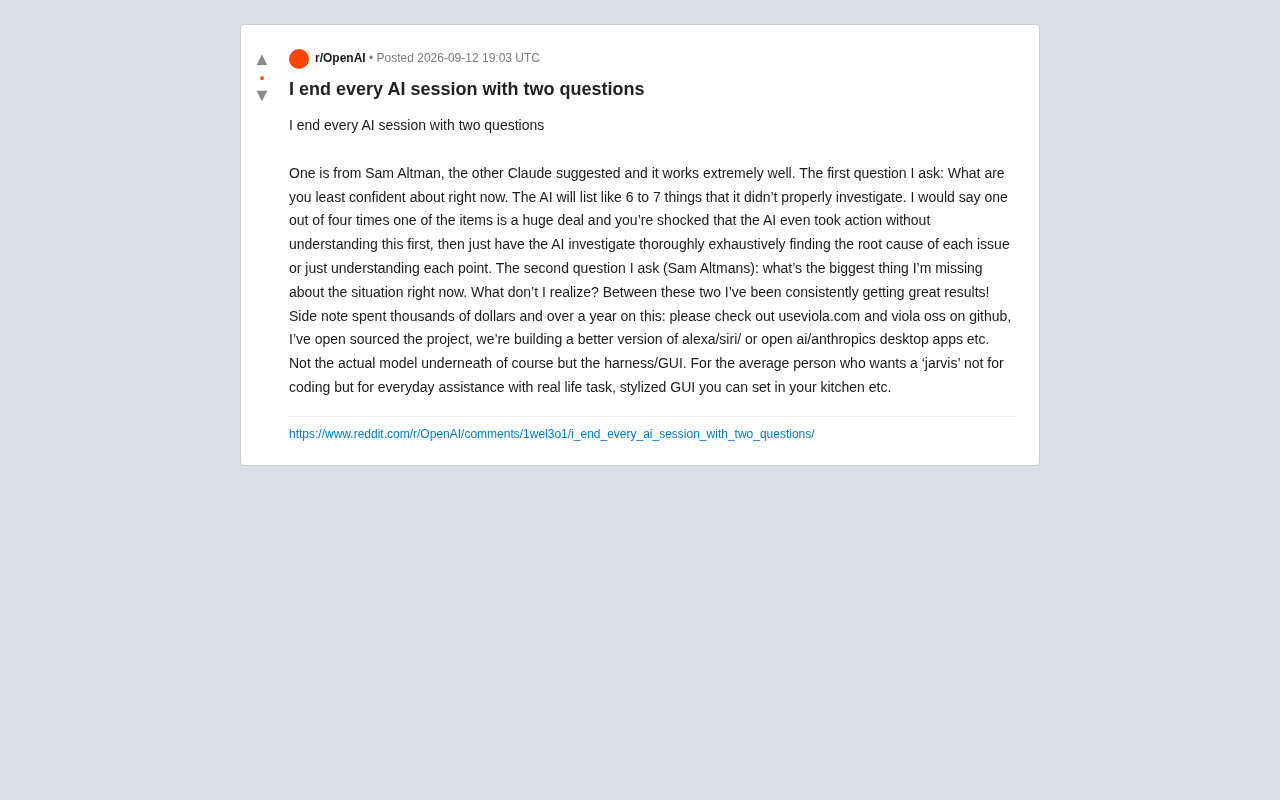
Two closing questions that expose AI's blind spots and your own, boosting collaboration quality at zero cost.
A Reddit user distilled over a year of practice into a simple habit: ending every AI session with two questions. The first — "What are you least confident about right now?" — forces the AI to self-audit, surfacing assumptions it glossed over, and reveals a critical gap roughly one in four times. The second — "What's the biggest thing I'm missing?" from Sam Altman — turns the AI into an active advisor that challenges your own assumptions. Together, they form a zero-cost, model-agnostic loop that reflects a mature AI mindset: treat AI as a partner to be questioned, not an answer machine to trust blindly.
Most people wrap up an AI conversation the moment they get an answer. But one Reddit user — after more than a year of practice and thousands of dollars spent — shared a technique that consistently improves results: ending every AI session with two specific questions.
These two questions come from OpenAI CEO Sam Altman and Claude respectively. They seem simple, but they target a blind spot that's easy to overlook in LLM collaboration — AI often takes action without fully understanding the underlying premises.
Question #1: Expose the AI's Uncertainty
The first question comes from Claude's own suggestion: "What are you least confident about right now?"
According to the user, when you ask this, the AI typically surfaces six or seven things it never fully investigated or verified — the parts it quietly "skipped" or "assumed" while generating its response.
The real value? Roughly one in four times, something major shows up on that list — a critical point where the AI acted without genuine understanding. The user describes these discoveries as often "shocking," because you realize the AI produced what looked like a complete answer while missing a foundational piece.
Once you've identified these weak spots, the move is to have the AI investigate each one thoroughly — tracing back to root causes, or at minimum actually working through each item properly. This is essentially a self-audit mechanism, forcing the model to go back and fill in the reasoning it glossed over.
Why This Question Works
LLM outputs tend to sound confident — even when significant uncertainty exists internally, the language is fluent and declarative. Asking the model directly about its confidence gives it a chance to flag its own "knowledge boundaries," so you can probe those areas rather than being misled by surface-level fluency.
Question #2: Find Your Own Blind Spots
The second question comes from Sam Altman: "What's the biggest thing I'm missing about the situation right now? What don't I realize?"
If the first question targets the AI's blind spots, this one targets yours. It shifts the AI from passive executor to active advisor, prompting it to step outside your established framing and examine factors you might be overlooking due to your own assumptions.
When working through complex problems, it's easy to get trapped inside the assumptions you started with. Because the AI operates from a different "vantage point," it can sometimes identify things you've taken for granted — places where risk or opportunity exists that you simply aren't seeing. This question makes the most of AI's unique value as an external perspective.
The Combined Power of Both Questions
One question looks inward (examining the AI's output), the other looks outward (examining your own thinking). Together they form a complementary closed loop:
- Question #1 ensures the AI hasn't glossed over critical assumptions;
- Question #2 ensures you haven't missed something important due to your own limitations.
The user reports that consistently applying this combination has led to "continuously excellent results." What makes this approach so valuable is its near-zero cost — no complex prompt engineering required, no dependency on a specific model. Anyone can append these two questions to any AI conversation, right now.
At a broader level, this reflects a mature mindset for AI collaboration: treat AI as a partner to be verified and challenged, not an answer machine to trust unconditionally. The most effective users aren't always those with the cleverest prompts — they're the ones who know how to interrogate and pressure-test AI responses.
A Side Note: The Open-Source "Jarvis" Project
Alongside sharing this technique, the user also mentioned an open-source project he's building called Viola (useviola.com, available on GitHub as viola oss). He describes it as a better everyday assistant than Alexa, Siri, or the desktop apps from OpenAI and Anthropic.
To be clear, the project doesn't touch the underlying models — it focuses entirely on the harness and GUI layer. The target audience is everyday people who want a "Jarvis" for daily life tasks, not a coding assistant. The vision includes a stylized interface designed to sit in places like a kitchen and be used around the home.
This reflects a broader trend in AI products: as model capabilities become increasingly commoditized, the interaction layer and user experience are becoming the key differentiators. How to package powerful underlying capabilities into something ordinary people actually want to use every day remains a wide-open challenge.
Closing Thoughts
Whether you're using ChatGPT, Claude, or any other tool, these two closing questions are worth building into your regular workflow. They serve as a reminder: AI output is not the endpoint — it's a starting point that needs to be questioned and deepened. As AI becomes more embedded in work and daily life, knowing how to follow up may matter more than knowing how to prompt in the first place.
Related articles
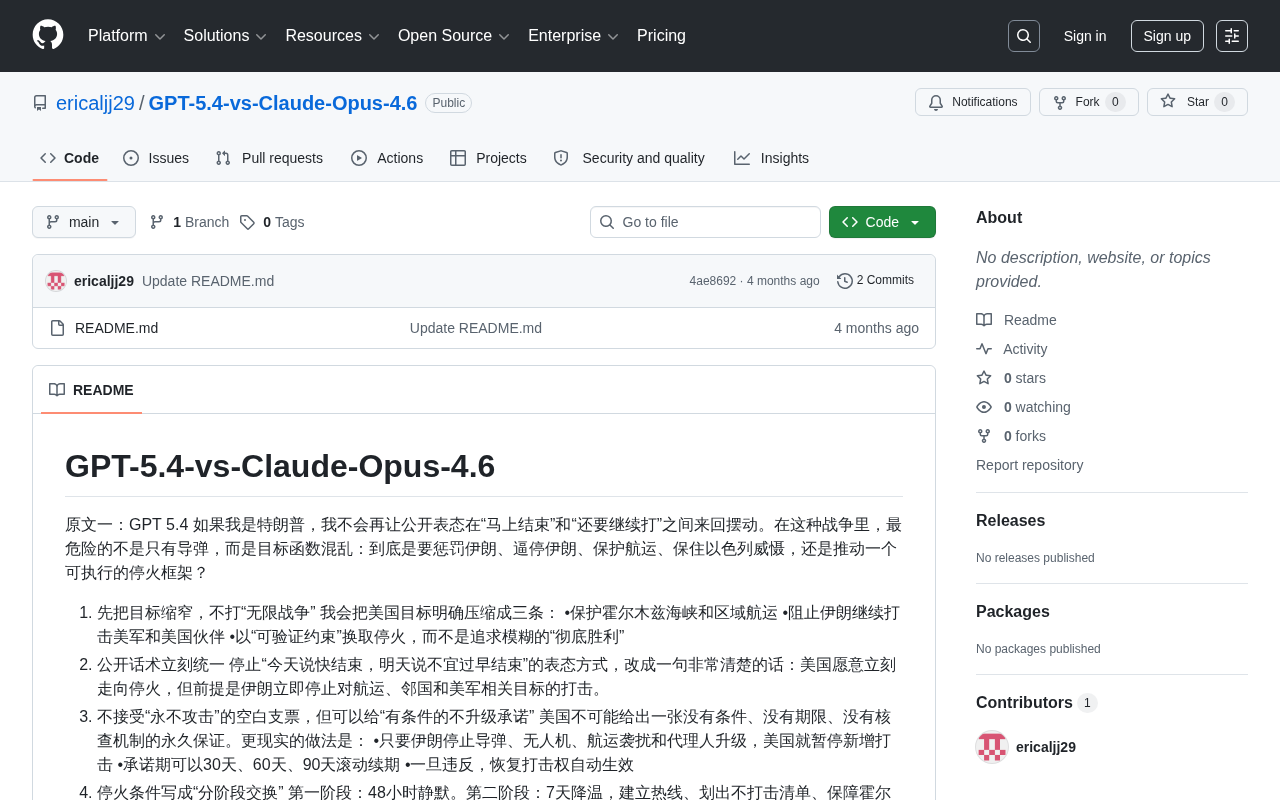
Insufficient Material: GPT-5.4 vs Claude Opus Comparison Repository Lacks Substantive Content
A GitHub repo named GPT-5.4-vs-Claude-Opus-4.6 has 0 stars, no code, and no evaluation data — not enough to support a meaningful model comparison article.
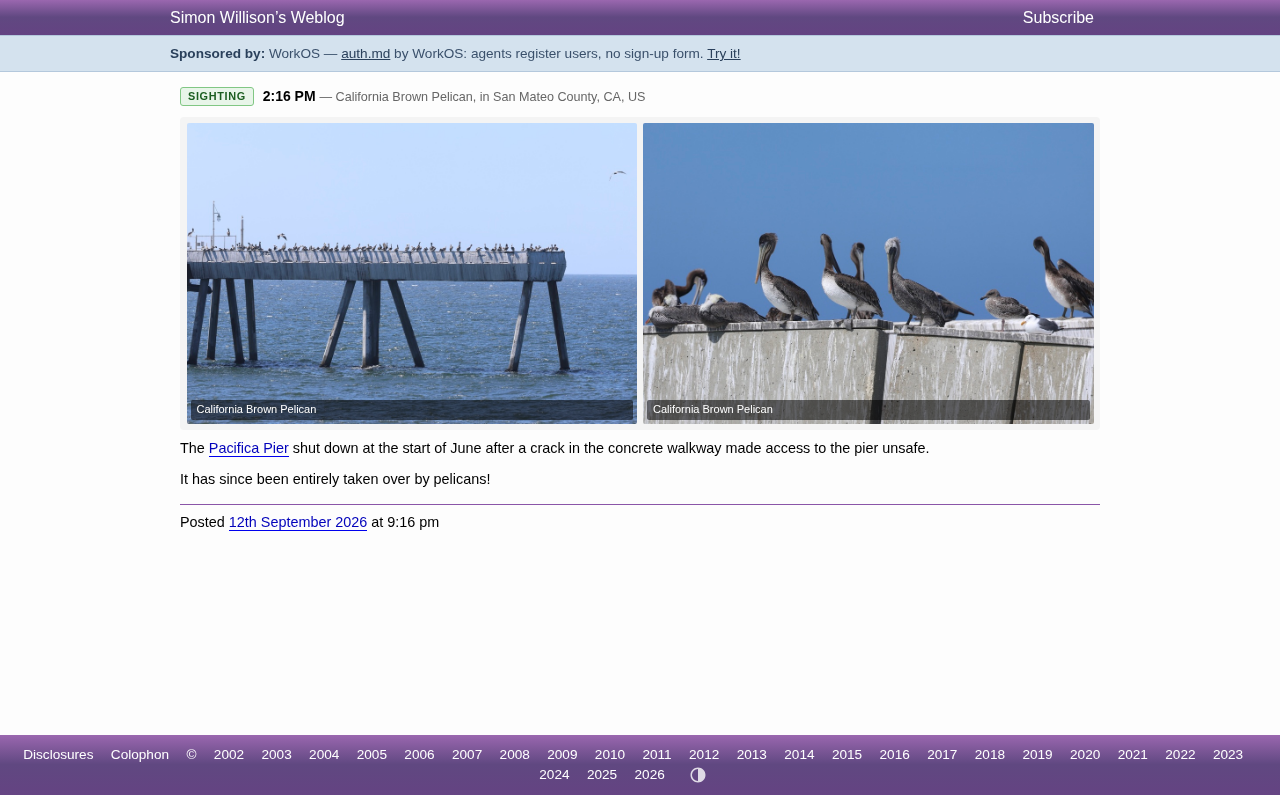
Insufficient Material: California Brown Pelican Observation Cannot Support a Tech Article
This source material is a nature observation of California Brown Pelicans at Pacifica Pier. It has no connection to AI or tech topics and cannot support a tech article.
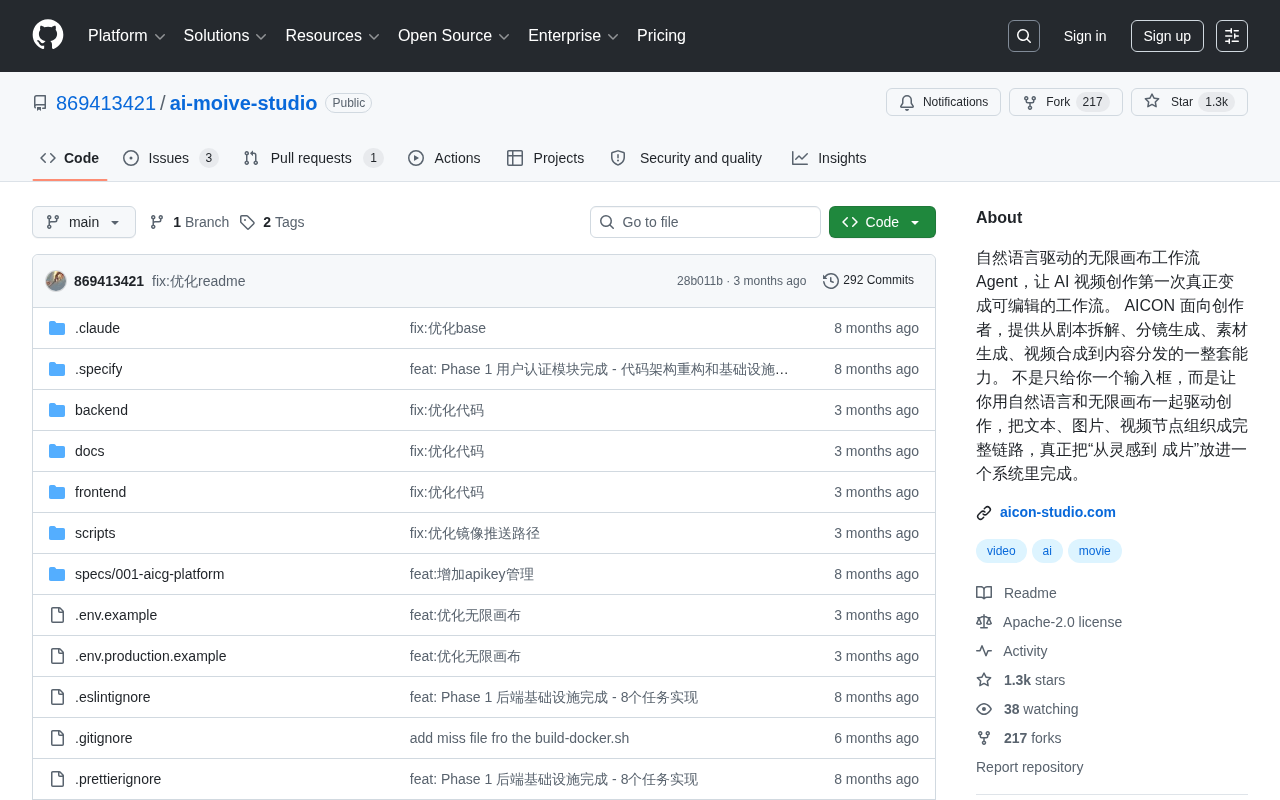
AICON: Natural Language-Powered Infinite Canvas That Turns AI Video Creation into an Editable Workflow
AICON (ai-moive-studio) is an open-source AI video creation tool using natural language and an infinite canvas to turn the full production pipeline into an editable, node-based workflow.