Two Fatal Crashes Trigger Investigation: Comma's Driver Assistance Technology Under Regulatory Scrutiny

Comma's openpilot faces investigation after fatal crashes involving third-party forks raised complex liability questions.
Open-source driver assistance company Comma is under regulatory investigation following two fatal crashes linked to its openpilot software. The complicating factor: the drivers involved were using third-party "forked" versions — modified builds that may have removed original safety constraints like hands-on-wheel detection. The case puts a longstanding open-source dilemma front and center: when anyone can modify a safety-critical system, how should legal and moral responsibility be divided among the original developer, the modifier, and the end user?
Overview
Comma, the open-source driver assistance software company, is facing a regulatory investigation tied to two fatal traffic accidents. Based on available information, at least some of the crash scenarios involved drivers using "forked" versions of Comma's software — modified third-party builds rather than the official release.
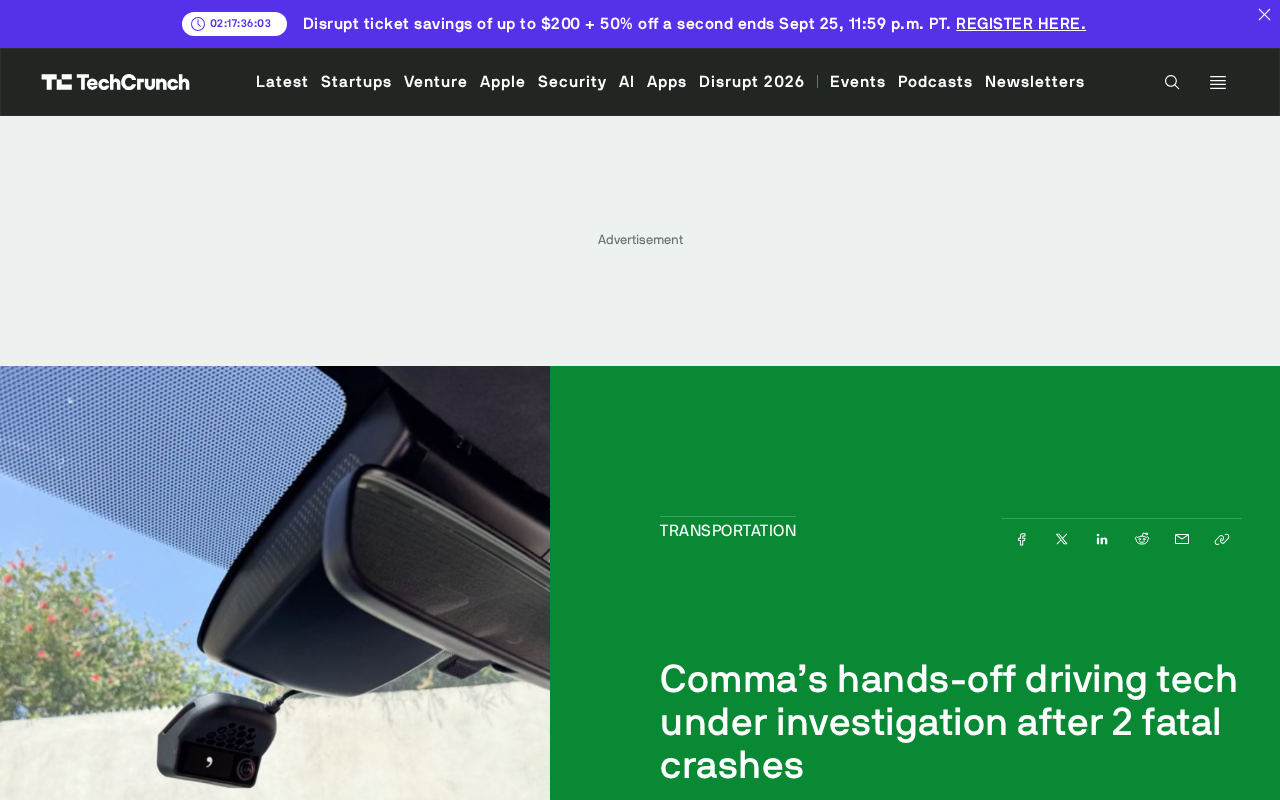
This detail significantly complicates the question of liability. Comma is best known for openpilot, its open-source autonomous driving software that enables lane keeping, adaptive cruise control, and other advanced driver assistance features across a range of production vehicles via dedicated hardware. But that same openness has allowed third-party modifications to circulate widely — and has planted the seeds of a contentious debate over safety accountability.
The Double-Edged Sword of Open-Source Driver Assistance
Comma's core strength lies in its open-source ecosystem. openpilot allows developers and enthusiasts to view, modify, and even recompile the software — a striking contrast to the highly closed nature of the autonomous driving industry. That openness fuels community innovation and rapid iteration, but it also means Comma has limited control over how the software actually runs in the real world.
A "fork" refers to a customized version built on top of the official codebase by a third party. These forks may remove safety constraints set by the original developers — such as loosening hands-on-wheel monitoring thresholds or expanding the range of road scenarios the system will operate in. When a modified version of the software is involved in a fatal crash, a critical question emerges: should liability fall on the original software authors, the modifier, or the end user?
openpilot currently supports dozens of popular vehicle models from brands including Honda, Toyota, and Hyundai. Users install Comma's dedicated hardware (such as the comma 3X) into their vehicles, and the system uses cameras and deep learning models to provide end-to-end lane centering and car-following control. Within the open-source community, well-known forks include Sunnypilot and FrogPilot, which build on the official codebase to add more aggressive automatic lane changes, more permissive hands-free detection thresholds, and other features that appeal to users seeking higher levels of automation. These forks typically spread through community forums and GitHub. Comma has no way to officially authorize them — nor any effective means to constrain them.
What Regulators Are Focused On
From a regulatory standpoint, the investigation likely centers on the "hands-off" driving feature. Most mainstream driver assistance systems today require drivers to remain attentive and ready to take control at any moment, yet a significant gap often exists between how hands-free capabilities are marketed and how they're actually used.
The involvement of forked software in these crashes exposes a blind spot in driver assistance safety governance: when software can be freely modified, can a manufacturer's original safety constraints still function as intended? Regulators must assess not only the safety of the product itself, but also the additional risk exposure created by an open ecosystem.
The National Highway Traffic Safety Administration (NHTSA) is the primary regulatory body for investigations of this kind. Since 2021, NHTSA has launched formal investigations into multiple driver assistance systems, including Tesla Autopilot and GM Super Cruise, using tools such as mandatory crash data submissions, Special Crash Investigations, and Engineering Analyses. Notably, NHTSA's regulatory framework was originally designed for traditional automakers. Its applicability to non-OEM companies like Comma — which operate a "software + hardware" ecosystem model — remains legally ambiguous, which is part of why this investigation is drawing such close attention.
Implications for the Industry
This incident is a wake-up call for the broader driver assistance industry. Open-source development offers clear value in democratizing technology and promoting transparency. But the modifiability of safety-critical systems inevitably creates governance challenges.
For Comma, the central question is how to maintain its open-source ethos while establishing clearer boundaries of responsibility and more robust safety guardrails. For regulators, the challenge is equally difficult: how do you create a framework for open-source autonomous driving software that doesn't stifle innovation while still protecting public safety?
As the investigation progresses, more technical details and a fuller picture of the crashes are expected to emerge. This case may well become a landmark reference point for liability attribution in driver assistance technology and the regulation of open-source safety-critical software.
Summary
Publicly available information remains limited, and the investigation has not reached any conclusions. But one thing is clear: the Comma case has brought the tension between "open source" and "safety accountability" into sharp relief. As driver assistance technology becomes increasingly mainstream, how to balance open innovation with safety fundamentals is a question no practitioner or regulator can afford to ignore.
Related articles

Workbuddy for Absolute Beginners: How a Desktop AI Agent Fits Into Real Workflows
A beginner's guide to the Workbuddy desktop AI agent: installation, claiming credits, file management, and building automated workflows—compared with CodeX for fit and cost, helping professionals shift from AI question-askers to AI managers.

OpenAI's New Agent Stack: Computer Use, Decisions API, and Ultra-Fast Workflows
OpenAI Dev Day unveiled a new agent stack: Computer Use outperforms humans, Decisions API delivers ultra-low-latency classification via Luna, Agents API opens the same Computer Use capabilities, and GPT-6.1 Sol costs only one-seventh of Astra. Core updates, benchmark data, and developer insights.

Liang Wenfeng Open-Sources DeepInfo Inference Framework, Takes On U.S. Ban
DeepSeek open-sources its DeepInfo inference framework after its models, featuring GPU/CPU cross-pipelining, small-model prediction with large-model verification, and full Huawei Ascend and NVIDIA chip support—facing the U.S. federal ban head-on. This article analyzes its significance for AI deployment and open-source strategy.