Two Years of AI Evolution: The Leap from Toy to Productivity Tool

How AI evolved from an unreliable novelty to a real productivity tool in just two years.
In just 24 months, generative AI has undergone a dramatic transformation across three main dimensions: large language models evolved from basic conversation to advanced reasoning with million-token context windows; multimodal AI unified text, image, audio, and video understanding; and AI agents shifted from passive response to autonomous action. Driven by scaling laws, algorithmic breakthroughs, open-source ecosystems, and fierce competition, AI is rapidly becoming an integral part of real-world workflows.
From "Toy" to "Productivity Tool" in Two Years
On Reddit, a user sparked widespread discussion with a simple comparison: "2 years ago vs Today." Behind that phrase lies an almost dizzying capability leap that the entire AI industry has undergone in just 24 months.
Rewind to two years ago, and generative AI was still in its "impressive but unreliable" phase. Text generation models frequently suffered from logical breakdowns and factual errors, image generators couldn't even draw a proper hand, and video generation was a hotbed of abstract art gone wrong. Today, those weaknesses have been largely addressed, and AI has evolved from an "interesting toy" into a genuine productivity tool capable of integrating into real workflows.
The speed of this transformation has exceeded even many insiders' expectations. Two years ago, mainstream debate still centered on whether generative AI was just a passing fad. Today, companies from Silicon Valley to every corner of the globe are deeply embedding AI into their products and workflows, and AI-related venture capital hit an all-time high in 2024. This isn't incremental improvement — it's a revolution reshaping an entire technological paradigm in an extraordinarily short time.
Three Main Threads of AI's Capability Leap
Large Language Models: From Conversation to Reasoning
Two years ago, the core selling point of large language models was "the ability to chat." They could write emails, summarize articles, and answer common-knowledge questions, but faltered when faced with multi-step reasoning, complex code, or long-context processing.
Today's models present an entirely different picture. Context windows have expanded from a few thousand tokens to the million-token scale, enabling models to "read through" entire books or codebases in a single pass. Tokens are the smallest units that large language models use to process text — an English word typically corresponds to 1–2 tokens, and a Chinese character roughly 1–2 tokens. The context window determines how much information a model can "see" and process at once. In early 2023, GPT-3.5's context window was only 4,096 tokens (roughly 3,000 English words). By 2024, Google's Gemini 1.5 Pro supported up to 1 million tokens — equivalent to processing about 700 pages of book content in one go. This order-of-magnitude leap means AI has evolved from "handling a single conversation" to "understanding an entire project," fundamentally transforming its application potential in document analysis, code review, and knowledge management.
More importantly, reasoning capabilities have improved dramatically. Through techniques like chain-of-thought prompting and reinforcement learning, model performance on demanding tasks in math, programming, and logical reasoning has seen a qualitative leap. Chain-of-Thought (CoT) is a technique that guides models through step-by-step reasoning — instead of jumping straight to a final answer, the model shows its intermediate reasoning steps, much like a human showing their work on a math problem. Meanwhile, RLHF (Reinforcement Learning from Human Feedback) trains a "reward model" based on human evaluations of model outputs, which then guides the optimization direction of the large language model to produce content more aligned with human expectations. In late 2024, OpenAI's o1 model pushed these techniques to new heights — the model performs extended "internal thinking" before answering questions, achieving near-human-expert performance on International Mathematical Olympiad-level problems, something almost unimaginable two years ago.
AI coding assistants have evolved from "completing code snippets" to "autonomously building entire feature modules." In early 2023, GitHub Copilot could only manage line-level or function-level code completion. By 2024–2025, next-generation AI coding tools like Cursor and Windsurf can understand an entire project's architecture and autonomously perform cross-file refactoring, debugging, and feature development. The developer's role is shifting from "the person who writes code" to "the person who reviews and guides AI in writing code."
Multimodal AI: From Single-Mode to Fusion
Two years ago, most AI systems were "one-trick ponies" — text processors didn't understand images, and image generators didn't grasp semantics. Today, multimodal capability has become standard in mainstream architectures. A single model can simultaneously understand text, images, audio, and even video, freely converting between these modalities.
The technical foundation of multimodal AI traces back to OpenAI's CLIP model released in 2021, which first demonstrated that contrastive learning could establish unified semantic understanding between text and images. This approach has been continuously expanded and deepened since. In March 2023, GPT-4 introduced image understanding capabilities, marking large language models' official entry into the multimodal era. Google's Gemini series then embraced "natively multimodal" as a core design principle, unifying text, image, audio, and video understanding within a single model architecture. The technical challenge of multimodal fusion lies in the fundamentally different structures and characteristics of different data types — text is a discrete symbolic sequence, images are continuous pixel matrices, and audio is a time-series waveform signal. How to map them all into a unified semantic space and enable accurate cross-modal reasoning and generation remains one of the field's core research challenges.
The quality improvement in image generation is especially striking — the once widely-mocked "AI can't draw hands" problem has been largely solved. This improvement stems from continuous iteration on the Diffusion Model architecture, from Stable Diffusion to Midjourney V6 to DALL-E 3, with each generation making significant strides in human anatomy understanding, detail consistency, and semantic accuracy. Video generation has also progressed from a few seconds of blurry clips to minute-long, temporally coherent high-definition videos. The Sora model OpenAI demonstrated in early 2024 stunned the industry — it could generate up to one minute of HD video with unprecedented levels of physics simulation and camera movement coherence. While still imperfect, it's a world apart from two years ago.
AI Agents: From Response to Action
Perhaps the most fundamental shift is AI moving from "passive response" to "proactive action." Two years ago, AI could only answer your questions. Today, AI Agents can autonomously plan tasks, invoke tools, execute multi-step operations, and even accomplish complex objectives without human supervision.
The core architecture of an AI Agent typically comprises four key components: a perception module (receiving and understanding external information), a planning module (breaking complex goals into executable subtasks), a tool-use module (utilizing search engines, code interpreters, APIs, and other external tools), and a memory module (storing and retrieving historical interaction data). The ReAct (Reasoning + Acting) framework, published in 2023, was a milestone in this field — it alternates between reasoning processes and action execution, enabling models to dynamically adjust subsequent strategies based on observations at each step. From the global excitement over AutoGPT's proof of concept in early 2023, to Cognition Lab's release of Devin (dubbed "the first AI software engineer") capable of independently completing the full development pipeline from requirements understanding to code deployment, to Anthropic's Computer Use feature enabling AI to directly operate computer interfaces — AI Agents have moved from lab concepts to the edge of practical application in just two years.
This role shift from "tool" to "collaborator" is redefining the boundaries of human-computer interaction. Future work scenarios will likely move beyond "humans using AI tools" to "humans collaborating with multiple AI agents," each responsible for different professional domains, working together to accomplish complex objectives.
Driving Forces Behind AI's Rapid Development
This exponential progress is no accident — it's the result of multiple converging factors.
First is the continued payoff of scaling effects. Larger models, more training data, and more compute continue to deliver steady capability improvements. The theoretical foundation here is the so-called "Scaling Laws" — research first systematically articulated by OpenAI in 2020 revealing that model performance has a predictable power-law relationship with parameter count, data volume, and compute. Put simply, as long as these three elements are proportionally increased, model capabilities improve continuously and smoothly. This discovery profoundly influenced resource allocation strategies across the industry, directly driving massive investments in large-scale GPU clusters — NVIDIA's data center revenue grew several-fold within two years, and AI chips like the H100/B200 were at times sold out globally.
Second is accelerating algorithmic innovation, from attention mechanism optimizations to training methodology breakthroughs — every technical advance is rapidly absorbed and amplified. The self-attention mechanism in the Transformer architecture is the foundation of virtually all current large models — it allows the model to simultaneously "attend to" all other elements in a sequence when processing each element, capturing long-range dependencies. However, self-attention's computational complexity scales quadratically with sequence length, creating the primary bottleneck for extending context windows. Technologies like FlashAttention optimize GPU memory access patterns to speed up attention computation by 2–4x without changing the mathematical results, directly enabling the practical deployment of long-context models. Additionally, the widespread adoption of Mixture of Experts (MoE) architecture has been a key innovation — it divides a massive model into multiple "expert" sub-networks, activating only a small subset during each inference pass. This maintains the knowledge capacity afforded by large parameter counts while dramatically reducing actual computational costs. Google's Gemini and Mistral's Mixtral series both employ this architecture.
Third is the flourishing open-source ecosystem. The emergence of numerous high-quality open-source models has ensured that innovation is no longer the exclusive domain of a few tech giants — developers worldwide can participate in this race. This open-source revolution can be traced back to Meta's release of the LLaMA model in February 2023. Before that, high-performance large language models were almost entirely controlled by a handful of companies like OpenAI and Google. LLaMA's open-source release broke that monopoly, triggering a global open-source AI wave. Since then, Meta has continued iterating with LLaMA 2 and LLaMA 3, Mistral AI released its impressively efficient Mistral and Mixtral series, and Chinese teams like Alibaba's Qwen series and DeepSeek have demonstrated top-tier performance in international benchmarks. The open-source ecosystem has not only lowered the barrier to AI adoption but also spawned rich downstream innovation — from quantization techniques enabling models to run on consumer hardware, to efficient fine-tuning methods like LoRA allowing individual developers to customize their own models. The open-source community's creativity is driving technological democratization at a pace that closed-source companies can hardly match.
Finally, and most often overlooked, is competitive pressure. The near "arms race" rivalry among leading companies pushes capability boundaries forward on a monthly rather than yearly basis. Competition among OpenAI, Google, Anthropic, Meta, xAI (founded by Elon Musk), and others has become white-hot — when one company releases a new model, competitors often launch counterparts within weeks. This competition extends beyond model capabilities to talent acquisition, compute reserves, and commercialization speed. In 2024, global tech giants' total capital expenditure on AI infrastructure exceeded $200 billion — an investment intensity that is historically unprecedented in human technological history.
AI Development Trends for the Next Two Years
The real question posed in the original post is: "What will the next two years look like?" It's a topic that's both exciting and full of uncertainty.
If current trends continue, we have reason to expect breakthroughs in several directions. The maturation of agents is perhaps the most noteworthy — AI moving from executing individual tasks to autonomously running complex workflows over extended periods with stability. Current AI Agents, while already impressively capable, still have obvious shortcomings in reliability and persistence: they tend to accumulate errors in long-chain tasks and have limited ability to handle unexpected situations. The key breakthrough in the next two years lies in giving agents genuine "self-correction" capabilities and stronger environmental adaptability, enabling them to operate continuously for hours or even days with minimal supervision — much like a reliable human employee.
Continued cost reduction will also make high-performance AI increasingly accessible, further lowering adoption barriers. This trend is already very clear: using GPT-4-level model capabilities as a benchmark, API costs per million tokens have dropped over 90% in the past year. On the hardware side, NVIDIA's next-generation GPUs, competition from AMD and various AI-specific chips, and advances in model compression and inference optimization are all driving rapid cost reductions. It's foreseeable that within two years, the cost of running today's most advanced models could be one-tenth or less of current prices.
Additionally, the integration of AI with the physical world (robotics, embodied intelligence) could become the next explosive growth area. Embodied Intelligence refers to endowing physical robots with AI's perception, reasoning, and decision-making capabilities, enabling autonomous action and interaction in the real world. This field is considered ripe for breakthrough because the general understanding capabilities brought by large language models and multimodal models are rapidly converging with the hardware engineering expertise accumulated in robotics. Figure AI's humanoid robots can already execute complex object-sorting tasks via natural language commands, Tesla's Optimus robot is undergoing real-world factory testing, and Google DeepMind's RT-2 model has demonstrated that large language models can be directly translated into robot action policies. If these technologies achieve scale within the next two years, their impact on manufacturing, logistics, and home services could rival what large language models have done to knowledge work.
Of course, rapid development also brings concerns. Issues of reliability, safety, and interpretability remain unresolved, and AI deployment in critical domains still requires caution. The "hallucination" problem — where AI confidently generates plausible-sounding but factually incorrect content — continues to improve but hasn't been fundamentally solved, posing serious barriers in high-stakes scenarios like medical diagnosis, legal advice, and financial decision-making. The gap between technological progress and societal adaptation may become an increasingly prominent tension. AI's impact on the job market, challenges to education systems, threats to information authenticity, and increasingly complex regulatory demands all require society to adapt and respond at speeds far exceeding those of the past.
Conclusion
"Two years ago vs today" — this simple comparison captures an industry's breakneck acceleration. Looking back, every underestimation of AI's capabilities has been swiftly corrected by reality. Looking ahead, the only certainty is that the pace of change won't slow down. For everyone caught in the middle of it, rather than trying to predict the destination, the wiser path is learning to coexist with this relentless change.
Related articles
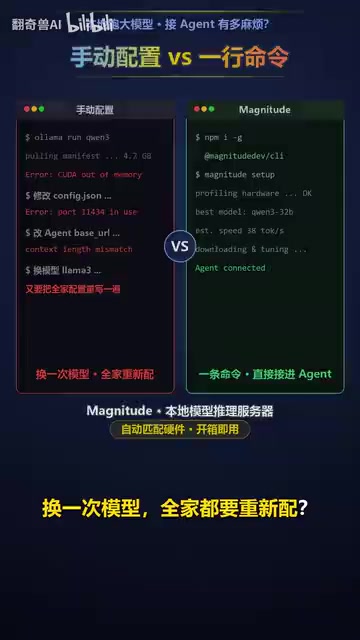
Magnitude: One Service to Handle Local LLM Inference and Agent Integration
Magnitude is an open-source local LLM inference server that auto-optimizes for your hardware and integrates seamlessly with Codex, Claude Code, and other AI Agents.
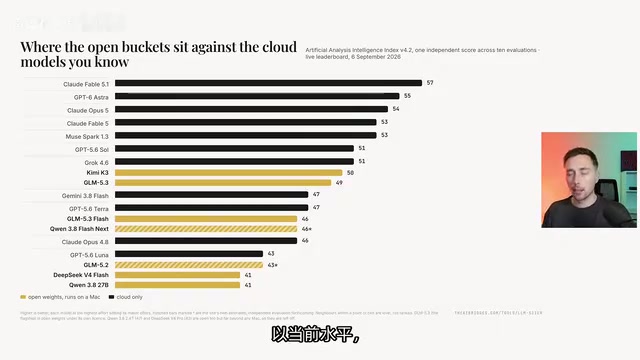
Mac Local AI Buying Guide: A Complete Breakdown of Memory Configurations and Model Speed
In-depth analysis of Mac memory requirements, inference speed, and costs for running local AI LLMs. From 48GB to 512GB configs — which models fit, how bandwidth affects speed, and local vs. cloud cost comparison.
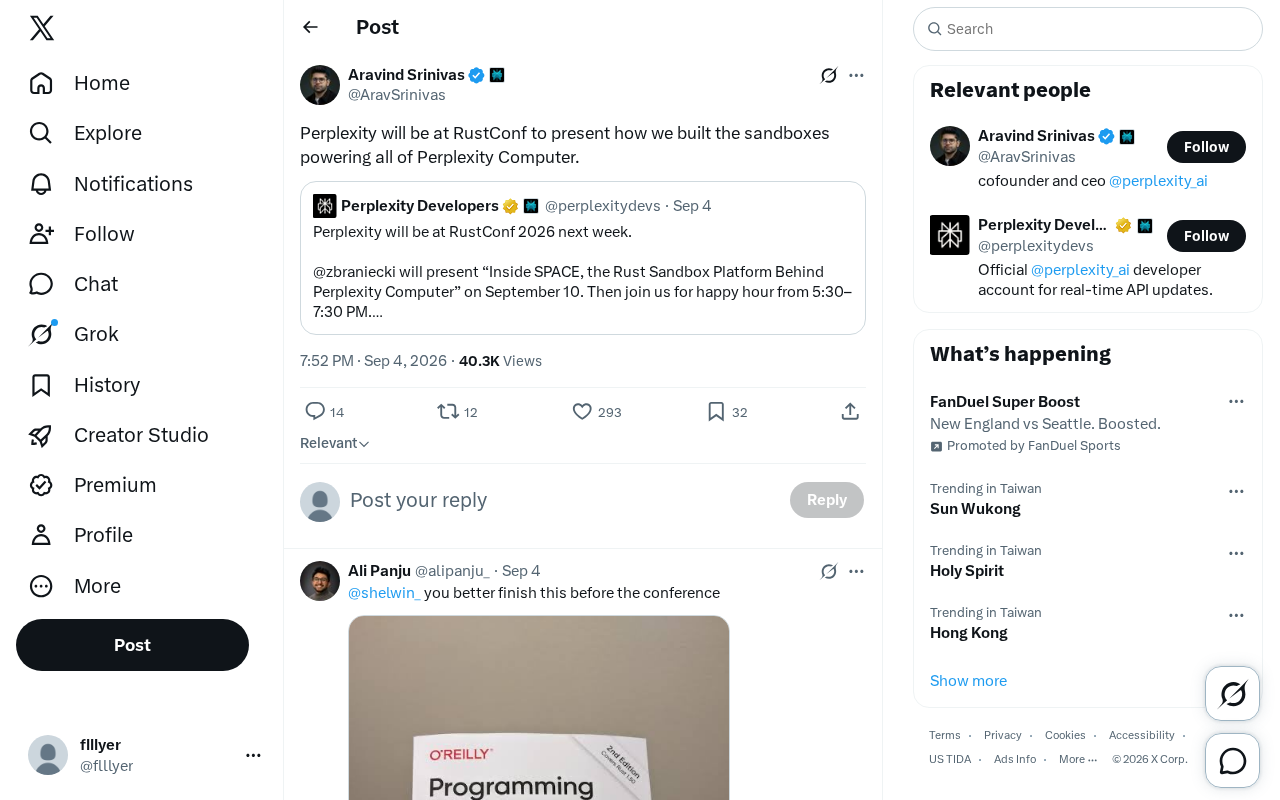
Perplexity Builds AI Sandbox with Rust: A Deep Dive into the RustConf Technical Talk
Perplexity shares its Rust-built sandbox architecture for its Computer product at RustConf. Explore why Rust is ideal for secure AI execution environments.