TypeSafe Jev: The First Pure Decision Model, Redefining the Economics of AI Inference
TypeSafe's Jev outputs only structured decisions — no text — with ultra-low latency and near-zero cost per call.
TypeSafe's Jev is positioned as the first "System One" decision-specialized model, designed to output typed decisions with calibrated probabilities rather than any natural language text. With response times of 70–500ms and pricing as low as $0.042 per million input tokens — one to two orders of magnitude cheaper than mainstream LLMs — it's purpose-built for real-time, high-volume use cases like content moderation, fraud detection, and intent routing. Jev's emergence signals an accelerating trend toward specialized model architectures, though its performance claims still await independent third-party verification.
What Is a "Decision-Specialized" Model?
Jev, introduced by TypeSafe, is officially positioned as the first model in a new "System One" category — an AI system that generates no text whatsoever, outputting only typed decisions with calibrated probabilities. This stands in sharp contrast to the large language models (LLMs) we're familiar with: mainstream models are built around autoregressively generating tokens, while Jev is designed with the exact opposite goal in mind. It produces no natural language output at all, instead delivering structured decisions paired with confidence scores.
The naming draws on Daniel Kahneman's dual-process theory from psychology. System One represents fast, intuitive, and automatic judgment, while System Two is slow, deliberate reasoning. Today's leading reasoning models are fundamentally System Two — they trade lengthy chains of thought for accuracy, at the cost of latency and compute. Jev positions itself at the opposite end of that spectrum: serving scenarios that require an "instant judgment" rather than a "written explanation."
Daniel Kahneman's Dual Process Theory stems from decades of cognitive psychology research conducted with Amos Tversky, systematically laid out in his 2011 book Thinking, Fast and Slow. System 1 is the unconscious, rapid, heuristic-driven intuition — like instantly knowing that 2+2=4. System 2 is the conscious, slow, cognitively demanding analytical reasoning — like manually working through a complex tax return. Mapping this framework onto AI, Chain-of-Thought and step-by-step analysis in o1/o3-class reasoning models closely mirrors System 2, while Jev's claimed "direct decision output" corresponds to System 1's instant judgment mode. This analogy is useful for understanding the product positioning, but it's worth noting it's a conceptual mapping — not a precise description of neuroscientific mechanisms.
Performance and Latency: Built for Real-Time Decisions
Jev's most striking specification is its 70–500ms response time. For traditional models that rely on text generation, end-to-end latency — even on the fastest inference paths — typically ranges from hundreds of milliseconds to several seconds, and becomes even harder to control with longer outputs. Because Jev doesn't need to generate text token by token, it naturally avoids the time accumulation inherent to the generation phase.
This latency range means Jev can be embedded into pipelines with extreme real-time requirements — such as content moderation, fraud detection, routing decisions, intent classification, and pre-filtering before tool calls. In these scenarios, what the system actually needs isn't an explanatory paragraph, but a reliable "yes/no" or "option A vs. option B" judgment, paired with a confidence score for that judgment.
The Value of Calibrated Probabilities
Jev outputs typed decisions with calibrated probabilities — a point worth emphasizing on its own. Many classification systems produce a confidence score, but these scores are often uncalibrated: when a model says it's "90% confident," the actual accuracy may be far lower. Calibrated probabilities mean the output values genuinely reflect the reliability of the decision. This is critical for engineering systems that need to set thresholds and make risk trade-offs. Developers can use this to decide: automatically handle decisions above a certain probability, and escalate to human review or a heavier model for anything below it.
Calibration has a rigorous definition in probability theory and machine learning: a model is well-calibrated if, across all predictions where it outputs probability P, the actual accuracy is also close to P. A common metric for measuring calibration quality is ECE (Expected Calibration Error) — the lower the ECE, the better the model's confidence aligns with real-world accuracy. In practice, most deep neural networks suffer from "overconfidence," tending to output extreme high-confidence scores that don't match actual accuracy. Techniques for improving calibration include post-processing methods such as Temperature Scaling and Isotonic Regression. For engineering systems, uncalibrated probabilities can only be used for ranking, while calibrated probabilities can be used directly as risk estimates — enabling threshold-based logic like "automatically approve if probability > 0.85, escalate to human review if < 0.4."
Pricing: Driving Decision Costs to the Floor
Jev is priced at $0.042 per million input tokens — a figure that carries significant impact within the current model pricing landscape. For reference, mainstream large models are typically priced anywhere from tens of cents to several dollars per million input tokens. Jev pushes costs down by one to two orders of magnitude.
This low price is a natural consequence of architectural choices. Since Jev generates no output tokens, it completely avoids the computational overhead on the output side — where, in most models, output tokens are priced higher than input tokens. A decision-specialized architecture can also be built much leaner and more focused. For high-volume, high-frequency decision workloads, this kind of cost structure difference can directly determine whether an AI feature is commercially viable.
If an application needs to make hundreds of millions of classification judgments per day, the cost of using a general-purpose LLM would be prohibitive. A specialized model like Jev makes it economically feasible to "add a layer of AI judgment to every single interaction."
Understanding this pricing gap requires some context on LLM inference cost structure. LLM inference has two phases: the Prefill phase, which processes input tokens with highly parallelizable computation and relatively low per-token cost; and the Decode phase, which autoregressively generates output tokens one by one. The Decode phase is constrained by serial dependencies, resulting in low GPU utilization and heavy memory bandwidth pressure — so the marginal cost of output tokens is typically 3–5x that of input tokens. Jev eliminates the Decode phase entirely. This means its compute graph requires only a single forward pass to produce a decision distribution at inference time, theoretically maximizing hardware utilization and significantly reducing per-call compute consumption. This is closer in spirit to image classification models (like ResNet or ViT) than to GPT-style generative models.
A Signal of Model Specialization
Jev's emergence reflects a trend that is accelerating across the AI infrastructure space: specialized division of labor among models. For the past few years, the dominant narrative has been "one big model to solve everything." But as deployment scenarios have grown more complex, the weaknesses of general-purpose models in latency, cost, and reliability have become increasingly apparent.
TypeSafe's choice to isolate "decision-making" as a single capability and push it to the extreme is fundamentally a subtractive exercise in systems engineering: not pursuing versatility, but instead reaching levels on specific dimensions — speed, cost, calibratability — that general-purpose models cannot match. This mirrors the evolution in software engineering from monolithic applications to microservices — distributing different responsibilities to the most appropriate components.
It's reasonable to anticipate that future AI application architectures may become layered: using lightweight decision models like Jev for fast upfront judgment and routing, and only invoking heavy System Two models when generation or complex reasoning is genuinely needed. This "fast-and-slow" orchestration approach can control costs while preserving quality for complex tasks.
Where Caution Is Warranted
The information publicly available at this point comes primarily from TypeSafe's own launch materials. The specific datasets, comparison baselines, and evaluation methodologies behind the benchmark results still await independent third-party verification. The claim of being "the first decision-specialized model" holds up as a marketing statement, but specialized classifiers and discriminative models built along similar lines have been practiced in the industry for some time. Jev's real differentiation lies in productizing and API-wrapping this capability, then pairing it with aggressively competitive pricing.
For teams evaluating whether to adopt Jev, the key questions are: what decision types does Jev support, can it cover your specific business scenarios, and how do the calibrated probabilities hold up on real-world data distributions? These questions require validation on actual workloads — not conclusions drawn from spec sheets alone.
Regardless, a clearly positioned, transparently priced decision-specialized model entering the market adds a new option to the AI engineer's toolkit that deserves serious evaluation.
Related articles

AI Agent Developer Job Hunt Guide: Four Hard Standards to Clear Before You Apply
A practical guide for landing AI Agent developer roles: four measurable standards — project runs, problems debuggable, solution explainable, interviews survivable.
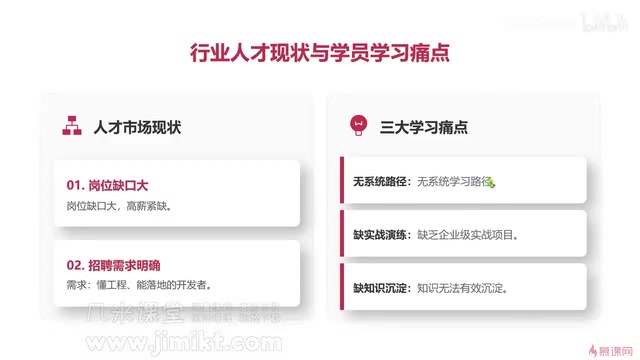
Multi-Agent Development Guide: From Monolithic AI to Team Collaboration in Practice
A beginner's guide to multi-agent development covering core advantages, common learning pain points, enterprise tech stacks, and engineering methodology for AI developers.

Agent Skill Routing: Retrieval vs. LLM vs. Two-Stage Architecture Compared
Retrieval or LLM for Agent skill routing? Compare coarse-filter vs. fine-select architectures on latency, accuracy, and cost — with 4 key production considerations.