Uber's AI Agent Platform Now Contributes 11% of PRs — The Engineering Role Is Transforming

Uber's internal AI agent platform now autonomously generates 11% of the company's PRs, marking the shift to AI-autonomous coding.
Uber disclosed that its internal AI agent platform now contributes 11% of the company's Pull Requests, signaling AI's evolution from an assistive coding tool to an autonomous agent system capable of completing full workflows. The platform focuses on pattern-based tasks like dependency upgrades and code standardization, employing a unified platform strategy to ensure consistency, observability, and controllability. As engineers shift from code writers to code reviewers and AI orchestrators, Uber's approach offers other enterprises a clear reference path: start with low-risk tasks and gradually expand the scope of AI automation.
What It Means That Uber's AI Agent Platform Contributes 11% of PRs
Uber recently disclosed a striking figure: its internal Agentic Developer Platform now generates 11% of all the company's Pull Requests. In other words, more than 1 out of every 9 to 10 code submission requests is completed autonomously by AI agents.
Pull Requests (PRs) are the core mechanism for code collaboration in modern software engineering. When a developer finishes a code change, they submit a merge request to the main codebase via a PR, and other team members conduct a Code Review to verify quality and security before merging. PR volume is one of the key metrics for measuring engineering team output, as each PR typically represents an independent feature improvement, bug fix, or system maintenance task. As a massive tech organization with thousands of engineers, Uber's codebase is enormous — 11% of PRs likely means hundreds of code changes completed autonomously by AI every day.
This number doesn't just showcase AI's actual penetration rate in large-scale software engineering — it reveals a clear trend: top tech companies are moving from "AI-assisted coding" to a new phase of "AI-autonomous coding."
From Assistance to Autonomy: The Fundamental Difference Between Agentic Platforms and Traditional AI Coding Tools
What Is an Agentic Developer Platform
Traditional AI coding tools (like GitHub Copilot) primarily play a "completion" role, with developers still in the driver's seat. Uber's Agentic platform is fundamentally different — AI no longer just suggests code snippets but can independently complete the entire workflow from understanding requirements, writing code, to submitting PRs.
Agentic AI is one of the most important paradigm shifts in the AI field since 2024. Traditional AI coding tools like GitHub Copilot leverage large language models' code completion capabilities, essentially functioning as an advanced autocomplete engine — developers write comments or partial code, and AI predicts and completes what follows. The Agentic architecture gives AI systems the ability to autonomously plan, invoke tools, and perform multi-step reasoning. An AI agent can receive a high-level task description (such as "upgrade dependency library from v2 to v3"), then autonomously analyze all affected files in the codebase, plan modification strategies, execute code changes, run tests for validation, and finally submit a PR. This shift from "human-driven AI responses" to "AI-autonomous task execution" represents a qualitative leap in software engineering automation.
An 11% PR share means this platform is no longer an experimental internal project — it's truly integrated into Uber's daily engineering operations as core infrastructure. Considering Uber has thousands of engineers, this percentage represents substantial engineering output.
Why 11% and Not Higher
The number itself is worth examining closely. It indicates Uber has adopted a pragmatic deployment strategy — AI agents aren't attempting to replace all engineering work but are focused on tasks that are pattern-based, highly repetitive, and low-risk, specifically including:
- Dependency upgrades and version migrations
- Code formatting and standards unification
- Templated service configuration changes
- Automated bug fixes and security patch applications
- Test code generation and maintenance
Among these, dependency upgrades may seem simple but are actually one of the most time-consuming maintenance tasks in large software systems. Modern software projects typically depend on hundreds or even thousands of third-party libraries, each with its own version update cadence. A single dependency upgrade might involve API interface changes, configuration file adjustments, compatibility testing, and multiple other steps. In a microservices architecture like Uber's, upgrading a core library might require synchronized modifications across hundreds of services. These tasks have fixed patterns but enormous workloads, making them ideal for batch processing by AI agents. Google's internal Large-Scale Changes tooling has long proven the value of automating such tasks, and AI agents further lower the barrier to building this type of automation.
The common characteristic of these tasks: clear rules, fixed change patterns, and easy rollback if errors occur. Starting with these types of tasks is the typical path for large companies advancing AI engineering.
Platform Strategy: The Core Philosophy of Uber's AI Engineering
Why Build a Unified Platform Instead of Having Everyone Use Individual AI Tools
Uber didn't simply let engineers individually use ChatGPT or Copilot — they invested resources to build a unified internal AI agent platform. This platform approach delivers three significant advantages:
Consistency: All AI-generated code follows unified quality standards and security specifications, avoiding the chaos of different teams using different tools.
Observability: The platform can systematically track the output quality, error rates, and actual impact on engineering efficiency of AI agents, driving iteration through data. Observability is a core concept in modern distributed systems engineering, typically referring to the ability to understand a system's internal state through logs, metrics, and distributed tracing. Applying this philosophy to an AI agent platform means Uber can systematically monitor the full lifecycle of every AI-generated PR: code generation time, Code Review pass rate, post-merge production incident rate, rollback frequency, and more. This data-driven approach ensures that AI agent effectiveness is no longer subjective perception but can be precisely quantified through engineering metrics. This is also the fundamental difference between enterprise-level AI deployment and individual AI tool usage — enterprises need not just AI capabilities themselves but systematic governance over AI output.
Controllability: The enterprise can precisely control the permission boundaries of AI agents, deciding which types of changes are allowed to be automated and which must have human intervention.
This approach is far more effective than letting each team independently adopt AI tools, and makes it much easier to measure ROI at the organizational level.
How the Engineering Role Is Changing
Uber Senior Software Engineer Nikhil Ramakrishnan will share in detail "how engineering work is actually changing" in a public discussion on May 15. From available information, the engineering role is shifting from "code writer" to "code reviewer" and "AI agent orchestrator."
This transformation is consistent with multiple paradigm shifts throughout software engineering history. From assembly language to high-level languages, from handwritten code to frameworks and low-code platforms, each elevation in abstraction level has freed engineers from low-level implementation details to focus on higher-level system design and business logic. The emergence of AI agents is the latest extension of this trend. Notably, this transformation raises rather than lowers the capability requirements for engineers — reviewing AI-generated code requires deep technical foundations, designing effective agent workflows requires profound understanding of task decomposition and system architecture, and judging the applicability boundaries of AI agents requires extensive engineering experience and risk awareness.
This doesn't mean engineers become less important. Quite the opposite — reviewing AI-generated code, designing agent workflows, and handling complex architectural decisions all require higher-level engineering judgment. AI agents liberate repetitive labor and amplify engineers' decision-making value.
Reference Value for Other Enterprises
11% is just a starting point. As AI agent capabilities improve and the platform matures, this percentage will most likely continue to grow. But what's more worth watching is the qualitative change — whether AI agents can expand from simple repetitive tasks to more complex feature development.
For enterprises considering adopting AI agents, Uber's practice provides a clear reference framework:
- Build a platform, don't go piecemeal: Construct a unified internal AI agent platform rather than letting teams individually select tools
- Start with low-risk tasks: Choose pattern-based, rollback-friendly tasks as the entry point
- Gradually expand scope: After validating effectiveness, extend to more complex scenarios
- Continuously measure results: Quantify AI agents' actual contributions using metrics like PR volume, code quality, and engineer satisfaction
AI agents aren't a future concept — at Uber, they're already an engineering reality operating every single day.
Key Takeaways
- Uber's internal AI agent platform now generates 11% of the company's Pull Requests, marking the shift from AI-assisted coding to autonomous coding
- Uber adopted a platform strategy rather than letting engineers individually use AI tools, ensuring consistency, observability, and controllability
- AI agents primarily focus on pattern-based, highly repetitive tasks, while the engineering role shifts from code writer to code reviewer and AI orchestrator
- This practice provides other enterprises with a clear AI engineering reference path: start with low-risk tasks, then gradually expand the scope of automation
Related articles
Meta Muse Hits 900K Downloads in Six D…
Meta Muse Hits 900K Downloads in Six Days: The AI Agent Era Has Officially Arrived
Meta's AI agent Muse hit 902K downloads in 6 days, topping US App Store and Google Play charts above ChatGPT and Claude. A deep dive into Muse's capabilities and the AI Agent race.
 Industry Insights
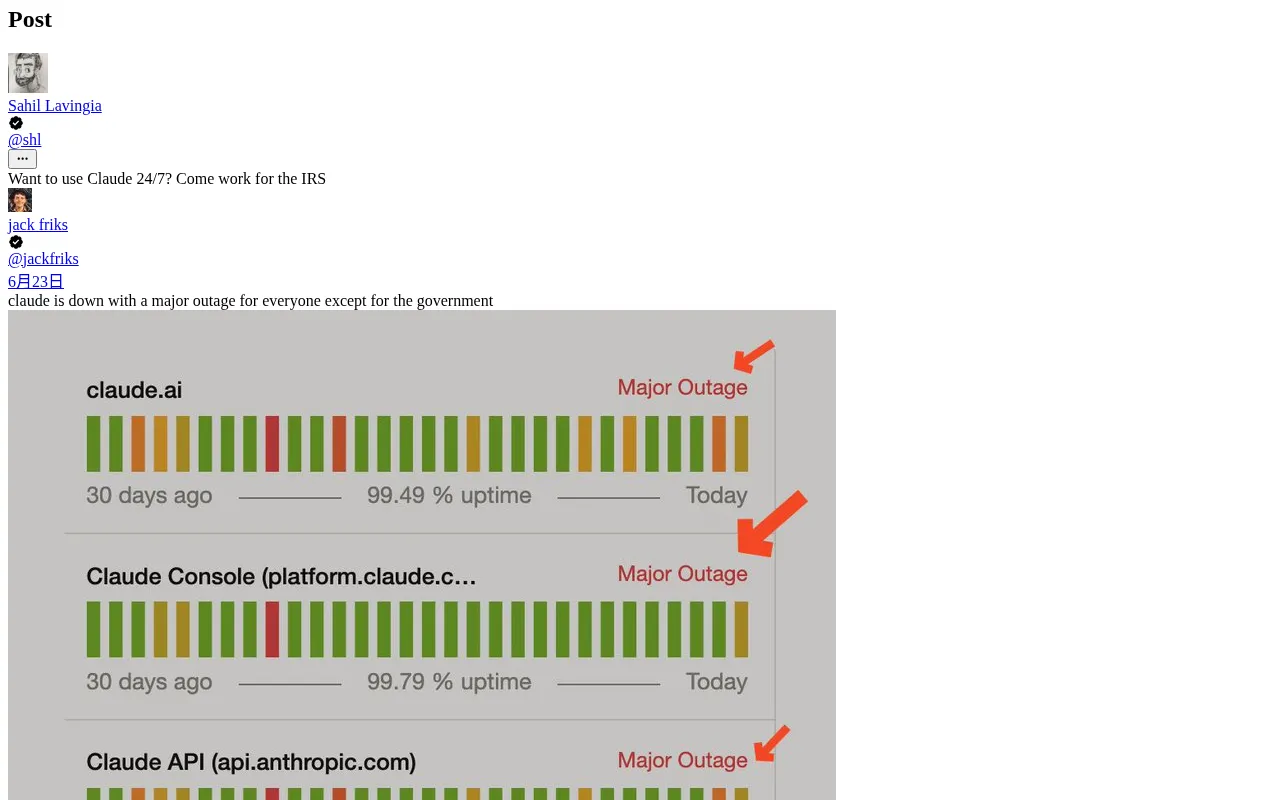
IRS Fully Embraces Claude AI, Accelerating Federal Government's AI Adoption
The IRS is recruiting staff with 24/7 Claude AI access, marking Anthropic's breakthrough into the federal government. Explore the strategic implications and tax use cases.
 Industry Insights
The IRS Mobile App Debate: A Trust Crisis in Government Digital Transformation
The IRS's proposed mobile app has sparked heated debate. This article analyzes the core arguments, exploring data security, privacy, and the trust crisis in government digital transformation.