Uber Tests Unaccompanied Rides for Teens, Offers Drivers Extra Pay
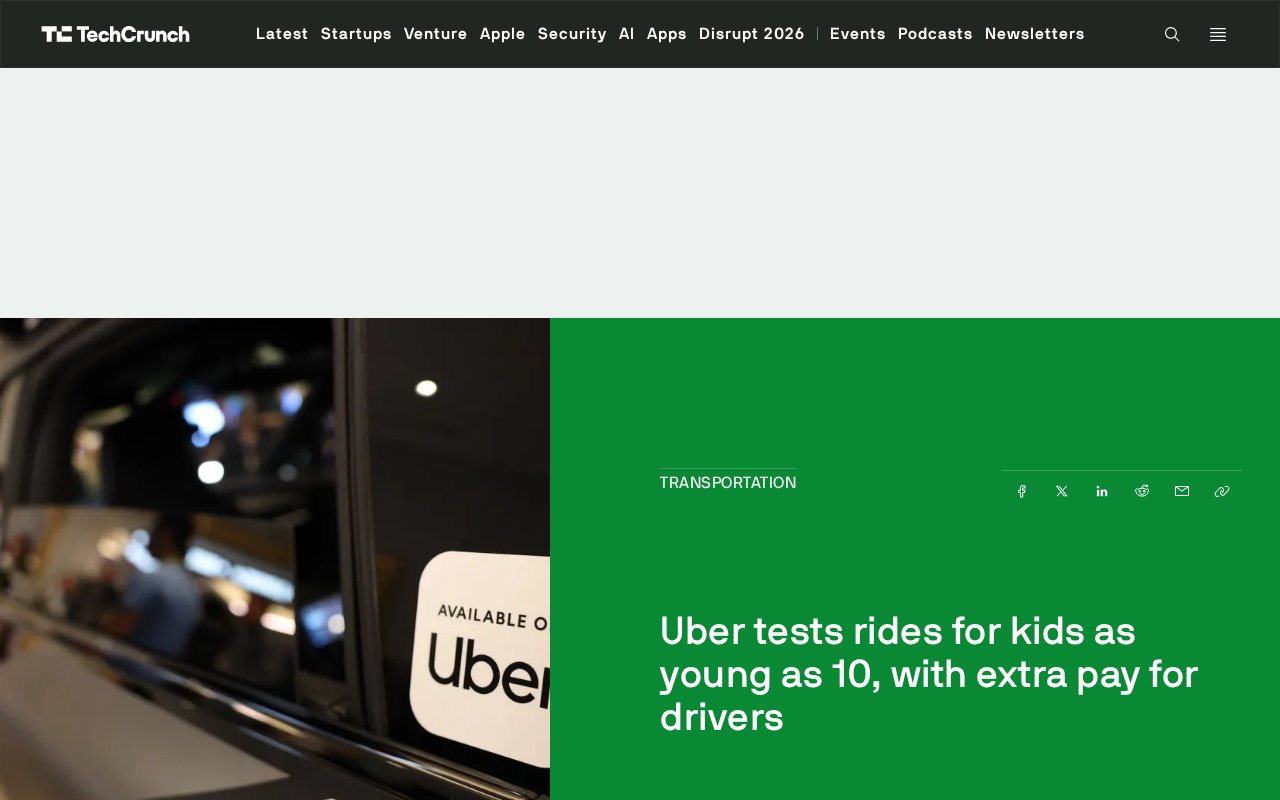
Uber tests unaccompanied rides for 10-year-olds in three U.S. cities, incentivizing drivers with extra pay and probing regulators.
Uber is testing a program in three U.S. cities allowing children aged 10 and older to ride alone without an adult, with drivers receiving extra pay. The program lowers the minimum age from the industry norm of 13 to 10 to fill the teen transportation gap, using price leverage to offset drivers' safety concerns. The small-scale pilot reflects caution over safety risks, with key metrics including parent willingness, driver acceptance rates, and incident rates. Safety and regulation are core thresholds: age verification, trip monitoring, stricter background checks, and fragmented state laws on minor transportation all gate expansion. If successful, the teen market could become an incremental space for the industry; a safety incident could quickly halt the program and affect industry exploration.
Uber is testing a new program in three U.S. cities that allows children as young as 10 to ride alone in ride-hailing vehicles without an adult, with drivers who participate receiving extra pay.
Program Core: Lowering the Age Threshold and Driver Incentives
According to information released by Uber, the test lowers the minimum riding age to 10, breaking the convention that ride-hailing services typically require minors to be accompanied by an adult. To balance the responsibility and risk borne by drivers, Uber has set additional subsidies for trips carrying underage passengers, though the specific amount has not been disclosed publicly.
The logic behind this design is not complicated: teen transportation has long relied on parents driving or school buses, leaving a clear capacity gap. Uber is trying to use price leverage to attract drivers to take these orders while offsetting drivers' safety concerns with extra pay.
The convention for minors riding ride-hailing services has long been "adult accompaniment" as the default rule. Uber previously launched "Teen Accounts" allowing 13-17 year-olds to ride independently with parental consent, but the 10-12 age group was typically excluded. Lowering the threshold to 10 essentially breaks through the industry's existing age stratification. For reference, the U.S. school bus system mainly serves K-12 students but only covers fixed routes; parent driving accounts for a large share of teen transportation. Uber's attempt targets the gap between school buses and parent driving, such as extracurricular activities and occasional trips.
Three-City Pilot: A Cautious Stance of Small-Scale Validation
The test is being conducted in only three U.S. cities, with limited scale. Choosing a small-scale pilot rather than a nationwide rollout shows that Uber is cautious about the sensitive scenario of minors riding—once a safety incident occurs, public opinion and regulatory pressure far exceed ordinary trip disputes.
Key observation metrics during the pilot should include parents' actual willingness to use the service, drivers' acceptance rates, and the proportion of abnormal incidents during trips. These data will determine whether the program can expand to more markets.
Safety and Regulation: Two Unavoidable Thresholds
Letting a 10-year-old ride alone in a stranger's car—safety is the most direct point of public skepticism. Questions Uber needs to answer include: how to verify passenger age, how to confirm the child's status during the trip, whether driver background checks need to be further tightened, and how liability is divided when disputes arise.
There is also uncertainty at the regulatory level. U.S. states have inconsistent rules for minor transportation services, and child protection laws in some areas may directly restrict the program. Uber's choice to first test in three cities is, to some extent, also probing regulatory reactions.
Driver background checks are mechanisms by which ride-hailing platforms verify drivers' criminal records, driving records, and more, typically including federal and state database comparisons and sex offender registry screening. Requirements for background checks vary widely across U.S. states—some require fingerprint-based checks, while others rely only on name and Social Security number queries. For drivers carrying minors, industry practice often requires stricter frequency and scope of checks, but whether Uber's current policy tightens requirements for such orders has not been disclosed.
Regarding child protection laws, U.S. states have different age thresholds for minors riding transportation alone; for example, some states have specific licensing requirements for transporting "unaccompanied minors." In addition, although COPPA (Children's Online Privacy Protection Act) mainly targets data collection from children under 13, if Uber needs to collect children's personal information for age verification, it may trigger compliance obligations. This fragmentation of regulations is an important backdrop for Uber's choice of a small-scale pilot.
Signaling Significance for the Industry
If the test goes smoothly, such services could change how families make transportation decisions: parents would no longer need to adjust their schedules specifically for their children's extracurricular activities or commutes. For the ride-hailing industry, the teen market is an incremental space previously blocked by compliance thresholds; whether it can be opened depends on whether safety mechanisms can convince parents and regulators.
Conversely, if a safety incident involving minors occurs during the pilot, the entire program could be quickly halted and affect the industry's pace of exploring similar services. Uber's test is essentially about finding a feasible boundary between business opportunity and risk control.
One-line Summary
Uber tests unaccompanied rides for 10-year-olds in three U.S. cities, incentivizing drivers with extra pay and probing regulators.
Paragraph Summary
Uber is testing a program in three U.S. cities that allows children aged 10 and older to ride alone in ride-hailing vehicles without adult accompaniment, with drivers carrying underage passengers receiving extra pay. The program lowers the minimum riding age from the industry convention of 13 to 10, aiming to fill the teen transportation capacity gap while using price leverage to offset drivers' safety concerns. The small-scale pilot reflects Uber's cautious attitude toward safety risks, with key observation metrics including parents' willingness to use, drivers' acceptance rates, and the proportion of abnormal incidents. Safety and regulation are core thresholds: age verification, trip monitoring, stricter driver background checks, and fragmented state regulations on minor transportation all constitute prerequisites for expansion. If the test goes smoothly, the teen market could become an incremental space for the ride-hailing industry previously blocked by compliance thresholds; if a safety incident occurs, the program could be quickly halted and affect the industry's exploration pace.
Related articles

Michael Nielsen Takes Down His Classic Neural Network Textbook, Sparking Community Discussion
Michael Nielsen's classic free textbook Neural Networks and Deep Learning has been taken offline, sparking discussion on Hacker News about the reasons and impact.

Inside the AI Training Data Market: The Trade-off Between Exclusivity and Discounts
G2i founder Gabe Greenberg reveals the dual-track pricing of the AI training data market: labs pay a premium for exclusive data or accept discounts that allow others to buy it.

SessionGraph: Unifying All Coding Agent Sessions in One Interactive Graph
SessionGraph aggregates coding agent sessions into an interactive graph, helping developers review, debug, and manage AI coding workflows across sessions. This article examines its positioning, value, and open questions.