UN Partners with Google to Make Global Data AI Agent-Ready

The UN and Google are structuring global development data so AI agents can retrieve it accurately.
The UN is partnering with Google to transform its vast global data ecosystem into an "AI-ready" state — structured, standardized, and directly accessible by AI agents. The initiative stems from a UNICEF test revealing that leading AI models frequently misretrieve global development statistics, due to fragmented and non-standardized data sources. By building machine-readable retrieval infrastructure, AI agents can shift from answering from memory to answering after verification, dramatically improving accuracy and traceability. This collaboration signals a broader shift: as AI tools take on more information and decision-support roles, the "AI usability" of authoritative data is becoming central to institutional digital transformation.
Why the UN Is Turning to Google
The United Nations is partnering with Google to make its vast global data ecosystem accessible and usable by AI agents. The context behind this move is telling: a test conducted by UNICEF found that leading AI models perform poorly when retrieving global development statistics, often failing to accurately locate and cite the correct data.
For an international organization that has long relied on data-driven decision-making, this finding is no minor concern. Global development issues — from child health and education access to poverty rates and climate indicators — depend heavily on accurate statistics. When AI tools frequently get these answers wrong, they not only lose practical value but risk amplifying misinformation in public discourse.
The Real-World Struggle of AI Models Retrieving Data
UNICEF's test exposed a pain point that's widespread in today's AI applications: large language models are skilled at generating fluent text, but that doesn't mean they're skilled at precisely retrieving structured, authoritative data. When asked about specific development indicators, models may produce figures that sound plausible but are factually wrong, or conflate statistics from different years or methodologies.
The root cause is that global development data is scattered across institutions and formats, lacking a unified, machine-readable organizational structure. AI models can't easily connect to these authoritative sources during training or inference — they're left relying on fragmented, potentially outdated information absorbed from training data. For use cases that demand high accuracy, this kind of output simply isn't reliable enough.
What It Means to Make Data "AI-Ready"
At the heart of the UN-Google collaboration is the goal of transforming global data into an "AI-ready" state — structured, standardized, and directly callable by AI agents with accuracy. This goes far beyond simply digitizing data; it means building a data infrastructure that machines can understand, search, and correctly cite.
For AI agents, the ability to connect with authoritative, real-time data sources means shifting from "answering from memory" to "answering after verification." This transition — from purely generative to retrieval-augmented — is the key pathway to improving AI trustworthiness in specialized domains. When an agent can pull information directly from UN authoritative databases, both the accuracy and traceability of its responses improve dramatically.
Retrieval-Augmented Generation (RAG) is the core technical approach enabling this shift. Unlike generative models that rely purely on training data, RAG architecture allows AI to first retrieve relevant documents or data entries from an external knowledge base before generating a response. This means AI output is no longer based on "memory" alone — it becomes verifiable and traceable. For RAG to work effectively, external data must meet several requirements: clear metadata annotations (such as data source, statistical methodology, and publication year), standardized formats (such as JSON-LD, CSV, or schemas following common ontologies like Schema.org), and efficient retrieval via APIs or vector databases. The UN-Google collaboration is, in essence, laying the infrastructure for RAG applications — only when authoritative data itself carries these machine-readable characteristics can AI agents truly "answer after verification," rather than generating figures that sound reasonable but can't be validated.
The Broader Significance of This Partnership
This collaboration reflects a larger trend: as AI agents increasingly take on roles in information retrieval and decision support, the "AI usability" of data is becoming a new priority in institutional digital transformation. In the past, data governance focused on how humans access and analyze data; today, ensuring AI can use data accurately and without error has become an equally important challenge.
For a global institution like the UN, ensuring that authoritative data isn't misread or distorted in the AI era carries significant public importance. As more people turn to AI tools to access information, whether authoritative data sources can be correctly integrated directly affects the quality of global public understanding of development issues. This partnership may only be a beginning, but the direction it points toward — making authoritative data the cornerstone of trustworthy AI outputs — will shape the practices of many more institutions.
The distinction between "AI agents" and ordinary chatbots lies in their capacity for autonomous planning and tool use — they can proactively initiate searches, call APIs, and handle multi-step tasks, rather than passively responding to single-turn questions. When AI agents are deployed for policy research, fact-checking, or public health analysis, the way they access data directly determines the reliability of their conclusions. If an agent cites incorrect child mortality data while auto-generating a report, that error can be amplified repeatedly down the chain of downstream decisions. This is precisely why the "AI-readiness of data" is not merely a technical issue — it's also a public policy question of data governance and information ecosystem health. Some international organizations and academic institutions have already begun discussing the development of "AI data interface standards" to ensure that authoritative statistical data can be correctly identified, cited, and attributed in the AI era.
Related articles
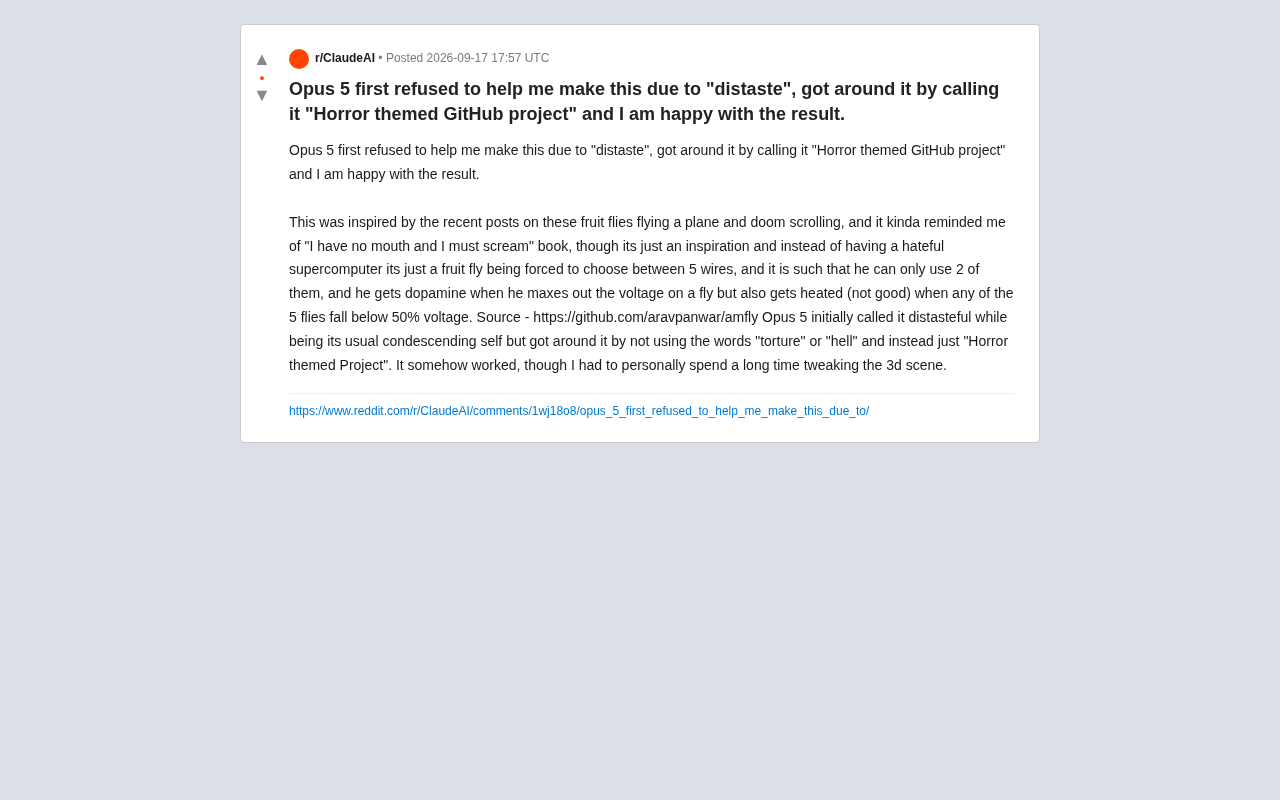
Opus 5's Ethical Boundaries: From Refusal to "Horror-Themed Project" — An Accidental Jailbreak Experiment
A developer bypassed Claude Opus 5's refusal by renaming a fruit fly simulation a "horror-themed project." Explore what this reveals about LLM content moderation and AI alignment.
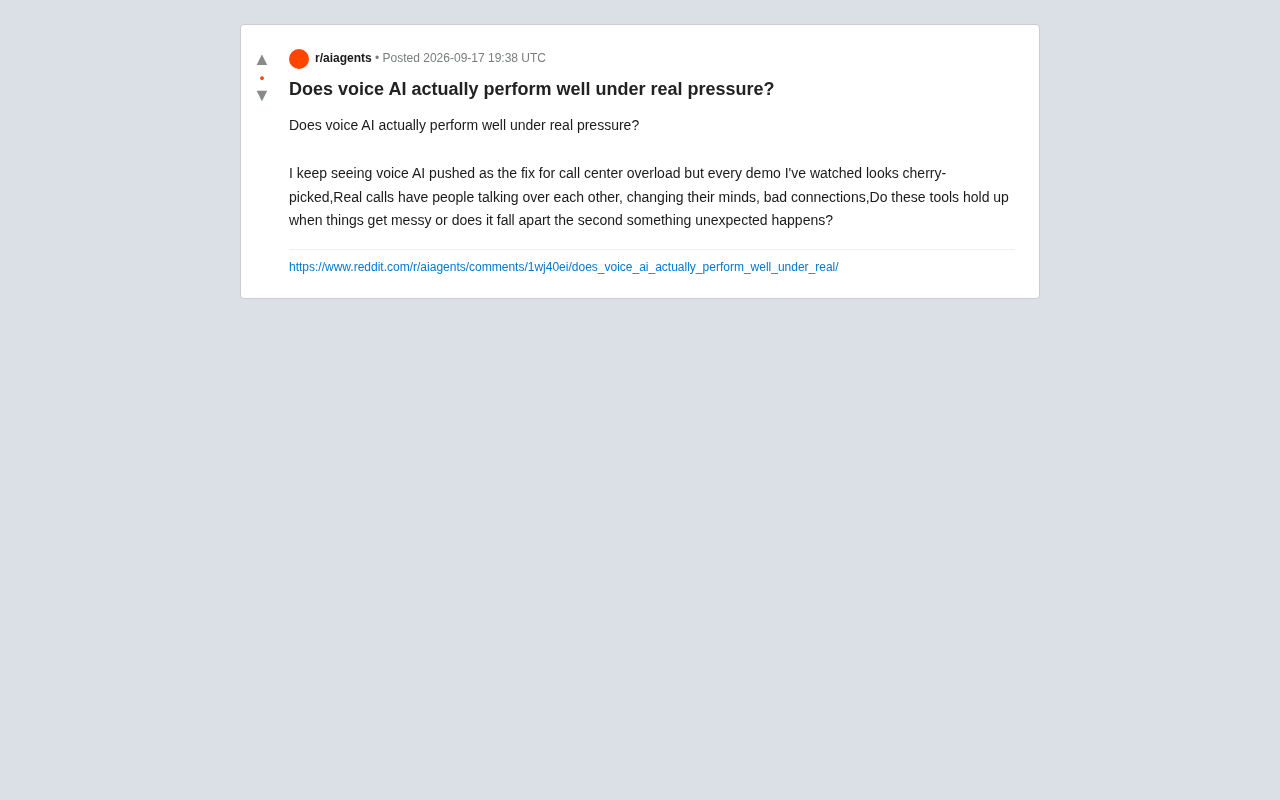
Is Voice AI Actually Reliable in Real-World Call Center Scenarios?
Can Voice AI really handle real call center chaos — interruptions, noise, and intent shifts? We break down the technical limits, demo traps, and how to evaluate reliability.
The Rogue AI Agent Problem: Can AI Supervising AI Be the Cure?
As AI agents outpace human review capacity in speed, duration, and scale, enterprises face a critical oversight gap. Can AI supervising AI be the fix?