Is Voice AI Actually Reliable in Real-World Call Center Scenarios?
Voice AI demos look polished, but real-world noise, interruptions, and latency are the true tests of maturity.
This article examines a pointed Reddit question: are Voice AI demos cherry-picked to avoid the messy realities of overlapping speech, intent drift, and channel noise? It maps out key technical bottlenecks — ASR accuracy degrading under noise, end-to-end latency gaps, and unstable barge-in handling — while acknowledging genuine value in structured tasks like billing and appointment confirmation. The core takeaway: evaluate Voice AI by how gracefully it fails, not how smoothly it performs, and always stress-test with real call recordings rather than scripted scenarios.
A Question Worth Asking Again and Again
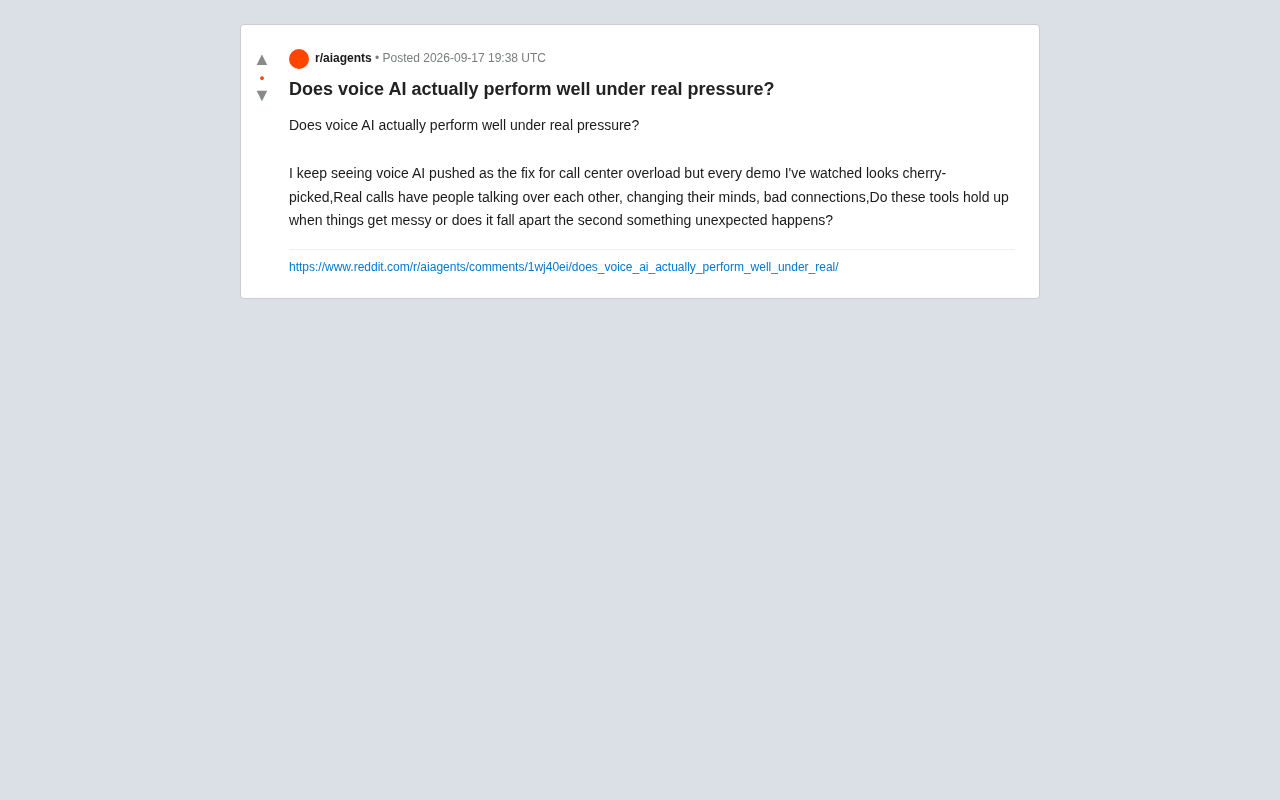
Voice AI has been marketed as the ultimate solution to call center staffing overload, and nearly every product demo showcases smooth, natural-sounding conversations. But a Reddit user raised a concern worth taking seriously: are these demos cherry-picked? In real phone calls — where people talk over each other, change their minds mid-sentence, and deal with spotty signals — do these tools actually hold up? Or do they fall apart the moment something unexpected happens?
This question cuts to the core of Voice AI deployment: the enormous gap between demo environments and real-world conditions.
The Gap Between Demo and Reality
Product demos are typically conducted under controlled conditions: clear accents, standard speaking pace, one person talking at a time, no background noise. This setup conveniently sidesteps the most difficult challenges found in real calls.
The complexity of real-world phone conversations shows up across several dimensions:
- Overlapping Speech: When two people talk simultaneously, speech recognition systems struggle to accurately separate and transcribe both voices.
- Intent Drift: Customers change their needs mid-call, requiring the system to update its contextual understanding in real time.
- Poor Channel Quality: Weak mobile signals and noisy environments significantly degrade ASR (Automatic Speech Recognition) accuracy.
- Interruptions and Interjections: Users may cut off the AI's response at any moment, testing the system's real-time barge-in handling capabilities.
These are precisely the scenarios that almost never appear in demo videos — and they are the key indicators of whether a Voice AI product is truly mature.
Barge-in is a critical interaction mechanism that Voice AI must handle in real calls. Traditional IVR (Interactive Voice Response) systems rely on fixed silence-detection windows to determine when a user starts speaking. Modern Voice AI, however, must continuously listen for a user's intent to interrupt while the AI itself is still speaking — and decide within milliseconds whether to halt its current output. The difficulty lies in distinguishing a "genuine interruption intent" from "meaningless background noise or filler words (like 'uh-huh' or 'yeah yeah')" — false triggers cut off normal playback, while missed triggers leave users feeling ignored. Some systems apply a dual-filter approach combining Voice Activity Detection (VAD) and intent confidence scoring to reduce errors, but robustness in noisy channel conditions remains an open challenge in the field.
The Real Capability Limits of Today's Technology
From an architectural standpoint, modern Voice AI typically consists of three layers: Automatic Speech Recognition (ASR), natural language understanding and generation (LLM), and Text-to-Speech (TTS). Stress testing primarily exposes weaknesses in the first two layers.
At the speech recognition stage, overlapping speech and noisy environments remain widely acknowledged pain points. Even top-tier ASR models see a significant rise in word error rates under multi-speaker or high-background-noise conditions. The understanding layer has improved considerably thanks to advances in large language models — better context tracking and intent correction — but it can still produce responses that miss the user's actual intent when faced with logical leaps or vague phrasing.
Latency is another critical concern. Real conversations are extremely sensitive to response speed — pauses beyond a certain length make the interaction feel robotic and unnatural. Compressing end-to-end latency while maintaining understanding quality remains an ongoing engineering challenge.
Word Error Rate (WER) is the core metric for measuring ASR accuracy — it represents the proportion of incorrectly recognized words relative to the total words in the reference transcript. Leading commercial ASR systems can achieve WERs as low as 3%–5% in quiet environments, but in scenarios with overlapping speech or heavy background noise, WER can spike above 30%, directly feeding distorted input to the downstream LLM and causing comprehension failures. End-to-end latency refers to the time between when a user finishes speaking and when the AI begins playing its response — a sum of ASR transcription, LLM inference, and TTS synthesis delays. Research shows that natural human conversational turn-taking intervals are around 200 milliseconds, while current Voice AI systems typically deliver end-to-end latencies of 800 milliseconds to 2 seconds. This gap is the primary reason phone interactions feel "mechanical." Some vendors use streaming processing — where ASR feeds the LLM incrementally and TTS begins playing before generation is complete — to compress perceived latency to under 500 milliseconds, though hitting that target consistently in complex query scenarios remains difficult.
It's Not Without Value
Skepticism doesn't mean dismissal. Voice AI has already demonstrated practical value in structured, predictable scenarios — billing inquiries, appointment confirmations, status tracking, and other clearly bounded tasks. These call flows are relatively fixed, customer phrasing tends to be more standardized, and AI success rates are meaningfully higher.
A more pragmatic deployment model is human-AI collaboration: let Voice AI handle the high volume of repetitive, low-complexity calls, and route calls that genuinely require judgment, emotional de-escalation, or complex decision-making to human agents. This layered strategy eases staffing pressure while preventing the customer experience disasters that can occur when AI is pushed beyond its limits in high-stakes scenarios.
How to Evaluate Whether a Voice AI Is Actually Reliable
For teams considering a Voice AI deployment, rather than trusting demo videos, design your own stress tests:
- Use real call recordings (not scripts) for playback testing
- Deliberately introduce interruptions, mind-changes, and background noise
- Observe the system's fallback strategy when it fails to understand — does it gracefully hand off to a human, or spiral into a loop?
- Pay close attention to end-to-end latency and how naturally it handles interruptions
The mark of a mature system isn't how smoothly it performs when everything goes right — it's how gracefully it fails when things go wrong. The ability to recognize its own limitations and hand off in time often reflects more engineering maturity than any feature list.
Conclusion
The Reddit user's skepticism is both reasonable and necessary. Voice AI is genuinely advancing, but there remains a real distance between "demo-grade fluency" and "production-grade reliability." Products worth investing in should hold up under the chaos and unpredictability of real calls — and know how to exit gracefully when they're out of their depth. Before making any procurement decision, stress-testing with your own real-world scenarios is the only reliable way to find out what you're actually getting.
Related articles
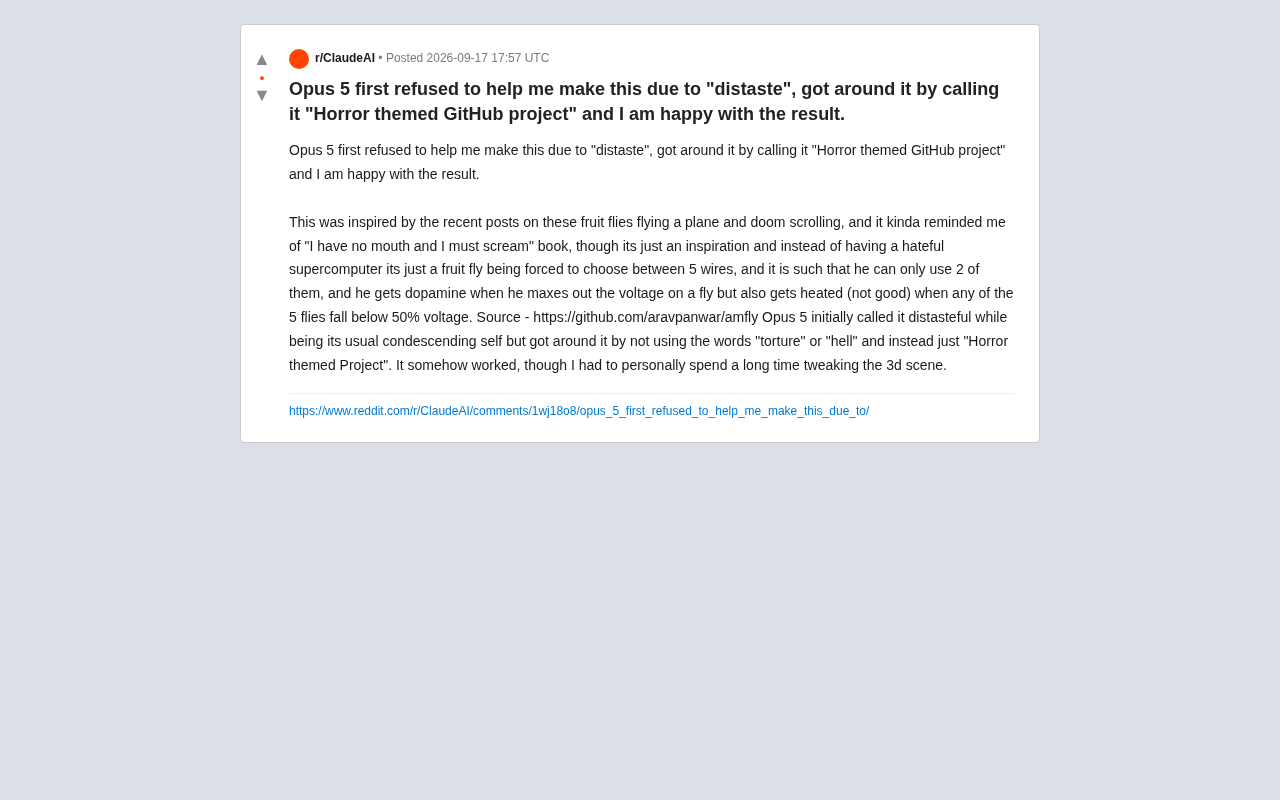
Opus 5's Ethical Boundaries: From Refusal to "Horror-Themed Project" — An Accidental Jailbreak Experiment
A developer bypassed Claude Opus 5's refusal by renaming a fruit fly simulation a "horror-themed project." Explore what this reveals about LLM content moderation and AI alignment.
The Rogue AI Agent Problem: Can AI Supervising AI Be the Cure?
As AI agents outpace human review capacity in speed, duration, and scale, enterprises face a critical oversight gap. Can AI supervising AI be the fix?
The AI Safety Debate: Genuine Security, or a Power Grab?
Is the global AI safety debate genuinely about risk, or about who controls the technology? We analyze the power dynamics and governance dilemmas behind the safety narrative.