Under 2.8 Meters Yet Fitting a Five-Link Suspension: How the smart #2 Cures the City Big-Car Burnout

The smart #2 packs a high axle-to-length ratio and rear-drive five-link suspension into a sub-2.8-meter body, redefining the premium city car.
Based on a Bilibili creator's in-depth experience, the article shows how the smart #2 escapes the "mobility scooter" image. Key engineering trade-offs: sub-2.8-meter body with 0.68 axle-to-length ratio and 3.35 m turning radius; rear-motor RWD, 50:50 distribution, five-link rear suspension, staggered tires; 120 kg split tailgate and 527 L trunk; CATL battery with 410 km range and 15-min flash charge to ~80%. ADAS is omitted as a positioning trade-off. The takeaway: premium city mobility needn't rely on bulk.
In the pure electric city-car market, most products give off a "mobility scooter" vibe—narrow and tall, wheels tucked inward, looking from afar like an upright bar of soap. But after an in-depth experience with the smart #2, a Bilibili creator offered a completely different assessment: those industrial obsessives who once knew space-packing better than anyone have finally returned.
The Small Body's Physical Cheat: 0.68 Axle-to-Length Ratio and a 3.35-Meter Turning Radius
The smart #2 measures under 2.8 meters in length, yet achieves a side axle-to-length ratio of 0.68—front and rear overhangs are so short they're almost invisible, with all four wheels pushed fully into the corners of the body. Combined with frameless doors and exterior waterlines hidden inside the door panels, the side profile is as flat as a freshly molded edge-to-edge screen.
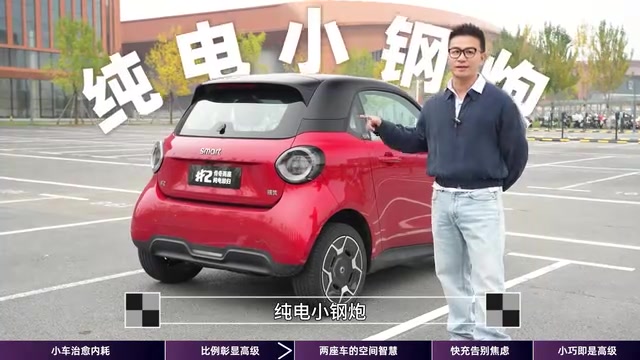
The direct benefit of this proportion is a turning radius of just 3.35 meters—a single swing across two lanes. In the video, the creator describes pulling out of a parking lot and slicing straight into the innermost lane—exactly the kind of "physical cheat you'll never experience driving a big car" that is the most practical capability in city commuting.
Axle-to-length ratio refers to the ratio between the distance separating the front and rear axles and the total body length, and is one of the core metrics for measuring a car's space-utilization efficiency. Traditional combustion vehicles, constrained by the layout of the engine, gearbox, and driveshaft, tend to have longer front and rear overhangs, with axle-to-length ratios typically between 0.55 and 0.60. Pure electric platforms, with batteries laid flat in the chassis and compact motors, can push the wheels toward the corners, generally raising the ratio. A figure of 0.68 in a model under 2.8 meters in length is extremely high, meaning the longitudinal space consumed by mechanicals is compressed to the limit, maximizing the cabin and luggage space—while the short overhangs directly shrink the turning radius and improve agility in narrow city conditions.
Rear-Motor, Rear-Wheel Drive Plus Five-Link: A Runabout's Foundation, a Hot Hatch's Bones
The car adopts a rear-motor, rear-wheel-drive layout with a 50:50 front-to-rear weight distribution. The rear wheels get a five-link independent suspension, while the front wheels handle only steering, not drive, delivering precise turn-in. Even more unusual is its sports-car-style "staggered" tire setup—narrow front, wide rear—with rear tires sized 205/45 R16; the mismatched setup lets the rear-drive character shine even more.
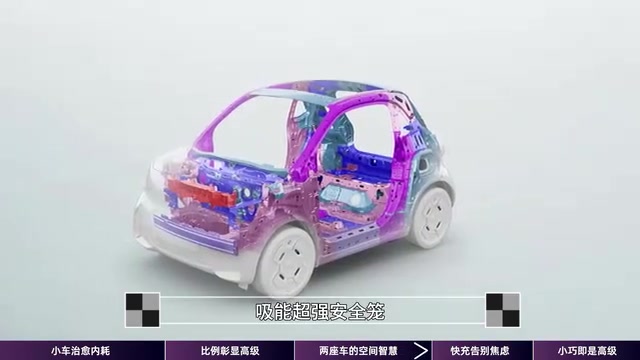
In real driving, the chassis feels as planted as if it were sucked to the ground, with no looseness or slip through corners; road surfaces are filtered well without losing road feel. Zero to 50 km/h takes just a hair over 3 seconds, with power delivery that fully delivers the hot-hatch feel. The creator puts it bluntly: you think it's a grocery runabout, but at its core it's a proper pure electric hot hatch with German tuning.
A rear-motor, rear-wheel-drive (RR) layout means the motor sits on the rear axle and drives the rear wheels. Its advantages: the front wheels handle only steering for purer steering feel, and weight shifts rearward under acceleration, increasing rear-wheel traction for more eager launches and corner exits; the drawback is greater weight at the tail, which demands more from suspension tuning. A five-link independent suspension is one of the more complex and costly forms of rear suspension: five links separately control the wheel's longitudinal and lateral motion, keeping the tire's contact angle more stable over bumps and through corners, balancing comfort and handling. "Staggered tires" means the front and rear tire widths differ—the rear is wider to handle drive torque and provide more grip—common on high-performance rear-drive sports cars, and an upmarket configuration on a micro runabout.
Split Tailgate and 527 Liters: A Two-Seater That Reserves Space Only for What's Truly Useful
The rear retains smart's classic split tailgate design. The upper fiberglass panel makes grabbing a bag easy day to day—no awkward exposure, no effort; the lower drop-down gate bears 120 kg and comes with two cup holders, so two people can sit right on it with coffee and watch the sunset. Fold the passenger seat forward and trunk space leaps to 527 liters—a 28-inch suitcase, a long duffel, even a folding bike slides right in.

Inside there are two details that really win people over: first, a standard 1/4-inch threaded mount—screw on an action camera or phone holder wherever you like, no suction cups stuck to the windshield; second, a cat-paw easter egg in the armrest box, plus the concept-car-style new ring inner door handle. If a pillar blocks the driver's door when parked, flip up the armrest and slip elegantly across from the passenger side to get out.
The "split tailgate" (sky-and-earth door) is the colloquial name for a top-and-bottom split rear hatch: the upper section is a glass or composite panel that lifts upward, the lower a tailboard that folds down. First popularized on luxury SUVs like the Range Rover and BMW X5, it has also been a signature design across smart's model generations. Compared with a single upward-lifting hatch, the split tailgate needs less rear clearance to open in tight parking spots, and the drop-down lower gate can serve temporarily as a seat or loading platform, with load capacity usually reinforced structurally. The fiberglass composite panel significantly reduces weight while maintaining stiffness, making one-handed operation easy.
Range and Charging: 410 km, the Time of an Espresso
This sub-2.8-meter car packs a CATL battery with 410 km of range, supporting 15-minute flash charging to nearly 80%. In the creator's words: in the time it takes to drink an espresso, this car can be topped up and back on the road.
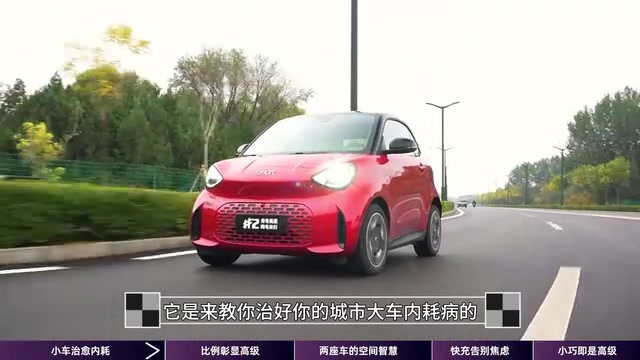
One note: limited by body dimensions, the #2 does not come with an advanced driver-assistance system. The creator believes that for city roads and nearby suburban trips, going without ADAS is perfectly fine—a positioning trade-off rather than a flaw.
Flash charging (DC fast charging) means replenishing the traction battery directly from a DC charging station, bypassing the onboard AC charger, at power levels from tens to over a hundred kilowatts—enough to bring the battery from a low level to around 80% in a dozen or so minutes. Above 80%, the battery typically enters a constant-voltage trickle phase and charging slows noticeably, which is why manufacturers commonly cite "charge to 80%" when advertising fast-charging capability. For a small car positioned for city commuting, 410 km of CLTC range plus fast charging basically covers a once-a-week charging rhythm, with far less charging anxiety than long-distance scenarios.
Reverse Thinking on City Mobility: Premium Feel Doesn't Need Bulk
More than a decade ago, owners of the old smart put up with拖拉机-like juddering and a bouncy chassis for over ten years just to park easily in the city. Later, EVs the world over went mad growing longer and wider, as if trying to weld a living room onto the road, making every trip out as draining as piloting an aircraft carrier.
The smart #2 offers a reverse path: with a sub-2.8-meter body, rear-motor rear-wheel drive, a five-link suspension, and a split tailgate, it proves that in an increasingly crowded city, true premium feel doesn't need massive bulk to fake gentility. When you decide to lighten the load on your life, the whole city will open a lane for you.
One-line Summary
With a sub-2.8-meter body, a high axle-to-length ratio, and rear-drive five-link suspension, the smart #2 redefines the premium city car.
Paragraph Summary
Drawing on a Bilibili creator's in-depth experience, this article explores how the smart #2 sheds the "mobility scooter" image in the pure electric city-car market. The core is engineering trade-offs: a sub-2.8-meter body with a 0.68 axle-to-length ratio and 3.35-meter turning radius, wheels pushed to the corners; rear-motor rear-wheel drive, 50:50 weight distribution, five-link independent rear suspension, and staggered tires for hot-hatch driving feel; a split tailgate with a 120 kg lower gate and 527 liters of trunk space with the passenger seat folded; a CATL battery offering 410 km of range and 15-minute flash charging to nearly 80%. ADAS is omitted due to size constraints, seen as a positioning trade-off rather than a flaw. The article lands on a reverse-thinking conclusion: premium city mobility needn't rely on bulk.
Related articles

The AI Agent Era: Building a New Product Paradigm with Evals
AI Agents are becoming the next users of products. This article explains how to use Evals to observe Agent usage behavior, test changes before launch, and compare new model performance, helping product teams establish a development methodology for the Agent era.

Microsoft Global Email Outage Leads to Chlorine Leak at German Hotel, Injuring 15
A Microsoft 365 and Outlook global outage prevented a chlorine safety alert from reaching a German Phantasialand hotel, injuring 15 guests and exposing the fragility of cloud-dependent safety systems.

iPhone Duo to Support Face Unlock Using Only the Front Camera
Apple is developing front-camera-only face unlock for the iPhone Duo, now testing in the iOS 27.3 beta. We analyze the technical approach, user experience, and security trade-offs.