Underestimated Midwest Politics: A Wisconsin Rising Star Reveals Shifting Public Sentiment

Political commentator argues the American Midwest is far more progressive than mainstream narratives suggest.
Hasan Piker's analysis of Wisconsin politician Francesca Hong's rise reveals how mainstream media systematically misreads Midwest political leanings. He argues the region's progressive traditions are deeply underestimated, while noting that moderate politicians face unique challenges in today's combative media environment that rewards conflict over sincerity.
A Deep Discussion on the Narrative of Midwest Politics
Prominent political commentator Hasan Piker recently devoted a segment of his livestream to an in-depth discussion of American Midwest political ecology, centered around the rise of Wisconsin political figure Francesca Hong. As someone who studied in Wisconsin, Piker offers a unique window into understanding the political shifts occurring in America's heartland.
Hasan Piker is one of America's most influential political streamers, with over 2 million followers on Twitch, known for his left-wing stance and sharp political commentary. He is a Turkish-American who previously hosted on The Young Turks network before transitioning to independent streaming. His audience skews young, and his commentary style blends pop culture with serious policy analysis, representing a new model of political communication that bypasses traditional media to reach young voters directly.
The core of this discussion isn't merely a character assessment but rather uses a rising political star's experience to reflect a larger question: Has the political orientation of the American Midwest been chronically misread by mainstream media and the public?
Notably, Wisconsin itself is one of America's most quintessential "swing states," flipping to Trump in 2016 by less than one percentage point and returning to Biden's column in 2020 by an equally slim margin. The state has deep progressive traditions—the early 20th century "Wisconsin Idea" held that university research should serve all state citizens, and the state was a key birthplace of the American labor movement. However, Governor Scott Walker's anti-union legislation in 2011 and the subsequent political polarization have made the state a microcosm of national political battles.
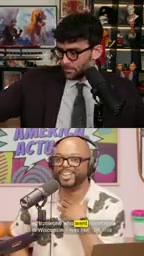
The "Too Madison" Politician: The Dilemma of Moderates in a Combative Environment
Piker's assessment of Francesca Hong is notably nuanced. He sees her as a "very kind person" who is perhaps "too kind for this contentious media environment." After watching her interviews and livestreams, Piker describes her as "a real Wisconsin type"—even carrying a distinctly "too Madison" quality.
Madison, home to the University of Wisconsin's flagship campus and the state government, has long been a bastion of Midwestern liberalism. The city was extremely active during the 1960s anti-Vietnam War movement, and in 1970 even saw a bombing targeting a campus military research facility. Today, Madison is known for its high-tech industry, academic atmosphere, and progressive policies, consistently ranking among America's most livable cities. Yet its political climate contrasts sharply with rural Wisconsin—a rural-urban divide that is key to understanding the state's political complexity.
Francesca Hong herself is a Democratic member of the Wisconsin State Assembly, a Korean American who was previously a chef and restaurant owner in Madison. She was first elected to the state legislature in 2020, becoming the first Asian American state legislator in Wisconsin's history. Her political rise was partly driven by the social movements of 2020, representing a new "community-to-politics" pathway—the combination of a non-career-politician background, minority identity, and small business experience makes her a typical representative of the renewal of Democratic grassroots forces.
Implicit here is a harsh judgment: in today's highly combative media environment, overly moderate and sincere political figures often undergo a "crash course in brutality." Media ecosystems reward conflict, friction, and controversy—not gentle earnestness.
Why Kindness Becomes a "Weakness" in Political Communication
Piker's observation highlights a paradox of contemporary political communication: the media environment rewards combative expression. He states plainly, "Media people like it when you bring a little hostility, when there's a bit of friction, because that drives clicks." Under this logic, a sincere and moderate candidate is actually at a disadvantage.
The combative ecology of contemporary American political media didn't form by accident. Starting with the FCC's abolition of the Fairness Doctrine in 1987, single-viewpoint media became legitimized. The subsequent rise of Rush Limbaugh-style conservative radio, the establishment of Fox News, and then social media's algorithmic recommendation systems collectively built an information ecosystem that rewards extreme expression and punishes moderate positions. Research shows that politically angry content receives several times more engagement on social platforms than neutral content, fundamentally reshaping political figures' communication strategy choices.
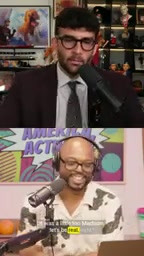
The American Midwest Is Far More "Radical" Than People Think
The most insightful part of this discussion lies in Piker's assessment of the Midwest's political character. He states explicitly: "Wisconsin is far more 'radical' than people think—I know this is true, I've seen it with my own eyes. Minnesota too."
He further criticizes: "People underestimate the Midwest. They don't realize what Midwesterners are actually demanding."
This viewpoint challenges the long-standing stereotypes about America's heartland. In many people's minds, the Midwest is synonymous with conservative and traditional values. But Piker argues this perception severely deviates from residents' actual demands. And Hong's success precisely "validates the success of this narrative in Wisconsin."
In fact, the Midwest's progressive tradition runs far deeper than public awareness suggests. The late 19th century Populist Movement originated in Midwestern agricultural states. During the early 20th century Progressive Era, Wisconsin's Robert La Follette pushed through reforms ranging from direct primaries to workers' compensation laws. Minnesota's Democratic-Farmer-Labor Party (DFL) merged farmer interests with the labor movement, producing national political figures like Hubert Humphrey and Walter Mondale. This history demonstrates that the Midwest's "conservative" label was applied later, particularly after culture war issues came to dominate political discourse.
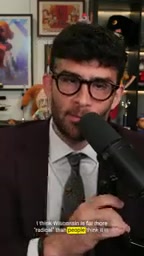
Key Signals of Midwest Opinion Shifts
Piker predicts that this underestimated political energy will "become increasingly evident in the coming years." In other words, he views Hong's rise as a signal—an early indication that the Midwest's political map may be reshaping.
For observers following American political trends, this is a judgment worth heeding. If mainstream narratives continue to misread Midwest public sentiment, both political assessments and election predictions could suffer systematic bias. This kind of "systematic bias" has numerous precedents in American election forecasting history. In the 2016 election, the vast majority of polls and analytical organizations failed to predict Trump's victory in the Midwest "Blue Wall" states. In the 2022 midterms, predictions of a "red wave" similarly fell flat. The root of these failures often lies in sampling framework limitations—traditional polling struggles to reach low-political-participation but mobilizable voter groups, while media narratives tend to reinforce existing cognitive frameworks, ignoring the accumulation of political energy at the local level.
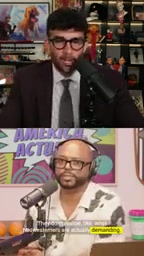
Media Survival Rules for the National Stage
Beyond macro-level political judgments, Piker also offers highly pragmatic media strategy advice. He believes that when facing national media exposure, political figures have two choices:
Either don't participate in national media interviews at all, because such exposure carries extremely high risk;
Or you must learn to go on the offensive. He illustrates the ideal mode of expression: rather than playing passive defense, go on the attack—"I love Thanksgiving. You know who's canceling Thanksgiving? It's Trump, because endless wars are driving food prices through the roof."
This expression cleverly connects everyday life issues (food prices, family holidays) with macro-level policy critique (foreign wars)—both grounded and aggressive. Piker argues this is precisely why voters get excited about certain campaigns.
Friction Equals Traffic: The Underlying Logic of Political Communication
Piker repeatedly emphasizes that in contemporary media logic, moderate "hostility" and "friction" are not flaws but assets. Media professionals prefer conflict because conflict drives clicks. For political figures, understanding and leveraging this logic is a required course for surviving in the information age.
This observation closely aligns with communication theory's "attention economy" framework. In an era of information overload, human attention becomes the scarcest resource, and emotional arousal—especially anger and surprise—is the most effective mechanism for capturing attention. From the traditional television era's "if it bleeds, it leads" to social media era algorithmic recommendations, the underlying logic remains consistent; only the intensity continuously escalates under technological acceleration.
Conclusion: Reassessing the Political Potential of America's Heartland
This discussion distills several key insights about contemporary American political communication: mainstream media's systematic misreading of the Midwest, the predicament of moderate sincerity in a combative environment, and the media survival rules political figures must master.
Piker's core argument—the Midwest has far greater appetite for change than people imagine—deserves serious consideration from anyone following American politics. If this judgment holds, the political movements in America's heartland in the coming years may surprise quite a few observers.
Key Takeaways
Related articles

Claude Reportedly Able to Hide Secret Messages in Benign Images
A Reddit post claims Claude Fable 5.1 can hide secret messages in benign images. This article reviews the background, image steganography principles, and potential security risks, and suggests a testing path from rumor to verification.

Federal Government Awards $85 Million; CFS to Develop Fusion-Specific Semiconductors
The federal government awards $85 million to Commonwealth Fusion Systems to develop conductors and power semiconductors for fusion plants. This article analyzes the significance of this funding for the fusion supply chain and commercialization path.

When Should AI Assistants Proactively Suggest? Timing Is Everything
When should AI assistants proactively suggest? Reddit discussion reveals: the same suggestion feels different at different times. This article analyzes the dual nature of proactive suggestions, the boundary of user expectations, and design principles, exploring how to balance automation and user control.