Unsloth: The Efficient Tool for Local Open-Source LLM Training — The Secret Behind 60K+ GitHub Stars

Unsloth is an efficient open-source tool for local LLM training and fine-tuning that dramatically lowers hardware and technical barriers.
Unsloth is a 63,500+ star GitHub project that provides a Web UI for local training and fine-tuning of mainstream open-source LLMs including Gemma 4, Qwen3, and DeepSeek. Through Triton custom kernels, gradient checkpointing, and LoRA/QLoRA techniques, it achieves 2-5x training acceleration and 50-80% VRAM savings, enabling consumer GPUs to handle LLM fine-tuning while meeting data privacy compliance requirements.
What Is Unsloth? A One-Minute Overview of This Viral Open-Source Project
Unsloth is an open-source tool focused on locally training and running open-source large language models, featuring a ready-to-use Web UI interface. As of now, the project has earned over 63,500 stars on GitHub with 5,583 forks, making it one of the most popular tools in the local LLM training space.
Built with Python, the project supports local training and inference for today's leading open-source models including Gemma 4, Qwen3, DeepSeekAd, and gpt-oss, covering the complete workflow from model loading to fine-tuning to deployment.
To understand why Unsloth gained popularity so quickly, you need to understand the industry context it operates in. 2024 to 2025 has been an explosion period for open-source LLMs: Meta's Llama series continued iterating to Llama 3.1 and Llama 4, Alibaba's Qwen series evolved from 1.0 to Qwen3, DeepSeek rose to prominence with its high-performance reasoning capabilities, and Google joined the open-source arena with the Gemma series. These models range from billions to hundreds of billions of parameters, with performance gradually approaching or even surpassing closed-source commercial models on certain tasks. However, "open-source models" doesn't equal "accessible to everyone" — there's a massive engineering gap between downloading a model weight file and actually completing fine-tuning for a specific business scenario. Unsloth was born to bridge this gap.
Core Features: What Earned Unsloth 60K+ Stars?
One-Stop Support for Mainstream Open-Source Models
Unsloth keeps pace with the open-source LLM ecosystem's iteration rhythm and currently supports multiple popular model series:
- Gemma 4: Google's latest open-source model
- Qwen3: The latest version of Alibaba's Tongyi Qianwen series
- DeepSeek: High-performance reasoning model from DeepSeek
- gpt-oss: OpenAI's open-source model
Users can switch between and fine-tune different open-source LLMs on a single platform, eliminating the hassle of setting up separate environments for each model. This is particularly valuable in practice — different model series often have their own codebases, dependency versions, and configuration formats, and manually adapting to a new model can take hours or even days of debugging. Unsloth abstracts away these differences through a unified layer, letting developers focus on their business logic.
Intuitive Web UI Lowers the Entry Barrier
Unsloth includes a graphical Web UI that simplifies what would normally require writing extensive training scripts into visual operations. From model loading and hyperparameter configuration to training monitoring and inference testing, the entire workflow can be completed in a browser, making it very friendly for users unfamiliar with the command line.
In traditional LLM training workflows, developers typically need to write Python scripts to define data loaders, configure optimizer learning rate schedules, set gradient accumulation steps, specify mixed-precision training parameters, and more — each configuration requiring an understanding of the underlying training mechanisms. Unsloth's Web UI presents these parameters as forms and sliders with sensible defaults, enabling even newcomers to launch a fine-tuning experiment within minutes. Meanwhile, key metrics during training such as loss curves, learning rate changes, and VRAM usage are displayed as real-time charts, helping users intuitively judge whether training is converging normally.
Training Efficiency Optimization: Consumer GPUs Can Handle LLMs Too
Unsloth's true killer feature lies in its dramatic improvement in training efficiency — the fundamental reason behind its rapid growth:
- VRAM Optimization: Through low-level memory management optimizations, it significantly reduces GPU VRAM usage, enabling consumer-grade GPUs like the RTX 3090 and RTX 4090 to handle LLM fine-tuning tasks
- Training Acceleration: Compared to native Hugging Face Transformers training, Unsloth achieves 2-5x speed improvements
- LoRA / QLoRA Support: Built-in Parameter-Efficient Fine-Tuning (PEFT) techniques that only update a small fraction of model parameters, further lowering hardware requirements
Technical Details of VRAM Optimization
To understand why Unsloth's VRAM optimization is so critical, you first need to understand the VRAM consumption breakdown during LLM training. Take a 7B (7 billion) parameter model as an example: the model weights alone require approximately 14GB of VRAM in FP16 (half-precision floating point) format. During training, you also need to store optimizer states (Adam optimizer requires roughly 2x additional parameter memory), gradient tensors, and intermediate activation values from forward propagation — total VRAM requirements can balloon to 50-80GB, far exceeding the 24GB VRAM limit of consumer GPUs.
Unsloth breaks through this bottleneck with multiple low-level techniques. It uses custom GPU kernels written in the Triton language, deeply optimizing core operations in the Transformer architecture such as attention computation and matrix multiplication, reducing unnecessary intermediate tensor allocation and memory fragmentation. Additionally, Unsloth employs an intelligent Gradient Checkpointing strategy that achieves a better balance between computation speed and VRAM usage — by discarding some intermediate activation values during forward propagation and recomputing them during backpropagation, it trades a small amount of extra computation for substantial VRAM savings.
LoRA and QLoRA: The Core Technologies Behind Parameter-Efficient Fine-Tuning
LoRA (Low-Rank Adaptation) is a parameter-efficient fine-tuning technique proposed by Microsoft Research in 2021. Its core idea is based on a key observation: during fine-tuning, the weight change matrix typically has very low "intrinsic rank." Put simply, although a model has billions of parameters, the actual "degrees of freedom" that need adjustment during fine-tuning are far fewer.
Based on this insight, LoRA doesn't directly modify the original model's weight matrix W. Instead, it injects two much smaller low-rank matrices A and B alongside it (with rank typically set to 8, 16, or 64), so that the weight update ΔW = A × B. This way, a layer that would originally require updating millions of parameters now only needs to train thousands to tens of thousands. For a 4096×4096 weight matrix, the original parameter count is 16.77 million, but with rank-16 LoRA, the trainable parameters are only 4096×16×2 = 131,072 — a compression ratio exceeding 100x.
QLoRA takes this even further, proposed by a research team at the University of Washington in 2023. It quantizes the base model weights to 4-bit (NF4 format) while applying LoRA fine-tuning on top of the quantized model. This means a 7B model's base weights occupy only about 3.5GB of VRAM (compared to 14GB in FP16). Combined with the small number of LoRA adapter parameters, total VRAM requirements can be compressed to 6-8GB, enabling a single RTX 3060 (12GB VRAM) to fine-tune a 7B model — something nearly unimaginable two years ago.
Unsloth further optimizes its implementation of LoRA and QLoRA through custom backpropagation kernels that reduce additional computational overhead, achieving faster training speeds while maintaining fine-tuning quality.
Relationship with the Hugging Face Transformers Ecosystem
When discussing Unsloth's performance benchmarks, it's essential to introduce Hugging Face Transformers. Hugging Face is currently the largest AI model open-source community and tool provider, and its Transformers library is virtually the starting point for all LLM research and development — providing unified APIs to load, run, and train thousands of pre-trained models. Together with the Trainer API, Datasets library, Tokenizers library, and other components, it forms a complete training toolchain widely adopted by both academia and industry.
However, Hugging Face Transformers is designed for versatility and ease of use, not peak performance optimization. Its default training pipeline has significant room for optimization in areas like VRAM management, operator fusion, and memory allocation. Unsloth achieves 2-5x training speed improvements and 50-80% VRAM savings through deep low-level optimizations while remaining compatible with the Hugging Face ecosystem (users can directly use models and datasets from Hugging Face Hub). This "compatible but faster" strategy means users can gain significant performance benefits with almost no changes to their existing workflows — a key reason why Unsloth was quickly embraced by the community.
Why Should Developers Pay Attention to Unsloth?
Making Open-Source LLM Fine-Tuning No Longer a Big Tech Exclusive
From 2024 to 2025, open-source LLMs experienced explosive growth, with high-quality models like Llama, Qwen, and DeepSeek being released one after another. But the technical barrier to training and fine-tuning these models remains high — configuring distributed training, debugging VRAM overflow, writing data processing pipelines — each step can deter newcomers.
"Fine-tuning" refers to further training a pre-trained base model on domain-specific or task-specific data to improve its performance in that area. For example, fine-tuning a general chat model into a specialized medical Q&A assistant, or teaching a model to generate marketing copy in a specific tone and format. Fine-tuning data is typically much smaller than pre-training data (thousands to tens of thousands of samples vs. trillions of tokens), but its impact on model performance in specific scenarios is often decisive.
Before Unsloth, completing a full fine-tuning experiment typically required: manually writing data preprocessing scripts, configuring distributed training frameworks like DeepSpeed or FSDP, handling numerical stability issues in mixed-precision training, debugging OOM (Out of Memory) errors, and more. These tasks demand solid engineering skills and deep understanding of underlying systems, capabilities typically found only in large companies' AI teams. Unsloth packages these complex steps into an accessible toolchain, enabling independent developers and small teams to participate in customized LLM development.
Highly Active Community with Fast Issue Response
Behind the 63,000+ stars and 5,500+ forks is a highly active developer community:
- Fast bug fixes and new feature iterations
- Newly released open-source models typically receive support within a short timeframe
- GitHub Issues and community forums contain extensive hands-on tutorials and troubleshooting records
When choosing open-source tools, community activity is often more important than feature lists. An active community means: when you encounter a problem, someone has likely hit the same issue and shared a solution; when new models are released, community contributors quickly submit adaptation code; when underlying dependencies (like PyTorch or CUDA) are upgraded, compatibility issues get fixed promptly. Unsloth's community excels in all these areas — for example, when DeepSeek-R1 was released, the Unsloth community completed full adaptation and optimization within days and published detailed fine-tuning tutorials.
Data Stays Local, Meeting Privacy and Compliance Requirements
In an environment where data security and compliance requirements are becoming increasingly stringent, more and more organizations prefer to complete model training and inference locally. Unsloth's local deployment approach ensures training data remains on the user's own machines throughout the entire process, with no need to upload to any third-party cloud services, inherently satisfying data privacy protection requirements.
The importance of this feature is increasingly evident as global data privacy regulations tighten. The EU's General Data Protection Regulation (GDPR) imposes strict restrictions on cross-border transfer and processing of personal data, with violating companies potentially facing fines of up to 4% of global revenue. China's Data Security Law and Personal Information Protection Law similarly require localized storage and processing of important data and personal information. In sensitive industries like healthcare, finance, and legal, training data often contains highly confidential information such as patient records, transaction histories, and contract terms — uploading such data to cloud training platforms not only poses compliance risks but may also trigger customer trust crises.
Unsloth's fully local approach means: from data preprocessing through model training to inference deployment, everything occurs within hardware environments controlled by the user, with no data passing through any external network. For organizations with strict data governance requirements, this architecture fundamentally eliminates the risk of data leakage.
Who Is Unsloth Best Suited For?
| User Type | Typical Scenarios |
|---|---|
| Individual Developers | Fine-tuning models on local GPUs to build personalized AI assistants or chatbots |
| AI Researchers | Quickly comparing the effects of different model architectures, training strategies, and hyperparameters |
| SMEs | Building industry-specific vertical LLM applications at lower hardware costs |
| Students and Educators | As a teaching platform for learning LLM training principles and hands-on practice |
For individual developers, Unsloth's most direct value lies in lowering the hardware barrier for LLM fine-tuning from professional-grade A100/H100 GPUs (tens of thousands of dollars per card) to consumer-grade RTX 4090 (approximately $1,500-2,000) or even lower. This means you can train an AI model optimized for specific tasks on your gaming PC — such as a customer service bot that understands your industry's terminology, or a writing assistant that generates content in your preferred style.
For AI researchers, Unsloth's efficient training capabilities mean more experiments can be run within the same hardware budget. In research scenarios requiring extensive repeated training, such as hyperparameter searches and ablation studies, a 2-5x speed improvement directly translates to multiplicative gains in research efficiency.
Summary: The Go-To Tool for Local LLM Training
Unsloth represents an important trend in the open-source LLM toolchain — putting AI training capabilities that once belonged exclusively to big tech companies and research labs into the hands of every developer. With continuously expanding model support, significant training efficiency optimizations, and an active community ecosystem, it's becoming the benchmark tool in the local LLM fine-tuning space.
From a broader perspective, Unsloth's rise reflects a profound transformation taking place in the AI industry: the core competitive advantage in LLMs is shifting from "who can train the largest model" to "who can most efficiently adapt models to specific scenarios." As foundation models become increasingly commoditized, fine-tuning and deployment efficiency become the true differentiating factors. The efficient fine-tuning toolchain that Unsloth represents is spreading this differentiation capability from a handful of big tech companies to the entire developer ecosystem.
If you're looking for a tool that can efficiently train and run open-source LLMs in a local environment, Unsloth deserves the top spot on your research list.
Key Takeaways
- Unsloth is an open-source project with 63,500+ stars, providing a Web UI for local LLM training and inference
- Supports current mainstream open-source models including Gemma 4, Qwen3, DeepSeek, and gpt-oss
- Significantly lowers hardware requirements for local LLM training through Triton custom kernels, gradient checkpointing, and LoRA/QLoRA parameter-efficient fine-tuning methods
- The Web UI dramatically reduces the technical barrier to model training without requiring complex scripts
- Its fully local architecture meets GDPR, data security law, and other privacy compliance requirements, suitable for individual developers, researchers, and enterprise users
Related articles
 Product Reviews
The Programmer's Desk Setup Guide: Building a Workspace That Feels Like Home
Discover how programmers build productive, comfortable workspaces. From multi-monitor setups to ergonomic design, explore the desk philosophy that drives focus and flow.
 Product Reviews
Qoder vs Cursor Real-World Comparison: Which $20/Month AI IDE Is Better?
Hands-on comparison of Qoder vs Cursor AI IDEs: Agent autonomy, human interaction count, and architecture decisions. Qoder needed only 2 interactions vs Cursor's 8.
 Product Reviews
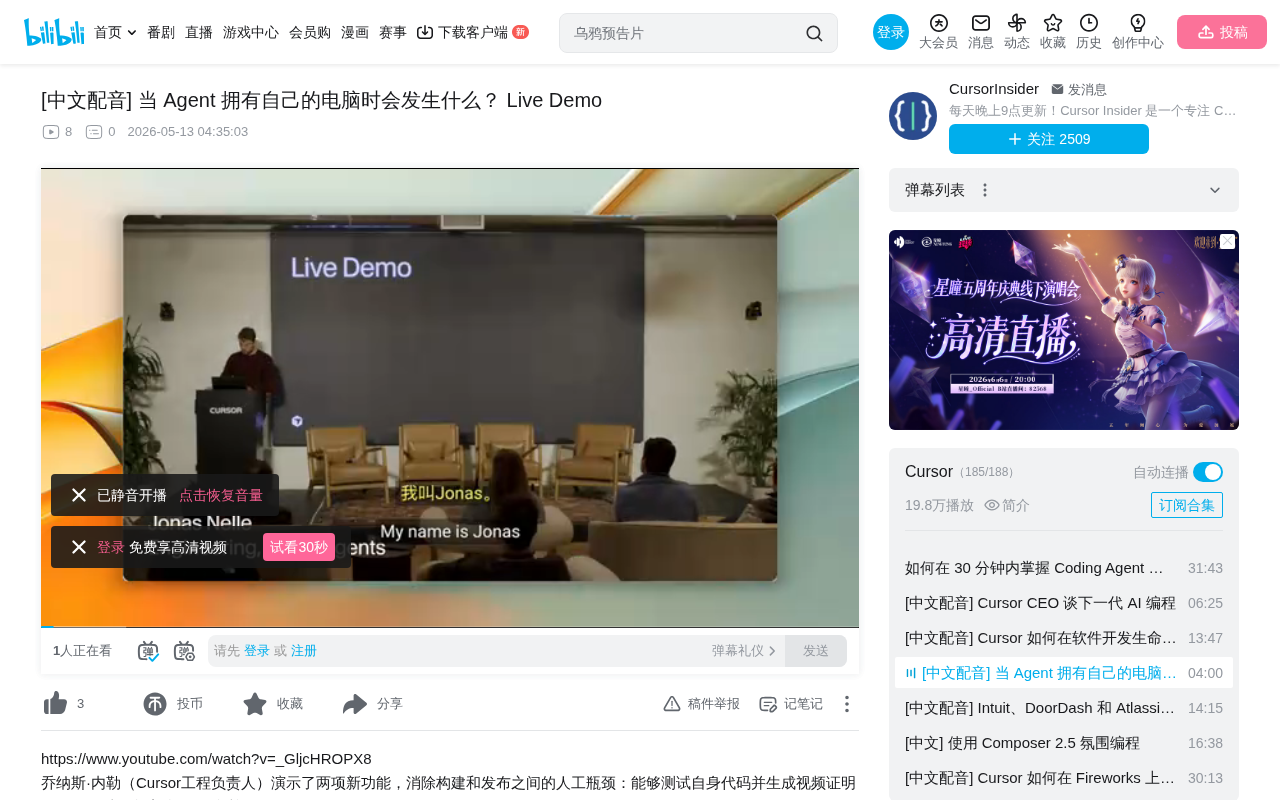
Cursor Cloud Agent Demo: Eliminating Bottlenecks Across the Entire Software Development Lifecycle
Deep analysis of Cursor's Cloud Agent demo showing how cloud VMs, automated test artifacts, and a full-chain control plane systematically eliminate human bottlenecks across the software development lifecycle.