US EV Sales Rebound for Three Consecutive Quarters, Market Shows Signs of Recovery

US EV sales have risen for three straight quarters, with demand recovering but sustainability still unproven
The US electric vehicle market has maintained sales growth for three consecutive quarters, temporarily easing concerns about slowing demand. The recovery is being driven by price cuts from major manufacturers, a richer model lineup, and federal and state policy support. Although high interest rates and incomplete charging infrastructure remain obstacles, consumer acceptance is still rising steadily. Challenges including charging network coverage and reliability, battery costs, supply chain stability, and global economic uncertainty have not disappeared. Whether this rebound can become a long-term trend still requires more quarterly data to verify.
The US electric vehicle market is sending positive signals. The latest industry data shows that US EV sales have grown for three consecutive quarters, and this sustained recovery has temporarily eased earlier concerns about slowing demand.
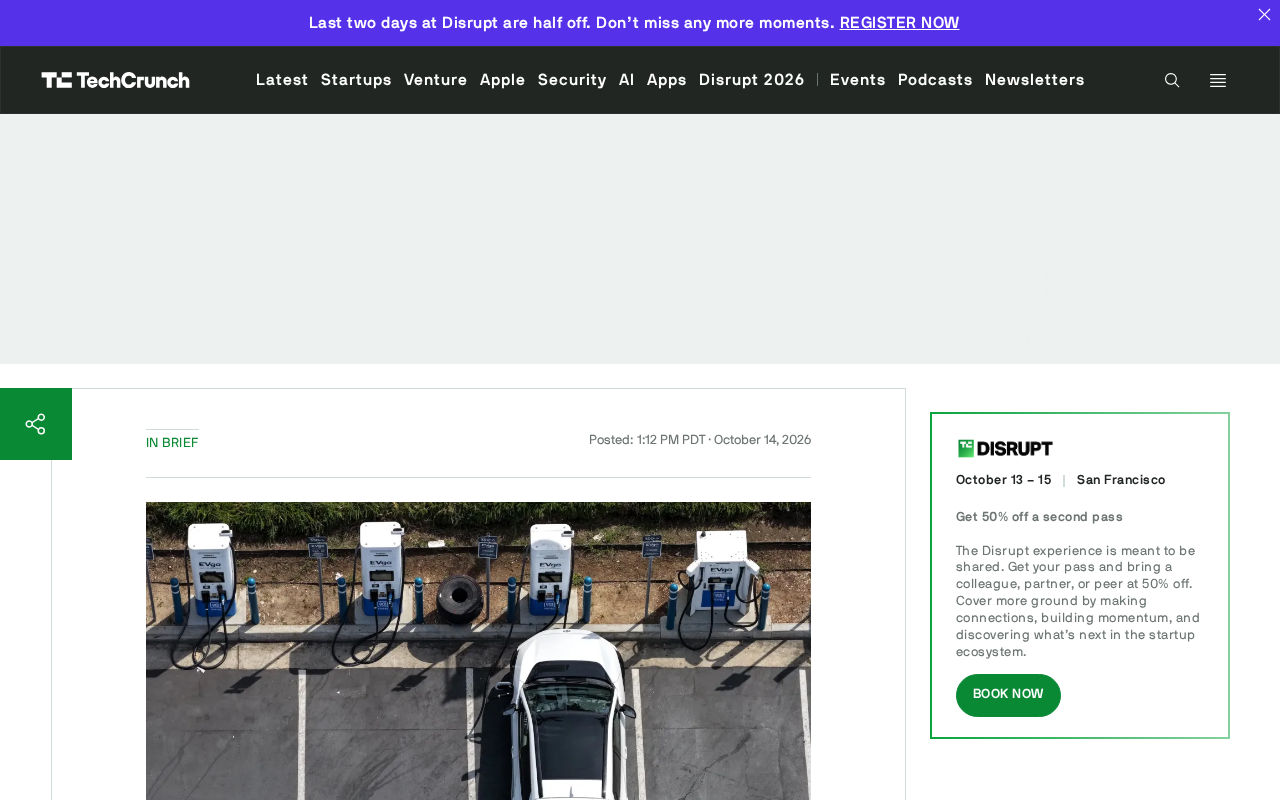
Market Signals Behind Consecutive Growth
According to RSS sources, the US electric vehicle market has shown consecutive growth over the past three quarters. This data breaks the previous pessimistic expectations that EV demand had peaked.
Three consecutive quarters of growth is no accident. It shows that despite unfavorable factors such as high interest rates and charging infrastructure that still needs improvement, US consumers' acceptance of electric vehicles continues to rise steadily. The market's resilience has exceeded many analysts' expectations.
Where Is the Growth Momentum Coming From?
The factors driving this recovery may be multifaceted.
Intensifying Price Competition
For some time now, major EV manufacturers have been adjusting their pricing strategies, stimulating sales through price cuts and the introduction of more affordable models. Lower price thresholds have directly expanded the pool of potential buyers.
Behind the price competition is the global wave of price cuts Tesla launched in 2023. As the undisputed leader in the US EV market, Tesla repeatedly lowered the prices of the Model 3 and Model Y, forcing traditional automakers such as Ford, GM, and Hyundai, as well as newcomers like Rivian, to follow suit. The direct impact of this strategy was to narrow the purchase price gap between EVs and comparable internal combustion engine vehicles, a gap that has long been one of the core obstacles preventing mainstream consumers from switching to electrification. At the same time, automakers began launching lower-positioned entry-level models, attempting to reach price-sensitive user groups that had previously been overlooked. However, continuous price cuts also compressed per-vehicle profit margins, posing a test to automakers' profitability and cash flow, and some manufacturers had to reweigh the trade-off between sales volume and profit.
Richer Product Matrix
From sedans to SUVs to pickup trucks, the coverage of electric models continues to expand. Consumers no longer need to make too many compromises between performance and practicality, which helps attract a broader user base.
Policy Environment Support
Federal and state incentive policies are still playing a role. Although some subsidies have been adjusted, the overall policy framework still supports EV consumption.
The core policy tool for US EV consumption is the clean vehicle tax credit in the Inflation Reduction Act (IRA). The act provides up to $7,500 in federal subsidies for eligible buyers, but it sets gradually tightening thresholds for the domestic production share of vehicle battery components and the sourcing of critical minerals, causing some models to be unable to enjoy the full subsidy. In addition, zero-emission vehicle (ZEV) mandate requirements implemented by states such as California, as well as additional subsidies and license plate incentives provided by individual states, together form a multi-layered policy support system. Policy uncertainty, especially the dynamic adjustment of subsidy eligibility by model, has also brought some disruption to consumer decision-making and automakers' product planning.
Hidden Concerns Remain
Beneath the optimism, challenges have not disappeared.
The density and reliability of charging network coverage remain important reasons for consumers to hesitate, especially in non-urban areas. In addition, battery costs, supply chain stability, and global economic uncertainty may all affect the sustainability of subsequent growth.
Three consecutive quarters of growth is a positive signal, but whether it can continue as a long-term trend still needs more quarterly data to verify.
The shortcomings of charging infrastructure are one of the key bottlenecks in US EV adoption. According to US Department of Energy data, although the number of public charging stations in the country has exceeded 170,000, their distribution is highly uneven, relatively dense in urban coastal areas but severely insufficient in the Midwest and rural areas. An even more prominent problem is reliability: multiple surveys show that a considerable proportion of public charging stations are faulty or cannot be used normally, which exacerbates consumers' range anxiety. At the same time, Tesla-led NACS (North American Charging Standard) is gradually becoming the industry's common standard. Automakers such as Ford and GM have announced that future models will adopt this connector. This standardization process is expected to improve the charging experience in the medium to long term, but in the short term, compatibility issues brought by connector conversion still need to be absorbed.
Implications for the Industry
This round of recovery in the US EV market shows that demand has not disappeared, but is waiting for the right products and prices. For automakers, whether they can continue to launch competitive models while controlling costs will determine whether they can seize the dividends of this recovery.
One-line Summary
US EV sales have grown for three consecutive quarters, with demand recovering but sustainability still to be verified
Paragraph Summary
The US electric vehicle market has maintained sales growth for three consecutive quarters, temporarily easing earlier concerns about slowing demand. Factors driving this recovery include price cut strategies by major manufacturers, a richer model matrix, and federal and state policy support. Although unfavorable factors such as high interest rates and incomplete charging infrastructure still exist, consumers' acceptance of electric vehicles continues to rise steadily. However, challenges such as insufficient charging network coverage density and reliability, battery costs and supply chain stability, and global economic uncertainty have not disappeared. Whether the market recovery can evolve from a short-term rebound into a long-term trend still needs more quarterly data to verify. For automakers, whether they can continue to launch competitive models while controlling costs will be the key to seizing the recovery dividend.
Related articles

WorkBuddy Full Feature Deep Dive: Three Modes and WeCom Integration in Practice
A deep dive into WorkBuddy's three task modes, WeCom integration, and high-value scenarios like foreign trade inquiries, payroll, and scheduled tasks, with a sober assessment of credit strategy and ecosystem lock-in.

Can Foldable Phones Disrupt the Vertical Short-Drama Ecosystem?
The large unfolded screen of foldables doesn't suit vertical short videos—huge black bars appear on both sides. Meanwhile, China-origin micro-dramas are generating over $1 billion in US revenue in vertical format. With foldables under 2% of global sales, can they disrupt the vertical content ecosystem?

Programming Laws Tier List: Which Are Truths and Which Should Be Retired?
From Conway's Law to Brooks's Law, senior developers Tier List classic programming laws: which still hold in the AI era, and which are overrated folk wisdom?