US Regulators Step In: Robotaxis to Use Cyan Lights to Indicate Autonomous Driving Status
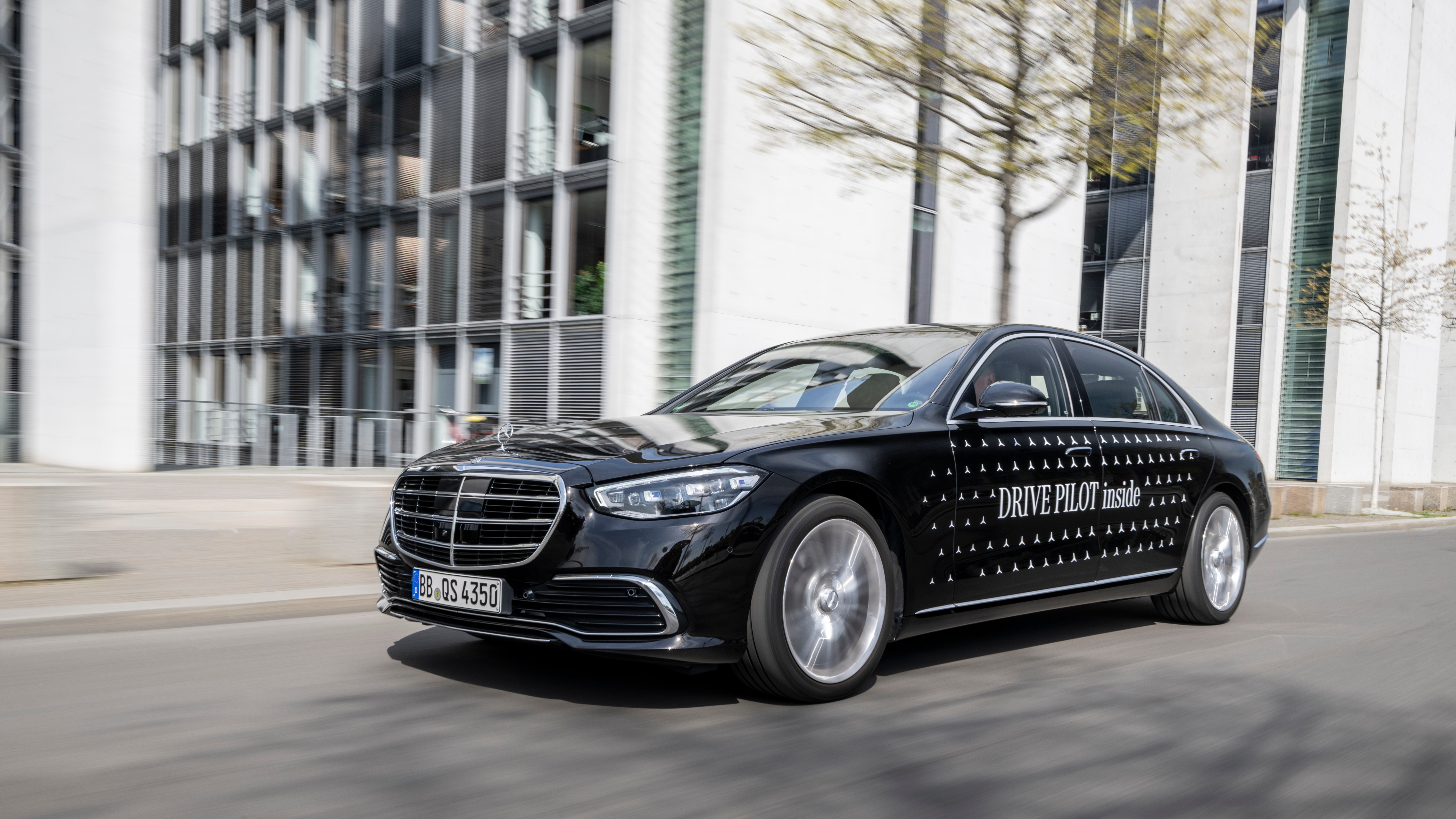
NHTSA proposes amending FMVSS 108 to uniformly require autonomous vehicles to identify self-driving status with cyan lights.
The National Highway Traffic Safety Administration (NHTSA) has issued a proposed amendment to Federal Motor Vehicle Safety Standard No. 108, requiring Robotaxis and other autonomous vehicles to use cyan lights to indicate "driving autonomously" to surrounding pedestrians and vehicles. Cyan falls in a color range not occupied by existing traffic light colors, can be clearly distinguished from red brake lights, yellow turn signals, and white headlights, and has high night visibility. This amendment is not just adding a color requirement but rewriting the definition and scope of signal devices, upgrading voluntary corporate behavior to a federal compliance requirement, expected to resolve fragmented state compliance issues and reduce cross-state operating costs. The rule still requires public comment and final determination, with retrofit requirements for existing fleets and signal visibility standards yet to be clarified.
From Debate to Resolution: Cyan Lights Become the Federal Unified Solution
How autonomous vehicles should signal to the outside world that "no one is driving" has been debated across the industry for years—flashing text, voice prompts, and custom lighting all have their proponents. Now, the National Highway Traffic Safety Administration (NHTSA) has provided a unified answer: cyan lights.
NHTSA has issued a proposed amendment to Federal Motor Vehicle Safety Standard (FMVSS) No. 108, specifically rewriting the provisions related to light signals, requiring Robotaxis and other autonomous vehicles to use cyan lights to communicate "I am driving autonomously" to surrounding pedestrians and vehicles. This move means that the previously fragmented attempts by individual states and companies will gradually converge into a unified federal-level standard.

Why Cyan? The Safety Logic Behind the Standard
Choosing cyan is not arbitrary. FMVSS 108 originally had strict regulations on the color, position, and flashing patterns of vehicle front and rear lights, and cyan happens to fall in a color range not yet occupied by existing regulations, clearly distinguishing it from red brake lights, yellow turn signals, and white headlights. For pedestrians, this color has high visibility at night and in complex road conditions, and is not easily confused with existing traffic signals.
A deeper consideration is "predictability." When autonomous vehicles mix with human-driven vehicles, surrounding traffic participants need to quickly determine whether the other party is controlled by a human. A unified cyan light serves as a standardized "identity marker" for autonomous vehicles, reducing misjudgments caused by uncertainty.
Cyan falls between green and blue in the visible spectrum, with a wavelength of approximately 490 to 520 nanometers. The reason it can be used in traffic lighting is that current US regulations have clear divisions for road vehicle light colors: white/amber for forward-facing, red for rear-facing, amber for side-facing, and red-blue combinations reserved for emergency vehicles. Cyan belongs to none of these occupied categories, and due to its high saturation and unique hue, it is relatively easy to distinguish at night, in rain and fog, and among people with color vision deficiencies, thereby reducing the risk of confusion with brake lights and turn signals.
Rewriting FMVSS 108: A Key Step in the Regulatory Framework
FMVSS 108 is the core regulation for vehicle lighting systems in the United States, covering everything from headlights to reflectors. NHTSA's proposed amendment is not simply adding a color requirement, but rewriting the definition and scope of "signal devices" in the standard to create legal space for the special lighting needs of autonomous vehicles.
The significance of this adjustment is that it upgrades the external communication method of Robotaxis from voluntary corporate behavior to a federal compliance requirement. Previously, companies such as Waymo and Cruise each explored different notification solutions, lacking a unified baseline and facing compliance fragmentation when operating across states. The intervention of a federal standard is expected to reduce compliance costs for autonomous vehicle fleets while providing a clear basis for regulatory enforcement.
FMVSS (Federal Motor Vehicle Safety Standards) is a series of mandatory technical regulations formulated by the National Highway Traffic Safety Administration under the National Traffic and Motor Vehicle Safety Act, numbered from 100 to over 500, regulating different systems such as crash safety, lighting signals, braking, and tires. Among them, FMVSS 108 specifically governs vehicle lighting and reflective devices, with quantitative requirements for the color, brightness, installation position, and flashing frequency of each type of lamp. As a federal standard, FMVSS has nationwide uniform effect, and automakers must self-certify compliance before selling vehicles in the United States. This is also why NHTSA chose to amend 108 rather than issue guidance to promote cyan lights—the former has legal enforceability.
Notice of Proposed Rulemaking (NPRM) is a rulemaking stage stipulated by the US Federal Administrative Procedure Act: the agency first publishes a draft and solicits public comments, then issues a final rule, usually with an effective date and compliance transition period. NHTSA's amendment to FMVSS 108 is currently at the NPRM stage, with a public comment period typically of 30 to 60 days, and the agency must respond to substantive comments before finalizing. This process determines that the cyan light requirement typically takes months or even longer from proposal to implementation, which is also the institutional context behind the article's statement that "the effective timetable is not yet clear."
Industry Impact: Unified Standards Accelerate Robotaxi Scaling
For autonomous vehicle operators, the cyan light standard brings not only hardware changes but also adjustments to operational logic. Vehicles need to integrate compliant cyan signal light modules and ensure they reliably illuminate when autonomous driving mode is activated. This involves the linkage design between lighting control and the autonomous driving system, representing a new engineering-level requirement.
From an industry landscape perspective, a unified federal standard is generally regarded as a prerequisite for scaled deployment. When states no longer require different notification methods, Robotaxi companies can meet national requirements with a single design, reducing customization costs. This may also drive lighting suppliers to develop standardized modules, creating a new market segment.
Open Questions and Pace of Progress
The proposed rule still needs to go through the public comment period and final determination process, and the specific effective timetable and transition arrangements are not yet clear. Industry concerns include: retrofit requirements for existing fleets, the distinction between cyan lights and emergency vehicle lights, and visibility standards under different lighting conditions.
Moreover, unified light signals are only part of autonomous vehicles' external communication. How pedestrians understand this signal and whether other drivers respond correctly still need to be verified through real-world road data and public education. NHTSA's move is a step toward standardization, but the "communication language" between autonomous vehicles and human traffic participants is still being constructed.
Related articles

Private Key Set to 4? CA's Elementary Mistake Leaves TLS Exposed
CA eMudra set private keys to tiny values like 4, making TLS certificates brute-forceable. A Computerphile video demonstrates the full process from extracting public keys to forging certificates, and explores the fragility of the PKI trust chain.

How Gen Turns Data into Decisions with ChatGPT Work
In an OpenAI user case, business leader Gen shares how ChatGPT Work turns data into decisions: within hours of launch, teams can judge whether integrations and onboarding flows work, shifting decision iteration from hundreds of trial-and-error attempts to a fast feedback loop.

ChatGPT vs. Claude In-Depth Comparison: Strong at Coding but Weak at Research — How to Bridge the Gap?
A user considers switching from ChatGPT to Claude, finding Claude stronger at coding but shallower at research. We analyze the differences and share tips to make Claude's research deeper.