Usage4Claude: Real-Time Claude Usage Quota Monitoring in Your macOS Menu Bar

Usage4Claude is a macOS menu bar tool that monitors Claude AI usage quotas in real time.
Usage4Claude is an open-source macOS menu bar tool by GitHub developer f-is-h, built natively in Swift, that monitors Claude AI's 5-hour sliding window, 7-day quotas, Extra Usage, and independent model-specific limits (Opus/Sonnet) in real time. It solves the core pain point of Anthropic's opaque rate-limiting mechanism where users cannot predict when they'll be throttled, helping paid users plan conversation resources and model selection wisely.
Project Overview
Claude AI users have long faced a persistent pain point: there's no intuitive way to see how much of their usage quota remains. Anthropic doesn't provide a clear usage dashboard, and users often find themselves suddenly rate-limited in the middle of a conversation—a terrible experience. The open-source project Usage4Claude by GitHub developer f-is-h was created precisely to solve this problem—it's a macOS menu bar tool that monitors Claude AI's various usage limits in real time.
The project is developed in Swift and has already garnered 272 Stars and 27 Forks, attracting significant attention within the Claude user community.
Claude AI Subscription Tiers and Rate Limiting Background
Claude AI currently offers multiple subscription tiers: Free, Pro ($20/month), Team ($30/person/month), and Enterprise. While Pro and Team users enjoy much higher usage allowances than free users, Anthropic employs a dynamic rate-limiting mechanism rather than fixed hard caps. This means the rate-limiting threshold dynamically adjusts based on current system load, overall usage patterns across the user base, and other factors—making it virtually impossible for users to predict when they'll be rate-limited through simple counting. This "Schrödinger's rate limit" causes considerable anxiety and has driven demand for monitoring tools like Usage4Claude.
From a technical perspective, Dynamic Rate Limiting is a common traffic management strategy in large-scale distributed systems. Unlike static rate limiting (e.g., "maximum 100 requests per hour"), dynamic rate limiting calculates each user's available quota in real time based on multiple signals: real-time load on backend GPU clusters, queued request counts, user priority levels, and more. For service providers, this strategy represents optimal resource allocation—users enjoy higher quotas during off-peak times, while limits automatically tighten during peak periods to maintain overall service quality. However, this "elasticity" means complete unpredictability for users. By comparison, OpenAI's GPT-4 rate-limiting strategy, while adjusted multiple times, has at least provided clear numbers at each stage (e.g., "80 messages every 3 hours"), giving users something concrete to work with. Google's Gemini Advanced takes an even more relaxed approach, imposing almost no visible rate limits on paid users, though the trade-off is noticeably slower response times under heavy load.
Core Features
Multi-Dimensional Quota Monitoring
Usage4Claude supports monitoring multiple usage limits that Claude subscription users face:
- 5-hour sliding window limit: The most commonly encountered short-term rate limit for Claude Pro/Team users, triggered when conversation frequency is too high
- 7-day usage quota: A periodic total volume limit that affects long-term usage planning
- Extra Usage: Monitoring for Anthropic's recently introduced pay-per-use overage allowance
- 7-day Opus quota: An independent usage limit specifically for the Claude 3 Opus model
- 7-day Sonnet quota: A usage limit for the Claude 3.5 Sonnet model
Sliding Window Rate Limiting Explained
The 5-hour sliding window is a common rate-limiting algorithm. Unlike fixed time windows, a sliding window doesn't reset a counter at each fixed interval—instead, it continuously tracks cumulative usage over the past 5 hours. Every moment, the window is "sliding"—the earliest usage records continuously expire while new usage is continuously counted. This mechanism is smoother than fixed windows but makes it harder for users to intuitively judge their remaining quota, since recovery is gradual rather than a one-time reset. For example, if you sent a conversation with a large number of tokens 3 hours ago, that quota will automatically free up in another 2 hours, but you can hardly perceive this process precisely.
In the spectrum of rate-limiting algorithms, the sliding window sits between Fixed Window and Token Bucket approaches. Fixed windows are the simplest—reset the counter once per hour—but suffer from the "boundary burst" problem (users can send double the requests in a short period around window boundaries). The Token Bucket algorithm is more refined: it adds tokens to a "bucket" at a constant rate, each request consumes one token, the bucket overflows when full, and requests are rejected when empty. This algorithm allows short-term bursts while guaranteeing long-term average rates. Anthropic's actual implementation is likely a hybrid variant of sliding window and token bucket, combining multiple time scales (5-hour short-term + 7-day long-term) to achieve tiered rate limiting. The practical implication for users: even if you see remaining quota at a given moment, sending a concentrated burst of requests in a short period may still trigger more granular instantaneous rate limiting.
Why Model-Differentiated Quotas Exist
Anthropic sets independent quotas for Opus and Sonnet fundamentally because of the enormous difference in computational costs between the two. Claude 3 Opus is Anthropic's most powerful model with a larger parameter count, requiring far more GPU compute power and memory for inference than Sonnet—with per-inference costs potentially several times higher. While Claude 3.5 Sonnet approaches or even surpasses early Opus performance on most benchmarks, its architecture has been optimized for higher inference efficiency and lower cost. Therefore, Anthropic imposes stricter usage limits on high-cost models to balance service quality and operational costs. Understanding this helps users make smarter model choices when quotas are tight.
LLM inference costs are primarily determined by three factors: model parameter count (determining how much GPU memory is needed to load model weights), sequence length (attention mechanism computational complexity scales quadratically with sequence length), and generated token count (each step of autoregressive generation requires a complete forward pass). Based on current industry estimates, running a ~200 billion parameter model (Opus scale) on NVIDIA H100 GPUs costs approximately $0.01-0.03 per 1,000 generated tokens, while a distilled and architecture-optimized ~70 billion parameter model (Sonnet scale) might only cost $0.003-0.005. This 5-10x cost differential directly explains why Anthropic needs independent usage caps for different models. Additionally, high-end models are typically deployed on dedicated GPU clusters with limited total compute capacity—independent quotas also prevent a few heavy users from monopolizing scarce computational resources.
Menu Bar Resident Design
As a native macOS application, Usage4Claude adopts a menu bar resident design philosophy. Users don't need to open extra windows or switch applications—a quick glance at the top of the screen reveals current quota consumption. This non-intrusive design is especially practical for heavy Claude users—you can monitor how far you are from being rate-limited while using Claude simultaneously.
The Technical Paradigm of macOS Menu Bar Apps
The macOS Menu Bar App is a unique application form in the Apple ecosystem—they have no traditional Dock icon or main window, instead residing as a small icon in the menu bar at the top of the screen. In Swift development, these apps are typically implemented through the NSStatusItem API, paired with NSPopover or NSMenu to display information. Since they don't occupy Dock space and require no window management, menu bar apps are particularly suited for scenarios requiring continuous monitoring but infrequent interaction, such as system monitoring (iStat Menus), network status, calendar reminders, etc. Usage4Claude chose this form precisely because usage monitoring is a classic "needs to be visible at all times but doesn't require deep interaction" scenario.
With SwiftUI's maturation, the development paradigm for macOS menu bar apps is undergoing transformation. In the traditional AppKit era, developers needed to manually manage the lifecycle of NSStatusItem and NSPopover, handling various edge cases (such as automatic popover dismissal, dark/light mode adaptation, etc.). Starting with macOS 13, SwiftUI introduced the MenuBarExtra scene type, allowing developers to create fully functional menu bar apps with just a few lines of declarative code. This dramatically lowered the development barrier for such tools and explains why the macOS menu bar tool ecosystem has seen explosive growth in recent years. As a native Swift application, Usage4Claude likely leverages these modern framework features, achieving a smooth user experience while remaining lightweight. Additionally, menu bar apps are typically configured as LSUIElement (i.e., "Application is agent" set to YES in Info.plist), meaning they don't appear in the Cmd+Tab app switcher, further reducing disruption to the user's workflow.
Why This Tool Is Needed
The Opacity of Anthropic's Rate Limiting
Anthropic has long lacked transparency regarding Claude's usage limits. Official documentation vaguely mentions the existence of usage caps, but critical information like specific token counts and reset times hasn't been clearly disclosed. Users frequently encounter these frustrations:
- Not knowing how many messages they can still send
- Not knowing when limits will reset after being rate-limited
- Being unable to plan the timing of important conversations
This opacity isn't unique in the AI industry. OpenAI's ChatGPT Plus had similar issues early on (the 40 messages per 3 hours limit was only explicitly announced later), but Anthropic's rate-limiting strategy is more complex because it simultaneously involves multiple time windows, multiple model dimensions, and dynamically adjusted thresholds. For professional users who rely on Claude as a core productivity tool, this uncertainty directly impacts workflow reliability.
From a product strategy perspective, Anthropic's choice not to disclose specific quota numbers likely stems from multiple considerations. First is preventing "gamification"—once users know the exact limits, various "edge-gaming" behaviors emerge (like precisely calculating each message's token count to maximize utilization), which paradoxically increases burst load on the system. Second is maintaining operational flexibility—publicly committing to specific numbers means any adjustment could trigger user backlash, while a vague policy allows Anthropic to adjust freely as infrastructure scales without needing announcements. Finally, there are competitive considerations—specific quota numbers would be used by competitors as marketing comparison material. However, the cost of this strategy is erosion of user trust, especially when paying users feel they "paid money but don't know what they bought."
Helping Users Optimize Usage Strategy
With real-time usage monitoring, users can:
- Allocate conversation resources wisely — Schedule complex tasks for when quotas are ample
- Avoid sudden rate limiting — Proactively reduce usage frequency when approaching limits
- Choose the right model — Decide between Opus and Sonnet based on each model's remaining quota
Technical Implementation
The project is developed natively in Swift, fully leveraging macOS system features including low-power background operation, native UI components, and seamless menu bar integration. As a lightweight tool, it produces no noticeable impact on system performance.
Looking at the project structure, Usage4Claude obtains usage data by monitoring Claude's web API requests or Cookie information—a common technical approach used by community developers when no official API is available.
Technical Details of Data Acquisition
Without an official public API, Usage4Claude likely employs browser session interception or reuse to obtain usage data. Specifically, when a user logs into the claude.ai web interface, the browser stores authentication Cookies (such as session tokens). Third-party tools can read these Cookies and then simulate browser requests to Anthropic's internal API endpoints to retrieve usage statistics. The risks of this approach include: internal APIs may change at any time causing the tool to break, Cookies may expire requiring re-authorization, and it could theoretically violate terms of service. However, in community practice, this is a common approach for accessing undisclosed data, similar to how early Twitter third-party clients accessed unpublished APIs.
It's worth noting that macOS apps reading Safari or Chrome Cookies face increasingly strict privacy restrictions in recent system versions (such as requiring Full Disk Access permission)—a security consideration users should understand when using such tools.
From a reverse engineering implementation perspective, these tools typically go through several steps: first, observing the communication patterns between the claude.ai frontend and backend via browser developer tools (Network panel) to identify API endpoints that return usage data; then analyzing the authentication headers required for requests (typically a session token from Cookies or an Authorization header); and finally reproducing these requests in the local application. The biggest technical challenge in this process isn't sending the requests themselves, but how to securely obtain and store user credentials. On macOS, best practice is to store sensitive information in the system Keychain rather than in plaintext within the app sandbox. Furthermore, since macOS Sonoma and newer versions impose stricter TCC (Transparency, Consent, and Control) restrictions on cross-application Cookie access, Usage4Claude may require users to manually paste their session token rather than automatically reading from the browser—this increases the usage barrier but also reduces security risk. From a legal perspective, the U.S. CFAA (Computer Fraud and Abuse Act) remains in a gray area regarding such activities, but it's generally considered that users accessing their own account data (even through unofficial means) does not constitute "unauthorized access."
Community Response and Outlook
The 272 Stars figure is quite impressive for a niche tool, reflecting strong demand among Claude users for usage management. As Anthropic continues to adjust its pricing and rate-limiting strategies, the value of such third-party monitoring tools may become even more pronounced.
From a broader perspective, Usage4Claude's emergence reflects the tension between AI service providers and users over information transparency. Providers tend to maintain ambiguity in rate-limiting policies to preserve adjustment flexibility, while users need certainty to plan their workflows. This tension exists throughout the SaaS industry but is particularly acute in the AI space—because the "interruption cost" of AI conversations is high. Being rate-limited may mean a complex reasoning chain is forcibly interrupted, and the cost of losing context and starting over far exceeds that of ordinary software services.
This third-party tool ecosystem around AI services is rapidly taking shape, exhibiting several noteworthy trends. First is the rise of "observability" tools—beyond usage monitors like Usage4Claude, the community has also produced token counters (helping users estimate a message's token consumption before sending), conversation export tools (preventing context loss due to rate limiting), multi-model routers (automatically switching to another service when one is rate-limited), and more. Together, these tools form an "AI usage optimization" toolchain. Second is the evolution of platform attitudes—historical experience shows that when third-party tool ecosystems become sufficiently vibrant, platforms typically choose one of two paths: either internalize core features (as Twitter eventually killed third-party clients and built the features themselves), or open official APIs to embrace the ecosystem (like Slack's open platform strategy). Which path Anthropic ultimately takes will directly determine the long-term fate of projects like Usage4Claude. Based on Anthropic's current stance of actively building an API ecosystem (for developers) while maintaining a closed approach to consumer-side tools, third-party monitoring tools will retain their value in the short term.
Of course, the ideal scenario would be for Anthropic to officially provide a native usage dashboard feature. But until then, Usage4Claude offers macOS users an elegant alternative.
How to Get It
Open-source project page: github.com/f-is-h/Usage4Claude — users can download pre-compiled builds directly from GitHub or build from source.
Key Takeaways
- Usage4Claude is a macOS menu bar tool that monitors Claude AI's 5-hour, 7-day, Extra Usage, and other quota types in real time
- Built natively in Swift with a non-intrusive menu bar resident design, it has earned 272 Stars
- Solves the core pain point of Anthropic's opaque rate-limiting mechanism where users cannot predict when they'll be limited
- Helps users allocate conversation resources wisely, choose models strategically, and avoid being suddenly rate-limited during critical tasks
Related articles
 Product Reviews
The Programmer's Desk Setup Guide: Building a Workspace That Feels Like Home
Discover how programmers build productive, comfortable workspaces. From multi-monitor setups to ergonomic design, explore the desk philosophy that drives focus and flow.
 Product Reviews
Qoder vs Cursor Real-World Comparison: Which $20/Month AI IDE Is Better?
Hands-on comparison of Qoder vs Cursor AI IDEs: Agent autonomy, human interaction count, and architecture decisions. Qoder needed only 2 interactions vs Cursor's 8.
 Product Reviews
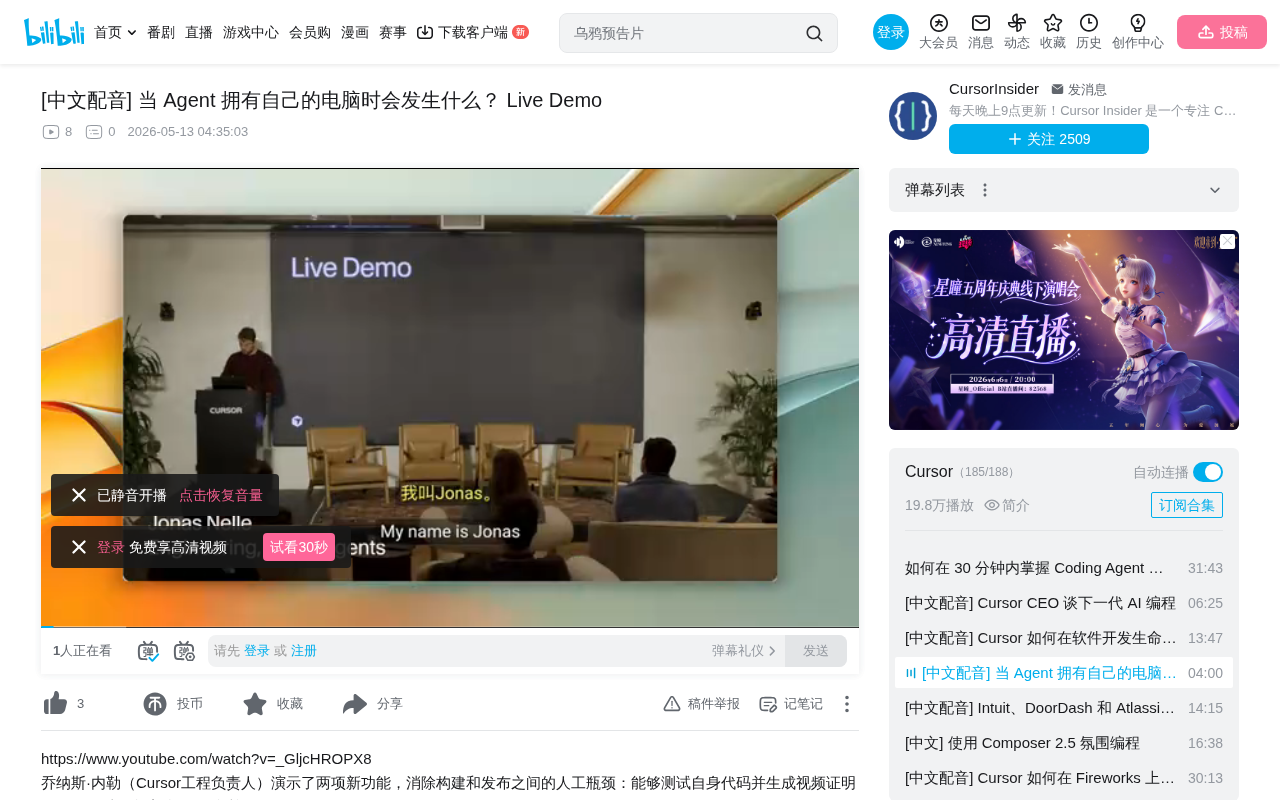
Cursor Cloud Agent Demo: Eliminating Bottlenecks Across the Entire Software Development Lifecycle
Deep analysis of Cursor's Cloud Agent demo showing how cloud VMs, automated test artifacts, and a full-chain control plane systematically eliminate human bottlenecks across the software development lifecycle.