USPS Seizes Counterfeit Postage Label Website: A Large-Scale Postal Fraud Operation

USPS shuts down a counterfeit postage label site, exposing systemic flaws in digital payment credential verification.
The U.S. Postal Inspection Service seized a large-scale website selling millions of counterfeit postage labels, enabling users to ship packages at little or no cost and causing serious financial losses to the postal system. The root vulnerability: automated sorting systems only verify barcode format, not real-time payment status. The case sparked broad discussion on Hacker News about structural flaws in barcode verification and the tradeoffs between fraud prevention, operational efficiency, and user experience. Long-term fixes — digital signatures, one-time tokens, real-time verification — all face steep infrastructure challenges.
The U.S. Postal Inspection Service recently shut down a website that had been selling millions of counterfeit postage labels. The case sparked heated discussion on Hacker News, accumulating 269 upvotes and over 150 comments — a testament to the tech community's ongoing interest in postal system security and digital fraud.
What Happened
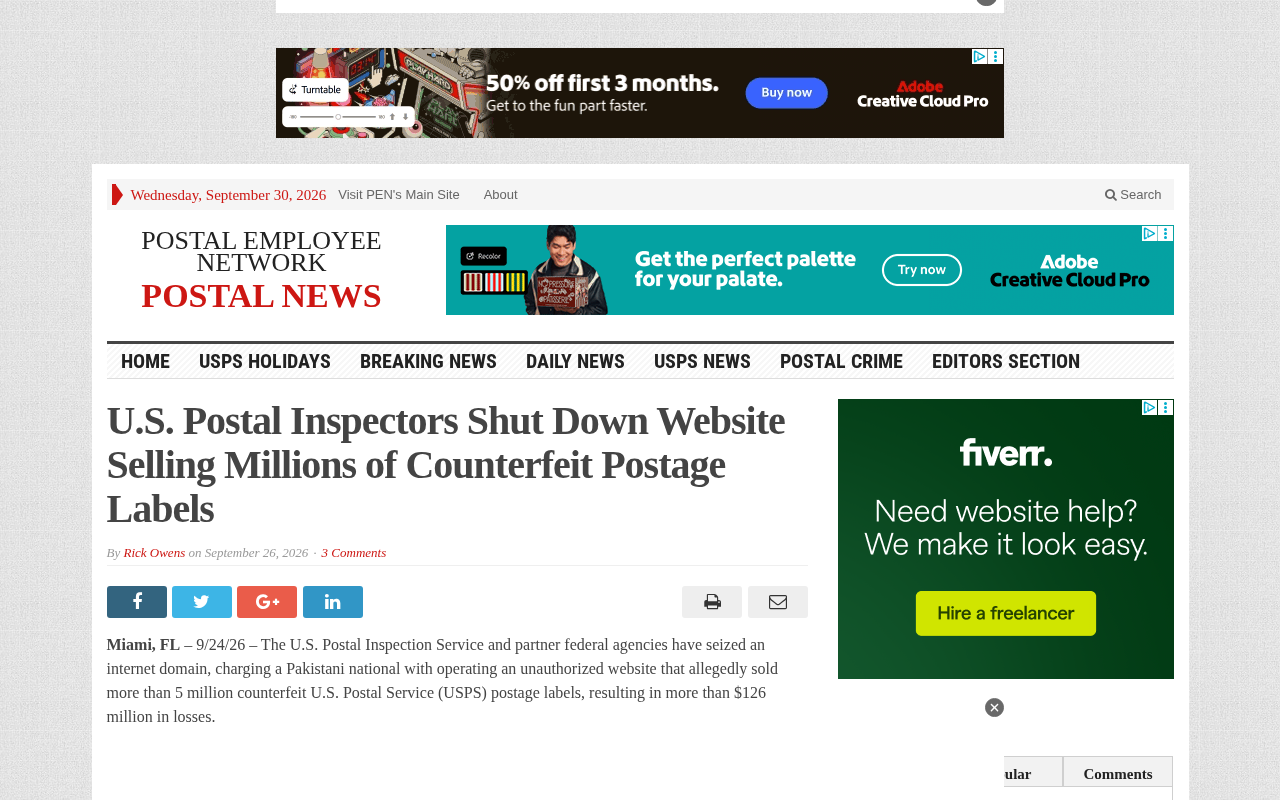
According to Postal Employee Network, U.S. postal inspectors seized a website specializing in the sale of counterfeit postage labels. The site allegedly generated and sold millions of fake labels, allowing users to ship packages at a fraction of the normal cost — or even for free — causing significant financial losses to the U.S. postal system.
This type of fraud typically works by forging barcodes or QR codes that appear to carry valid postage. Once a package enters the postal system, the scanning process may not immediately detect whether a label is genuine, allowing fraudsters to slip through. When executed at scale, the cumulative postage losses become substantial.
Why Counterfeit Postage Remains a Persistent Problem
Postage label fraud is nothing new, but it has grown more acute alongside the explosive growth of e-commerce and parcel volumes. Modern postage systems rely heavily on digitally printed labels — users can print barcode-equipped shipping labels from home. While this convenience improves efficiency, it also creates openings for counterfeiters.
Fake labels often reuse barcodes from legitimately paid shipments, or generate codes that look valid but were never actually paid for. Since postal sorting is highly automated and package throughput is enormous, manually verifying each label is simply not practical — a reality that enables large-scale fraud.
The primary label standard used by USPS today is the Intelligent Mail Barcode (IMb), introduced in 2009 to replace the earlier POSTNET and PLANET formats. IMb is a 65-bar, four-state barcode capable of encoding mailing sequence numbers, service types, and sender/recipient ZIP codes — theoretically providing tracking and verification capabilities. However, a critical flaw in its verification logic is that sorting equipment typically only checks whether a barcode's format is valid, rather than querying in real time whether the code has been legitimately paid for. This means any counterfeit barcode that passes a format check can move through the sorting process undetected. Additionally, the widespread adoption of online prepaid postage services like Click-N-Ship has normalized home-printed labels, shifting oversight from the post office counter to the end user — further lowering the barrier to counterfeiting.
What the Tech Community Is Discussing
The high engagement this story received on Hacker News reflects the tech community's interest in several deeper questions. On one hand, people are examining why the postal system's barcode verification mechanisms have these vulnerabilities, and how this kind of fraud was able to persist and scale into a commercial operation. On the other hand, there's considerable discussion around the tradeoffs between postal pricing, verification costs, and user experience.
One key tension worth considering: postal authorities designing verification systems must balance "catching fraud" against "not disrupting legitimate users." Overly strict real-time verification could slow sorting speeds and increase operational costs, while overly permissive checks leave room for exploitation. This is a security dilemma common to many large-scale automated systems.
Implications for Postal System Security
This seizure signals that law enforcement is taking digital postage fraud seriously. For the postal system, long-term solutions will likely require stronger cryptographic verification — for instance, binding each label's barcode to a non-replicable dynamic signature, or deploying real-time online verification at the sorting stage.
However, all of these approaches require tradeoffs between infrastructure investment, processing speed, and cost. This case serves as a reminder: any system that "digitizes and decentralizes" payment credentials to end users must be paired with sufficiently robust anti-counterfeiting and verification mechanisms — otherwise, large-scale fraud is nearly inevitable.
The "cryptographic verification" approaches mentioned above have several well-established implementations worth considering. The first is digital signature labels: each label is signed by the server using a private key at generation time; sorting equipment holds the corresponding public key and verifies the signature at scan time — any forgery or tampering fails verification. The second is one-time tokens: each barcode is tied to a unique transaction ID, and the system records its "used" status; reusing the same barcode triggers an alert, effectively preventing barcode replay attacks. The third is real-time online verification: sorting nodes query a central database at scan time to confirm payment status, similar to the online authorization model used by credit cards. The shared challenge across all these approaches is scale: USPS processes approximately 400 million pieces of mail per day, and any solution that introduces network latency or single points of failure demands extremely high system reliability and infrastructure investment — which is precisely why modernization efforts have stalled for so long.
Conclusion
The USPS seizure of a counterfeit postage label website may be rooted in the traditional postal world, but the underlying technical and security questions it raises are broadly relevant. It reminds us that the convenience of digital credential systems must be matched by equally robust anti-counterfeiting capabilities. As logistics and e-commerce continue to grow, building a postage verification system that is both efficient and secure will remain a long-term challenge for postal institutions.
Related articles

Chain of Thought Isn't Just for AI: How Humans Can Use CoT to Improve Thinking Quality
Chain of Thought isn't just a prompt trick for large models. Starting from a Hacker News discussion, this article analyzes why CoT works for human thinking too, breaks down actionable ways to transfer it, and highlights the key differences between human CoT and machine CoT.
Cloudflare Teams Up with OpenAI: Closi…
Cloudflare Teams Up with OpenAI: Closing the Loop from Vulnerability Discovery to Defense with AI
Cloudflare uses OpenAI Daybreak to investigate security vulnerabilities and generate reviewable remediation plans, while developers use Codex to boost coding efficiency and quality.

Orca Multi-Agent Orchestration in Practice: A Guide to Parallel Collaboration with Claude and Codex
Orca is Stable AI's free open-source agent workbench supporting 34 agents like Claude Code and Codex in parallel. Learn its Git worktree isolation, multi-model orchestration, and mobile management.