v0.40.12 Pre-release: MLX Inference Speedup and Gemma Vision Detail Optimization

v0.40.12 pre-release patches MLX and llama.cpp backends for prompt speed, small-image fidelity, and model support.
v0.40.12 is a pre-release with four changes from a single contributor, all focused on the MLX and llama.cpp inference backends. MLX gets three changes: improved small-image detail for the Gemma 4 compact vision tower, synchronized MLX/MLX-C upgrades boosting prompt speed for gemma/flint/laguna, and new DFlash2 support. llama.cpp is routinely bumped to b11901. Since it is an rc build concentrated in the inference backend, test target models in an isolated environment before upgrading.
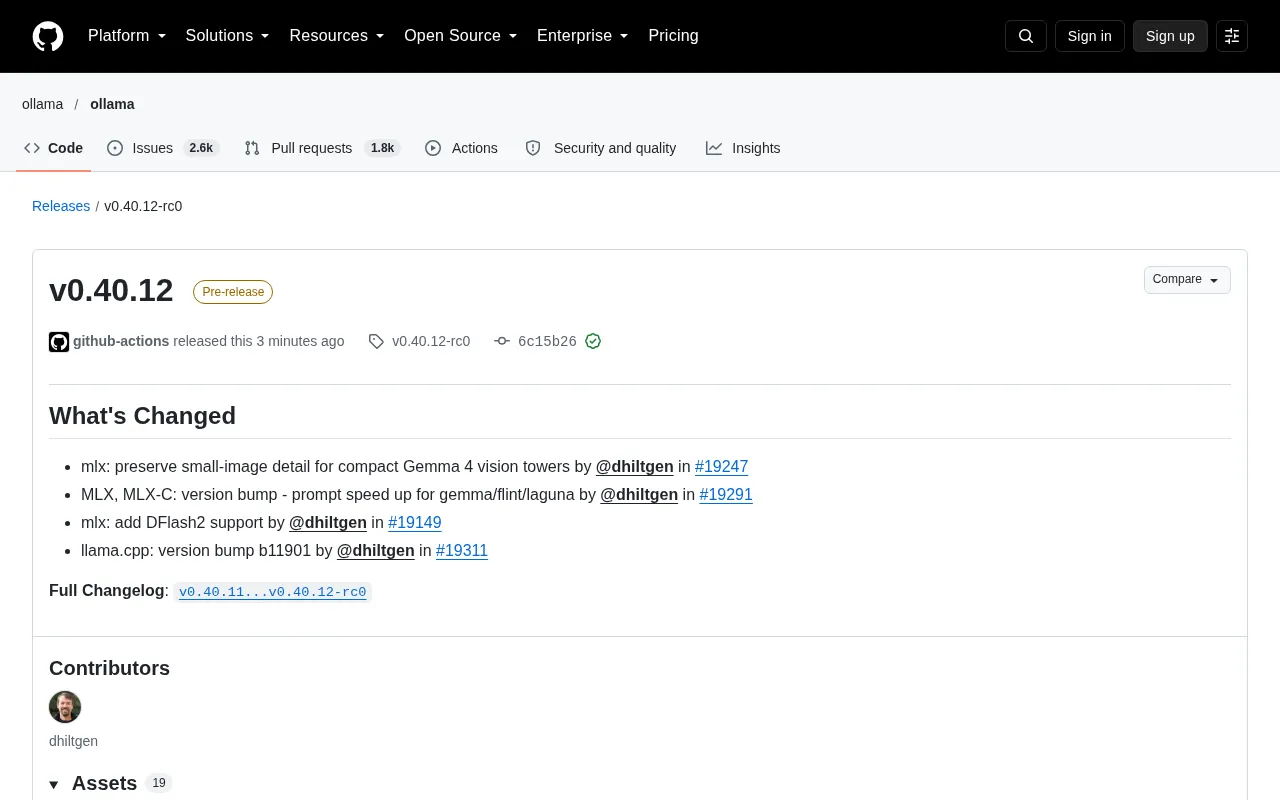
v0.40.12 appears in the version list with a Pre-release tag, with commits concentrated on the two inference backend lines: MLX and llama.cpp. Judging from the changelog entries, this is a typical "small but dense" iteration: no major new features, but targeted fixes around prompt speed, visual detail preservation, and model support coverage.
Version Overview and Release Cadence
This version was automatically built by GitHub Actions. The publisher tagged v0.40.12-rc0 on commit hash 6c15b26, and the commit carries a GitHub-verified signature (GPG key ID: B5690EEEBB952194).
The contributor list contains only @dhiltgen, who authored all four changes. This suggests a highly concentrated theme—essentially a dedicated performance patch set for the Apple Silicon / MLX path. The pre-release form also indicates it hasn't entered the stable channel yet, making it more suitable for users willing to try it early and report issues.
Pre-release version (Pre-release / rc tag) is a stage marker in the semantic versioning process: -rc0 means the 0th iteration of a release candidate—features are frozen and awaiting validation, but API and behavior stability are not yet promised. On GitHub, pre-releases are not marked as Latest and typically do not appear in the automatic redirect for releases/latest; package managers' stable channels will not resolve to them by default, and users must explicitly specify the version number to pull them. By contrast, stable releases are produced by removing the rc suffix and re-tagging. The core purpose of the pre-release stage is to collect regression feedback from real environments: if issues are found, rc1, rc2, etc. can continue to be released without affecting stable users. Therefore, when you see an rc tag, the reasonable expectation is "worth trying, worth giving feedback, but not recommended as a production default."
GitHub-verified signature means the commit or tag is signed with a GPG key, and GitHub verifies it against the registered public key before displaying the Verified badge. It proves that the object was indeed created by the person or automation system holding the corresponding private key and was not tampered with in transit. The GPG key ID in the text is the last 16 characters of the public key fingerprint and can be used to trace the signing identity—here it points to GitHub Actions' automated build identity, indicating that the tag was generated by a CI pipeline rather than pushed manually from a local machine, so the build process is reproducible and auditable.
Three Changes to the MLX Backend
Small-Image Detail and Compact Vision Towers
The first change is titled "preserve small-image detail for compact Gemma 4 vision towers" (#19247). It means: when Gemma 4's compact vision encoder (vision tower) processes images, it preserves detail information for small-sized images.
Compact vision towers usually reduce computation by lowering input resolution or reducing the number of tokens, at the cost of losing texture and edge information in small or downscaled images. This patch targets exactly that trade-off, aiming to improve the fidelity of small-image inputs without significantly increasing overhead. For scenarios involving thumbnails, chart screenshots, or small UI screenshots, this kind of change has a more direct impact than stacking parameters.
Vision tower is the subnetwork in a multimodal model responsible for encoding images into visual tokens, typically built from stacked ViT-like structures, with outputs aligned to the language model's embedding space through a projection layer. A so-called "compact" vision tower generally reduces computation and memory usage by lowering patch resolution, reducing layers, or pooling/compressing visual tokens, so that the cost of visual encoding does not outweigh the language backbone. The cost is an information bottleneck: after an image is split into coarser patches, fine-grained texture and edges are the first to be lost, and this is especially pronounced for small inputs—the original image itself has limited pixels, and after scaling and coarse-grained splitting, the number of usable visual tokens rapidly approaches the lower bound.
Version Upgrade Brings Prompt Speed Improvement
The second change (#19291) involves version bumps for both MLX and MLX-C, described officially as "prompt speed up for gemma/flint/laguna"—that is, improved prompt processing speed for the gemma, flint, and laguna model series.
Prompt processing is a major component of first-token latency, especially in long-context scenarios. This speedup is achieved through underlying library upgrades rather than application-layer scheduling optimization, meaning the benefits take effect automatically as these three model series are used, with no configuration changes required on the user side. A detail worth noting: the change upgrades both MLX and MLX-C, indicating that the improvement covers the full chain from Python bindings down to the underlying C interface.
MLX is an array computation framework designed by Apple for Apple Silicon. It uses a unified memory architecture, where the CPU and GPU share the same physical memory, eliminating data copies between separate VRAM pools. MLX-C is its C API layer, used by non-Python languages or callers that need finer-grained control. Inference stacks like llama.cpp often connect to MLX through the C interface, so a synchronized "MLX + MLX-C upgrade" means operator implementations, memory management, and the binding layer are all updated, and the call chain from Python bindings down to the underlying C interface benefits from the improvement.
Prompt processing speed (prompt processing / prefill) refers to the stage where the model performs forward computation on the input context and fills the KV Cache, and its result directly determines first-token latency (TTFT). This stage can process the entire input in parallel and is compute-intensive; the subsequent decoding stage generates tokens serially one by one and is memory-bandwidth-intensive. In long-context scenarios, prefill often accounts for the bulk of end-to-end latency, so optimizations to underlying operators and kernels yield the most significant gains with long prompts.
Added DFlash2 Support
The third change (#19149) is a clear capability expansion: adding DFlash2 support for MLX. Compared with the previous two performance and quality refinements, this is an expansion of the support matrix, enabling the backend to load model formats or architectures that previously could not run. The exact scope of support needs to be confirmed against the repository documentation, but judging from the commit title, it is independent of the Gemma and llama.cpp change lines.
Routine Follow-up for llama.cpp
The last change (#19311) advances the llama.cpp version to b11901. Such version bumps are common in hybrid-backend projects, serving to synchronize upstream fixes and operator improvements and to prevent the local branch from drifting too far from upstream.
Although the entry itself contains limited information, it shows that the project maintains two inference paths: MLX and llama.cpp. The former targets GPU acceleration in the Apple ecosystem, while the latter covers a broader range of hardware and quantization formats. With both lines updated in parallel, the experience gap for users on different platforms will continue to narrow.
llama.cpp is a C/C++ inference engine in the ggml ecosystem, known for broad coverage of multiple backends such as CPU, Metal, CUDA, and Vulkan, as well as rich quantization formats (Q4_K_M, Q8_0, etc. in the GGUF system). Its version numbering uses a rolling form of b plus a build number (e.g., b11901), does not follow semantic versioning, and each build number corresponds to a snapshot of the upstream mainline. This rolling release means version bumps often span a large number of upstream commits, including ongoing fixes to operator implementations, quantization kernels, and backend adaptations. For downstream projects, regular follow-up avoids difficult-to-merge conflicts after long-term divergence from upstream, but it is also necessary to watch for output differences that upstream behavior changes may introduce.
Who Should Upgrade
Judging from the composition of the changes, the value of this pre-release is concentrated for three types of users: those running the Gemma series on Apple Silicon and troubled by first-token latency, users with vision tasks that need to process small-sized image inputs, and users interested in access to the new DFlash2 model.
Since this is an rc version and all changes are concentrated in the inference backend, it is advisable to verify the output quality of the target model in an isolated environment before upgrading, especially the small-image performance of vision tasks—performance improvements and accuracy changes often appear together, and practical testing is needed to confirm whether the trade-off meets expectations. For the full changes, refer to the comparison record for v0.40.11...v0.40.12-rc0.
One-line Summary
v0.40.12 pre-release focuses on prompt speed, small-image fidelity, and model support fixes for the MLX and llama.cpp backends.
Paragraph Summary
v0.40.12 was released with a pre-release tag, with all four changes submitted by a single contributor and concentrated on the two inference backend lines, MLX and llama.cpp—a typical "small but dense" iteration. On the MLX side there are three changes: first, optimizing small-image detail preservation for the Gemma 4 compact vision tower; second, synchronously upgrading MLX and MLX-C to bring prompt processing speed improvements for the gemma, flint, and laguna model series, with benefits covering the full chain from Python bindings down to the underlying C interface; third, adding DFlash2 support to expand the range of runnable models. On the llama.cpp side, the routine advance to b11901 synchronizes upstream fixes and operator improvements. Since this is an rc version and the changes are concentrated in the inference backend, the author recommends testing the target model in an isolated environment before upgrading, especially the small-image performance of vision tasks, to confirm that the performance-accuracy trade-off meets expectations.
Related articles

How Did Da Vinci Prove the Sun Is Hot? A Neglected Chapter in Science History
How did da Vinci use a concave mirror experiment to overturn Aristotle's cold sun theory? This article traces this neglected chapter in science history, revealing the embryo of scientific thinking in the 15th century and da Vinci's cold observations on solar heat and the nature of life.
SharpLogic: Formalizing Bug Detection for LangGraph Routing Graphs with k-CNF
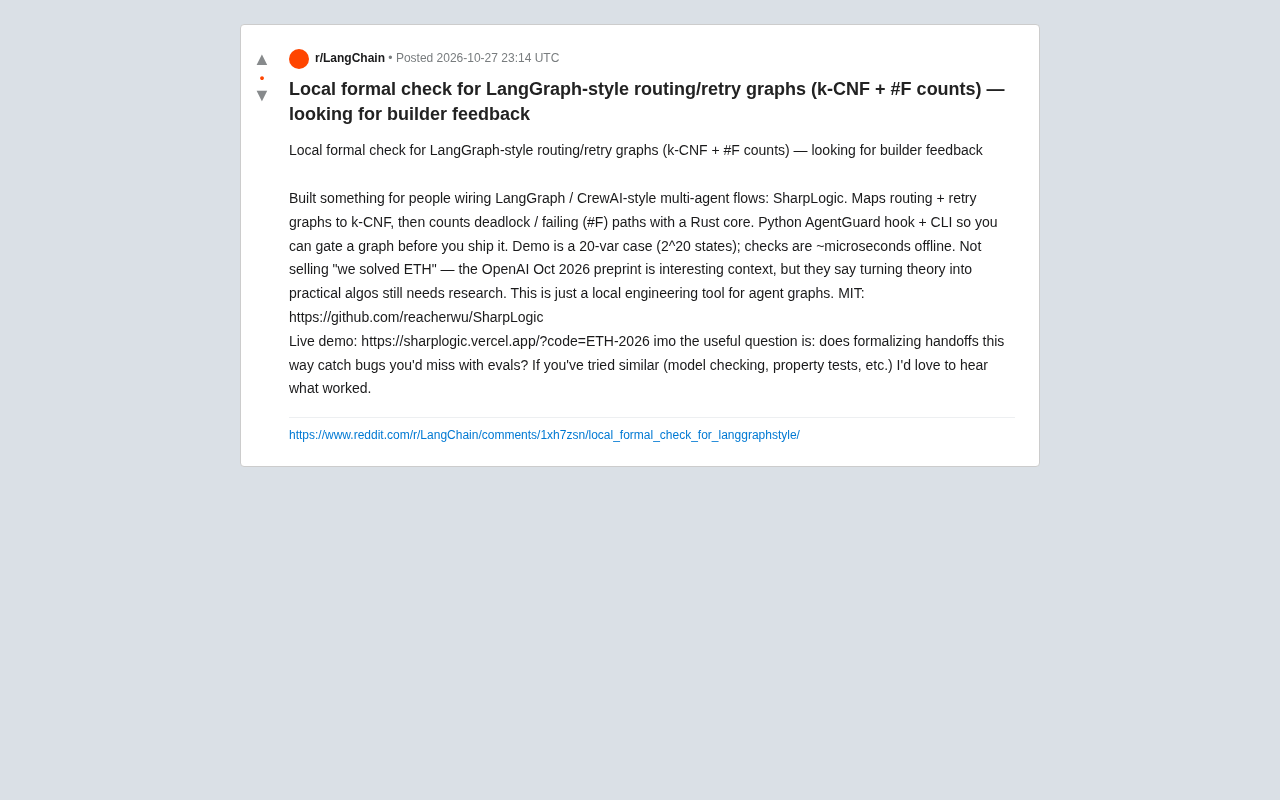
SharpLogic, an open-source project, maps LangGraph-style multi-agent routing and retry graphs to k-CNF, using a Rust kernel to count deadlocks and failing paths (#F counting), offering a Python AgentGuard hook and CLI for pre-release formal gate checks. This article analyzes its principles, its complementary relationship with evals, and the community's concern about modeling costs.
PPO Training of a Franka Robotic Arm for Pick-and-Place: A Reinforcement Learning Starter Project
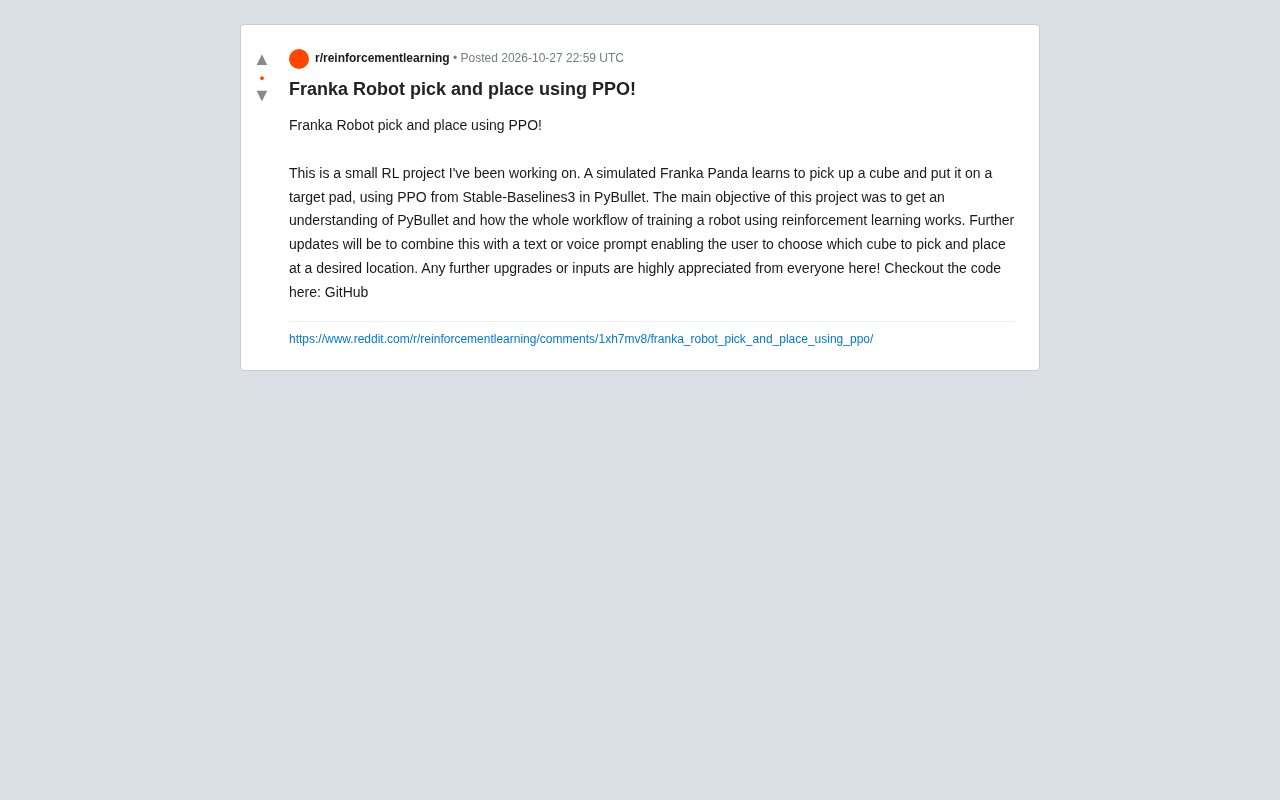
A reinforcement learning project using PPO to train a Franka Panda robotic arm for pick-and-place in PyBullet, covering tech stack choices, task design challenges, and future text/voice command interaction plans—a good reference for beginners.